Latest
Gemini 4 Argon vs Claude Opus 5.5 vs GPT-6.1 Sol: Cost and Access
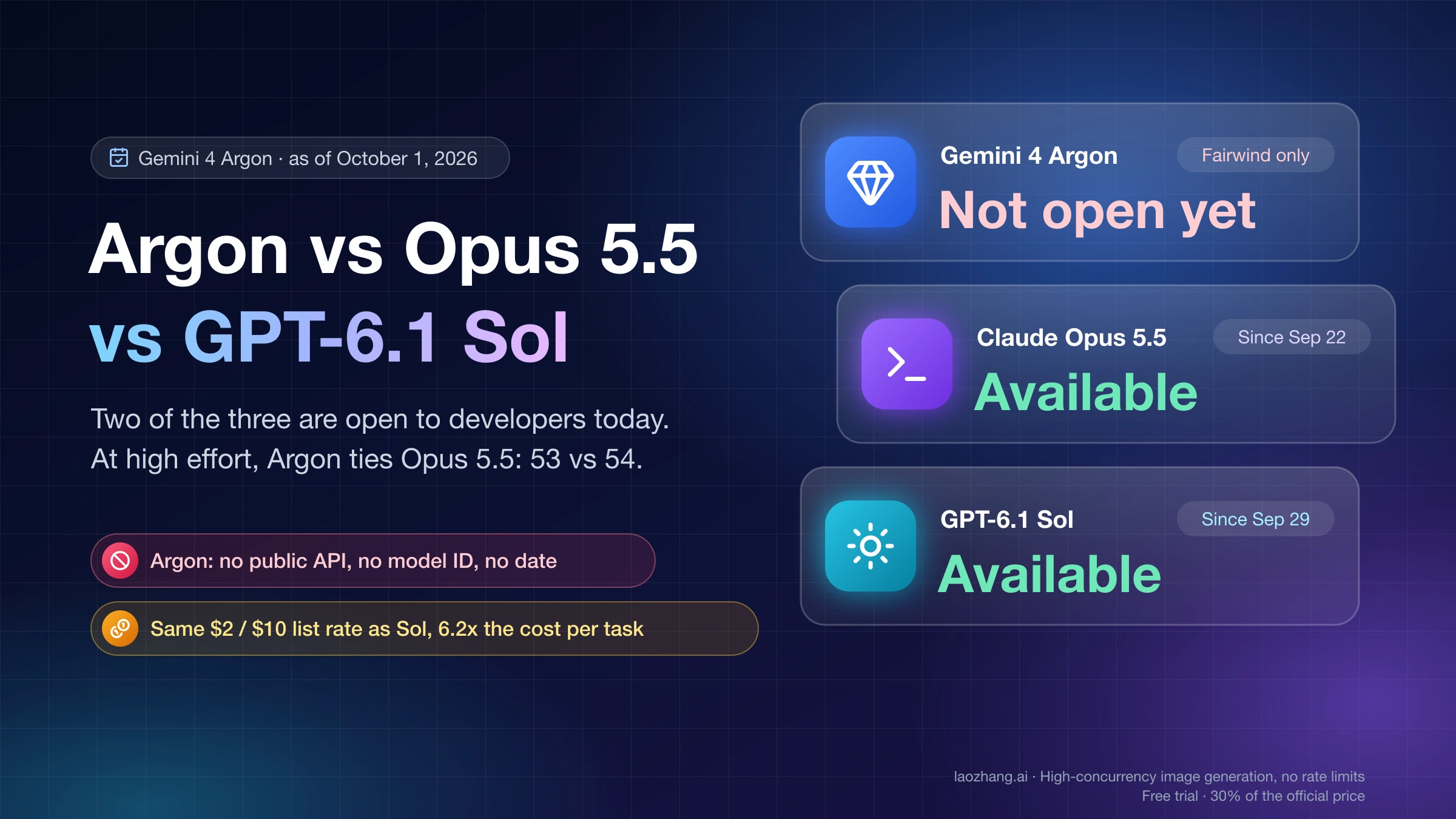
Gemini 4 Argon opened to paid API users on October 13 at $2/$10, doubling December 1. At matched effort it ties Opus 5.5 per task and costs 6.2x GPT-6.1 Sol.
18 min
Gemini 4 Argon opened to paid API users on October 13 at $2/$10, doubling December 1. At matched effort it ties Opus 5.5 per task and costs 6.2x GPT-6.1 Sol.
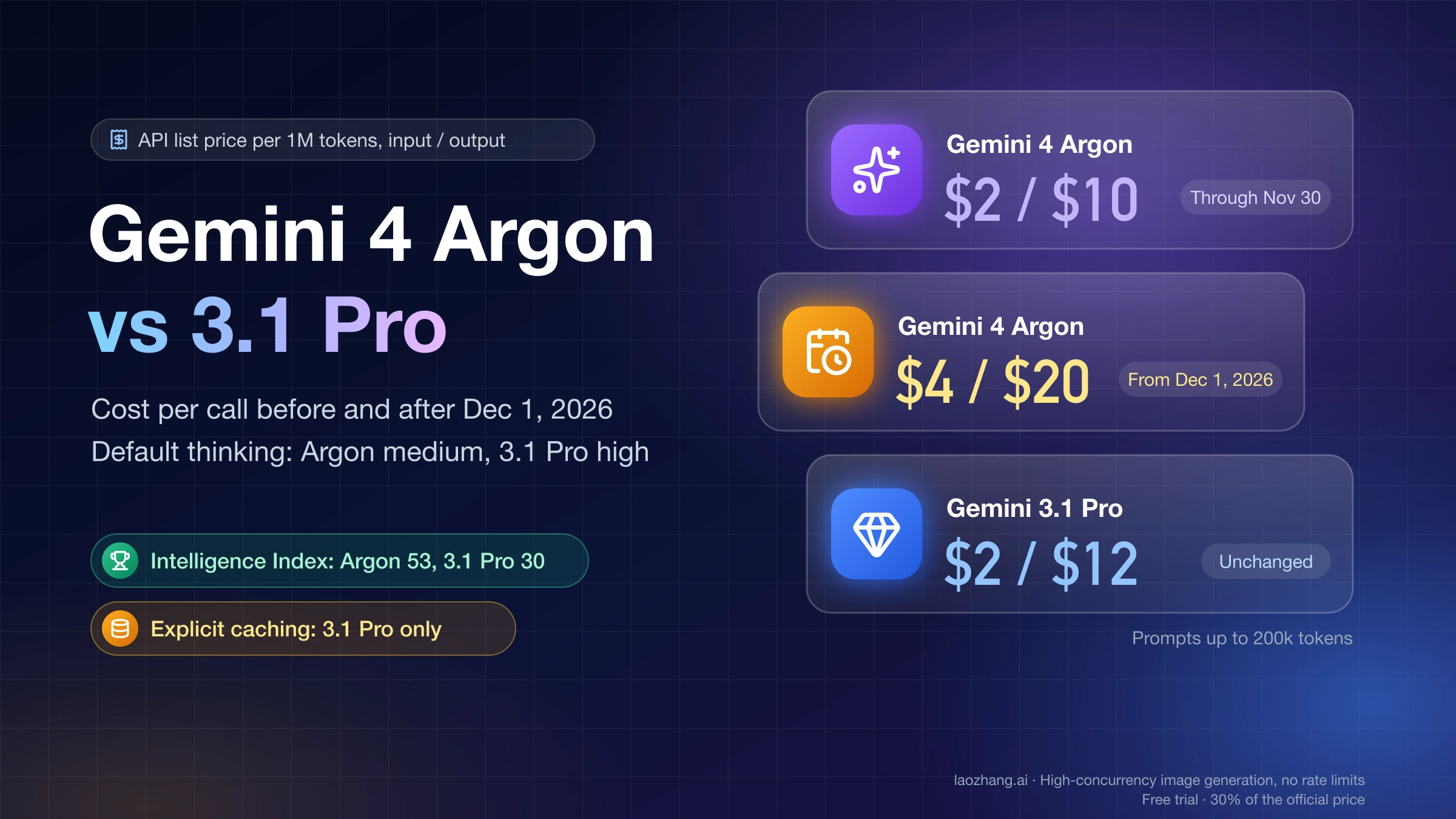
Each at its default thinking, Gemini 4 Argon cost 57% less than 3.1 Pro on five test calls through Nov 30, 2026, and 14% less from Dec 1. Hard tasks cost more.
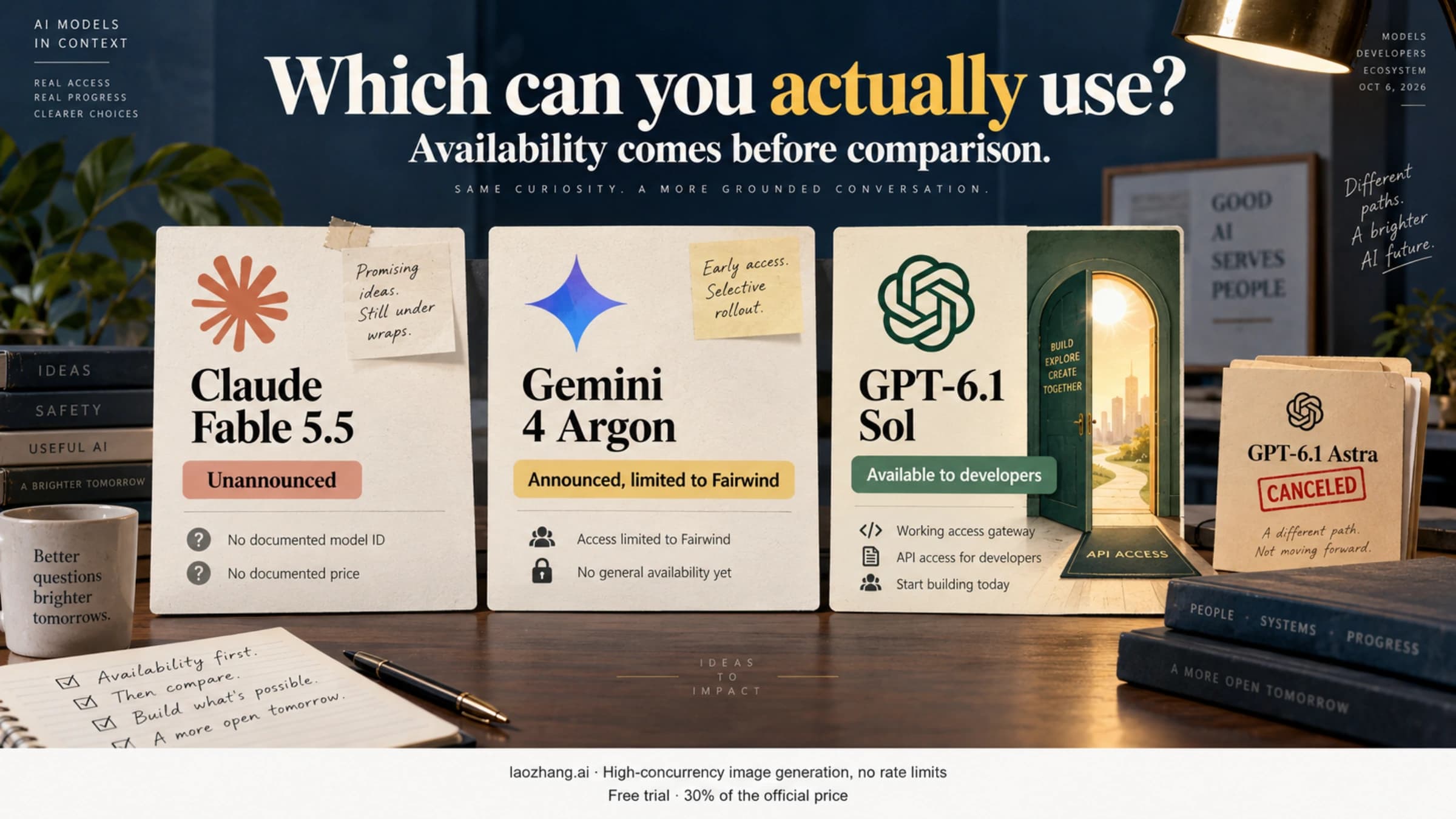
As of October 14, 2026, you can call GPT-6.1 Sol and Gemini 4 Argon, available since October 13. Fable 5.5 is unannounced, and GPT-6.1 Astra was shelved.
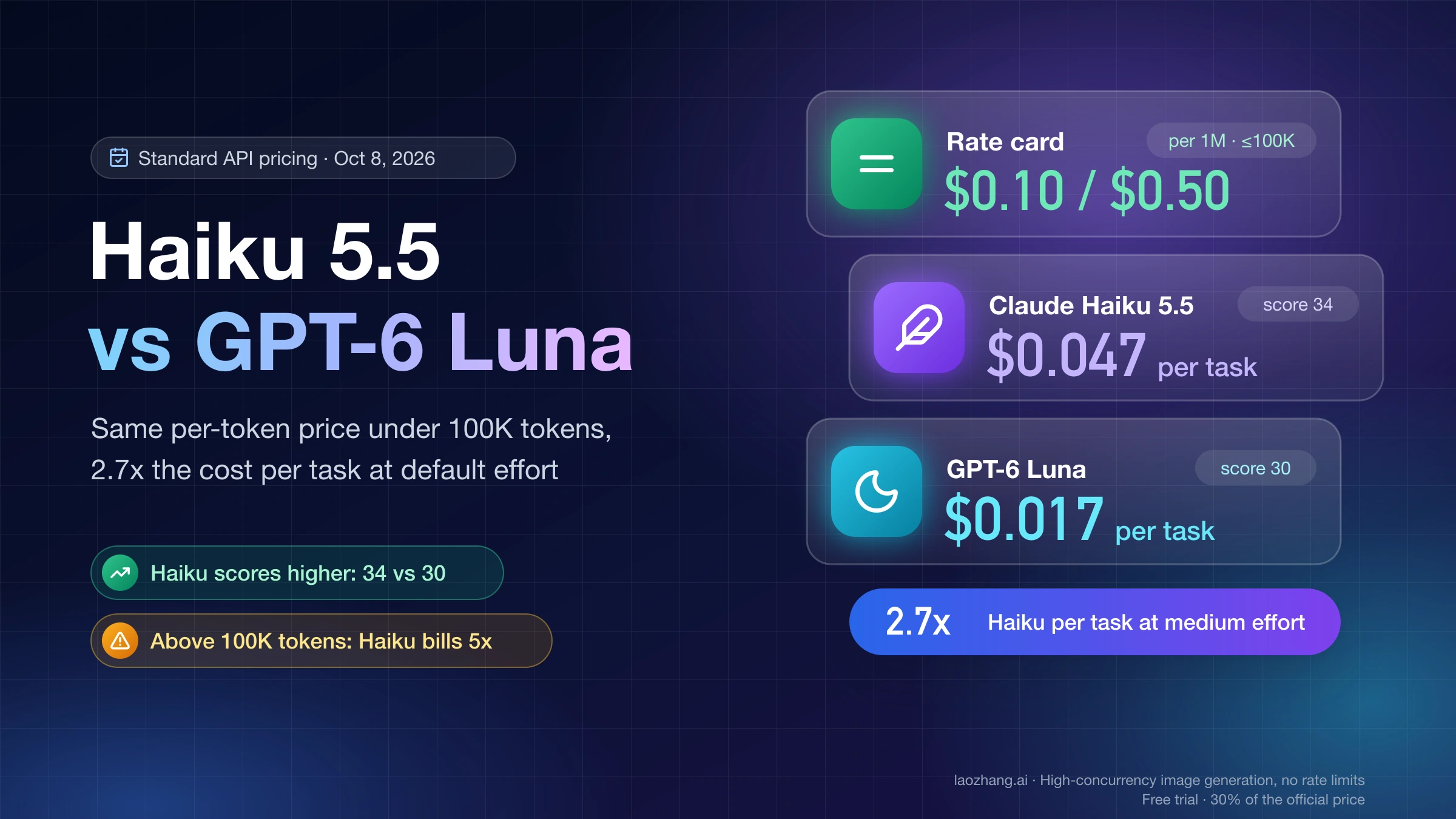
Claude Haiku 5.5 and GPT-6 Luna share $0.10/$0.50 rates under 100K tokens, yet Haiku cost 2.7x more per task at default effort and reprices 5x above 100K.
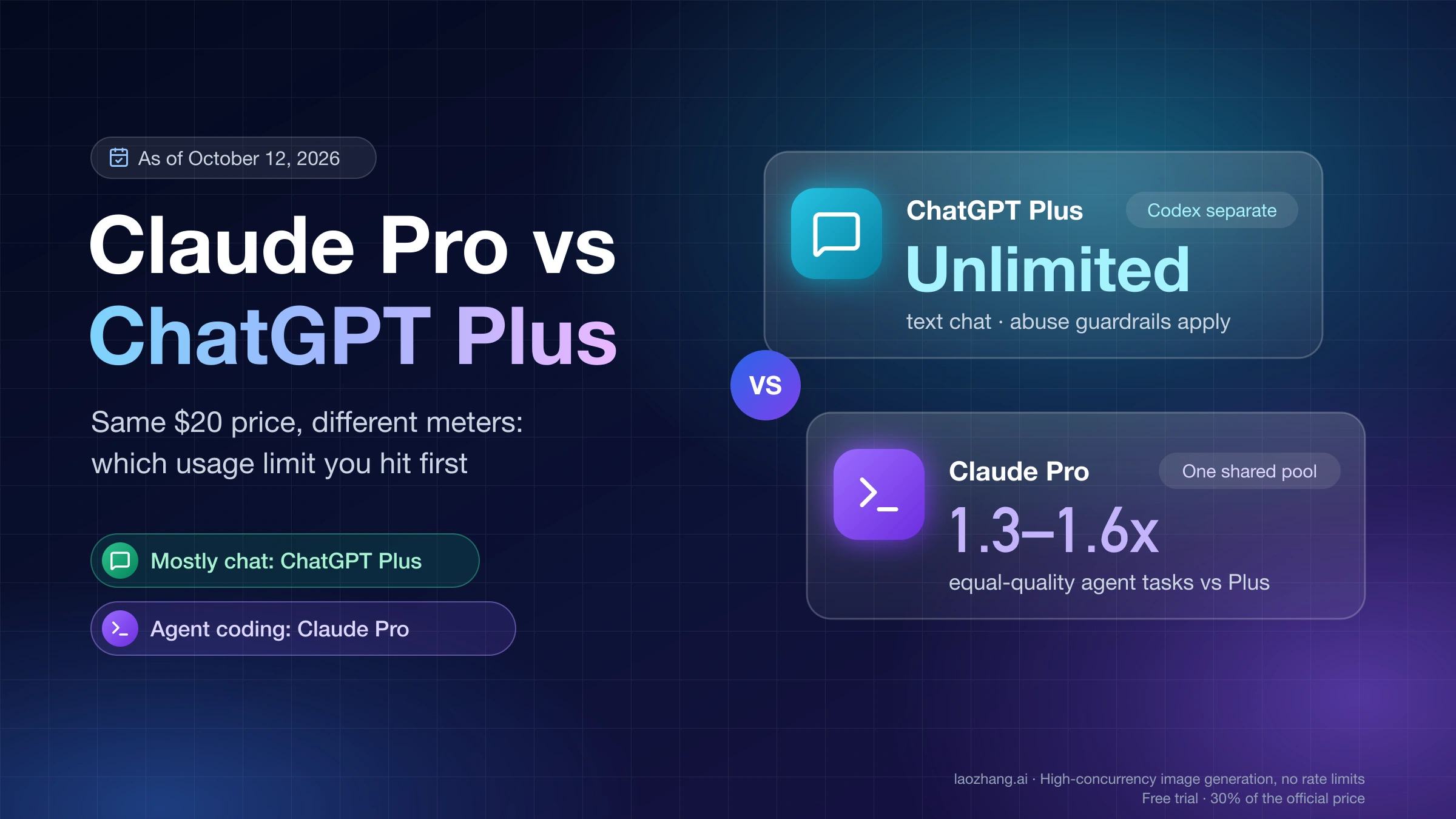
Claude Pro vs ChatGPT Plus usage limits as of October 15, 2026: Plus doesn't cap everyday text chat; Claude Pro fits more agent coding in one shared pool.
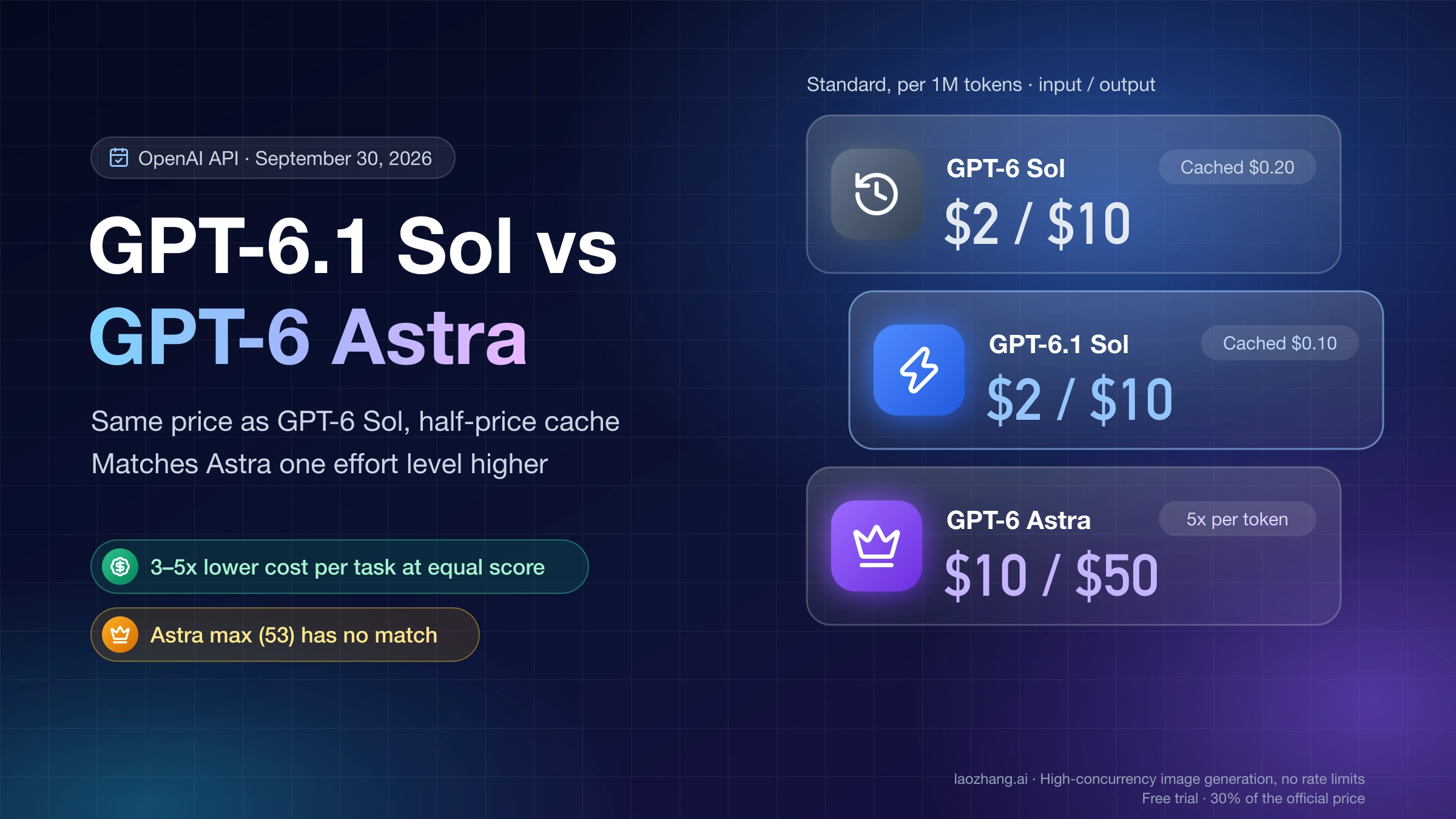
Move gpt-6-sol traffic to GPT-6.1 Sol: same price, higher scores at every effort. Run it one level higher to match Astra for 3–5x less; Astra max has no equal.
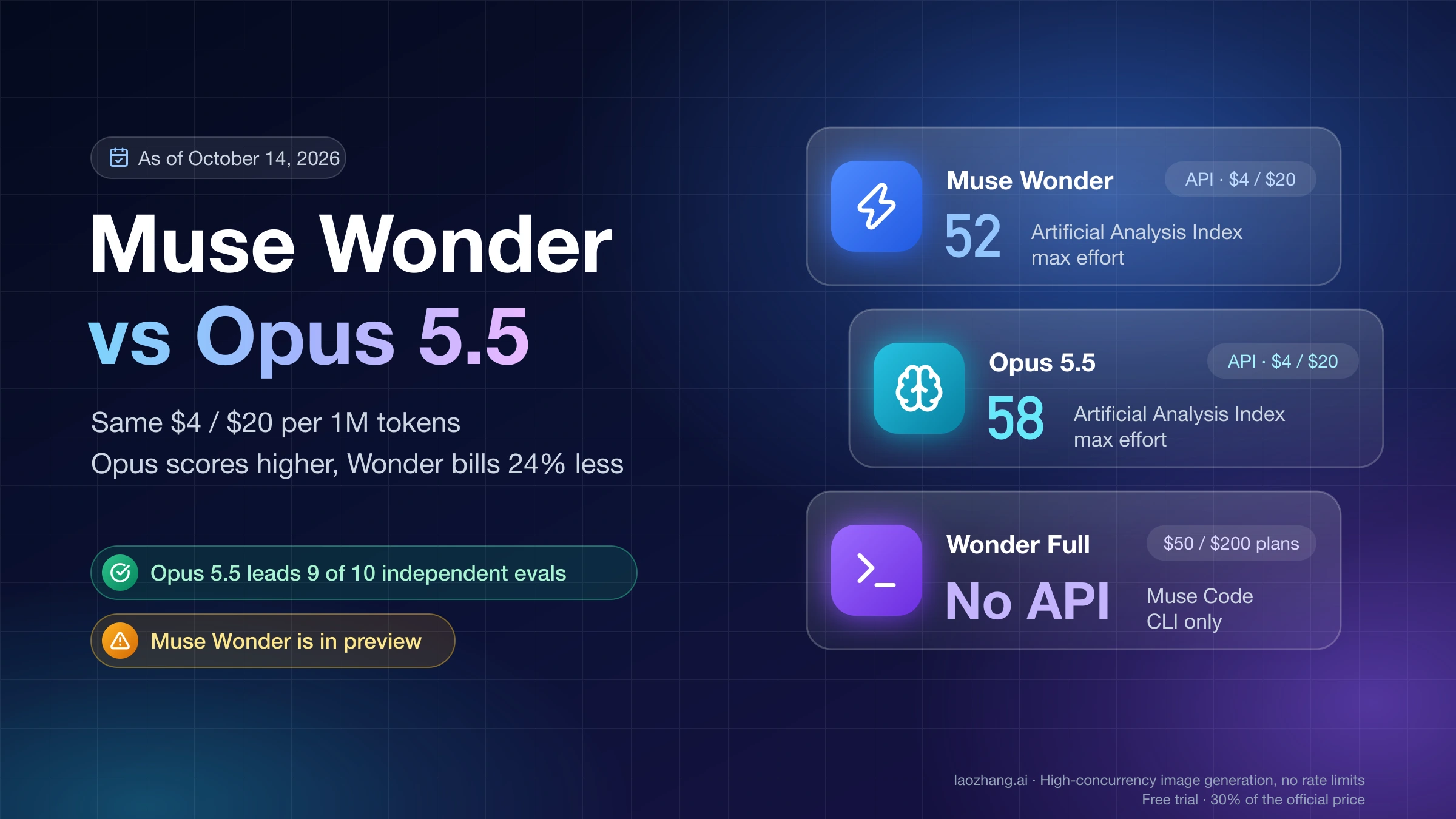
At max effort on Artificial Analysis, Claude Opus 5.5 scores 58 to Muse Wonder's 52, but Wonder costs 24% less per task. Wonder Full has no API.
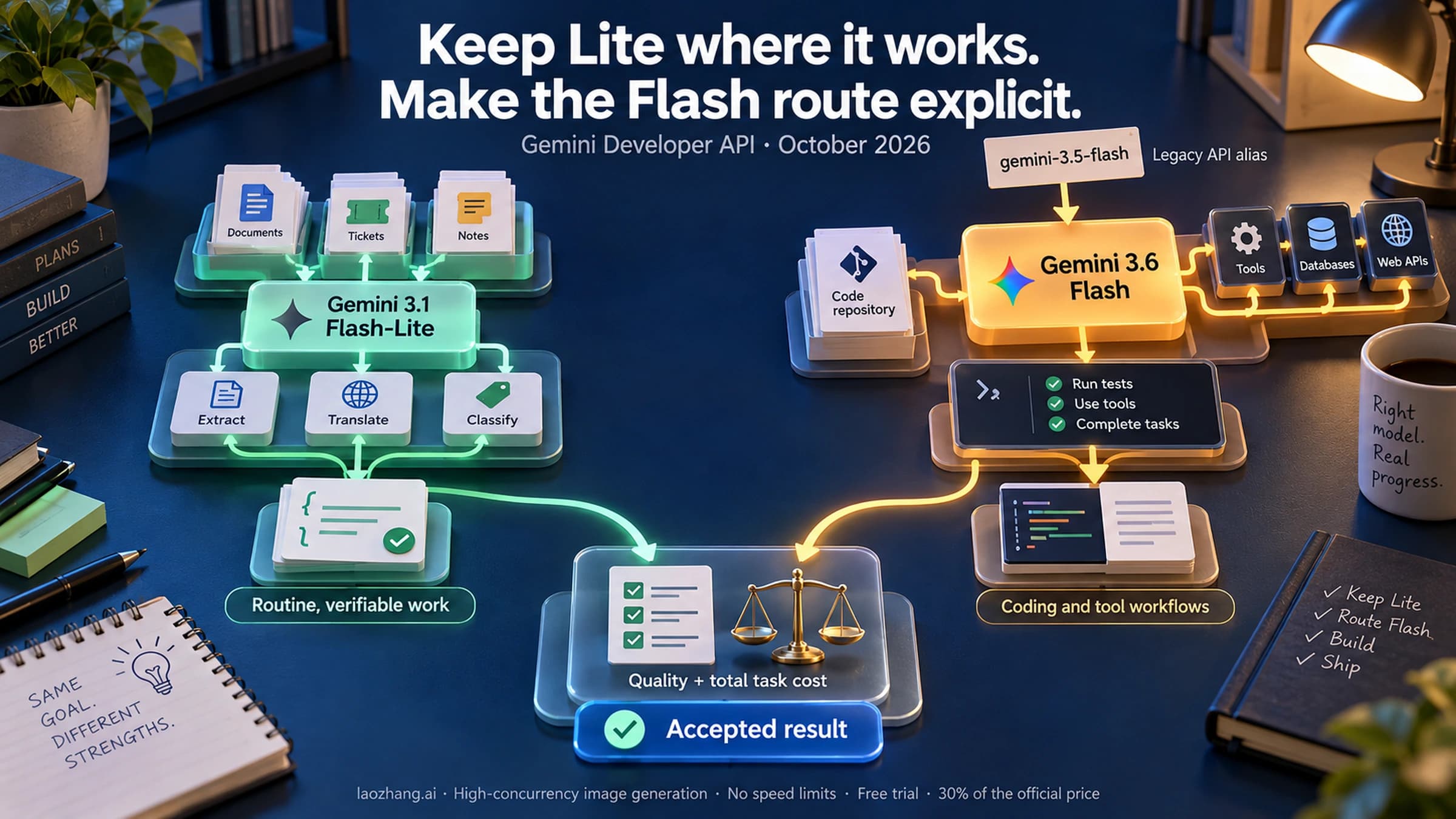
Keep Gemini 3.1 Flash-Lite for routine work that passes validation. An old 3.5 Flash API configuration now serves 3.6 Flash; compare current costs before switching.
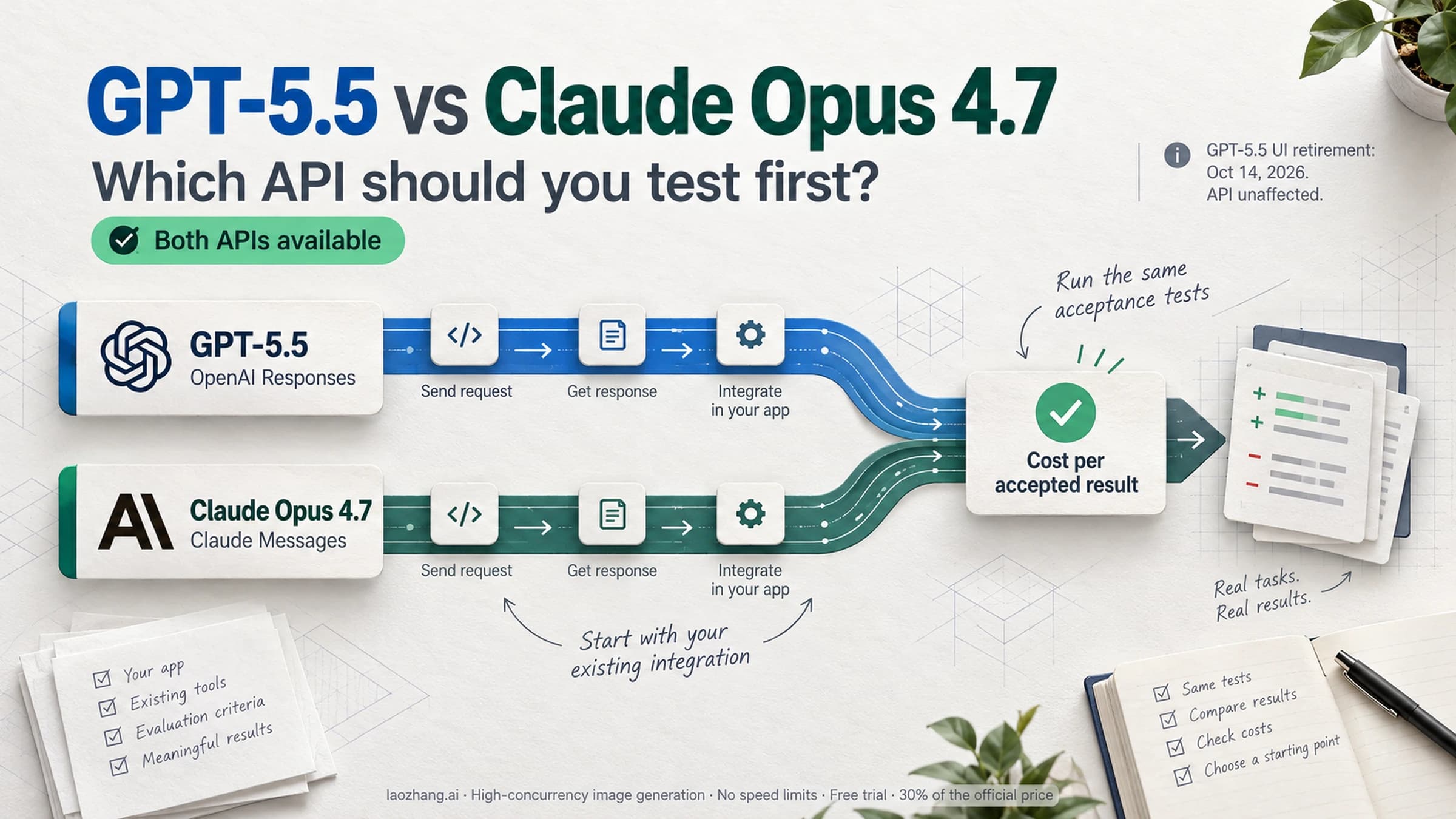
Both APIs are available. GPT-5.5 is the first test for an existing Responses integration; Opus 4.7 has lower standard output rates and no long-input premium. Choose on accepted-task cost, not a universal coding ranking.
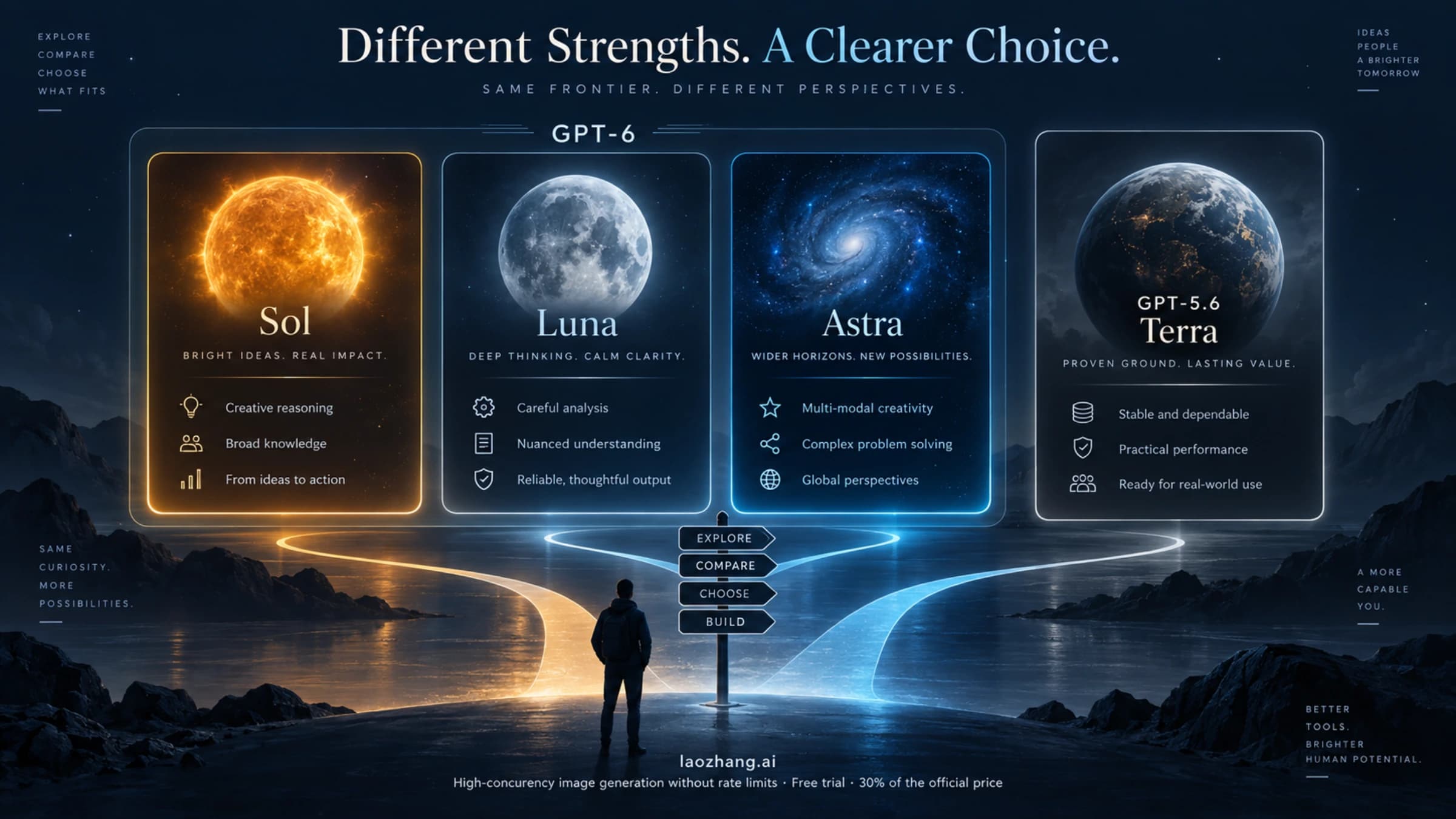
The current Sol is GPT-6.1 Sol; Luna and Astra are GPT-6, and Terra is GPT-5.6. Compare direct-API rates, then test cost per accepted task before switching.
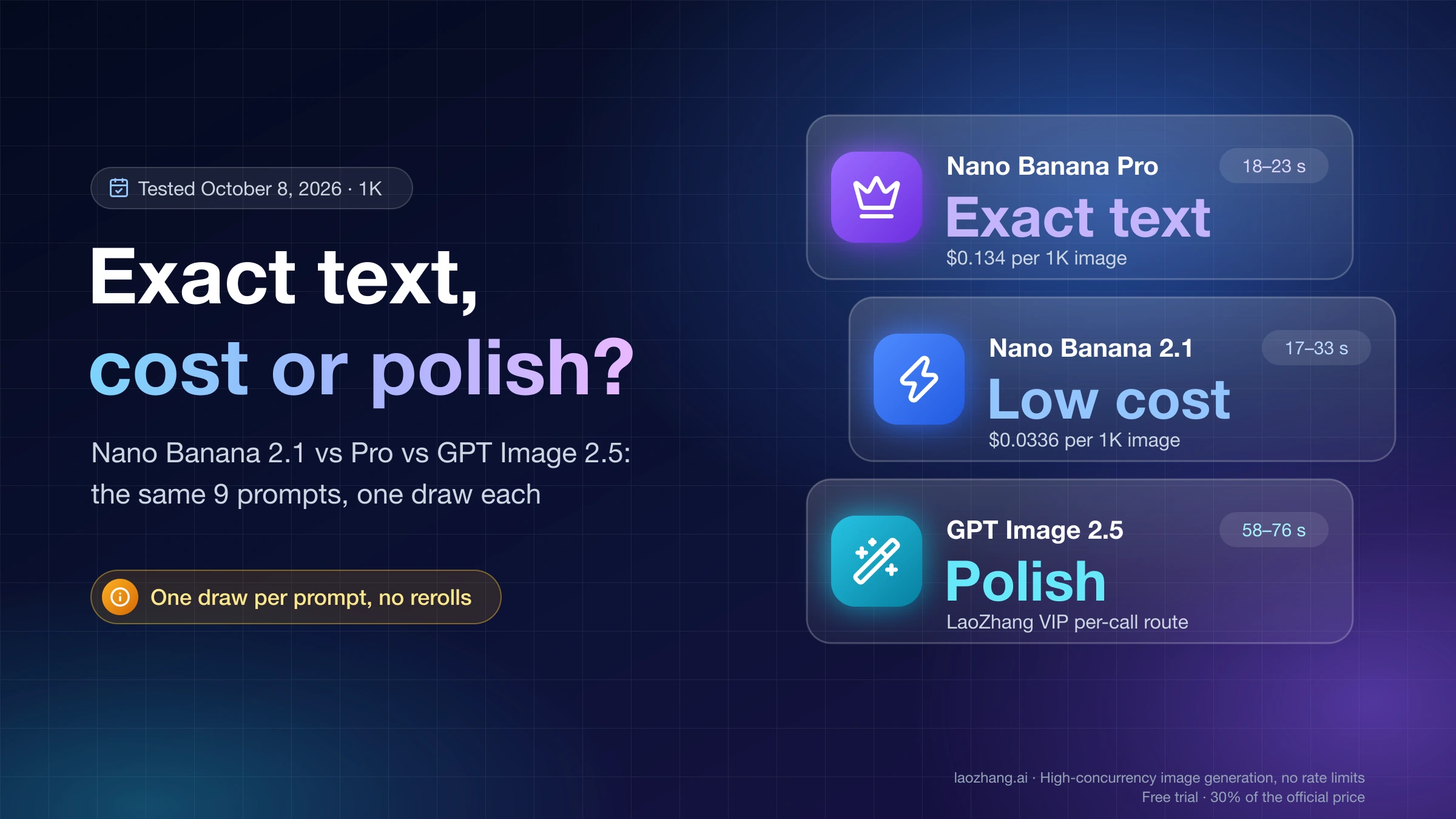
Same 9 prompts, one draw each at 1K: Pro and GPT Image 2.5 matched the requested wording; Nano Banana 2.1 slipped on text but costs a quarter of Pro.
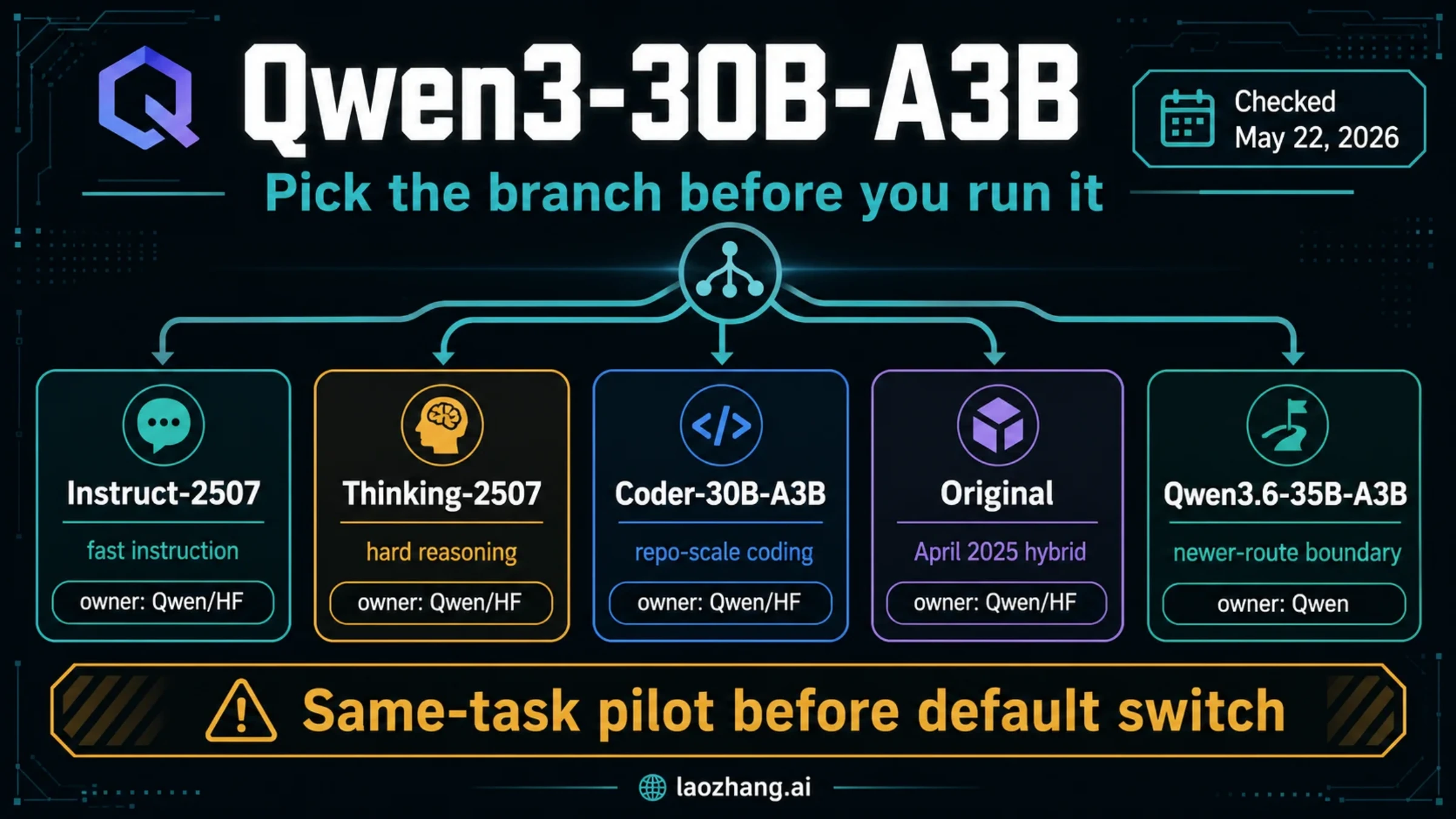
Use Instruct-2507 for everyday instructions, Thinking-2507 for reasoning-focused work, Coder for code, or the original when you need switchable thinking. An explicit model tag and a short context window make the first local check easier to interpret.
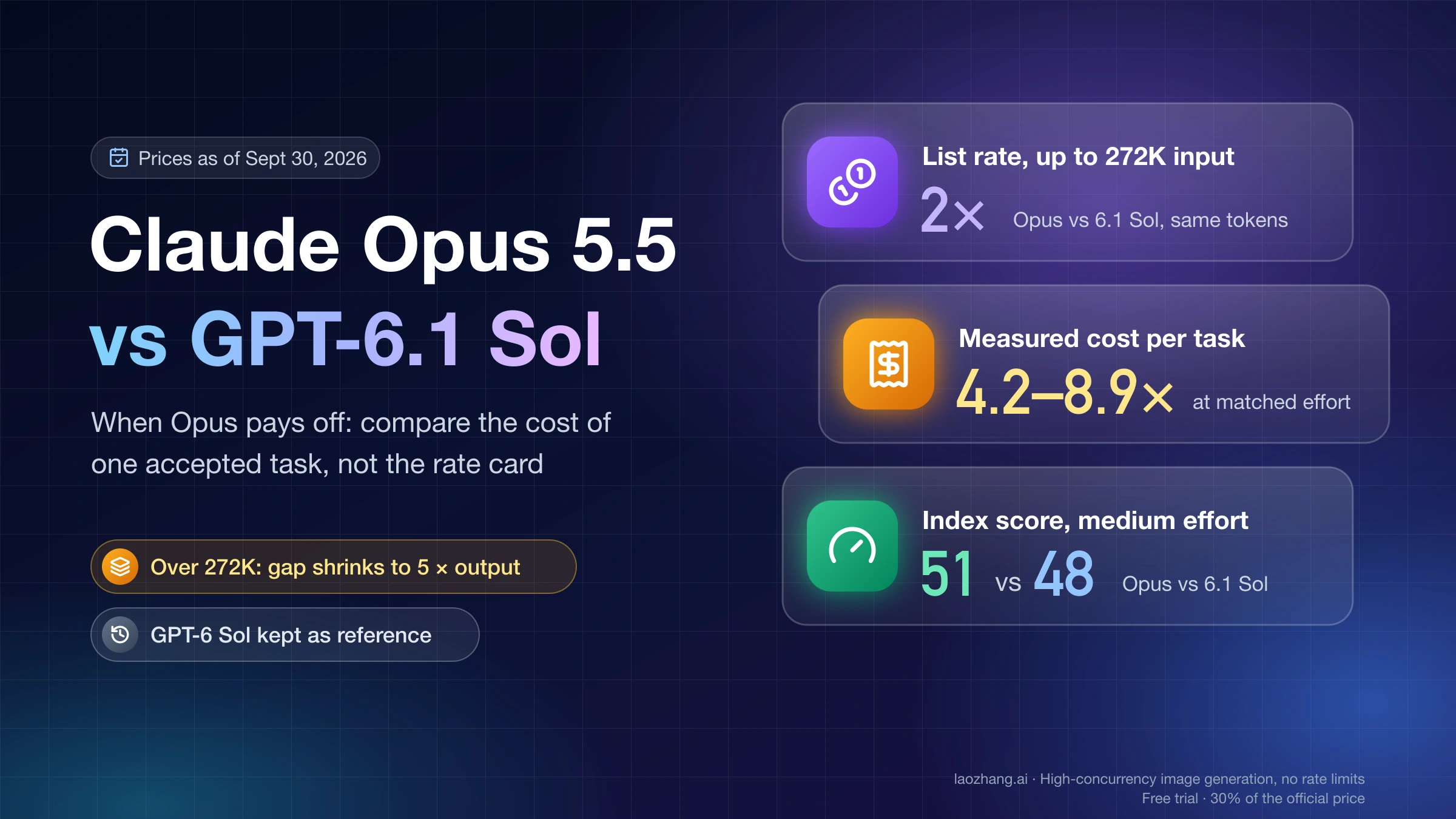
Against GPT-6.1 Sol, Opus 5.5 costs exactly 2x per token under 272K input and stays pricier above. Opus scores higher; pay only where it passes more tasks.
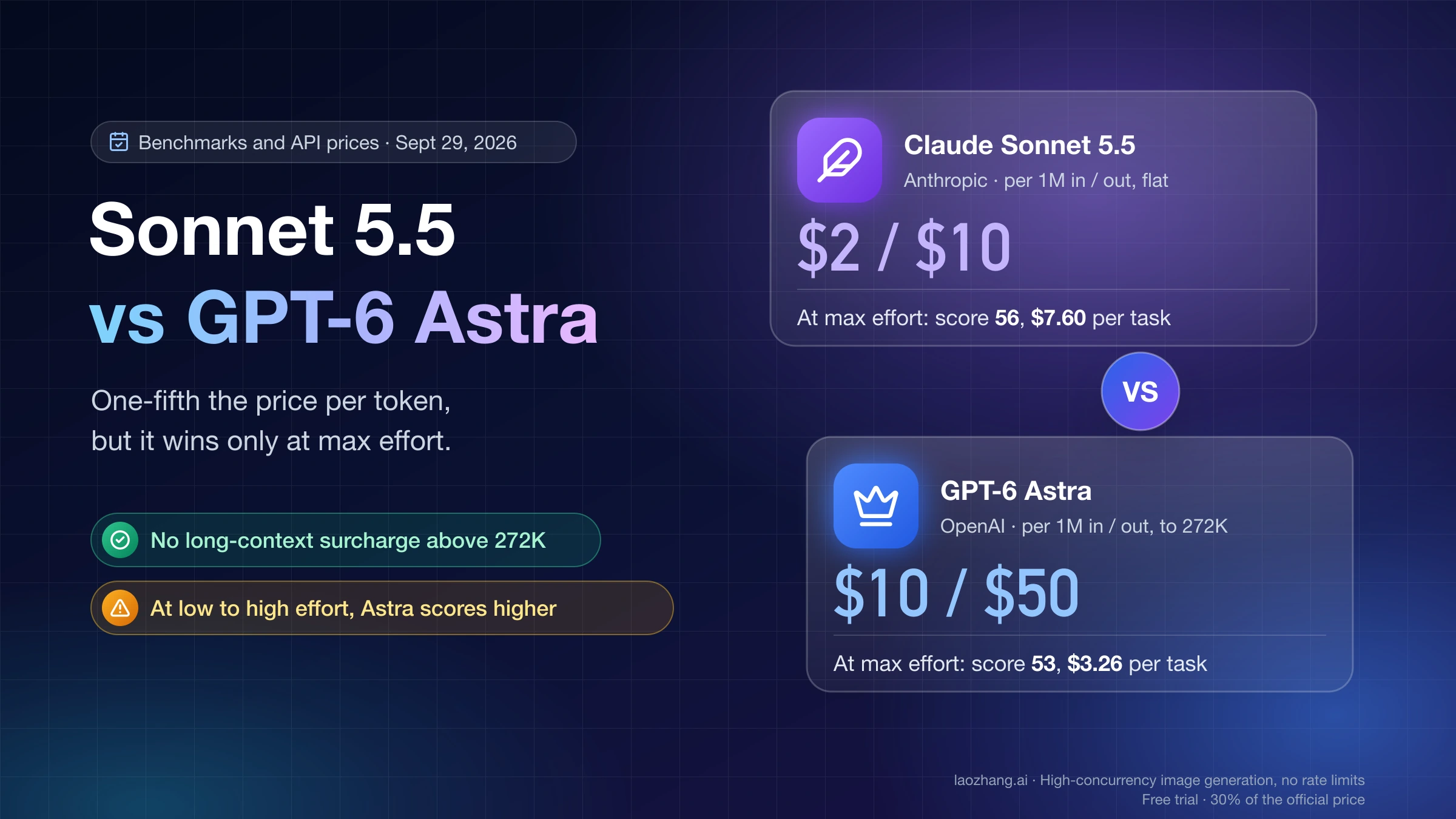
Sonnet 5.5 beats GPT-6 Astra only at max effort, at a higher cost per task. Astra leads from low to high, ties at xhigh; Sonnet's low rates win on long inputs.
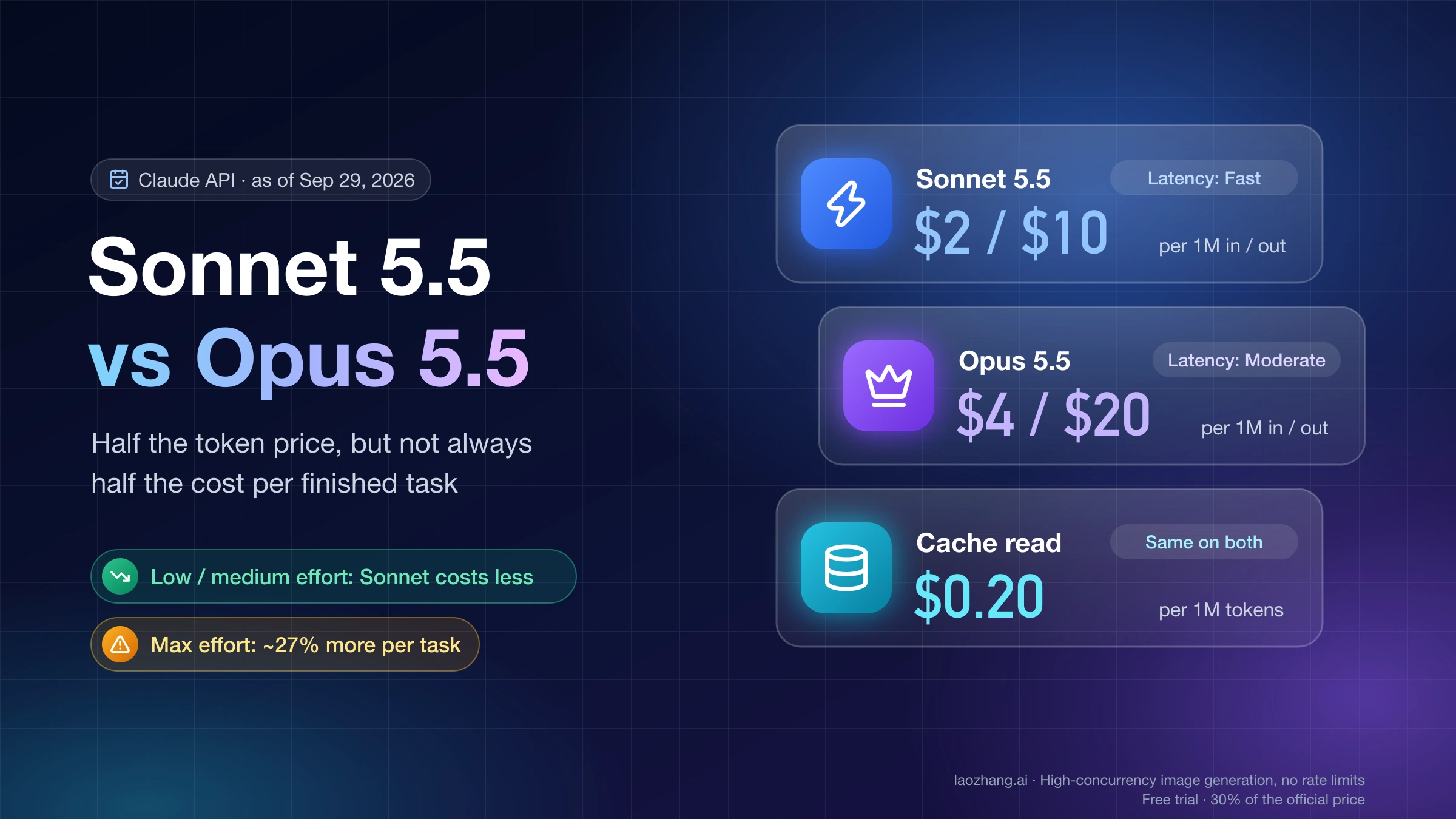
Sonnet 5.5 costs half as much per token and suits well-scoped work at low or medium effort. Push it to max effort and it can cost more per task than Opus 5.5.
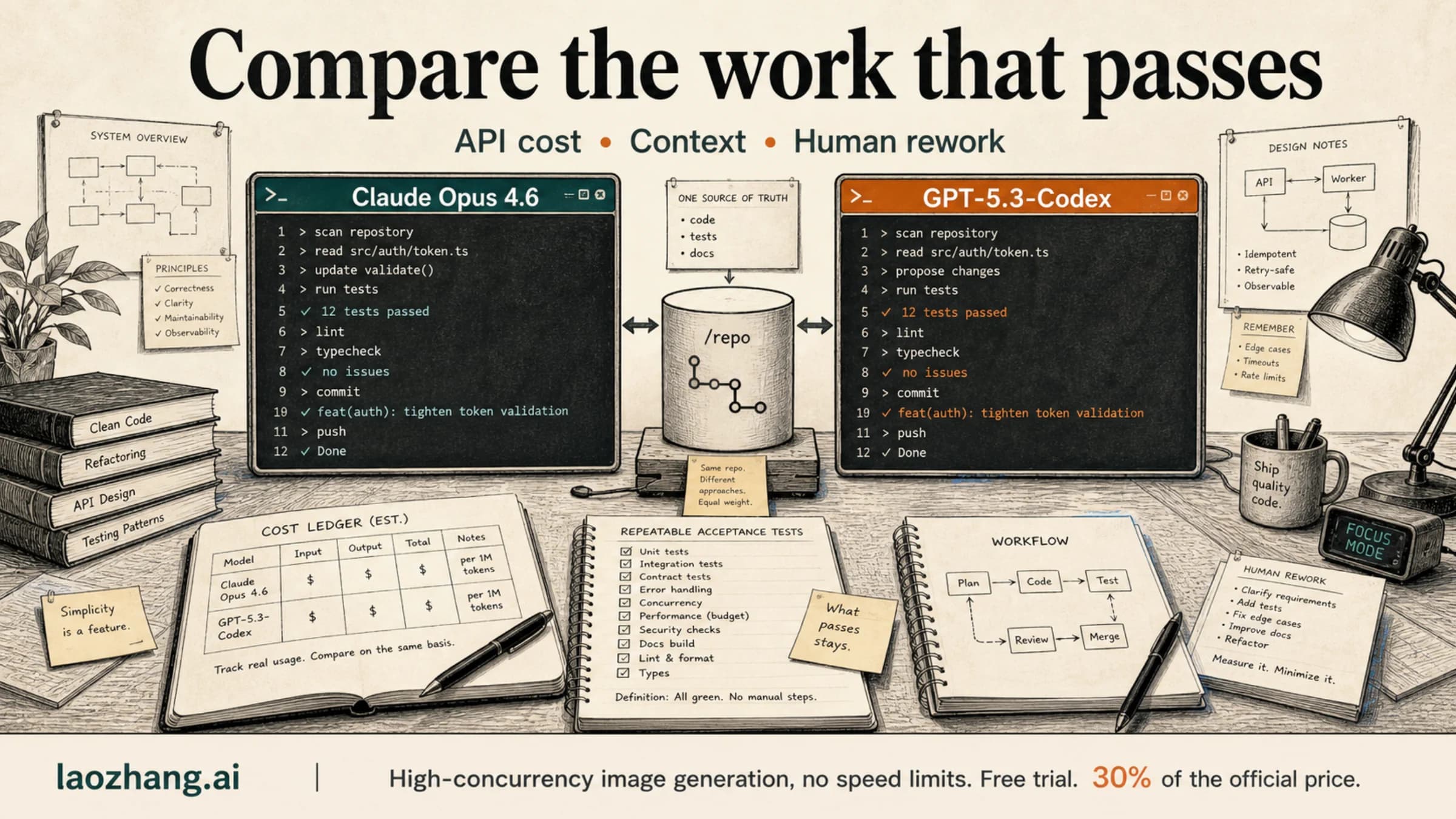
GPT-5.3-Codex has lower token rates; Claude Opus 4.6 has a larger context window. Compare both models' cache costs and test the same coding task before deciding which produces cheaper, acceptable work.
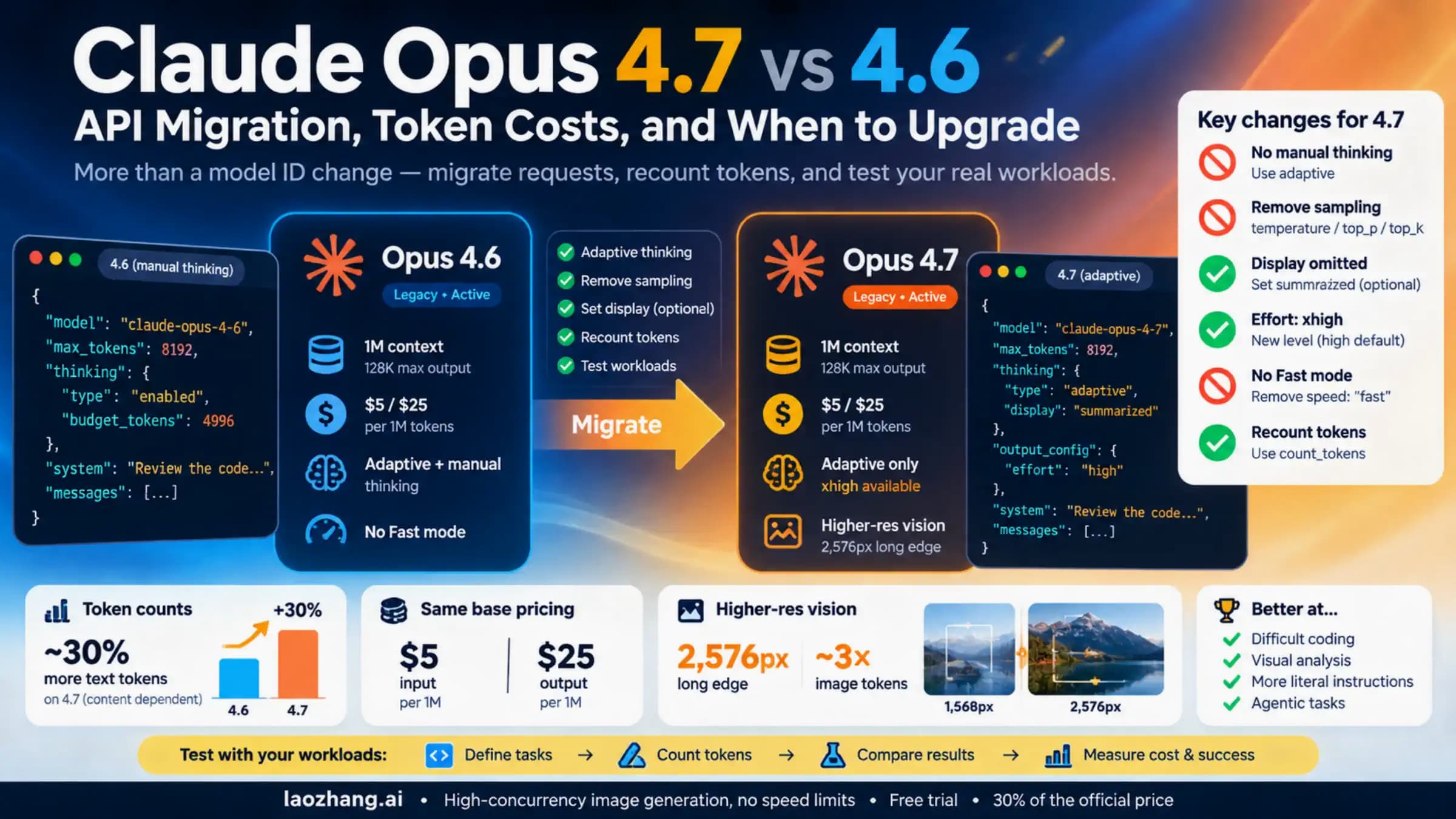
Moving an existing Claude Opus 4.6 integration to 4.7 changes thinking controls, sampling parameters, and token counts. Use these request examples and a controlled workload comparison to decide whether the upgrade pays off.
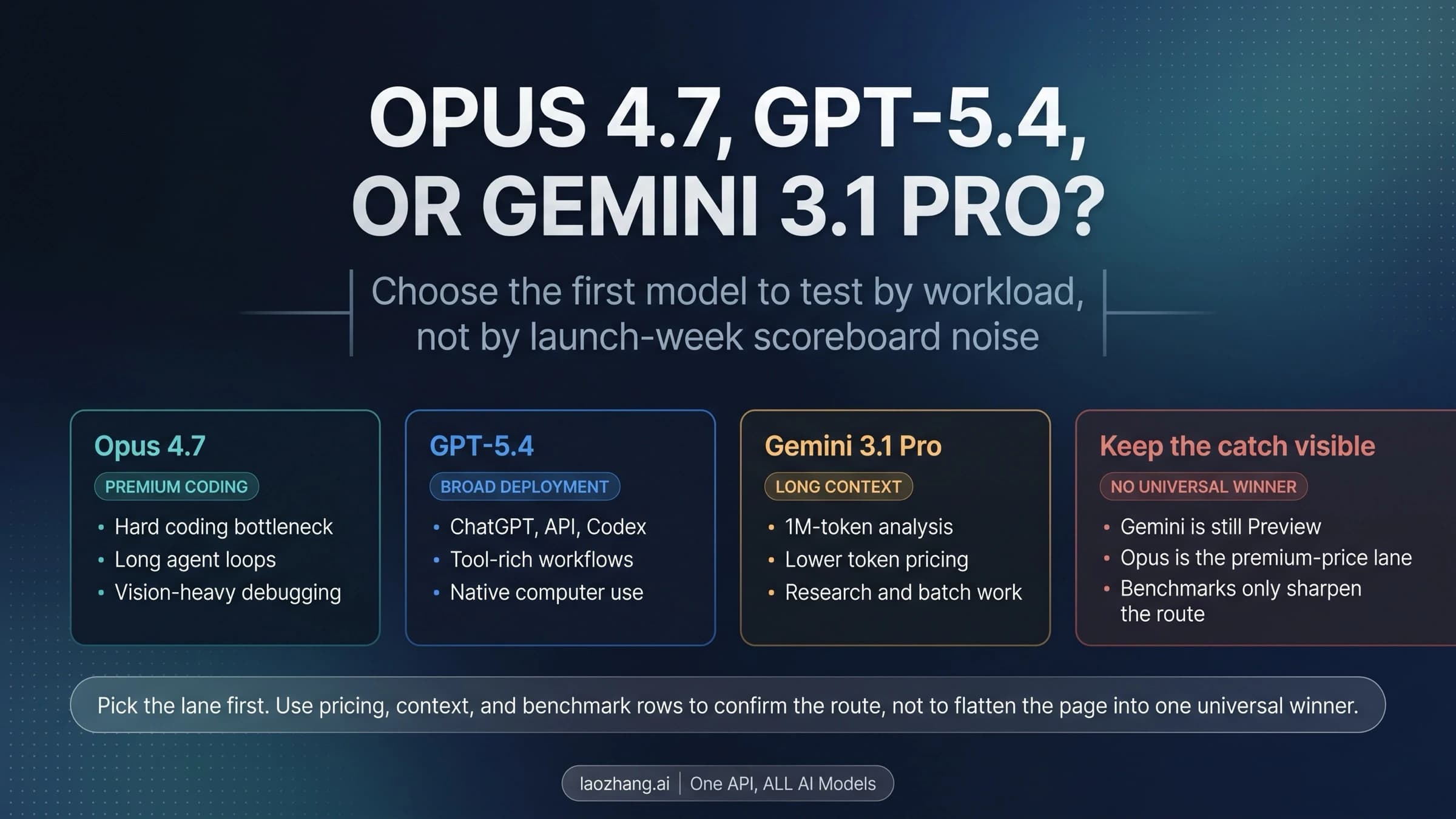
Compare the three APIs by input formats, context limits, tools, and request costs. Worked pricing examples show why the cheapest model changes with prompt size.
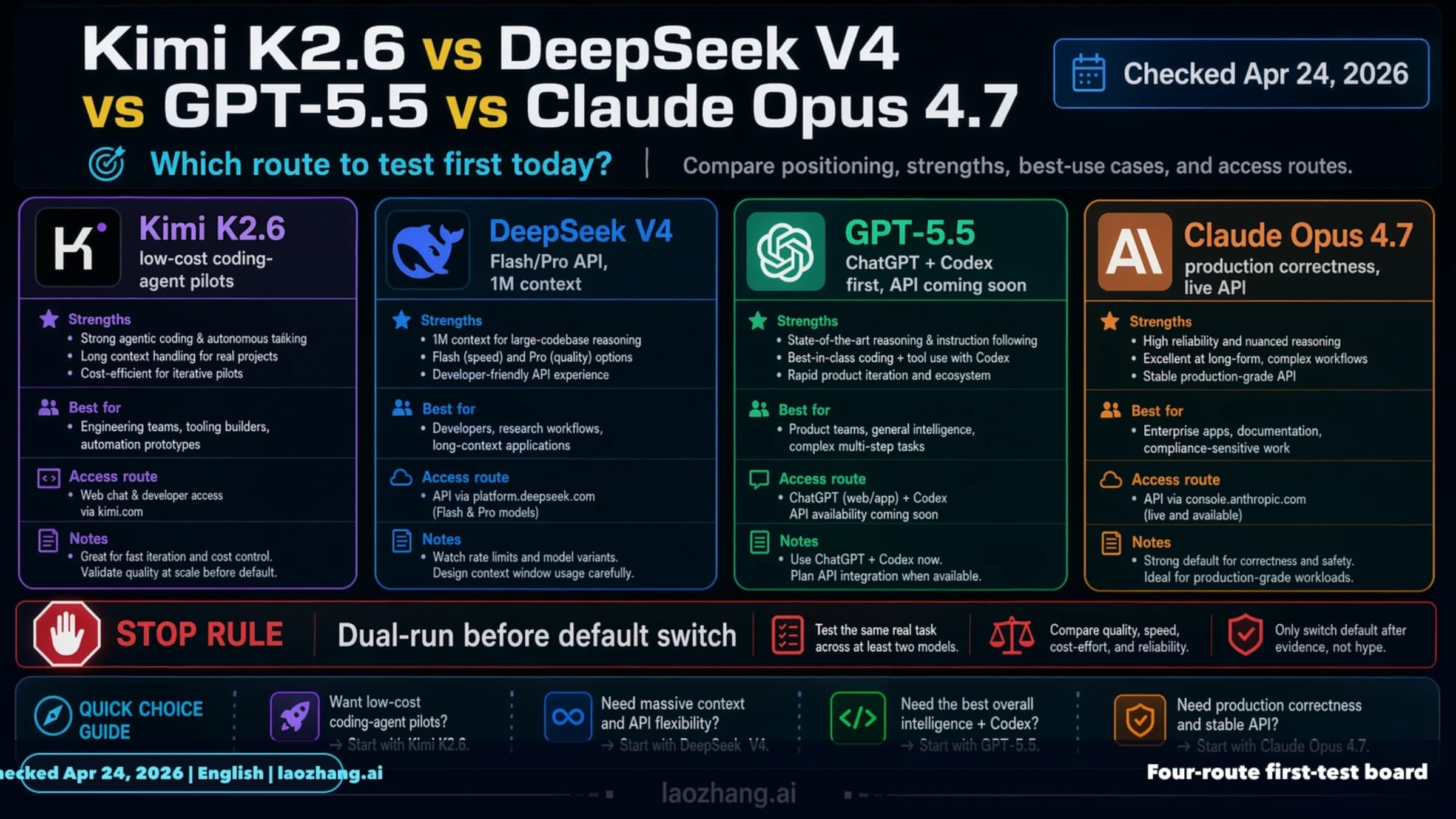
Compare Kimi K2.6, DeepSeek V4, GPT-5.5 and Claude Opus 4.7 APIs: context, current token prices, worked costs and tests for choosing a coding model.
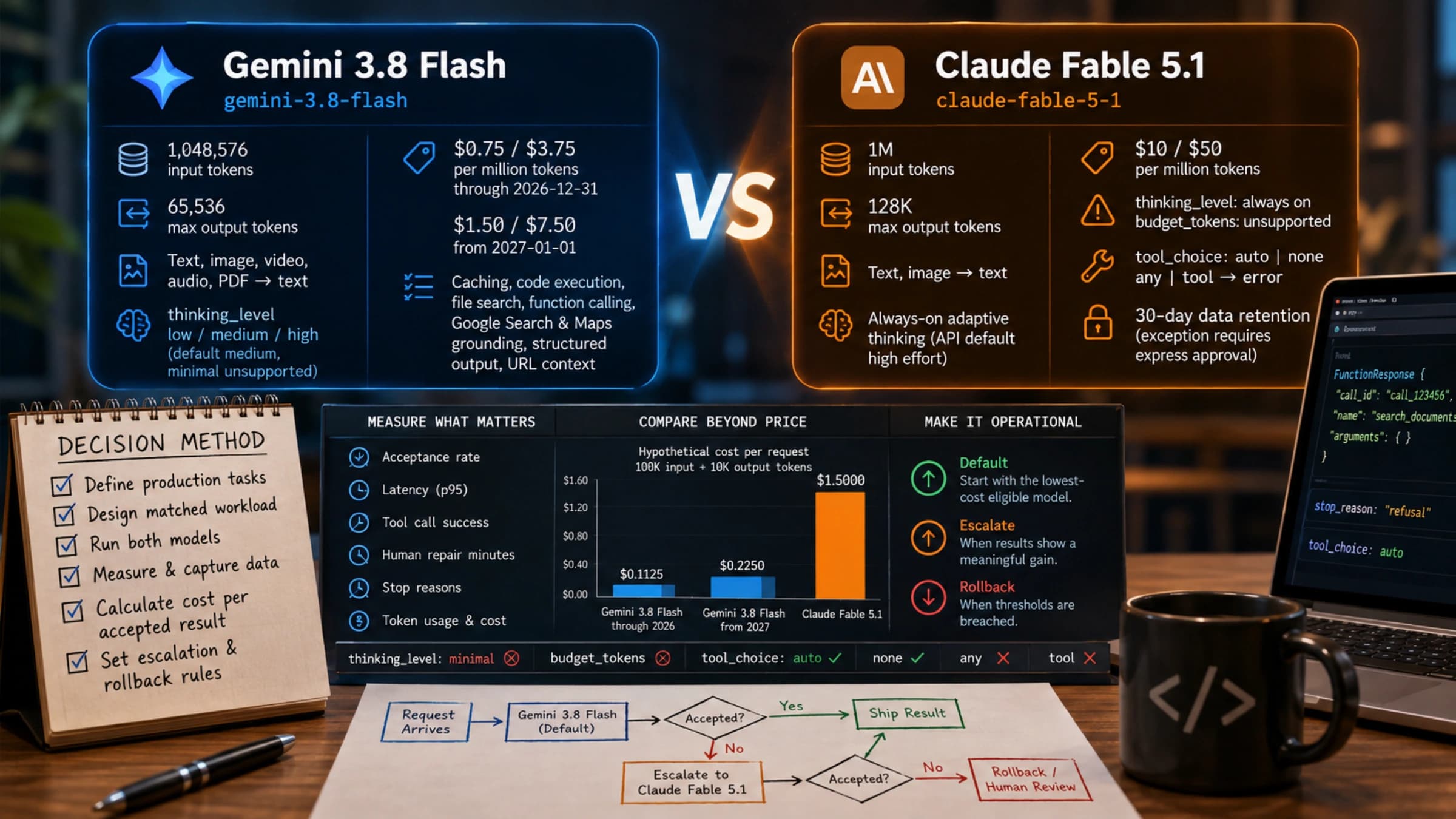
Gemini 3.8 Flash is the lower-cost first test for most high-volume workloads. Claude Fable 5.1 is a targeted challenger for demanding long-running work—but only your own acceptance, latency, and repair data can justify the premium.
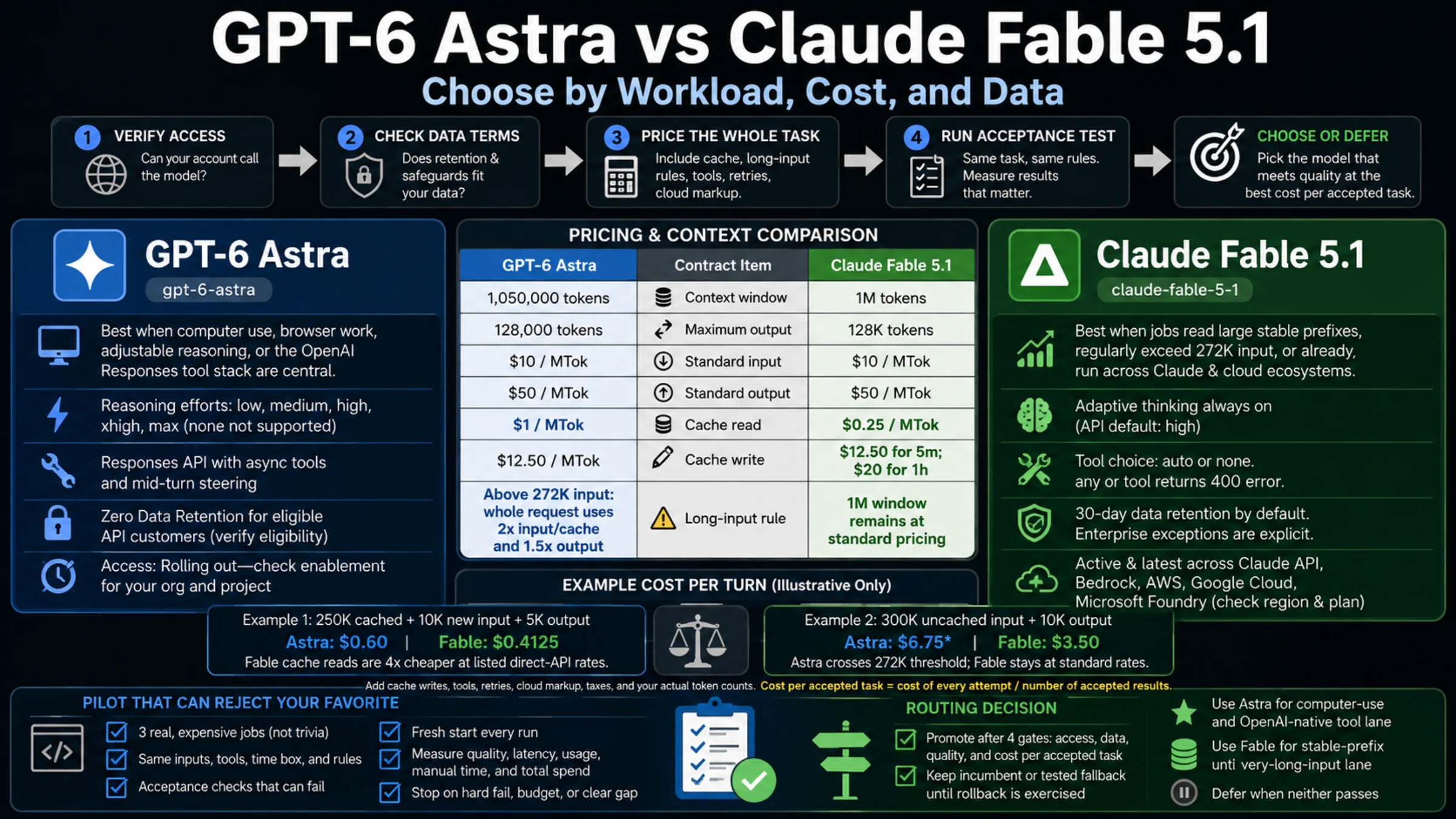
Astra and Fable share the same headline input and output rates, but cache pricing, long-context billing, access, and safeguards can reverse the cheaper or safer choice.
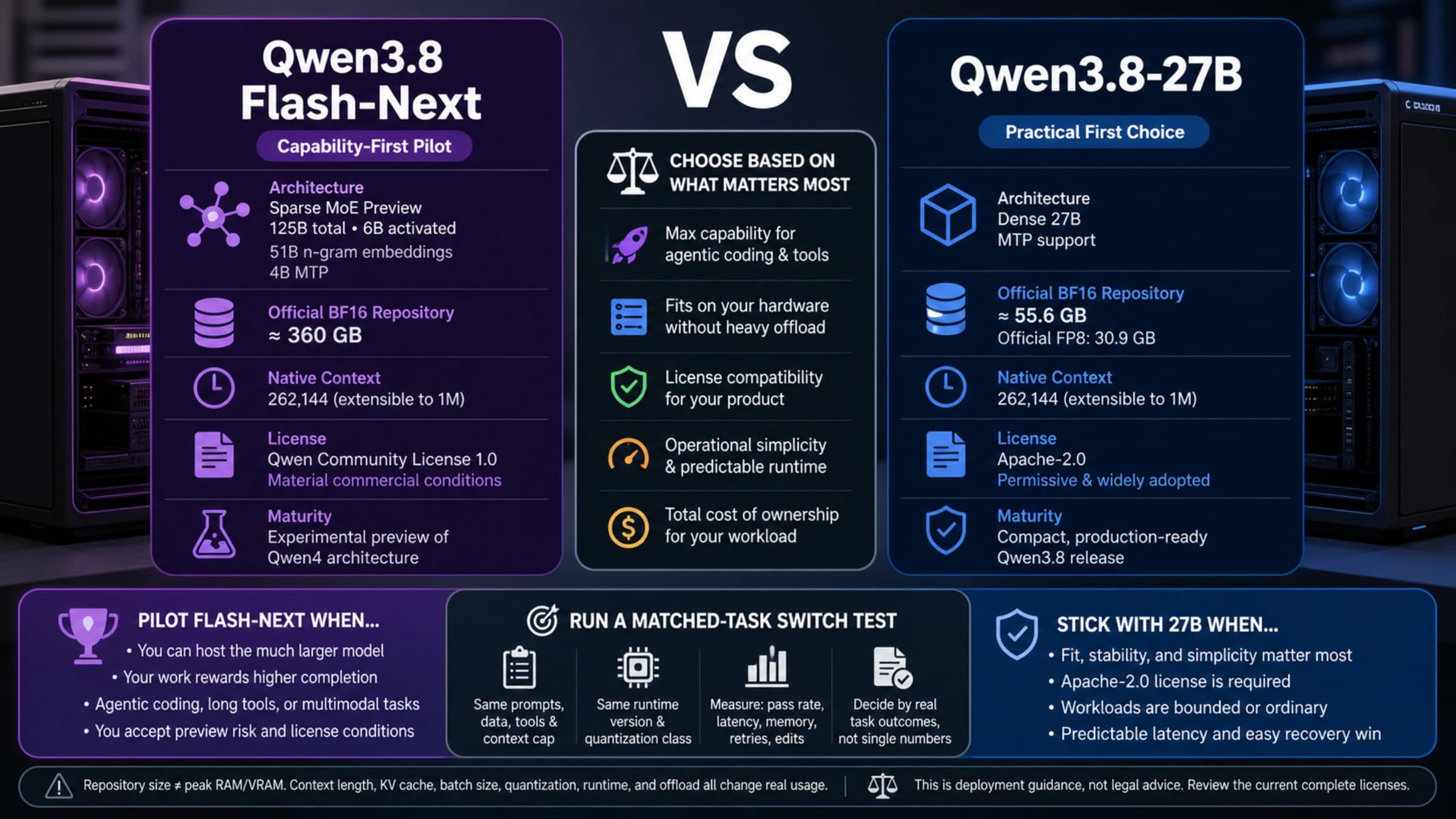
Start with Qwen3.8-27B when memory, a simpler serving setup, and Apache-2.0 matter most. Test Flash-Next if you can host its much larger weights and want to evaluate its reported advantages on coding and agent tasks.
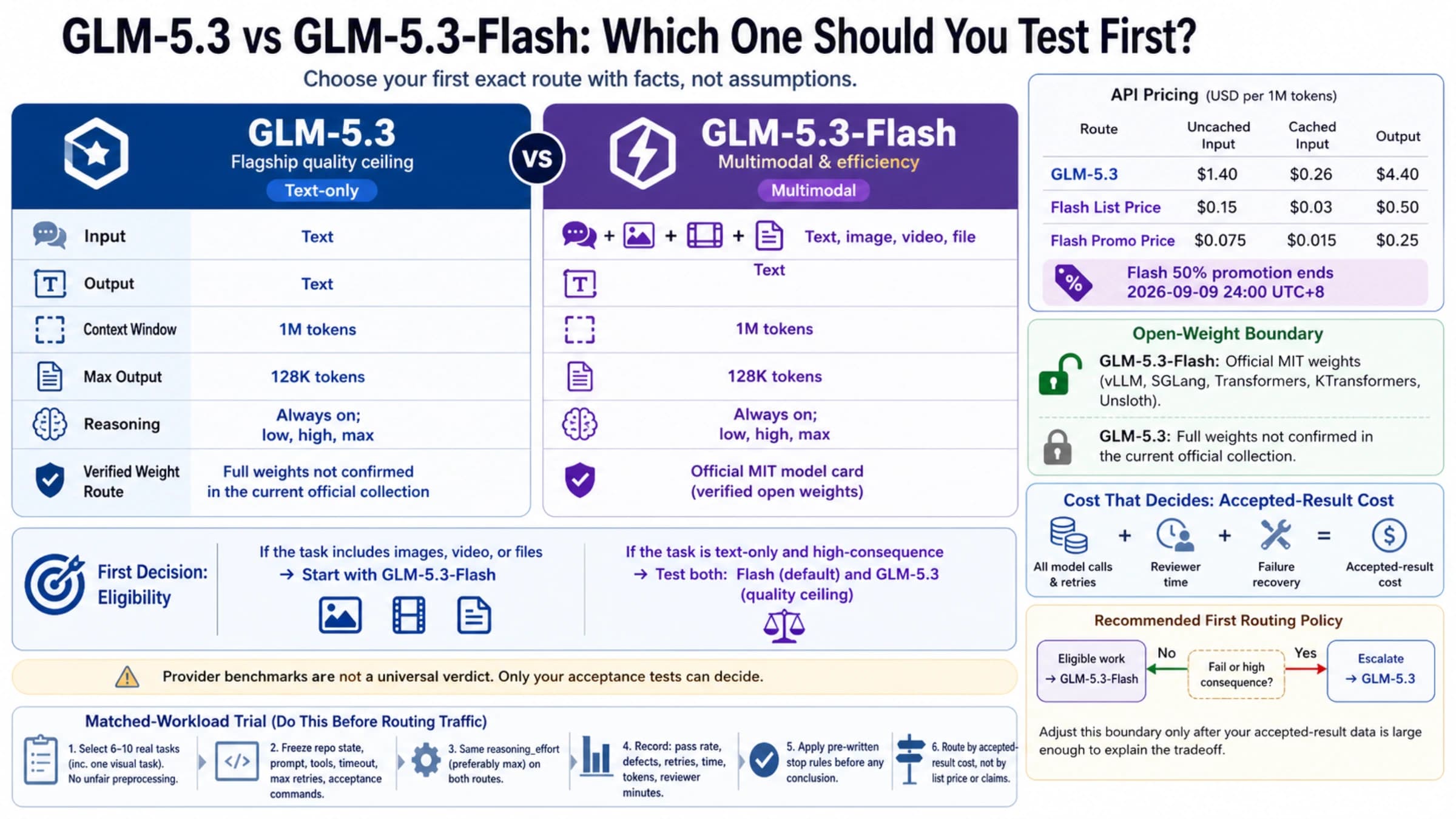
Start with GLM-5.3-Flash for multimodal or cost-sensitive work. Test GLM-5.3 alongside it for demanding text-only tasks, then choose by cost per accepted result.
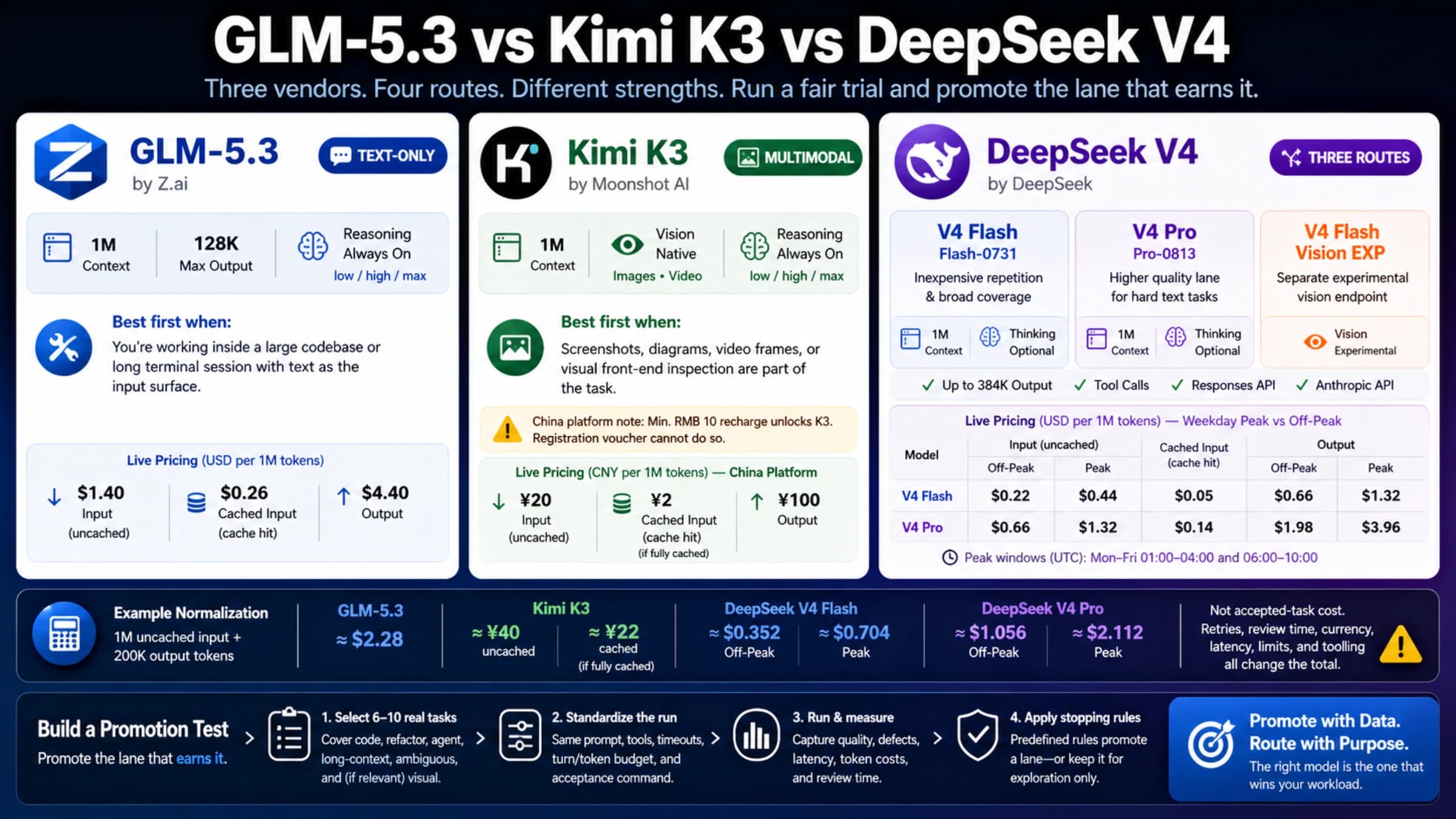
Start with GLM-5.3 for text-only long-horizon engineering, Kimi K3 when vision belongs inside the model loop, and DeepSeek V4 Flash when cheap repeated coverage matters; use V4 Pro as the harder-task control.