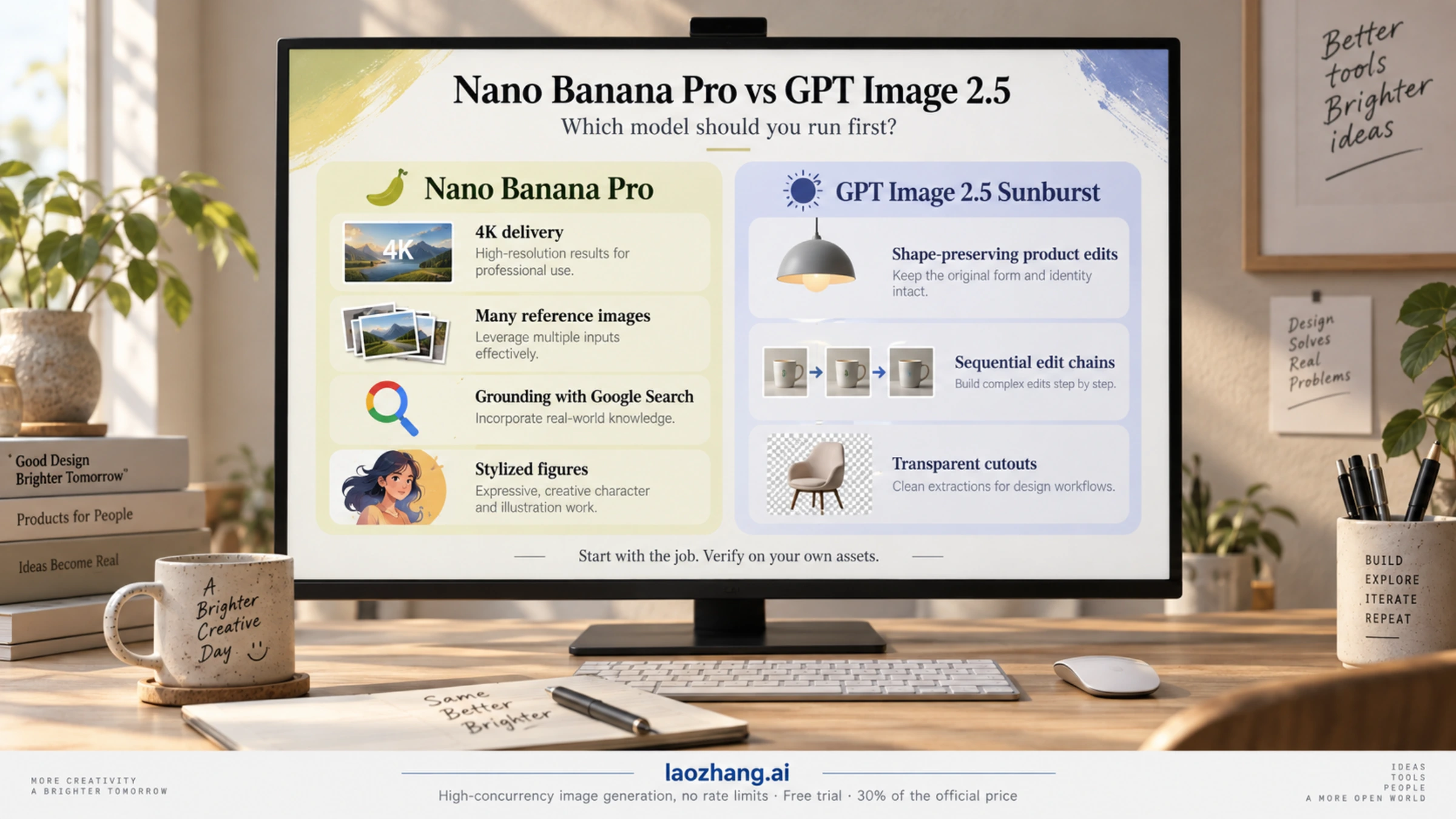
There is no universal winner between Nano Banana Pro and GPT Image 2.5 as of September 22, 2026, but there is a clear first choice for each kind of job. Start with GPT Image 2.5 Sunburst when a product's silhouette, hardware, or layout must survive an edit, and when an approved edit has to stay put through several more rounds. Start with Nano Banana Pro when you need a 4096-pixel deliverable, more than a handful of reference images, Grounding with Google Search, or a stylized conversion of a reference illustration. For plain text posters in English, the small published tests tie, so the cheaper run per usable image decides. None of the results below are our own tests: they come from the two vendors' documentation, two public leaderboards, and six published third-party tests, each quoted with the conditions it was run under.
The question is hard to settle because published comparisons rely on tiny samples. The largest English-language test uses four prompts at one generation each, and the "~99% text accuracy" figure that circulates for Nano Banana Pro has no published test behind it. The tests that do report results disagree with each other because they tested different jobs, which is itself the most useful finding.
Which models this comparison covers
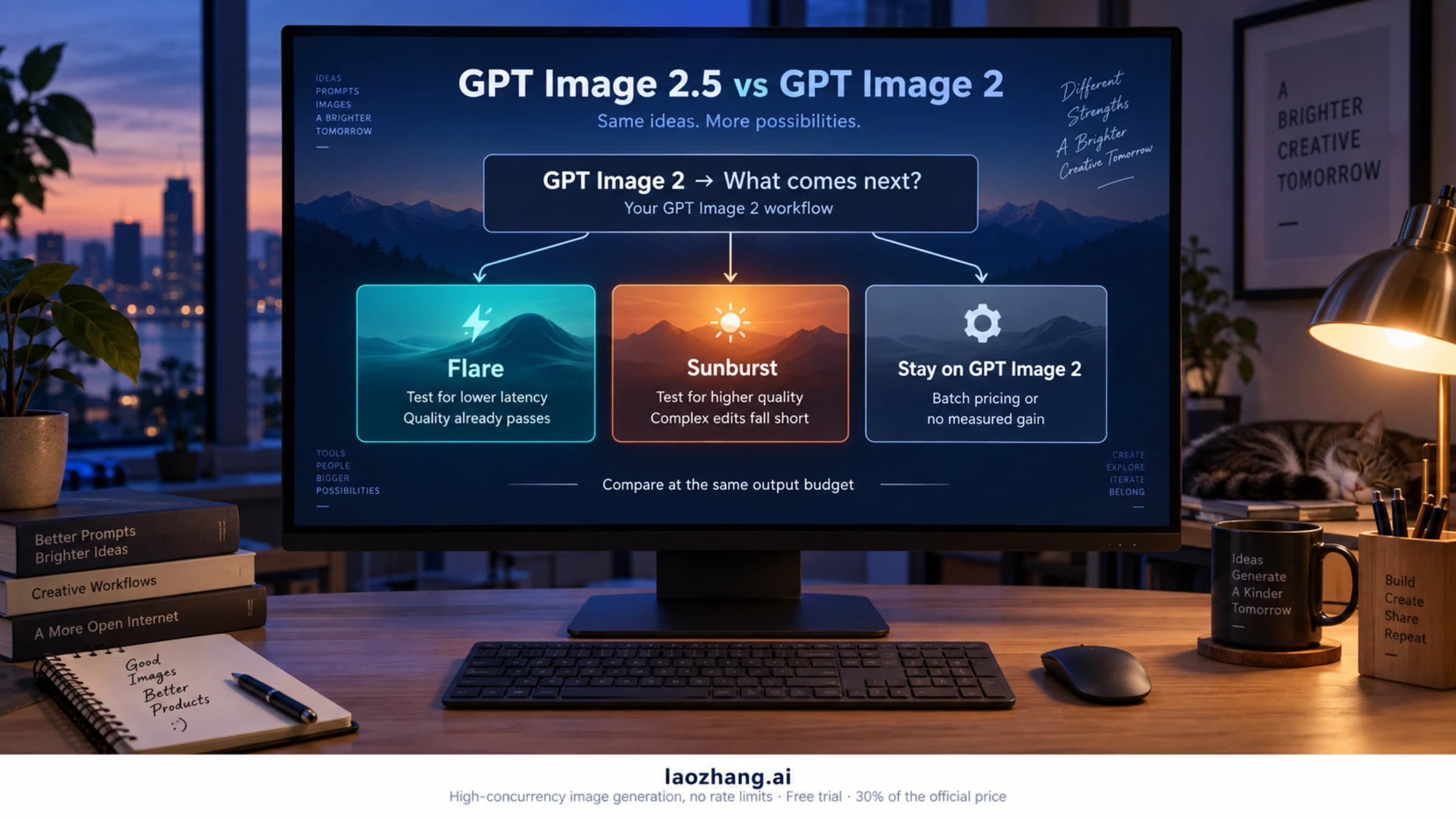
"GPT Image 2.5" is two API models and one ChatGPT feature. The API IDs are gpt-image-2.5-flare (snapshot gpt-image-2.5-flare-2026-09-08) and gpt-image-2.5-sunburst (gpt-image-2.5-sunburst-2026-09-08); an unsuffixed gpt-image-2.5 is not a model ID. OpenAI's prompting guide calls Flare "the small model, optimized for speed, with image quality comparable to GPT Image 2" and Sunburst "the base model, optimized for quality, with higher image quality than GPT Image 2", while its launch post says Flare delivers "higher-quality images than GPT‑Image‑2 at 50% lower latency". Those two descriptions of Flare do not fully agree; both are OpenAI's words, and neither is a measurement against Google. ChatGPT Images 2.5 is the consumer feature, and two of the tests below used it rather than the API. Flare model page · Sunburst model page · Launch post
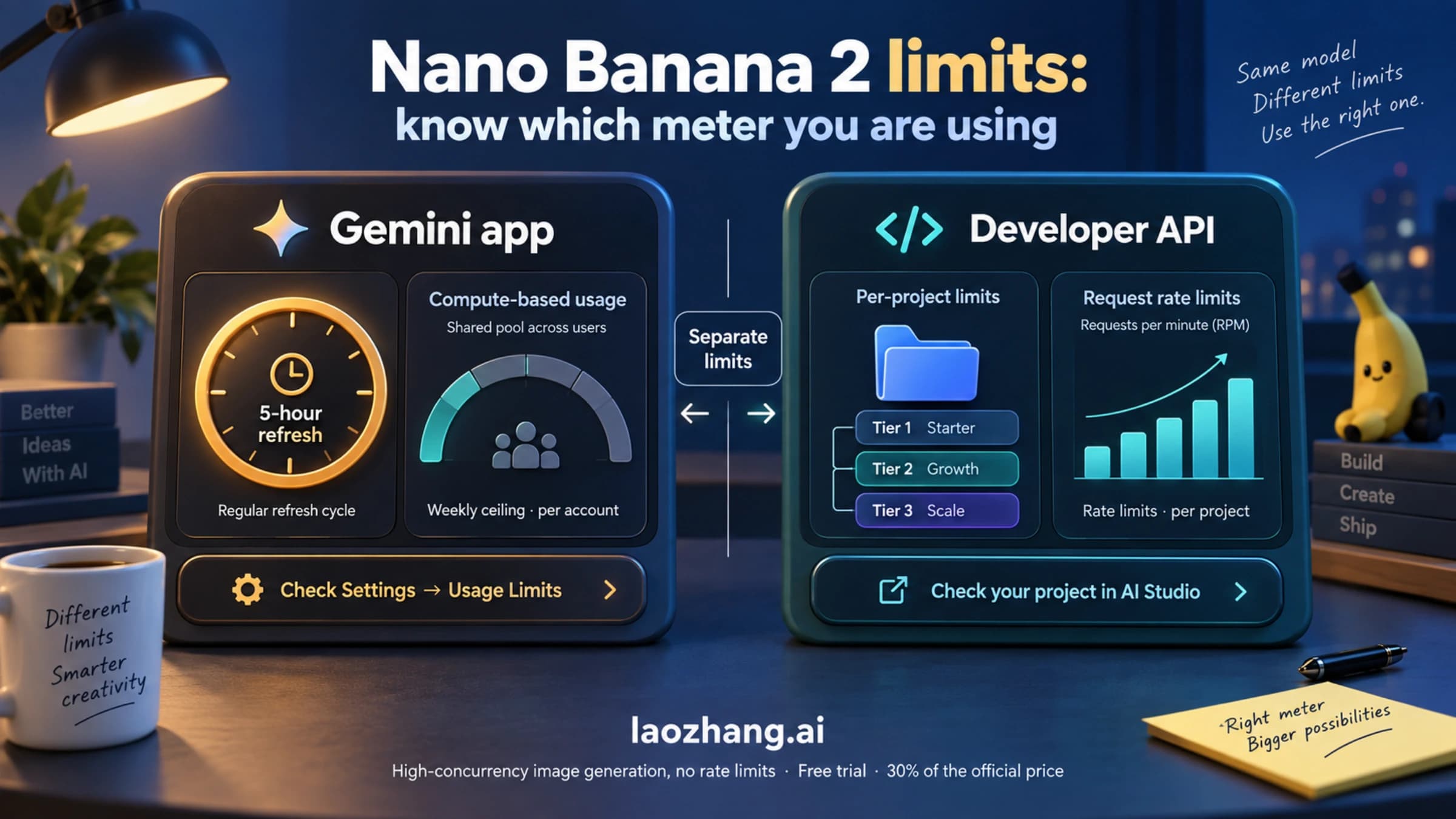
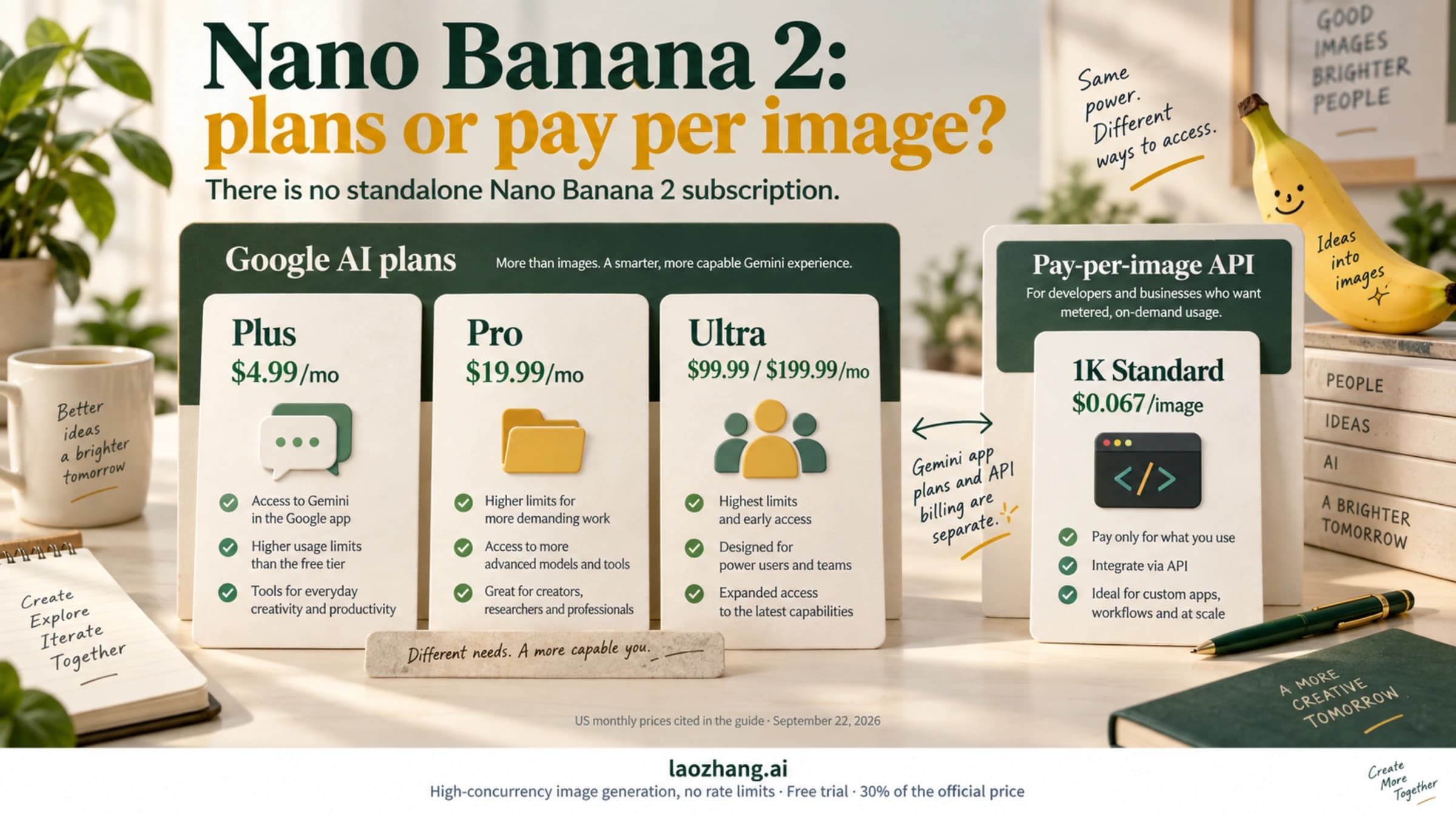
"Nano Banana" is four Google models. The object here is Nano Banana Pro, API ID gemini-3-pro-image, generally available, which Google positions as "the premium choice for the most complex visual tasks" and "designed for professional asset production and complex instructions". Its cheaper siblings are Nano Banana 2 (gemini-3.1-flash-image, $0.067 per 1K image, and the model Google says "should be your go-to"), Nano Banana 2 Lite, and the original Nano Banana (gemini-2.5-flash-image), which shuts down on October 2, 2026. Many published comparisons actually pair 2.5 with Nano Banana 2; if that is the comparison you need, see our Nano Banana Pro vs Nano Banana 2 breakdown. Gemini 3 Pro Image model page
"Nano Banana 2.5" is not a product. Google's pricing, model, and image-generation pages list no such model; the name comes from an unconfirmed Arena entry under the codename "spicy-mayo", with no announcement, price, or API specification. Nothing in this article applies to it.
First pick by task
The table gives the model to run first and the published result behind it. "Run first" means the model most likely to produce an acceptable image on the first attempt for that job, based on what has been published; it is where to start a test on your own assets, not a guarantee.
| Job | Run first | Why, with the source and its conditions |
|---|---|---|
| Product edits where shape, hardware, or layout must not change | GPT Image 2.5 Sunburst | Ima Studio's pendant-lamp test (one SKU, three 5-stage chains per model, Sunburst 1024×1024 high vs Pro 1K): Sunburst kept the shallow wide shade 3/3; Pro deepened it into a rounder dome 3/3 and the drift persisted through later stages |
| A chain of sequential edits | GPT Image 2.5 | Danawa's five-round edit sequence in the ChatGPT and Gemini apps: Pro brought back a suitcase deleted earlier; Images 2.5 kept prior edits. Ima Studio saw Pro's stage-one geometry drift carried downstream |
| English text on posters and packaging | Either; decide on cost per usable image | Text spelled correctly on both in Ima Studio (30 outputs) and JXP (café sign, skincare label; Flare medium). HiAPI's two-prompt sample had Flare print "NIGHT SHIFT" once as asked and Pro add an extra "SHIFT"; the author states no success rate can be drawn from four images |
| Non-Latin text | Test Pro before relying on it | hsworking.com's Japanese B2B thumbnail test (apps, small sample) reports Pro failing the first quality gate twice with broken Japanese; Danawa reports both models clean on Korean poster text |
| Composites with many references, or facts the image must get right | Nano Banana Pro | Documented caps: up to 6 object images, 5 character images, 3 style references (14 total) plus Grounding with Google Search. OpenAI documents multi-image edits but no maximum count. Note Danawa's one three-character composite favored Images 2.5 for unifying style, with Pro adding elements not in the sources |
| 4K delivery | Nano Banana Pro | Google's 4K tier is 4096 px; OpenAI caps any edge at 3840 px and 8,294,400 total pixels, so its largest square is 2880×2880. JXP observed exactly this: 4096×4096 vs 2880×2880 |
| Stylized or figure conversion from a reference illustration | Nano Banana Pro | Illustrator てんねん's six-model figure test (one prompt written for Pro, best of 4 per model, six 5-point criteria): Pro 30/30, GPT-Image-2.5 24/30. The author notes 2.5 kept the source's composition, face, and armor accurately but looked like cel-shaded 3DCG |
| Transparent cutouts | GPT Image 2.5 | background: "transparent" with PNG or WebP is documented by OpenAI; Google's image-generation page does not document alpha output |
| Non-urgent volume | Nano Banana Pro Batch, or GPT Image 2 Batch | Google Batch halves Pro to $0.067 (1K/2K) and $0.12 (4K); OpenAI's Batch tab lists only gpt-image-2, and both 2.5 model pages mark v1/batch unsupported |
Two patterns run through the tests. Where the job was "change one thing, keep everything else", 2.5 preserved more (Ima Studio, Danawa). Where the job was "reinterpret this reference in a new style", Pro was preferred (てんねん). Danawa's summary line fits both: Images 2.5 tends to add unrequested copy or effects to "finish" a piece, while Pro stays inside the instruction but can look plain. For a product edit the first behavior is a defect; for a poster concept it may be the point.
If you have both models available today and need one rule: run Sunburst first for approval-critical edits, run Pro first for 4K, many references, or stylization, and run both on a poster job because the published results are a tie at sample sizes too small to separate them.
Capability differences that no prompt fixes
These are documented limits, so they decide before quality does.
| Capability | GPT Image 2.5 (Flare / Sunburst) | Nano Banana Pro (gemini-3-pro-image) |
|---|---|---|
| Largest output | Any edge up to 3840 px, 655,360–8,294,400 total pixels, width and height multiples of 16, aspect 1:3–3:1; above 2560×1440 is experimental | image_size 1K, 2K, 4K (4K = 4096 px); 10 fixed aspect ratios from 1:1 to 21:9 |
| Largest square | 2880×2880 (calculated from the pixel cap) | 4096×4096 |
| Quality control | low, medium, high, xhigh, max, auto; OpenAI: "the same quality label does not imply the same image quality or response time across models" | None; the model always runs its own reasoning, generating up to two interim images that are visible but not billed. Thinking cannot be disabled |
| Reference images | Multi-image edits via image[]; guide example uses 4 inputs; image plus mask up to 50 MB; no documented maximum | Up to 6 object images with high fidelity, 5 character images, 3 style references, 14 total |
| Web knowledge | Not documented | Grounding with Google Search |
| Transparent output | background: "transparent" with output_format png or webp | Not documented |
| Multi-turn editing | previous_response_id in Responses, or pass the last output as the next edit input | previous_interaction_id |
| Batch pricing | Not offered for either 2.5 model today (GPT Image 2 only) | Yes, half of Standard |
| Watermark | Not documented | All outputs carry a SynthID watermark |
| Lifecycle | No deprecation entry for either 2.5 model or GPT Image 2 as of September 22 | Model page "Latest update: November 2025", GA |
Sources: OpenAI image generation guide, Gemini image generation guide, OpenAI deprecations. "Not documented" means the vendor's page does not describe the feature, not that it is impossible.
Two of these rows carry real weight. The 4K row is a hard ceiling: if a client specifies 4096×4096, OpenAI cannot deliver it natively, and JXP's macro shot is simply that spec playing out. The reference row matters for character and brand work, where Google publishes exact counts per category and OpenAI leaves the count undocumented; if your workflow depends on five character references plus a style board, only Google tells you in writing that it will accept them. Our Nano Banana Pro 4K guide covers the aspect-ratio and size parameters in detail.
Neither vendor documents a returned edit mask or changed-region map, so "did it touch anything else?" has to be checked by you, by comparing the output with the source.
What each usable image costs at matched sizes
Prices are official Standard rates read on September 22, 2026, output only. OpenAI bills tokens ($30 per million image-output tokens for all three of its image models; text input $5, image input $8 per million); the per-image figures are its own calculator's estimates for explicit quality and size. Google publishes fixed token counts per image: 1,120 tokens ($0.134) for 1K or 2K, 2,000 tokens ($0.24) for 4K, plus $2 per million input tokens and $12 per million for any text or thinking output. Compare at the same pixel size and an explicit quality; a label like high has no counterpart on Google's side. OpenAI pricing · OpenAI cost calculator · Gemini pricing
| Output | GPT Image 2.5, Standard (Flare and Sunburst share one estimate) | Nano Banana Pro, Standard | Nano Banana Pro, Batch |
|---|---|---|---|
| 1024×1024 | low $0.0059 · medium $0.0132 · high $0.0527 · xhigh $0.0937 · max $0.2107 | 1K: $0.134 | $0.067 |
| 2048×1152 | low $0.0047 · medium $0.0110 · high $0.0424 · xhigh $0.0753 · max $0.1695 | 2K tier (2048-px class, not the identical pixel count): $0.134 | $0.067 |
| 4K | No comparable size; the largest OpenAI outputs are 3840×2160 or 2880×2880, and the calculator offers no reading at those sizes, so there is no official per-image figure to place here | 4096 px: $0.24 | $0.12 |
Read across the 1024×1024 row: Nano Banana Pro's $0.134 sits between 2.5 xhigh ($0.094) and max ($0.211). At high, 2.5 is roughly 40% of Pro's Standard price; at max, it is about 1.6 times. Google's Batch price undercuts everything above 2.5 high, but only for jobs that can wait. So the cost answer depends on the setting: 2.5 is cheaper when high is enough for the job, Pro at 1K or 2K is cheaper than 2.5 max, and Batch Pro is the cheapest way to buy Google's quality when latency does not matter.
Three things move the bill beyond these estimates. Every reference image you send adds image-input tokens on both sides. On OpenAI, each streamed partial image adds 100 output tokens, and auto quality cannot be estimated in advance. On Google, thinking text is billed at $12 per million tokens on top of the image, and Grounding with Google Search is billed on top when used. Then there are retries, which is why the number that matters is cost per accepted image: total billed spend for the batch, including inputs, partials, retries, and thinking text, divided by the images you actually shipped. Ima Studio's platform credits illustrate how far this can swing from list price: Sunburst cost 31 credits per stage against 10 for Pro on their platform, yet they still recommend Sunburst for approval-critical silhouettes because a cheaper image that changes the product is not a usable image.
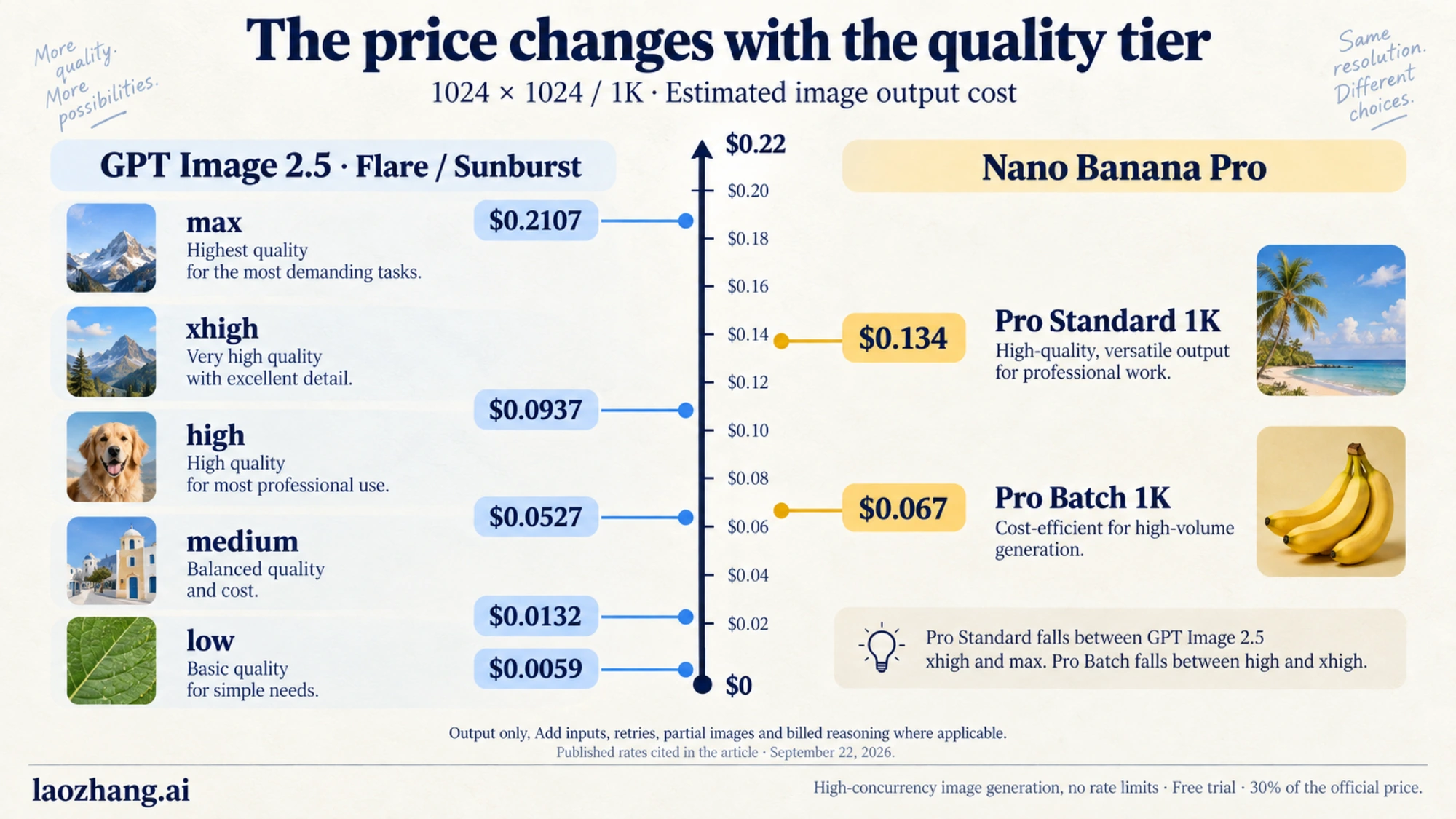
For a worked example, 10,000 single-output 1K images with no retries would be about $527 on 2.5 high, $1,340 on Pro Standard, $670 on Pro Batch, and $2,107 on 2.5 max. That is arithmetic on the list rates, not a bill. Our GPT Image 2.5 API pricing guide and Nano Banana Pro pricing guide go through each vendor's token math separately.
What the leaderboards show, and why the hands-on tests disagree with them
Both public leaderboards rank OpenAI's 2.5 models above Nano Banana Pro, and both flag the 2.5 entries as early.
| Board (read September 22) | GPT Image 2.5 Sunburst | GPT Image 2.5 Flare | GPT Image 2 | Nano Banana Pro |
|---|---|---|---|---|
| Arena text-to-image (displayed "last updated Sep 7, 2026") | #1, 1421 ±13, 3,149 votes, Preliminary | #2, 1399 ±13, 2,856 votes, Preliminary | #3, 1381 ±4, 78,731 votes (medium) | #14, 1246 ±3, 152,220 votes (2K entry); #16, 1232 ±5 (preview entry) |
| Arena image edit | #1, 1520 ±9, 6,704 votes, Preliminary | #2, 1491 ±9, 5,676 votes, Preliminary | #3, 1461 ±3, 235,928 votes | #9, 1390 ±3, 556,580 votes (2K entry) |
| Artificial Analysis text-to-image | #1, 1197 ±9, 13,401 comparisons (max) | #2, 1190 ±9 (max) | #3, 1171 ±9 (high) | #10, 1100 ±8, 15,977 comparisons |
| Artificial Analysis editing | #1, 1180 ±8 (max) | #2, 1161 ±8 (max) | #5, 1122 ±9 (high) | #13, 1096 ±8 |
Sources: Arena text-to-image, Arena image edit, Artificial Analysis text-to-image, Artificial Analysis editing.
Three caveats belong next to these numbers. The Arena 2.5 entries have roughly 3,000–7,000 votes against more than 150,000 for Nano Banana Pro, and Arena marks them Preliminary; the displayed update date also precedes OpenAI's September 8 launch, which is quoted as shown. Artificial Analysis tested 2.5 at max, the 7,024-token setting that costs $0.21 per 1024×1024 image, so its price column ($210.70 per thousand) describes that setting, not a high run at a quarter of the cost. And none of these boards measures speed or cost.
The disagreement with the hands-on tests is not a contradiction once you look at what each measures. Arena votes are blind preferences on single images from a prompt, which rewards the more finished-looking picture; that aligns with Danawa's observation that Images 2.5 adds polish beyond the instruction. The Ima Studio and Danawa edit chains measured whether a specified thing stayed unchanged, which also favored 2.5. The てんねん figure test measured likeness to a source illustration under a specific aesthetic, and there Pro won decisively, with a prompt written for Pro. A model can rank first on a leaderboard and still lose your job, which is why the per-task table above is built from tests with stated conditions rather than from the rankings.
Speed is where the least published data exists. OpenAI labels Flare "Very fast" and Sunburst "Medium" and claims Flare is 50% lower latency than GPT Image 2, not than Google. JXP, running through its own platform, saw 2.5 at roughly 20–40 seconds for 1K and 40–60 seconds for 4K, and Pro anywhere from under a minute to over two minutes, inconsistently. That is one platform's observation with no percentiles; Google publishes no latency figure for Pro, and its always-on reasoning pass is the likely reason it is rarely described as fast. Any claim that Pro "excels in raw speed" has no source behind it.
The six tests behind the picks, with their conditions
Every result in this article comes from one of these. Sample sizes are small in all of them, and each author says so.
| Test | Setup | What it found |
|---|---|---|
| Ima Studio, September 11–14 | One orange pendant lamp; three independent 5-stage edit chains per model (hero, cobalt shade, gray background, headline "LIGHT IN BALANCE" plus "SHOP NOW", ad with two detail windows); 30 outputs; Sunburst 1024×1024 high PNG vs Pro 1:1 1K | Geometry: Sunburst 3/3 kept, Pro 3/3 changed and drift persisted. Color and background 3/3 both. Text correct on both, Sunburst safer margins. Layout: Sunburst consistent, Pro variable. Rule: Sunburst when "the product silhouette, hardware, and repeatable layout are approval-critical"; Pro when you "can inspect the product against its source after the first generation" |
| JXP AI, September 15 | Four prompts, one generation each, Flare medium vs Pro through JXP's platform | Café sign text: tie. Skincare label: tie, Pro "more ad-ready". Bicycle color edit: tie. 4K macro: Pro 4096×4096, 2.5 2880×2880 (a spec result) |
| HiAPI, September 17 (Chinese) | Two prompts, one image each, Flare vs Pro, 1024×1024 | "NIGHT SHIFT" poster: Flare printed it once, Pro added a second "SHIFT". Trail shoe: Flare toe left as asked, Pro toe right. Author: four images cannot establish a success rate |
| Danawa DPG, September 17 (Korean) | ChatGPT Plus (Images 2.5) vs Gemini app (Pro), same prompt, one attempt each, four items | Three-character composite: 2.5 unified as one anime piece, Pro drew it in a bold-outline American comics style and added elements not in the sources. Sprite sheet: draw. Five-round edits: Pro brought back a deleted suitcase, 2.5 kept prior edits. Korean poster: both clean, 2.5 added unrequested effects, Pro looked plain |
| note, てんねん, September 11 (Japanese) | Six models, one figure-conversion prompt written for Pro, 4 generations each, best of 4, six 5-point criteria, consumer apps | Pro 30/30, Nano Banana 2 29, GPT-Image-2.5 24, GPT-Image-2.0 21. A prompt rewritten for 2.5 still scored 24. 2.5 variant not stated |
| HS Building Working Space (hsworking.com), updated September 9 (Japanese) | ChatGPT Images 2.5 vs Pro vs Seedream 5.0 Pro; three business tasks; metric: number of human interventions to finish | Images 2.5 needed the fewest interventions; Pro failed the first quality gate twice with broken Japanese text |
Two of the six used consumer apps, where you cannot choose Flare or Sunburst, set quality, or pick a size, so their findings carry over to the API only as general tendencies. None covered portraits, fashion try-on, or photoreal people at scale. Results published against GPT Image 2 before September 8, including our GPT Image 2 vs Nano Banana Pro comparison, describe a different OpenAI generation and should not be read as 2.5 findings.
How to run the comparison on your own work
OpenAI's own prompting guide describes a comparison method that applies equally well against Google, and it maps directly onto the conditions above.
- Freeze the variables. Same prompt, same reference images, same output dimensions, and an explicitly selected quality on the OpenAI side (
highis the fair default against Pro's 1K, sinceautocannot be costed). Match pixel sizes, not labels: 1024×1024 against 1K, 2048×1152 against 2K. - Score five things, not one. Instruction following, identity and product preservation, text accuracy, unwanted changes, and transparency where you need it. Put required wording in quotes and spell brand names letter by letter; for small text, compare
mediumagainsthighon 2.5 before blaming the model. - Compare stage one with the source. Ima Studio's rule is the single most useful habit from any of these tests: do not judge either model from the final image of a chain, because a geometry change in the first stage propagates. Overlay or flip between the source and the first output before continuing.
- Test the whole edit sequence. Run every stage of a real job, then check whether earlier approved edits survived. If a region must remain pixel-identical, OpenAI's advice is to composite the approved edit back into the original rather than trusting a prompt to preserve it; the same applies to Google.
- Repeat. Three runs per model per stage, as Ima Studio did, is the minimum that separates a tendency from a coin flip. Four one-shot prompts cannot.
- Record cost per accepted image. Log returned
usageon both sides, count retries, and divide total spend by images you shipped. Confirm current pricing rather than assuming the faster model costs less.
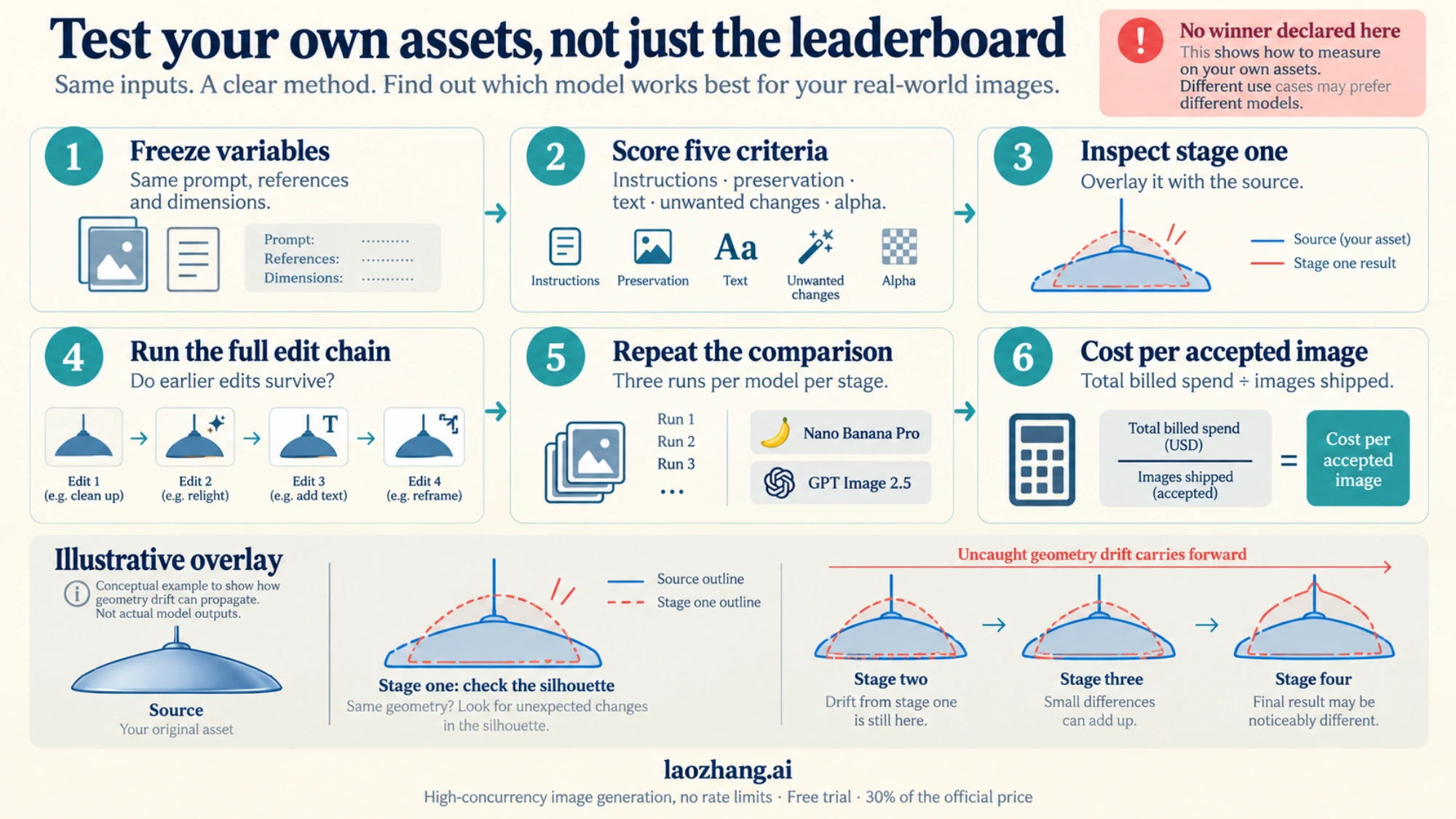
Ten to fifteen of your own assets run this way will tell you more than any ranking, because the ranking cannot know whether your job is "preserve" or "reinterpret".
Running both today
You can hold a direct key with each vendor, or run both models through one gateway. Either way, use the exact IDs.
Direct. OpenAI's Images API takes gpt-image-2.5-flare or gpt-image-2.5-sunburst on /v1/images/generations and /v1/images/edits, billed at the token rates above. Google's Gemini API takes gemini-3-pro-image at $0.134 per 1K/2K image Standard, or half that through Batch. Google has no free API tier row for Pro, though it can be tried in AI Studio; our Nano Banana Pro API guide covers the direct setup.
One key for both via LaoZhang. LaoZhang exposes both vendors' models behind https://api2.laozhang.ai/v1. The two 2.5 models run as official-API forwarding on the same Images API integration as gpt-image-2, with Flare/Sunburst selection and 2K/4K sizes, at what the provider states are the same token rates as official-forward GPT Image 2; this requires a usage-billed token in an official-forward group (Sora2Official or GPTImage2 Sora2 Enterprise), chosen in token settings rather than in the model field. Nano Banana Pro runs as gemini-3-pro-image at a flat $0.09 per call for every resolution including 4K, but 4K requires the Google-native request shape; the OpenAI-compatible chat shape is fixed at 1K square. The per-call gpt-image-2.5-flare-vip and gpt-image-2.5-sunburst-vip models, previously $0.03 per call, have been unavailable since September 16, 2026 "due to limited upstream capacity" with no confirmed recovery time; a per-generation gpt-image-2.5-web model exists but cannot select Flare or Sunburst, and its price is whatever the console shows. Treat the $0.09 Pro figure and the token-rate statement as the provider's catalog on September 22, confirm them in the console, and do not assume that an OpenAI-compatible endpoint carries every upstream quota or SLA. GPT Image 2.5 on LaoZhang · Nano Banana Pro on LaoZhang · September 16 notice
The same prompt sent to both, as a first comparison run at matched 1024-pixel output:
bash# GPT Image 2.5 Sunburst — OpenAI Images API shape
# Direct: BASE=https://api.openai.com/v1 ; via LaoZhang: BASE=https://api2.laozhang.ai/v1
curl "$BASE/images/generations" \
  -H "Authorization: Bearer $API_KEY" \
  -H "Content-Type: application/json" \
  -d '{
    "model": "gpt-image-2.5-sunburst",
    "prompt": "Studio product photo of a matte black ceramic mug, headline text \"MORNING RITUAL\" top center, white background",
    "size": "1024x1024",
    "quality": "high",
    "output_format": "png"
  }'
bash# Nano Banana Pro — Google-native shape as documented by LaoZhang (the one that accepts 2K/4K).
# Google's own guide currently shows the same options as response_format.aspect_ratio / image_size;
# copy the body from whichever endpoint you call.
curl "https://api2.laozhang.ai/v1beta/models/gemini-3-pro-image:generateContent" \
  -H "x-goog-api-key: $API_KEY" \
  -H "Content-Type: application/json" \
  -d '{
    "contents": [{"parts": [{"text": "Studio product photo of a matte black ceramic mug, headline text \"MORNING RITUAL\" top center, white background"}]}],
    "generationConfig": {
      "responseModalities": ["IMAGE"],
      "imageConfig": {"aspectRatio": "1:1", "imageSize": "1K"}
    }
  }'
Log the usage field from each response next to the image file. Switch imageSize to "4K" and size to "2880x2880" (experimental territory on OpenAI's side above 2560×1440) for a second round if 4K is on your spec, and expect the sizes to differ; that is the vendor ceiling, not a bug in your request.
Frequently asked questions
Is Nano Banana Pro still the best image generator? Not by blind preference: as of September 22, 2026, both OpenAI 2.5 models and GPT Image 2 rank above it on Arena's text-to-image and image-edit boards and on Artificial Analysis, with the 2.5 entries marked Preliminary at a few thousand votes. It remains the only one of the two families that produces 4096-pixel output, documents 14 reference images with per-category limits, offers Grounding with Google Search, and has Batch pricing, and it won the one published stylization test outright. "Best" depends on whether your job needs those things.
Is Nano Banana 2 better than GPT Image 2? On the leaderboards, no: GPT Image 2 (medium) sits at #3 on both Arena boards while Nano Banana 2 sits at #9 (text-to-image) and #12 (edit). Nano Banana 2 is Google's recommended everyday model at $0.067 per 1K image and half that in Batch, and GPT Image 2 is OpenAI's only image model with Batch pricing today. If you are choosing within OpenAI's line, our GPT Image 2.5 vs GPT Image 2 comparison shows how the quality ladder shifted; at 1024×1024, 2.5 high uses the same 1,756 tokens as GPT Image 2 medium.
Should I pick Flare or Sunburst against Nano Banana Pro? Flare where you are exploring and can regenerate cheaply; Sunburst where an edit has a long list of things to preserve. The two share one price ladder, and the tests that favored 2.5 on geometry used Sunburst (Ima Studio) or the ChatGPT app; JXP's ties used Flare at medium. Our Flare vs Sunburst guide covers the choice inside 2.5.
Which is faster? No comparable measurement exists. OpenAI labels Flare "Very fast" and Sunburst "Medium" and claims 50% lower latency than GPT Image 2 for Flare; Google publishes no latency figure for Pro and cannot switch off its reasoning pass. JXP's platform observations put 2.5 at 20–60 seconds and Pro anywhere from under a minute to over two minutes, from four requests each. Measure typical and slow responses on your own account.
What is "Nano Banana 2.5"? An unconfirmed model spotted on Arena under the codename "spicy-mayo", with no Google announcement, price, or API. Pages comparing it with GPT Image 2.5 are comparing a codename; the released Google model this article covers is Nano Banana Pro, gemini-3-pro-image.
Does ChatGPT give the same result as the API? The two app-based tests here (Danawa, hsworking.com) show tendencies, but the app does not expose Flare/Sunburst selection, explicit quality, or custom sizes. For a decision that will be run through an integration, test through the API. Our ChatGPT Images 2.5 guide explains what the app label does and does not tell you.