ChatGPT vs Claude in 2026: The Complete Comparison Guide (GPT-5.4 vs Opus 4.6)
In March 2026, ChatGPT (GPT-5.4) and Claude (Opus 4.6) represent the two leading AI assistants with distinct strengths. ChatGPT excels at multimodal tasks, image generation, and web search, while Claude leads in coding accuracy, long-document analysis, and developer tooling. Both offer free tiers and $20/month paid plans. This guide compares them across coding, writing, research, pricing, and API capabilities with verified benchmark data.
On this page
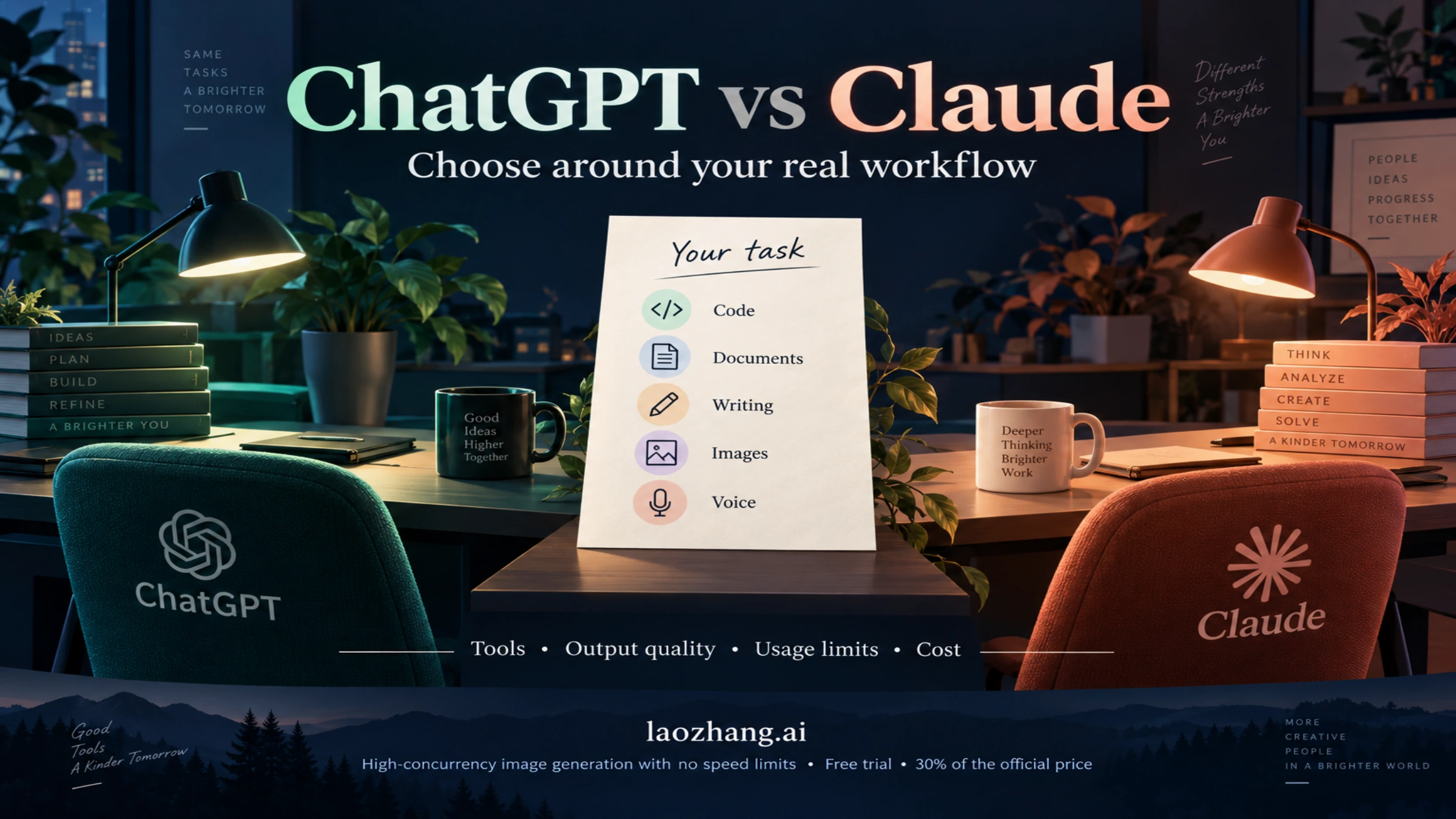
In March 2026, ChatGPT and Claude stand as the two most capable AI assistants available to consumers and developers alike. ChatGPT, powered by OpenAI's GPT-5.4, delivers unmatched multimodal capabilities including image generation, advanced voice mode, and web search. Claude, built on Anthropic's Opus 4.6, dominates in coding accuracy, deep reasoning, and long-document analysis with its industry-leading 200K context window. Both platforms offer free tiers and $20/month standard subscriptions, making the choice less about access and more about which strengths align with your specific needs. This guide provides a data-driven comparison across every dimension that matters — from benchmark scores to API economics — so you can make an informed decision.
TL;DR
If you want a quick answer before diving into the details, here is the verdict based on verified benchmark data and extensive testing across both platforms in March 2026.
| Use Case | Winner | Why |
|---|---|---|
| Coding & Programming | Claude (Opus 4.6) | 80.8% SWE-bench, Claude Code CLI, 200K context |
| Creative Writing | Tie | ChatGPT has flair; Claude has precision |
| Research & Analysis | Claude | 200K context, superior reasoning scores |
| Image Generation | ChatGPT | Built-in DALL-E, native image editing |
| Multimodal (Voice/Vision) | ChatGPT | Advanced voice mode, video understanding |
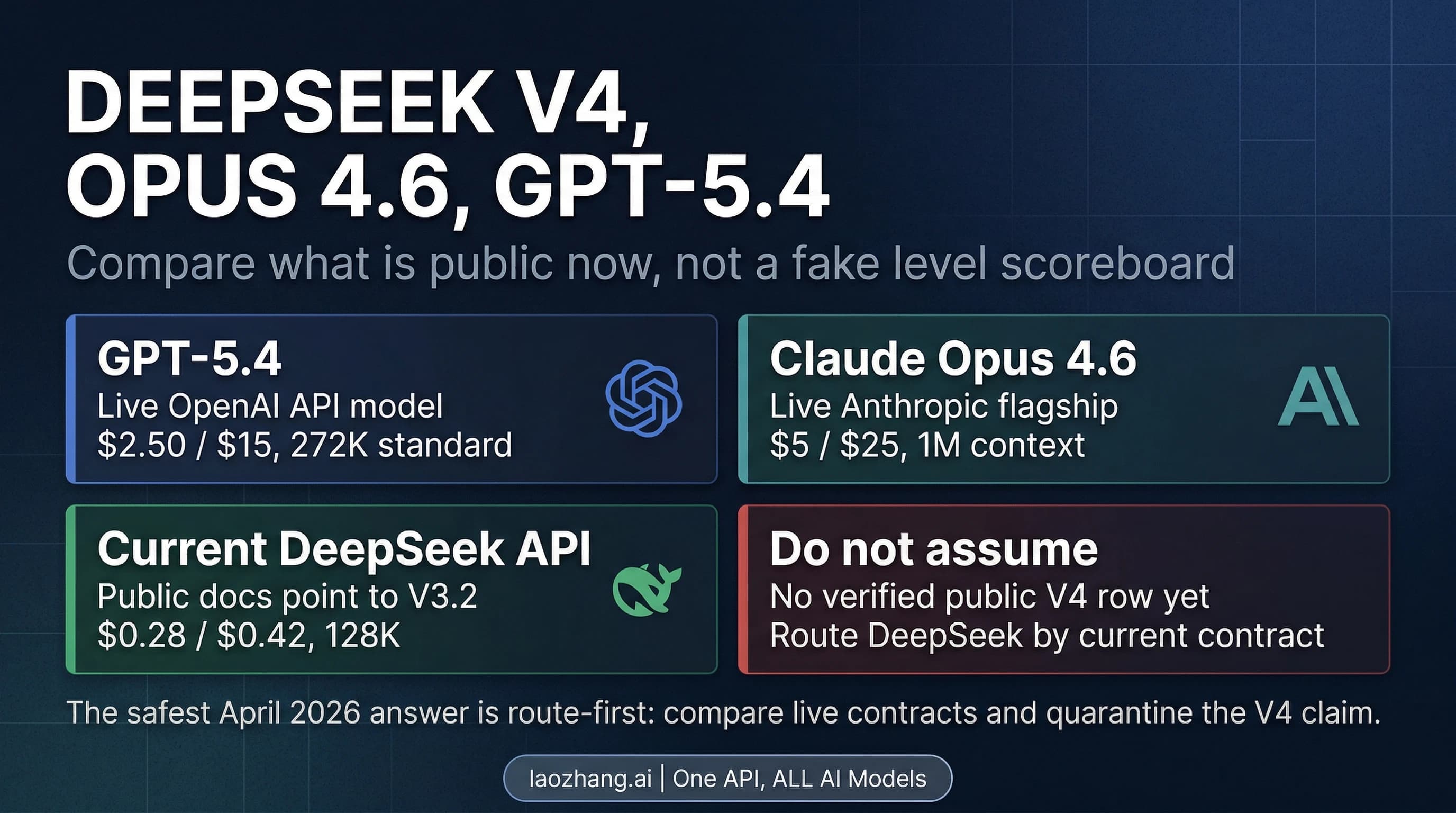
| API Value (Cost per Token) | ChatGPT | GPT-5.2 at $1.75/M input vs Opus at $5/M |
| Context Window | Claude | 200K tokens vs 128K tokens |
| Free Tier | Tie | Both offer generous free access |
| Standard Paid Plan | Tie | Both $20/month with similar value |
The bottom line is straightforward: choose Claude if you primarily write code, analyze long documents, or need deep reasoning capabilities. Choose ChatGPT if you need image generation, voice interactions, or a broader multimodal toolkit. For writing, try both — the "better" choice depends entirely on your preferred style and tone. If you are a developer building applications, Claude's API delivers superior code generation quality while ChatGPT's API offers lower per-token costs for general tasks.
ChatGPT vs Claude in 2026 — What's New
The AI landscape has shifted dramatically since early 2025, and both platforms have released significant upgrades that fundamentally change how they compare. Understanding what has changed helps you evaluate which platform has improved more in the areas you care about, rather than relying on outdated comparisons that reference models no longer in active use.
OpenAI released GPT-5.4 in early March 2026, representing their most capable consumer-facing model. This followed the GPT-5.2 release, which serves as the primary API model and brought substantial improvements in reasoning and multimodal capabilities. The GPT-5 family introduced native image generation that surpassed DALL-E 3 in quality, along with deeper integration of web search, voice mode, and vision capabilities into a single unified model. ChatGPT also introduced the Go tier at $8/month, filling the gap between free and Plus subscriptions. The Pro tier at $200/month provides unlimited access to GPT-5.4, o1 pro mode, and extended thinking capabilities for power users who need maximum performance without usage limits.
Anthropic's response came with the Claude 4 family, culminating in Opus 4.6 and Sonnet 4.6 as the current flagship models. Claude Opus 4.6 achieved 80.8% on SWE-bench Verified, making it the highest-scoring model on this widely-respected coding benchmark at the time of release. Beyond raw benchmark performance, Anthropic introduced Claude Code — a dedicated command-line tool that integrates Claude directly into developer workflows for code generation, debugging, and refactoring tasks. The 200K token context window remained a key differentiator, allowing Claude to process entire codebases, lengthy research papers, and complex documents that exceed the 128K limit of ChatGPT's standard models.
The pricing landscape also evolved significantly. Both platforms now offer free tiers that are genuinely useful rather than merely promotional. ChatGPT's free tier includes access to GPT-4o mini with web search and file upload capabilities, while Claude's free tier provides access to Sonnet 4.6 with Artifacts support. At the $20/month price point, both ChatGPT Plus and Claude Pro offer access to their respective flagship models, making direct cost comparison more relevant than ever. For a detailed Claude pricing breakdown, see our dedicated pricing guide.
Coding and Programming Comparison
Coding is the dimension where Claude has established the clearest advantage, and it is also the most searched sub-topic within the "ChatGPT vs Claude" comparison. Developers choosing between these platforms for their daily programming workflows need to consider not just raw benchmark scores, but the entire tooling ecosystem and practical coding experience each platform delivers.
On SWE-bench Verified — the industry-standard benchmark for evaluating AI models on real-world software engineering tasks — Claude Opus 4.6 scores 80.8% compared to GPT-5.2's 80.0% (as of March 2026, verified via SERP data). While the gap appears narrow at first glance, the difference becomes more significant when you consider that SWE-bench tasks involve resolving actual GitHub issues in production codebases, requiring deep understanding of existing code, dependency management, and test-aware modifications. In practical terms, that 0.8 percentage point gap translates to Claude successfully solving roughly one additional complex issue out of every hundred attempts — meaningful at scale for professional developers.
The difference is far more pronounced on ARC-AGI-2, a benchmark designed to test genuine reasoning and novel problem-solving rather than pattern matching. Claude Opus 4.6 achieves 68.8% compared to GPT-5.2's 52.9%, representing a 15.9 percentage point advantage. This suggests that Claude's coding superiority extends beyond memorized patterns into the kind of creative problem-solving that developers encounter when tackling novel architectural challenges or debugging unfamiliar systems.
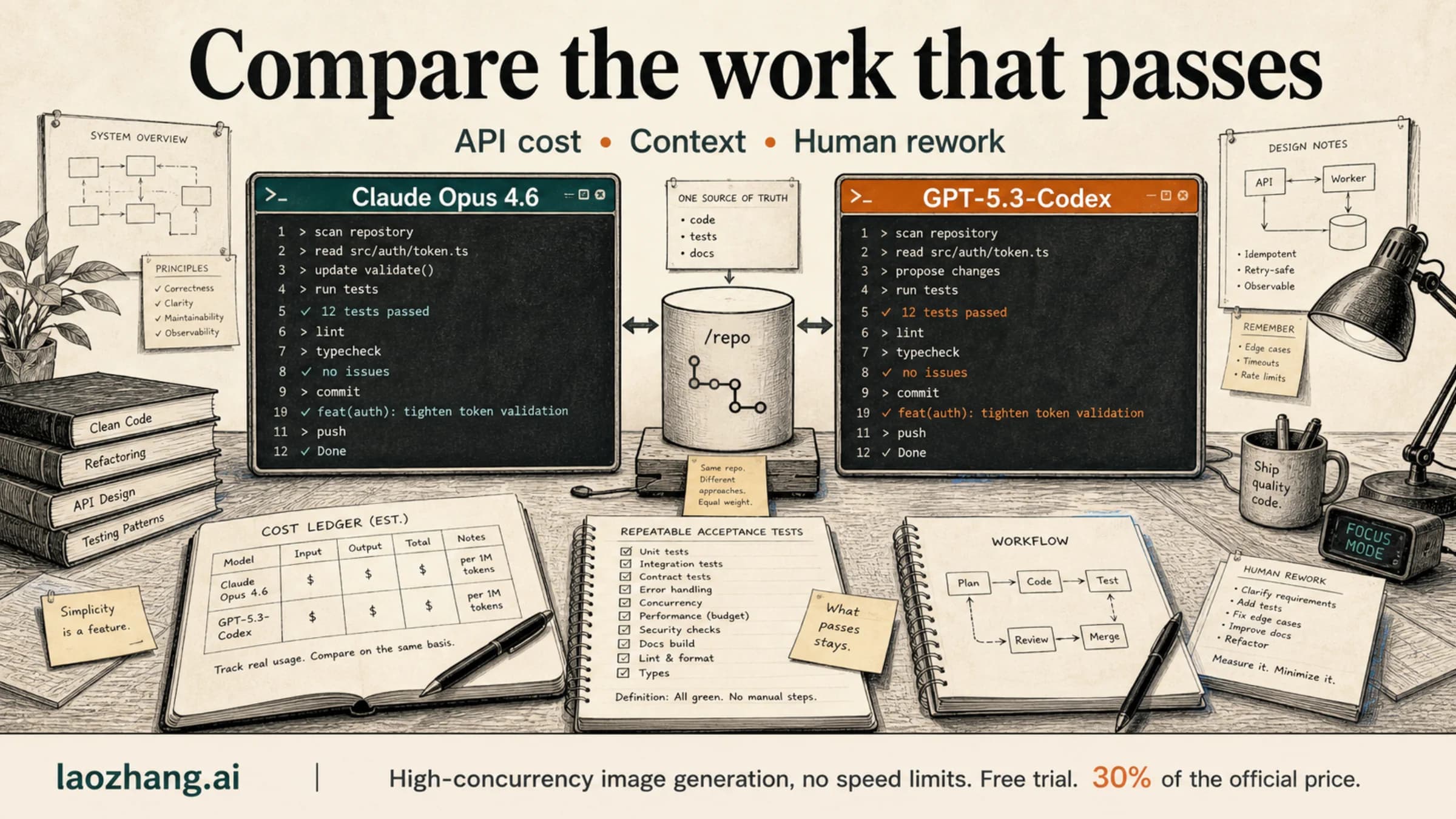
Beyond benchmarks, the practical developer experience differs substantially between platforms. Claude Code, Anthropic's dedicated command-line interface, integrates directly into terminal-based workflows and can read entire project directories, understand file relationships, and make coordinated changes across multiple files simultaneously. This is qualitatively different from pasting code snippets into a chat window. ChatGPT offers coding assistance through its standard chat interface and through integrations with tools like GitHub Copilot (which uses OpenAI models), and through Codex CLI, which can inspect repositories, edit code and run commands from the terminal. Claude's 200K token context window also means developers can load substantially larger codebases into a single conversation, reducing the need for manual context management that often leads to inconsistent or incomplete code modifications.
For developers building applications with these AI models, the GPT-5.4 performance analysis provides additional context on how both platforms compare against Google's Gemini 3.1 in coding tasks.
Writing and Content Creation
Writing quality is perhaps the most subjective dimension in any AI comparison, and the honest assessment is that neither platform holds a decisive advantage across all writing tasks. The difference lies not in overall quality but in stylistic tendencies, tone control, and the types of writing each model handles most naturally.
ChatGPT tends to produce writing with more conversational energy and creative flair. It uses varied sentence structures, incorporates metaphors and analogies more frequently, and often adds a polished, magazine-quality finish to its output. For marketing copy, social media content, email newsletters, and blog posts that need to engage casual readers, ChatGPT's default style often requires less editing. The model has been fine-tuned extensively on user feedback over three years of consumer deployment, which means it has developed an intuitive understanding of what most people consider "good" writing in everyday contexts. Its native web search capability also makes it particularly effective for writing tasks that require current information, such as news summaries or trend analysis pieces.
Claude approaches writing differently, favoring precision, nuance, and intellectual depth. Its output tends to be more measured and deliberate, with careful attention to accuracy and avoiding overstatement. For technical documentation, academic writing, policy analysis, and any content where factual precision matters more than stylistic polish, Claude consistently delivers stronger results. Claude is also notably better at following complex formatting instructions and maintaining consistency across long documents — a direct benefit of its larger context window. When given a detailed style guide or brand voice document, Claude adheres to the specifications more faithfully than ChatGPT, making it the preferred choice for enterprise content teams that need consistent output across multiple pieces.
The practical recommendation for writers is genuinely to try both with the same prompt and compare results. Writing preferences are deeply personal, and the "better" model depends entirely on your target audience, publication context, and personal editing style. Many professional writers maintain subscriptions to both platforms, using ChatGPT for initial creative brainstorming and Claude for technical content, fact-checking, and final refinement. The good news is that both platforms offer generous free tiers, making side-by-side testing easy before committing to a paid subscription. If Claude's writing style fits your needs, check the current Claude Pro trial and discount boundary before assuming a free Pro upgrade is available.
Research, Analysis, and Reasoning
For users who rely on AI for deep research, data analysis, and complex reasoning tasks, the comparison between ChatGPT and Claude reveals meaningful differences that directly impact productivity and accuracy. These capabilities matter most for academics, analysts, consultants, and anyone who regularly works with lengthy, complex information.
Claude's 200K token context window is a fundamental advantage for research tasks. In practical terms, 200K tokens is roughly equivalent to 500 pages of text or a 150,000-word document. This means Claude can process an entire book, a full-length research paper with all its references, or a comprehensive financial report in a single conversation without losing track of details from earlier sections. ChatGPT's 128K context window, while generous by historical standards, forces users to be more selective about what they include and often requires splitting large documents across multiple conversations. For anyone who regularly analyzes documents exceeding 100 pages, this difference is not marginal — it fundamentally changes the workflow.
On reasoning benchmarks, Claude Opus 4.6 maintains a consistent edge. On GPQA Diamond, a benchmark of graduate-level science questions that requires multi-step reasoning, Claude scores 74.9% versus GPT-5.2's 74.1%. While this gap is narrow, it aligns with broader patterns across reasoning-heavy benchmarks where Claude demonstrates slightly superior performance. Where Claude shows a more decisive advantage is in maintaining reasoning coherence over long chains of logic — when a problem requires following ten or more sequential reasoning steps, Claude's outputs remain more internally consistent and less prone to the kind of logical drift that can occur in complex analytical tasks.
ChatGPT counters with stronger multimodal research capabilities. Its integrated web search allows real-time information retrieval during analysis, enabling users to fact-check claims, find supporting data, and identify contradictions against current sources without leaving the conversation. ChatGPT can also analyze images, charts, and diagrams with high accuracy, making it valuable for researchers who work with visual data. The ability to generate images of concepts, flowcharts, and data visualizations inline adds a creative dimension to research workflows that Claude cannot match. For research teams that need to process a mix of text, images, and web data, ChatGPT's multimodal breadth provides genuine workflow advantages even if its raw text reasoning is slightly behind Claude's.
Both platforms are advancing rapidly in reasoning capabilities through features like extended thinking (ChatGPT Pro) and Claude's research mode (Claude Max), which allow models to spend more time reasoning before responding. These premium features are available at higher price tiers and represent the cutting edge of AI reasoning capability, with both platforms achieving performance levels that were considered impossible just eighteen months ago.
Pricing and Plans — Complete 2026 Breakdown
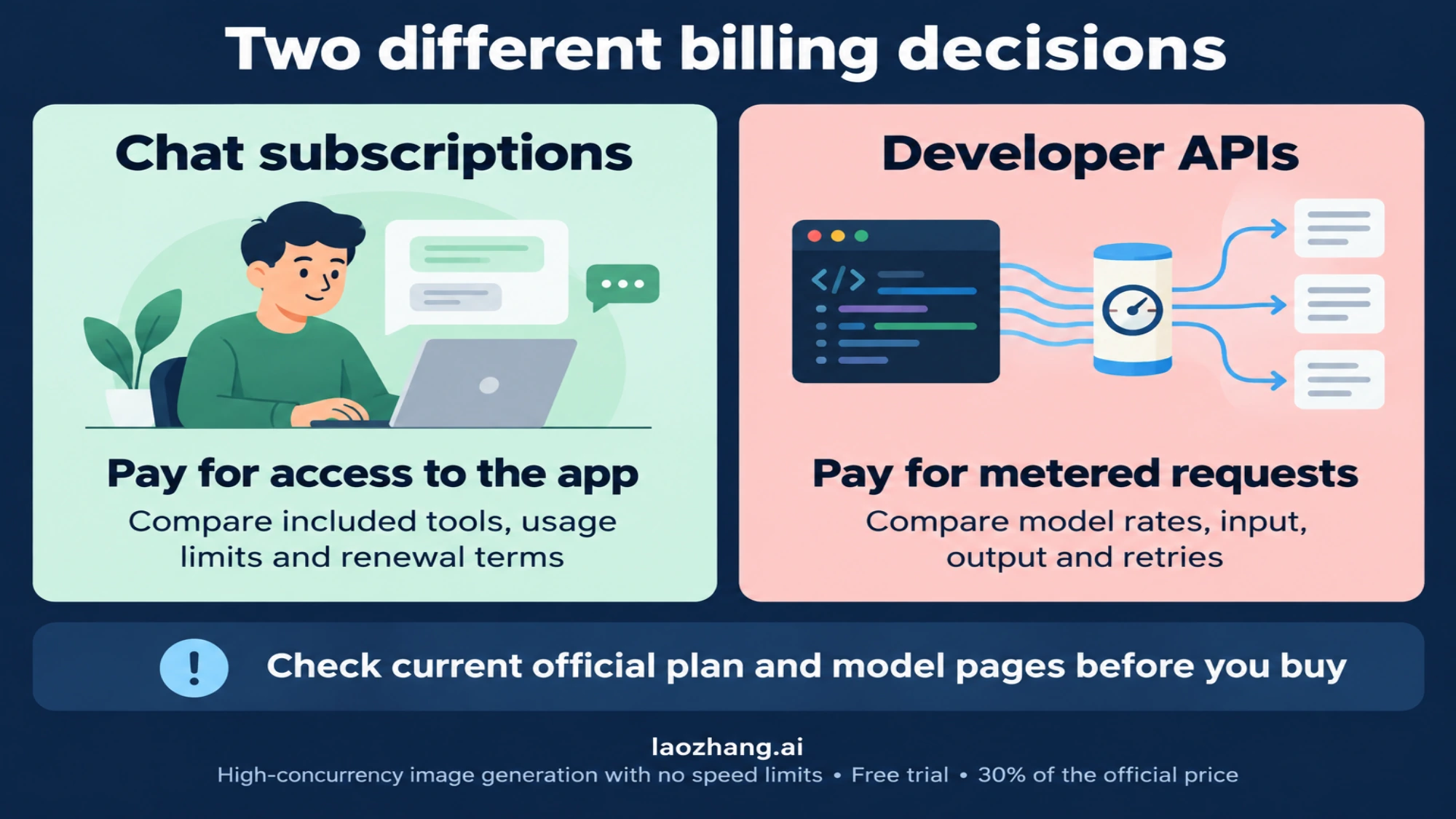
Understanding the full pricing picture is essential for making an informed choice, especially since both platforms have evolved their subscription structures significantly in 2026. The days of a simple "free vs paid" comparison are over — both ChatGPT and Claude now offer multiple tiers targeting different user segments.
ChatGPT Pricing Tiers
ChatGPT offers four consumer tiers in 2026 (verified pricing as of March 2026, openai.com). The Free tier provides access to GPT-4o mini with limited messages, web search, and file upload capabilities. The Go tier at $8/month is a new addition that bridges the gap between free and Plus, offering higher limits for eligible tools, including image generation; check the current plan page for model access and pricing. ChatGPT Plus at $20/month remains the most popular tier, providing access to GPT-4o, GPT-5.2, DALL-E image generation, advanced data analysis, custom GPTs, and voice mode. At the top end, ChatGPT Pro at $200/month unlocks GPT-5.4, unlimited usage, o1 pro mode, and extended thinking — targeting professionals and power users who need maximum capability without constraints.
Claude Pricing Tiers
Claude's pricing structure takes a different approach with its tiered system (verified pricing as of March 2026, claude.com/pricing). The Free tier provides access to Sonnet 4.6 with limited messages and basic features including Artifacts. Claude Pro at $20/month ($17/month with annual billing) unlocks Opus 4.6 access, 5x more usage than free, Claude Code, and Projects. Claude Max 5x at $100/month provides 5x the Pro usage limit with priority access, extended thinking, and research mode. Claude Max 20x at $200/month delivers 20x Pro usage with all features included. This tiered usage model means heavy users can scale their allocation without switching to a fundamentally different product.
Value Analysis
At the $20/month price point — where most users will compare — both platforms deliver strong value. ChatGPT Plus offers broader feature coverage with image generation, voice mode, and web search. Claude Pro offers deeper capability in coding and reasoning with Claude Code and the full 200K context window. The choice here genuinely depends on which features you will actually use regularly rather than which feature list appears longer.
For budget-conscious users, ChatGPT's $8 Go tier is an interesting option that has no direct Claude equivalent. It provides meaningful improvements over the free tier at less than half the cost of Plus, and includes higher image-generation limits than Free; model availability and prices should be checked on the current official plan page. If you primarily use AI for text conversations and do not need multimodal capabilities, the Go tier represents excellent value.
At the $200/month tier, ChatGPT Pro and Claude Max 20x target different needs. ChatGPT Pro focuses on providing the absolute best model (GPT-5.4) with unlimited usage. Claude Max 20x focuses on providing massive usage volume of Opus 4.6 with all features.
API and Developer Experience
For developers building applications, choosing between ChatGPT and Claude involves a different set of considerations than consumer use. API pricing, rate limits, developer tools, and integration ecosystem all matter more than subscription plans when you are writing code that will make thousands or millions of API calls.
API Pricing Comparison
The API pricing difference between platforms is substantial and can dramatically impact production costs at scale (all prices verified March 2026). GPT-5.2, OpenAI's flagship API model, costs $1.75 per million input tokens and $14.00 per million output tokens. Claude Opus 4.6, Anthropic's top-tier API model, costs $5.00 per million input tokens and $25.00 per million output tokens. For a typical application that processes 10 million input tokens and generates 2 million output tokens per month, the cost difference is significant: approximately $45.50 with GPT-5.2 versus $100.00 with Claude Opus 4.6.
However, raw per-token pricing does not tell the complete story. Claude Sonnet 4.6, the mid-tier model, costs $3.00 per million input tokens and $15.00 per million output tokens — offering a competitive balance between capability and cost. For many applications, Sonnet 4.6 delivers sufficient quality at roughly 60% of Opus pricing. Similarly, GPT-4o remains available at $2.50/$10.00 as a cost-effective alternative to GPT-5.2. The real decision often comes down to which model provides acceptable quality for your specific use case at the lowest cost, rather than simply choosing the cheapest or most expensive option.
For developers who want to evaluate both APIs without committing to separate billing accounts, API aggregation services provide a practical solution. For a broader three-way API comparison including Google's Gemini, see our dedicated API comparison guide.
Developer Tooling
Claude's developer tooling advantage is most visible in Claude Code, the dedicated CLI that turns Claude into an agentic coding assistant capable of reading your project structure, understanding dependencies, and making coordinated multi-file changes. OpenAI also offers Codex CLI for terminal-based repository work, so compare both tools on the same task rather than treating Claude Code as the only option. Claude also provides the Messages API with streaming support, tool use capabilities, and prompt caching that can reduce costs for applications with repetitive prefixes.
ChatGPT's developer ecosystem is broader, benefiting from OpenAI's longer market presence and larger developer community. The legacy Assistants API provided conversation management, file search, and code execution, but OpenAI has scheduled it to shut down on August 26, 2026. Existing integrations should follow the production guide to migrate Assistants API to Responses API and Conversations instead of creating new Assistants. The Custom GPTs platform remains a separate no-code product surface, while function calling and hosted tools belong to the developer API contract.
Both platforms support similar core features — streaming, tool use, vision, and JSON mode — but differ in implementation details and context window sizes. Claude's 200K context window gives it an advantage for applications that need to process long documents, while ChatGPT's broader model selection (from GPT-4o mini to GPT-5.4) provides more granular cost-performance optimization options.
Which Should You Choose? — The Decision Guide
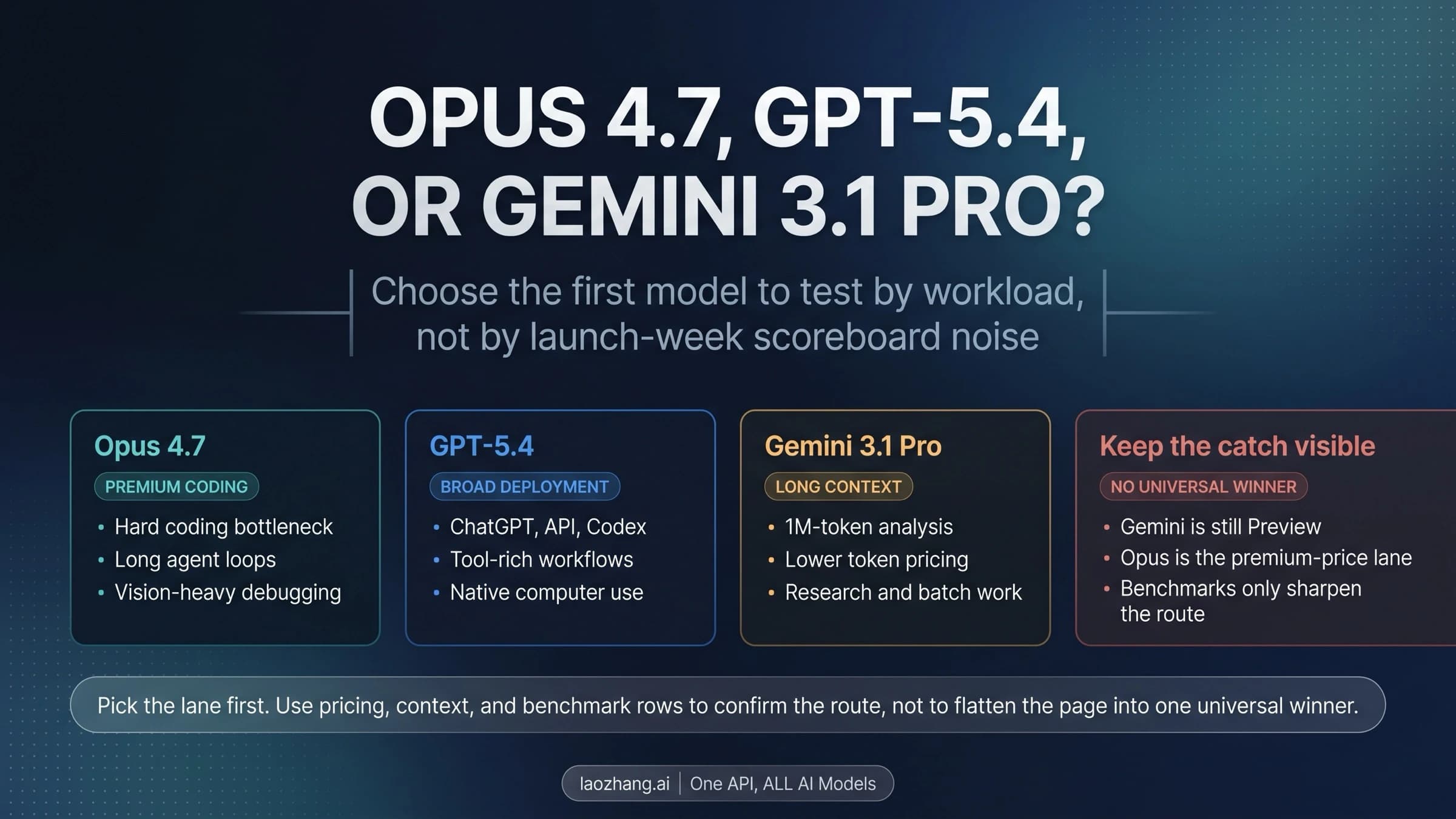
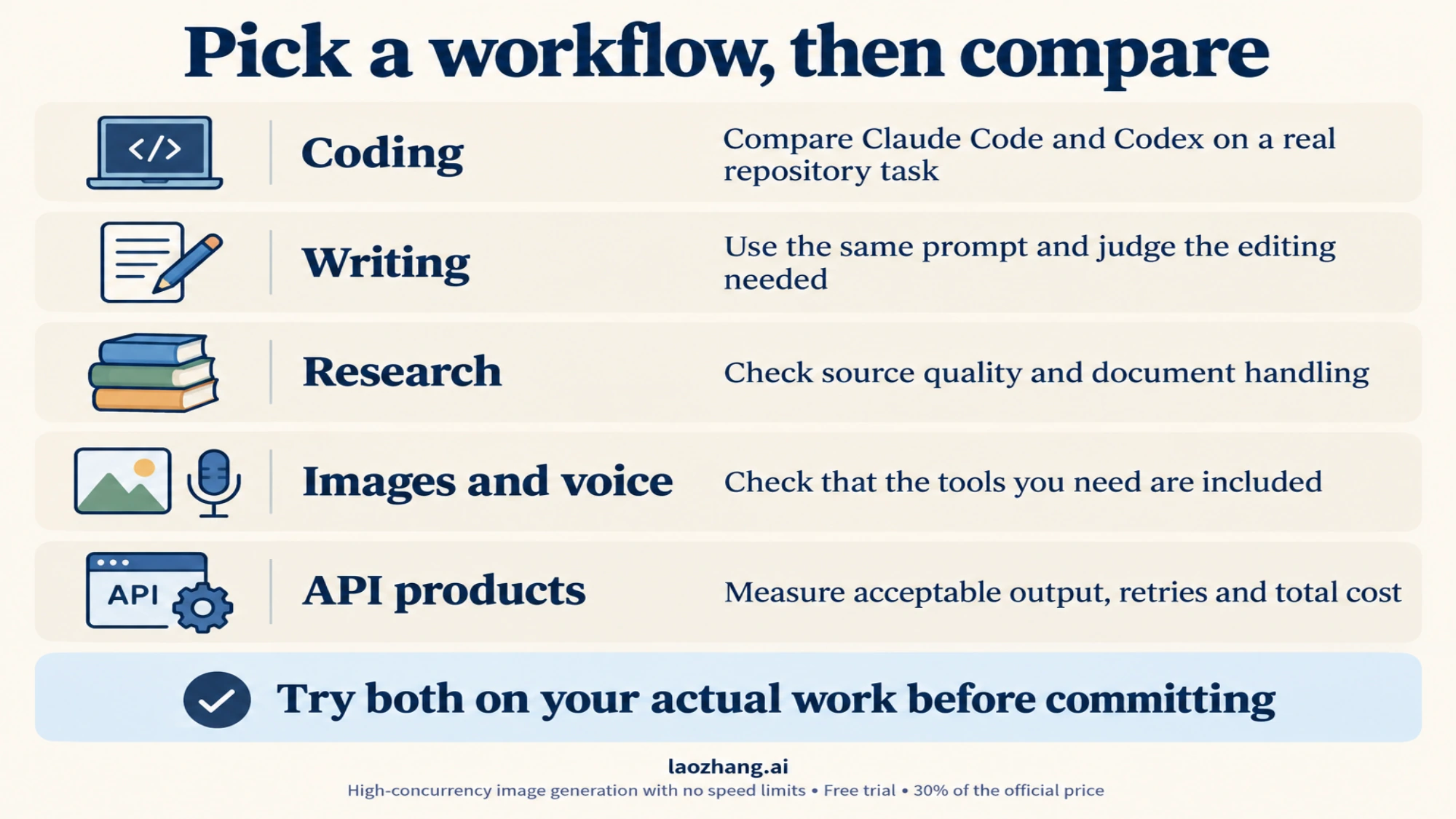
The choice depends on what you need the assistant to do. The recommendations below are starting points for comparison, not results from a controlled side-by-side test. Use the same real task to compare output quality, available tools and total cost.
Software Developers and Engineers: Choose Claude. The combination of superior SWE-bench scores (80.8%), Claude Code CLI integration, and 200K context for processing large codebases makes it the stronger choice for professional development work. The advantage is most pronounced for full-stack development, code review, refactoring legacy systems, and debugging complex issues. If you primarily write Python, JavaScript, TypeScript, or systems-level code, Claude will produce more accurate and contextually-aware code modifications. The one exception is if your workflow heavily depends on GitHub Copilot integration, where ChatGPT's OpenAI-powered backend may provide a more seamless experience.
Content Creators and Marketers: Choose ChatGPT. The built-in image generation, web search for current information, voice mode for brainstorming, and broader creative toolkit make ChatGPT more versatile for content production workflows. It excels at marketing copy, social media content, email campaigns, and any writing task where engaging tone matters more than technical precision. The Custom GPTs ecosystem also allows content teams to build specialized assistants tailored to their brand voice and workflow needs.
Researchers and Analysts: Choose Claude. The 200K context window is a decisive advantage when working with long documents, research papers, or comprehensive reports. Claude's superior reasoning consistency over long chains of analysis and its tendency to be more careful about factual claims make it the safer choice for work where accuracy matters more than speed. Academic researchers, financial analysts, policy advisors, and legal professionals will generally find Claude more reliable for their specific needs.
Students and General Users: Start with free tiers of both, then decide based on what you use most. Both free tiers are genuinely functional for everyday tasks like answering questions, summarizing content, brainstorming ideas, and learning new topics. If you find yourself wanting more, the $20/month subscription to either platform represents excellent value. Consider ChatGPT Plus if you frequently use image generation or web search; choose Claude Pro if you need help with coding homework or analyzing lengthy study materials.
API Developers Building Products: Evaluate both, then optimize. For applications requiring top-tier code generation, choose Claude Opus 4.6 despite the higher per-token cost — the quality difference often reduces the need for expensive retry loops and human review. For general-purpose applications where token costs dominate your budget, GPT-5.2 at $1.75/M input tokens offers strong capability at a lower price point. For cost-optimized production systems, consider routing different task types to different models: Claude for coding tasks, GPT for multimodal and general tasks.
Frequently Asked Questions
Is Claude better than ChatGPT for coding in 2026?
Yes, based on verified benchmark data. Claude Opus 4.6 scores 80.8% on SWE-bench Verified versus GPT-5.2's 80.0%, and shows a much larger advantage on ARC-AGI-2 (68.8% vs 52.9%). Beyond benchmarks, Claude Code and Codex CLI both support terminal-based development workflows. For most professional programming tasks, Claude produces more accurate and contextually-aware code.
Which is cheaper — ChatGPT or Claude?
At the consumer level, both offer $20/month standard plans and free tiers. ChatGPT uniquely offers an $8/month Go tier. At the API level, GPT-5.2 is significantly cheaper at $1.75/M input tokens versus Claude Opus 4.6 at $5.00/M input tokens. However, Claude Sonnet 4.6 at $3.00/M input tokens provides a competitive mid-tier option. The cheapest choice depends on your specific model requirements and usage volume.
Can I use both ChatGPT and Claude for free?
Yes. Both platforms offer genuinely functional free tiers. ChatGPT Free provides GPT-4o mini with web search and file uploads. Claude Free provides Sonnet 4.6 with Artifacts support. For most casual users, the free tiers are sufficient for daily use, though you will encounter message limits during peak hours. Developers can also test both APIs with free trial credits before committing.
What is the biggest difference between ChatGPT and Claude?
The biggest functional difference is in their respective strengths: ChatGPT offers a broader multimodal toolkit (image generation, voice mode, web search) while Claude provides deeper performance in coding and reasoning with a larger 200K context window. In practice, ChatGPT is the better "do everything" assistant, while Claude is the better "do complex things deeply" assistant. Your primary use case should drive the decision.
Should I switch from ChatGPT to Claude (or vice versa)?
Only switch if your primary use case aligns with the other platform's strengths. If you are a developer using ChatGPT primarily for coding tasks, switching to Claude will likely improve your code generation quality. If you are a Claude user who frequently needs image generation or voice interaction, adding ChatGPT makes sense. Many power users maintain access to both platforms and use each for its respective strengths rather than committing exclusively to one.
Sources2
External pages this guide links to, in the order they appear. Last updated Jul 27, 2026.
Sources2
External pages this guide links to, in the order they appear. Last updated Jul 27, 2026.