Gemini 3.8 Flash vs Claude Fable 5.1: Which API Should You Test First?
Gemini 3.8 Flash is the lower-cost first test for most high-volume workloads. Claude Fable 5.1 is a targeted challenger for demanding long-running work—but only your own acceptance, latency, and repair data can justify the premium.
On this page
The useful question is not whether Gemini or Claude is “better.” It is which model should receive the first production-shaped test, and what result would justify paying for the other one.
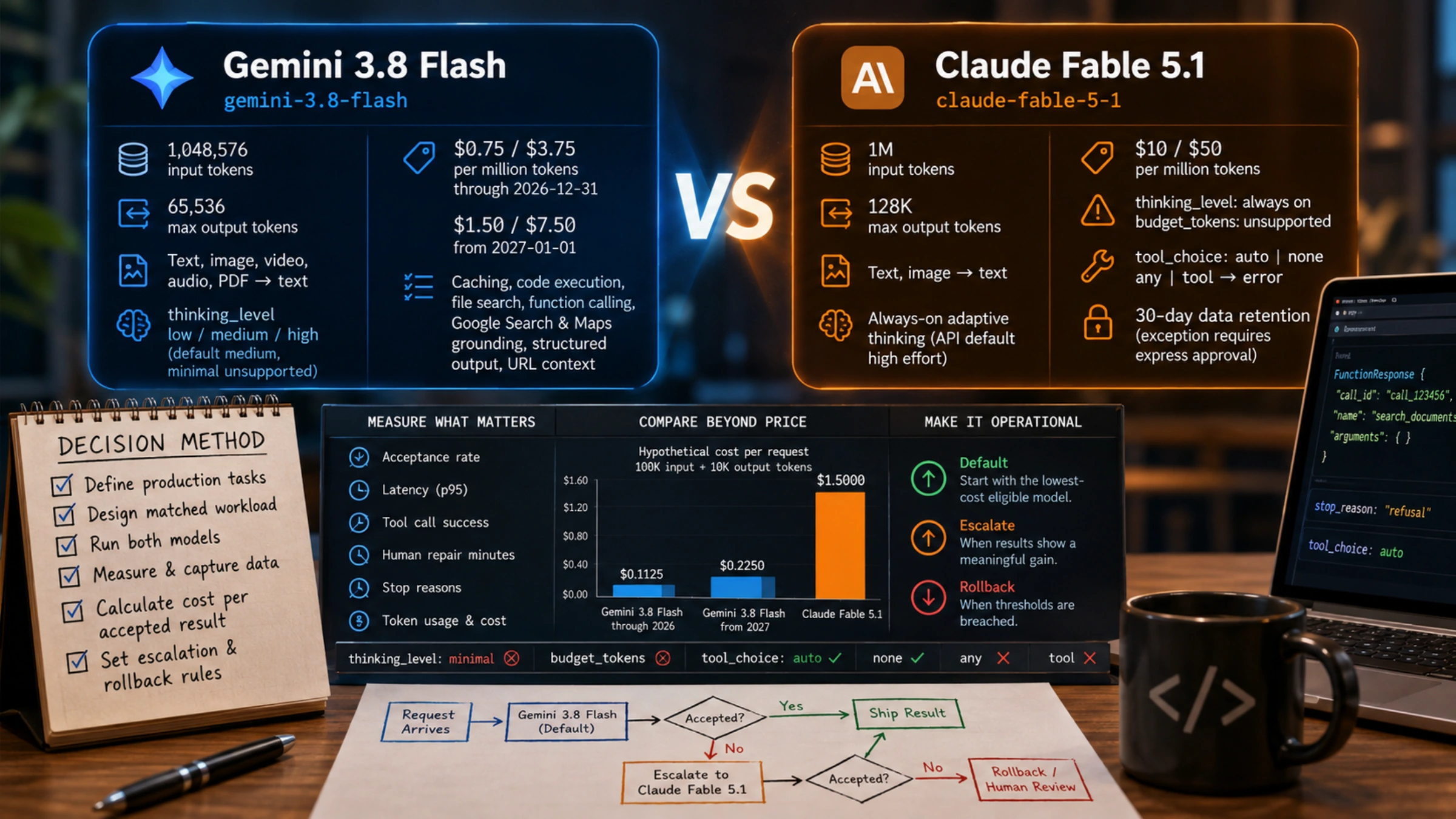
As of September 4, 2026, the exact public models are Gemini 3.8 Flash (gemini-3.8-flash) and Claude Fable 5.1 (claude-fable-5-1). “Claude Fable” alone is ambiguous because Fable 5 remains active, while Fable 5.1 is Anthropic's latest release.
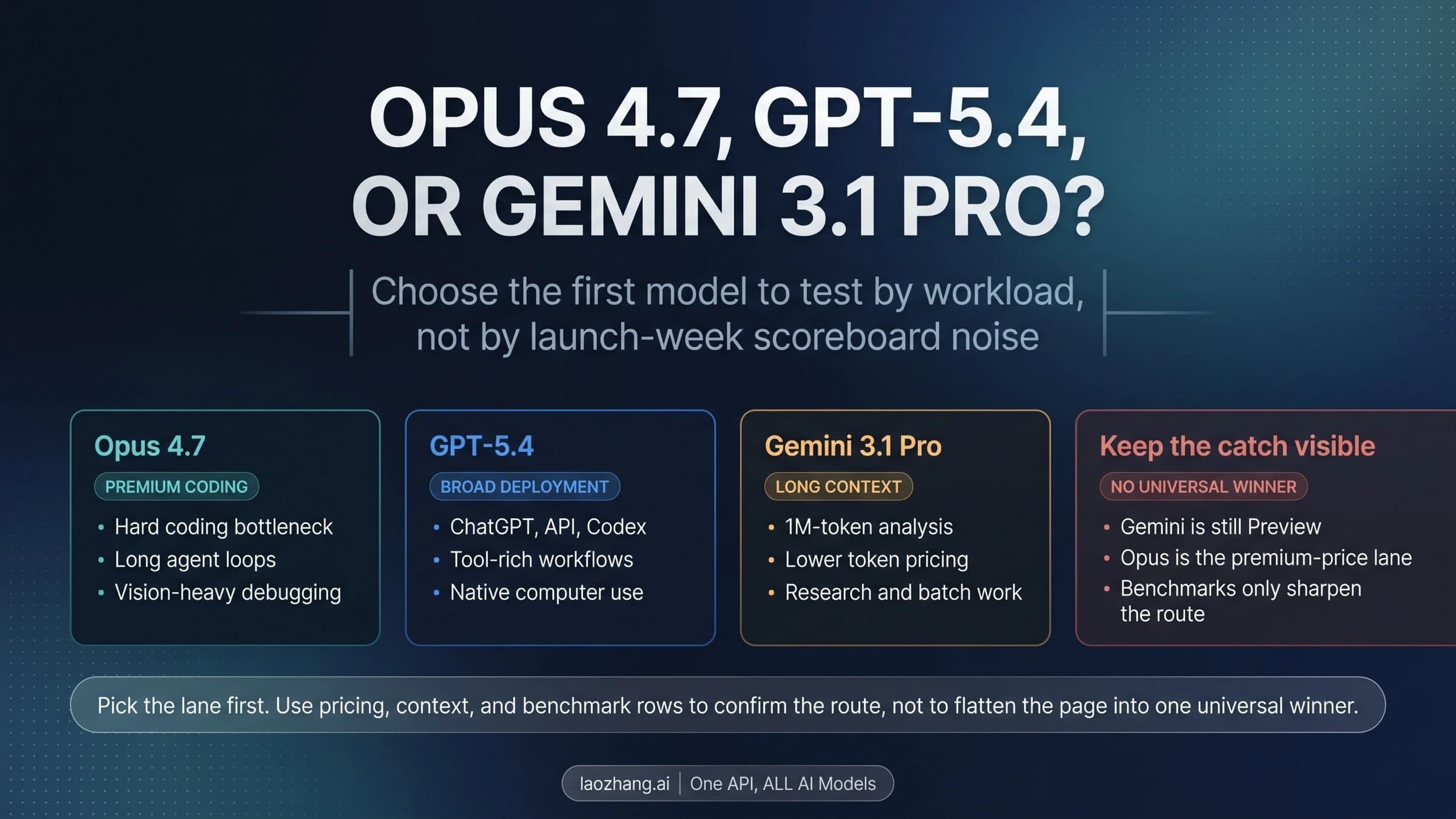
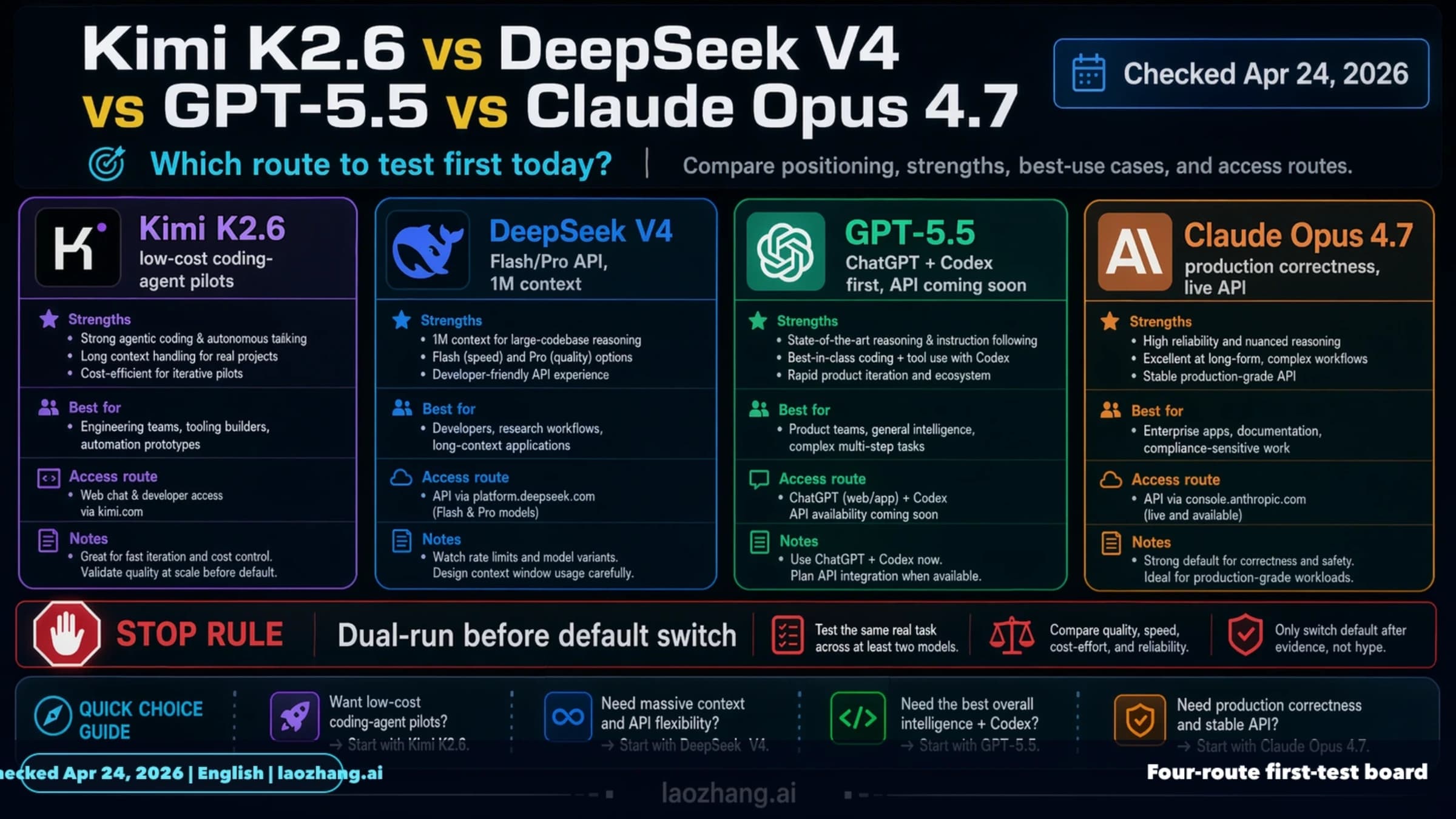
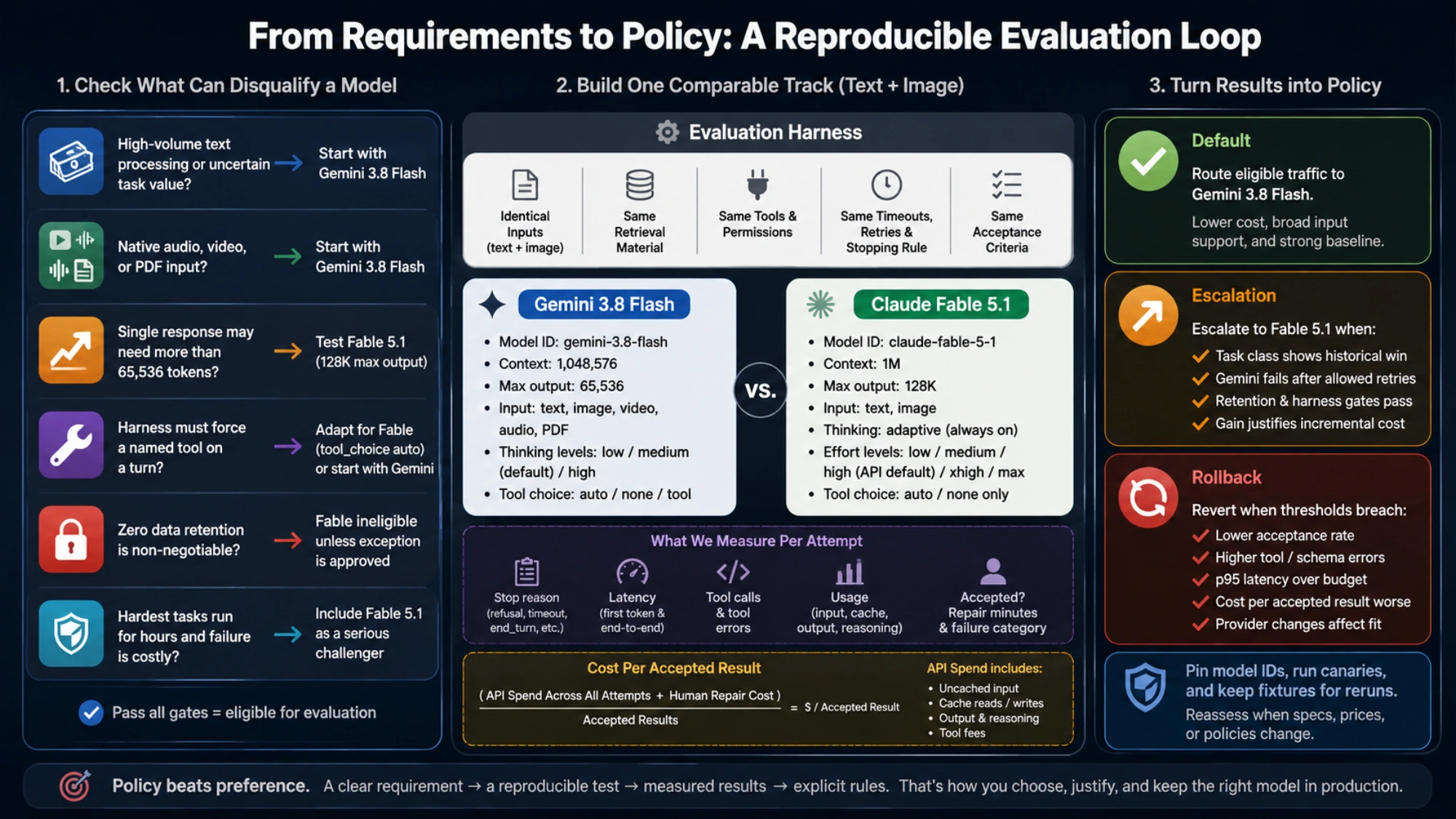
For most teams starting without workload data, Gemini 3.8 Flash is the rational first test. Its current input and output rates are about 7.5% of Fable 5.1's for the same number of billable tokens, and it accepts more media types. Fable 5.1 belongs in the evaluation as a deliberate challenger for unusually difficult, long-running work, or when its larger output allowance changes what the application can complete in one request. That is a test order, not a quality verdict.
Choose the first test from the constraint that can disqualify a model
Several requirements settle the first round before a benchmark does:
| Your requirement | Practical first move |
|---|---|
| High-volume text processing or uncertain task value | Start with Gemini 3.8 Flash; challenge it with Fable only on the failures that matter. |
| Native audio, video, or PDF input | Start with Gemini. Its model specification lists all three; Fable's model-level specification lists text and image input. |
| A single response may need more than 65,536 tokens | Test Fable's 128K maximum output. Do not assume it will use that capacity well without checking the result. |
| The harness must force a named tool on a turn | Either adapt the harness for Fable's auto tool choice or begin with Gemini. Fable rejects forced any and named tool choices. |
| Zero data retention is non-negotiable | Fable is ineligible unless Anthropic has expressly approved an exception for the relevant account and deployment. Verify the other provider's applicable terms separately. |
| The hardest tasks run for hours and failure is costly | Include Fable as a serious challenger, but require measured gains in acceptance or repair time before promoting it. |
This framing avoids a common mistake: buying the model with the most impressive launch claim before checking whether the API, data policy, or unit economics fit the system around it.
The specifications define different operating envelopes
Google released Gemini 3.8 Flash on September 2, 2026 and lists it as GA and Stable. Anthropic released Fable 5.1 one day earlier and lists it as Active (latest). Their current model pages establish the following boundaries:
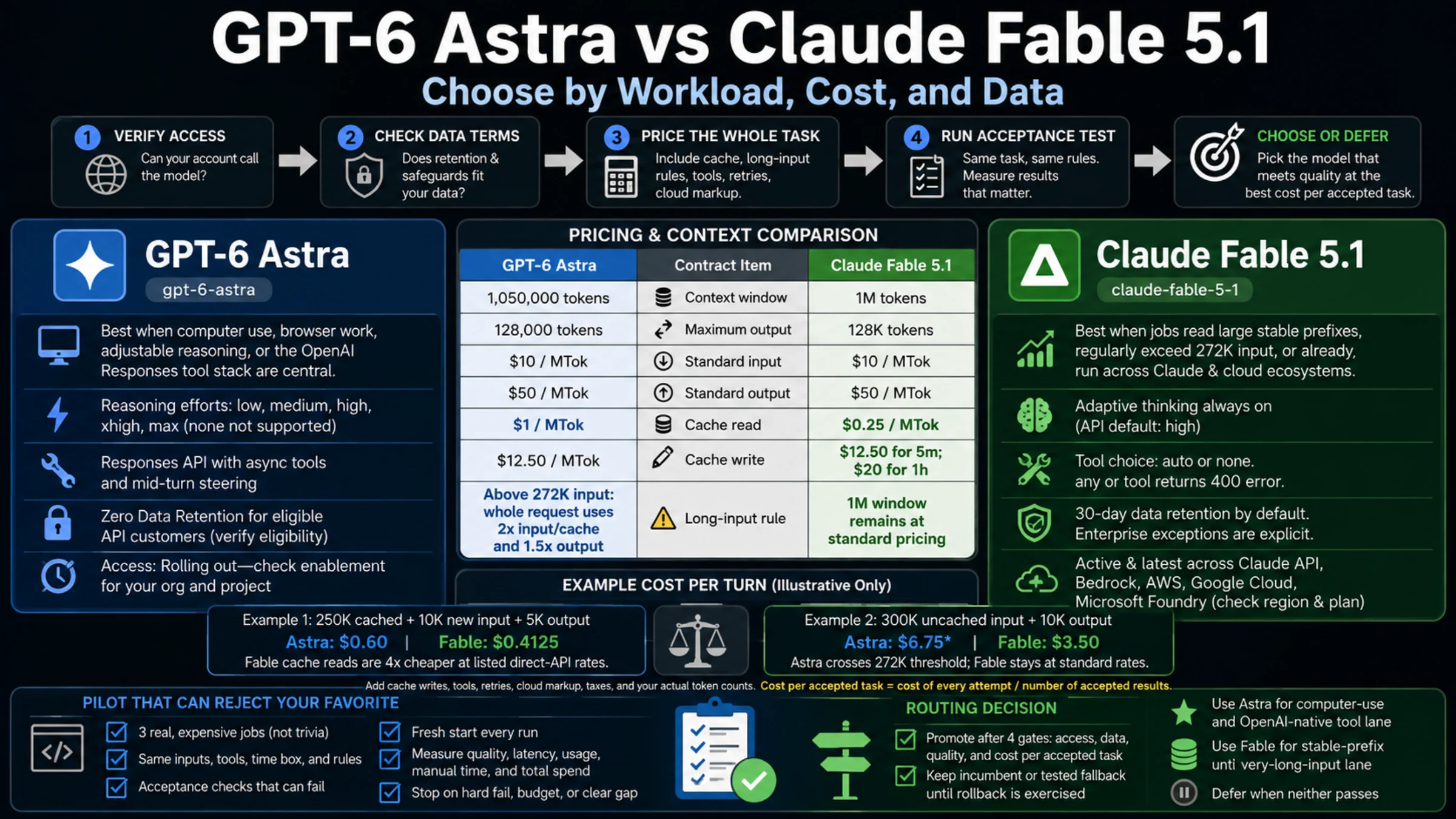
| Dimension | Gemini 3.8 Flash | Claude Fable 5.1 |
|---|---|---|
| Public API model ID | gemini-3.8-flash | claude-fable-5-1 |
| Input context | 1,048,576 tokens | 1M tokens |
| Maximum output | 65,536 tokens | 128K tokens |
| Model-level input and output | Text, image, video, audio, PDF → text | Text, image → text |
| Reasoning control | low, medium, high; default medium | Always-on adaptive thinking; API default effort high |
| Other effort values | minimal is unsupported | low, medium, xhigh, and max are also supported |
| Standard input price | $0.75/MTok through 2026; $1.50 from 2027 | $10/MTok |
| Standard output price | $3.75/MTok through 2026; $7.50 from 2027 | $50/MTok |
| Batch input / output | $0.375 / $1.875 through 2026 | $5 / $25 |
Google's Gemini 3.8 Flash specification also lists caching, code execution, file search, function calling, Google Search and Maps grounding, structured output, and URL context. Computer use is Preview. Image generation, audio generation, and the Live API are not supported, so multimodal input should not be mistaken for multimedia output.
Anthropic's Fable 5.1 model page positions the model for demanding reasoning and long-horizon agentic work. Its effort documentation lists all five settings and recommends beginning at high. Anthropic also tells most customers to begin with Opus 5 and move to Fable when evaluations at higher Opus effort still fall short. That matters when interpreting this comparison: Fable is an escalation model even within Anthropic's own lineup, not its routine cost-equivalent answer to Flash.
Knowledge dates do not supply a winner either. Google's 3.8 Flash model card gives a March 2026 cutoff, qualified by a warning that knowledge in some domains may still be limited to January 2025. Anthropic lists June 2026 for Fable 5.1. A later cutoff can reduce one kind of stale answer, but current facts still require the same retrieval material or tool access in a fair evaluation.
The 13.33× price gap is real—and incomplete
The Gemini Developer API rate card prices 3.8 Flash at $0.75 per million input tokens and $3.75 per million output tokens through December 31, 2026. Those rates become $1.50 and $7.50 on January 1, 2027. Output billing includes thinking tokens.
Anthropic's Claude API pricing lists Fable 5.1 at $10 per million input tokens and $50 per million output tokens. Both input and output are therefore 13.33 times Gemini's introductory rate. After Google's scheduled increase, the ratio becomes 6.67 times. Batch processing halves the base input and output prices for both models, so it does not change those ratios.
Consider a hypothetical request with 100,000 uncached input tokens and 10,000 output tokens, including billed reasoning:
Gemini through 2026 = 0.10 × $0.75 + 0.01 × $3.75 = $0.1125
Gemini from 2027    = 0.10 × $1.50 + 0.01 × $7.50 = $0.2250
Fable 5.1           = 0.10 × $10.00 + 0.01 × $50.00 = $1.5000
This arithmetic is reproducible, but it is not a claim that the two models consume the same number of tokens or finish the same task. They use different tokenization and reasoning systems. A model may call more tools, retry internally, produce a longer response, or fail an acceptance check that requires another attempt.
Caching also changes the shape of repeated-agent costs. Gemini currently lists cached input at $0.075 per million tokens plus $0.50 per million tokens per hour of storage. Fable lists a $0.25 cache read, a $12.50 five-minute cache write, and a $20 one-hour cache write per million tokens. These categories are not interchangeable line items. Calculate them from the actual prefix size, reuse rate, and retention time rather than applying one generic “cached discount.”
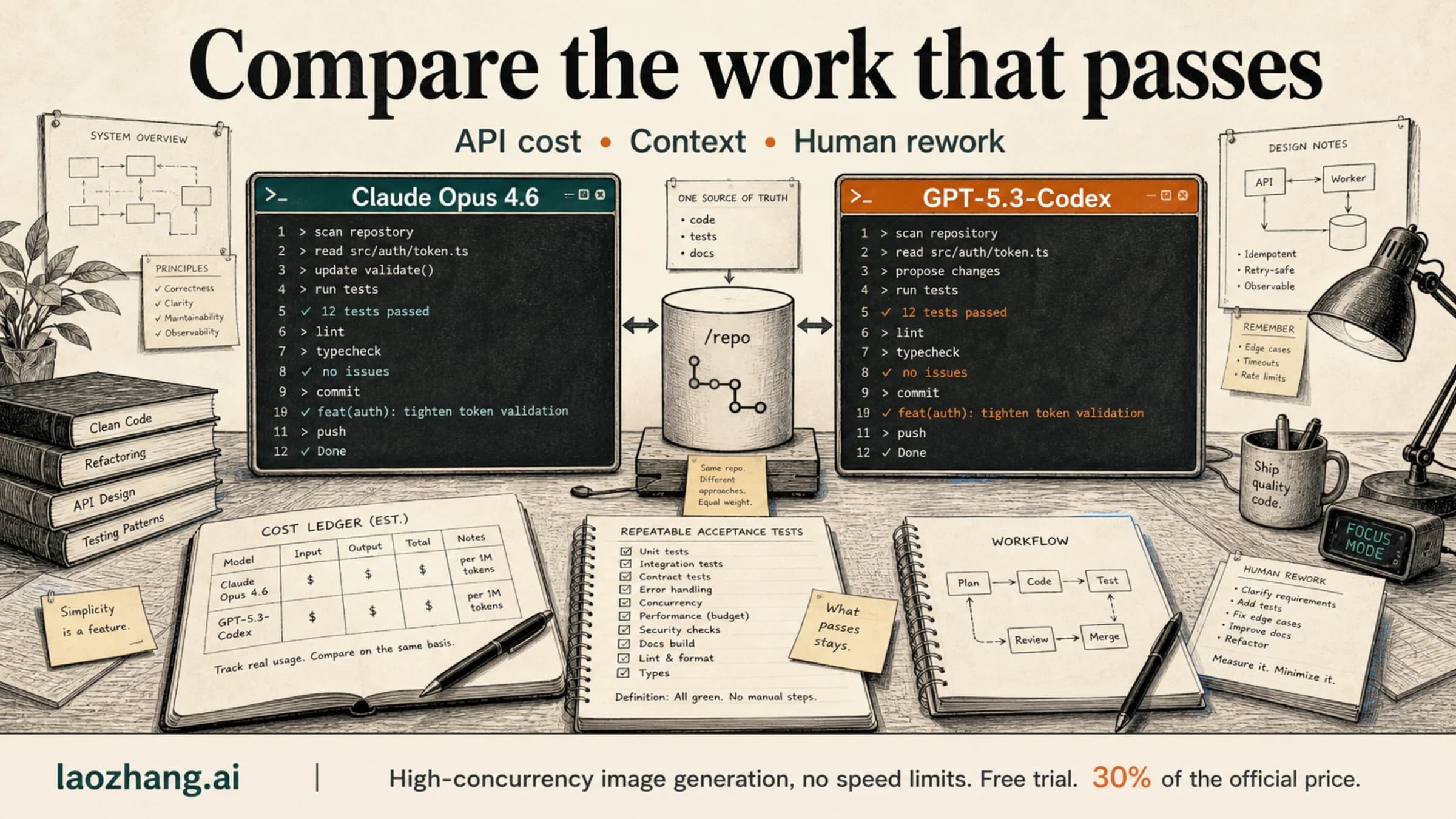
The business metric should include every attempt that was needed to obtain usable work:
API spend = uncached input + cached reads/writes + output/reasoning + tool fees

cost per accepted result =
  (API spend across all attempts + internal cost of human repair)
  / accepted results
If converting staff time to dollars is inappropriate, keep repair minutes as a separate metric. Do not erase them. A cheaper attempt can be the more expensive workflow when it repeatedly creates twenty minutes of review and correction; an expensive attempt can still be wasteful when the cheaper model already clears the same acceptance bar.
Fable's integration rules can outweigh its model capability
Fable 5.1 is not a drop-in target for every Claude harness. Anthropic's migration guide documents several request behaviors that should be checked before any quality test:
- Adaptive thinking is always on. Both disabled thinking and manual
budget_tokensreturn errors. - Assistant prefill is unsupported.
tool_choiceacceptsautoandnone, but forcinganyor a namedtoolreturns a 400 error.- Earlier Claude models cannot read Fable 5.1 thinking blocks.
- Changing the system prompt, tool definitions, or earlier messages can invalidate later thinking blocks in affected conversations.
These are architecture constraints, not benchmark footnotes. A harness that rewrites history during client-side compaction, relies on positional response parsing, or forces a particular tool must be adapted before its Fable result means anything. Otherwise the test measures integration incompatibility rather than the model's ability to do the job.
Data policy can be an even earlier stop. Anthropic currently designates Fable 5.1 as a Covered Model. Its API retention documentation requires 30-day retention and says zero-data-retention access needs express authorization. A regulated workload should clear that requirement with the responsible legal and security teams before prompts are sent. Model quality cannot compensate for a deployment that is not allowed to process the data.
Gemini has its own configuration edges. Its minimal thinking level returns an error; computer use is still Preview; grounding and caching have separate charges; and its broader audio, video, and PDF input support should be tested on the actual media limits and API path the application will use. The detailed Gemini 3.8 migration guide is the better reference when an existing Gemini integration must change parameters or multi-turn behavior.
Build one comparable track and separate feature-specific tracks
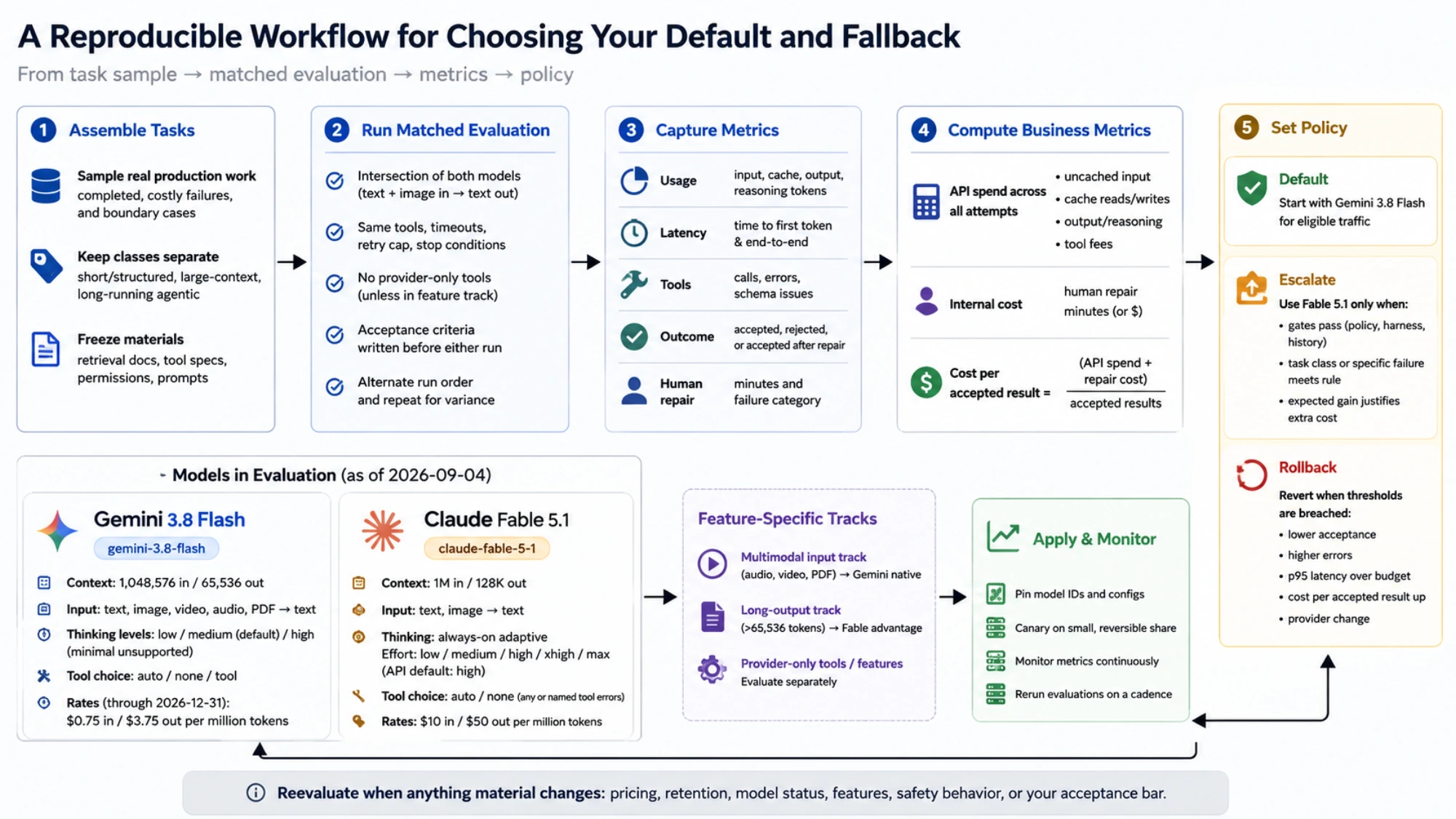
A useful evaluation begins with production tasks, not demo prompts. Sample recent work from the queues that will actually use the model: completed tasks, costly failures, and boundary cases that caused retries or human intervention. Keep distinct classes for short structured work, large-context synthesis, and long-running coding or tool use. A single average can hide a model that is excellent on one class and uneconomical on another.
For the directly comparable track, use the intersection of the two products:
- identical text and image inputs;
- the same frozen retrieval material;
- equivalent tool definitions and permissions;
- the same timeout, retry cap, and external stopping rule;
- no provider-only tool unless that tool is the feature being evaluated;
- acceptance criteria written before either model runs.
Test native advantages separately. Gemini's audio, video, and PDF inputs are relevant product capabilities, but including them in a supposedly matched text-and-image score would make Fable fail a task it was not specified to accept. The same principle applies to Fable's larger output allowance. A long-output track can test whether 128K changes completion quality without pretending that it is identical to the common track.
Do not equate effort labels across vendors. Gemini high and Fable high are product controls, not a shared compute unit. Two views are usually more informative: an out-of-box run using each provider's documented default, and a budgeted run with the same wall-time, retry, tool-call, and maximum-spend constraints. If tuning is permitted, tune both against the same development set and score only on a held-out set.
Acceptance must describe usable work. For a coding task, that might require tests to pass, changes to stay within scope, and a reviewer to find no blocking defect. For research, it might require every material claim to trace to an allowed source, calculations to reproduce, and all requested parts to be present. Style preference alone is too unstable to authorize a model change.
Capture enough detail to explain a result later:
| Field | Why it matters |
|---|---|
| Task ID and task class | Prevents an overall average from hiding workload differences |
| Exact model ID and configuration | Makes a rerun interpretable after defaults change |
| Attempt number and stop reason | Preserves retries, refusals, timeouts, and partial completions |
| Input, cache, output, and reasoning usage | Reconstructs the provider bill instead of estimating from text length |
| Tool calls and tool errors | Separates model failure from tool or schema failure |
| First-token and end-to-end latency | Distinguishes responsiveness from total completion time |
| Accepted, rejected, or accepted after repair | Supplies the denominator for cost per accepted result |
| Human repair minutes and failure category | Shows whether a nominal quality gain saves real work |
Alternate the run order when external conditions can change, and repeat enough tasks to see variance rather than treating one success as a stable rate. Keep raw responses and grader reasons. Without them, a changed aggregate is difficult to diagnose and easy to rationalize after the fact.
Convert the measurements into default, escalation, and rollback rules
A model policy should name the condition that changes the choice. “Use Fable for hard tasks” is not operational until the system can recognize the task or observe a failure.
A defensible default
In the absence of workload results, make Gemini 3.8 Flash the default candidate for ordinary eligible traffic. The price gap limits the cost of learning, and its input modes cover more ingestion-heavy jobs. This recommendation changes if a hard requirement disqualifies Gemini or if an existing, verified Fable workflow already shows a lower cost per accepted result.
Do not send every task to Fable merely because Anthropic positions it for frontier work. Even Anthropic recommends Opus 5 as the starting point for most Claude workloads. Fable should have a job that can repay its premium.
An escalation rule that can be audited
Escalation can be triggered by a task class that has already shown a Fable advantage, or by a specific Gemini failure such as an unaccepted plan after the permitted retry. It should not be triggered by response length, a vague confidence phrase, or an unsafe request that another model should not answer either.
Before escalating, check three gates:
- The request is allowed under the Fable retention and safety policy.
- The Claude harness supports the required conversation and tool behavior.
- Historical results for this task class show that avoided failures or repair time justify the incremental API cost.
For high-value work, the justification can include avoided failure loss as well as labor. Keep that value explicit. Otherwise “quality is worth it” becomes an unlimited budget with no feedback loop.
A rollback rule that reacts before users do
Pin the exact model IDs and canary the new policy on a small, reversible share of eligible traffic. Roll back when a predeclared threshold is breached: first-pass acceptance falls, tool/schema errors rise, refusal behavior changes, p95 latency exceeds the product budget, or cost per accepted result loses its expected advantage. Also stop if a provider changes pricing, retention, model status, or a required feature.
Google's deprecation page currently gives gemini-3.8-flash no shutdown date. Anthropic's lifecycle page says Fable 5.1 will retire no sooner than September 1, 2027. Neither is a permanence guarantee. A reversible adapter, stored fixtures, and scheduled reruns are more durable than an assumption that today's model will remain unchanged indefinitely.
Keep the restricted variants out of the ordinary comparison
Gemini 3.8 Flash Cyber is not a public higher-effort setting for gemini-3.8-flash. Google describes it as a separate model available to approved trusted defenders through the Fairwind Program. Its access path should not be represented by an invented public model ID or the ordinary Flash price row.
Claude Mythos 5.1 is similarly outside normal Fable access. Anthropic says it shares Fable 5.1's underlying capabilities but is limited to Project Glasswing participants with different safeguards. Cyber and Mythos may be relevant to approved security organizations, but substituting either one would turn this into a different access and governance decision.
Consumer subscriptions are another separate purchase. A model appearing in a chat product does not establish its API price, throughput, retention terms, or tool compatibility. Evaluate API workloads with API usage and invoices; evaluate subscription value with the plan's own allowance and product features.
The decision is a policy, not a trophy
Gemini 3.8 Flash has the stronger default case when volume, multimodal ingestion, or the cost of learning dominates: its public specification is broad, and its current equal-token rate is dramatically lower. Claude Fable 5.1 has a credible place as a challenger for the hardest long-running tasks and for workflows that benefit from its larger maximum output—but the specification alone cannot prove that it will recover its premium.
Start with the cheapest eligible model that could plausibly meet the requirement. Escalate only where matched results show a meaningful gain. Roll back when acceptance, latency, tool reliability, policy fit, or cost per accepted result crosses a limit set in advance. That approach remains useful after both model names and prices change.
For implementation details on the two branches, use the same-language guides for Gemini 3.8 Flash migration and Claude Fable 5.1 pricing, cache, and effort. If the real architecture question has expanded beyond this pair, the three-provider API comparison is the more appropriate next step.