Claude Fable 5.1 Usage Limits: Pro, Max, and Paid Credits
Claude Max includes Fable 5.1 within its existing weekly allowance, with a shared 50% cap for Fable models. Pro pays with usage credits from the first request. Here's how to check your limit, reset time, and spending controls before continuing.
On this page
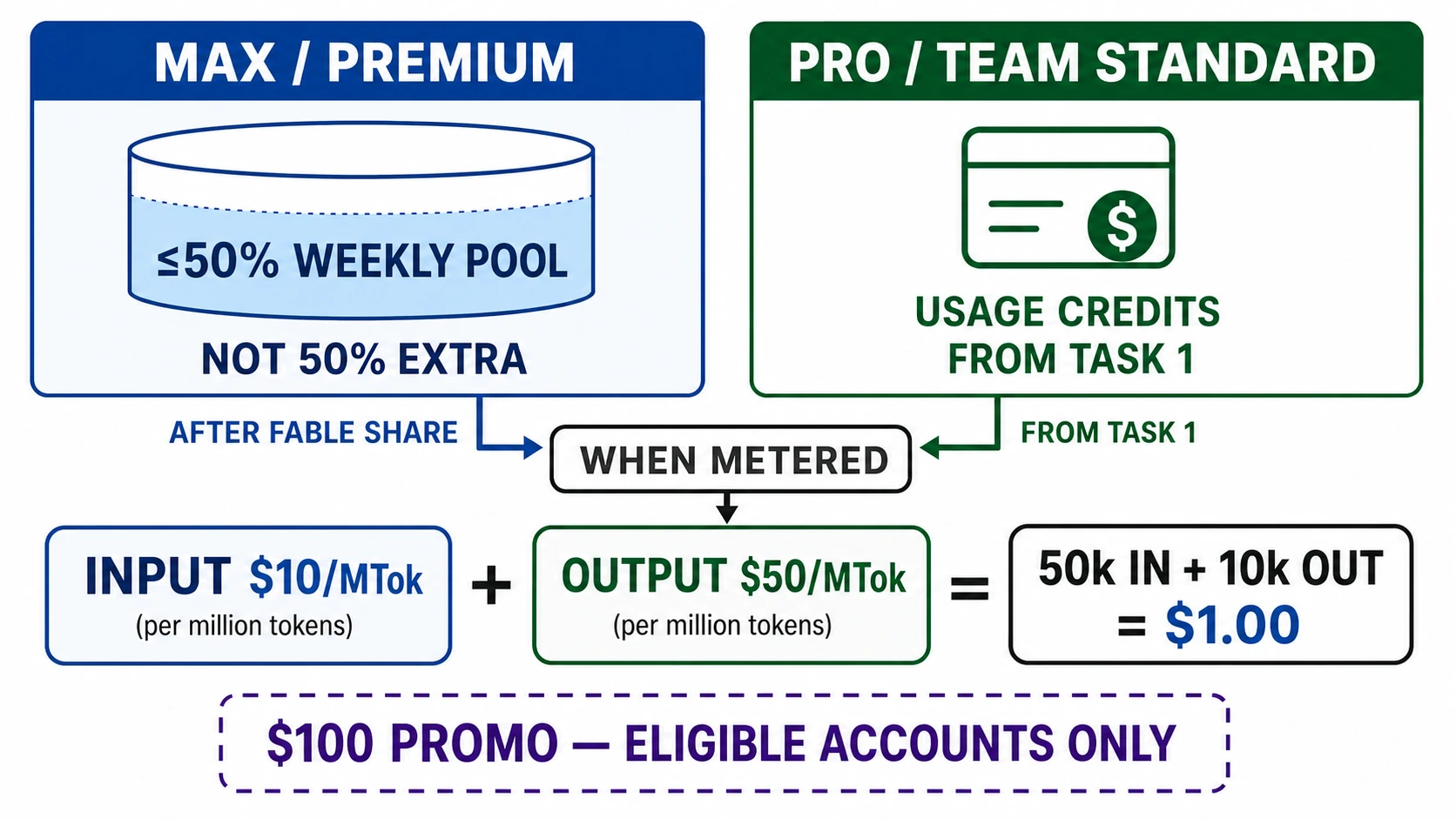
Claude Pro uses paid usage credits from the first Fable 5.1 request. Max 5x and Max 20x include Fable usage, but Fable 5 and 5.1 together can consume at most 50% of the existing shared weekly allowance. That is a ceiling inside your plan, not an extra allowance. Anthropic does not publish a fixed number of Fable messages per day or week. These are the rules in its Fable plan guide, checked September 20, 2026.
Before continuing an interrupted task, open Settings > Usage in the account you are actually using. Check which limit has been reached, its reset time, and whether paid credits are enabled. A remaining credit balance does not by itself mean another request can run: a spending cap or organization setting can still stop it.
Which plans include Fable 5.1?
| Account or seat | Included Fable usage | What allows paid continuation |
|---|---|---|
| Max 5x or Max 20x | Fable models together may use up to 50% of the shared weekly allowance | Enabled usage credits, available funds, and room under the spending cap |
| Premium seats on Team or legacy seat-based Enterprise | Same 50% Fable ceiling within the shared weekly allowance, subject to organization controls | Organization-enabled credits and the applicable spending controls |
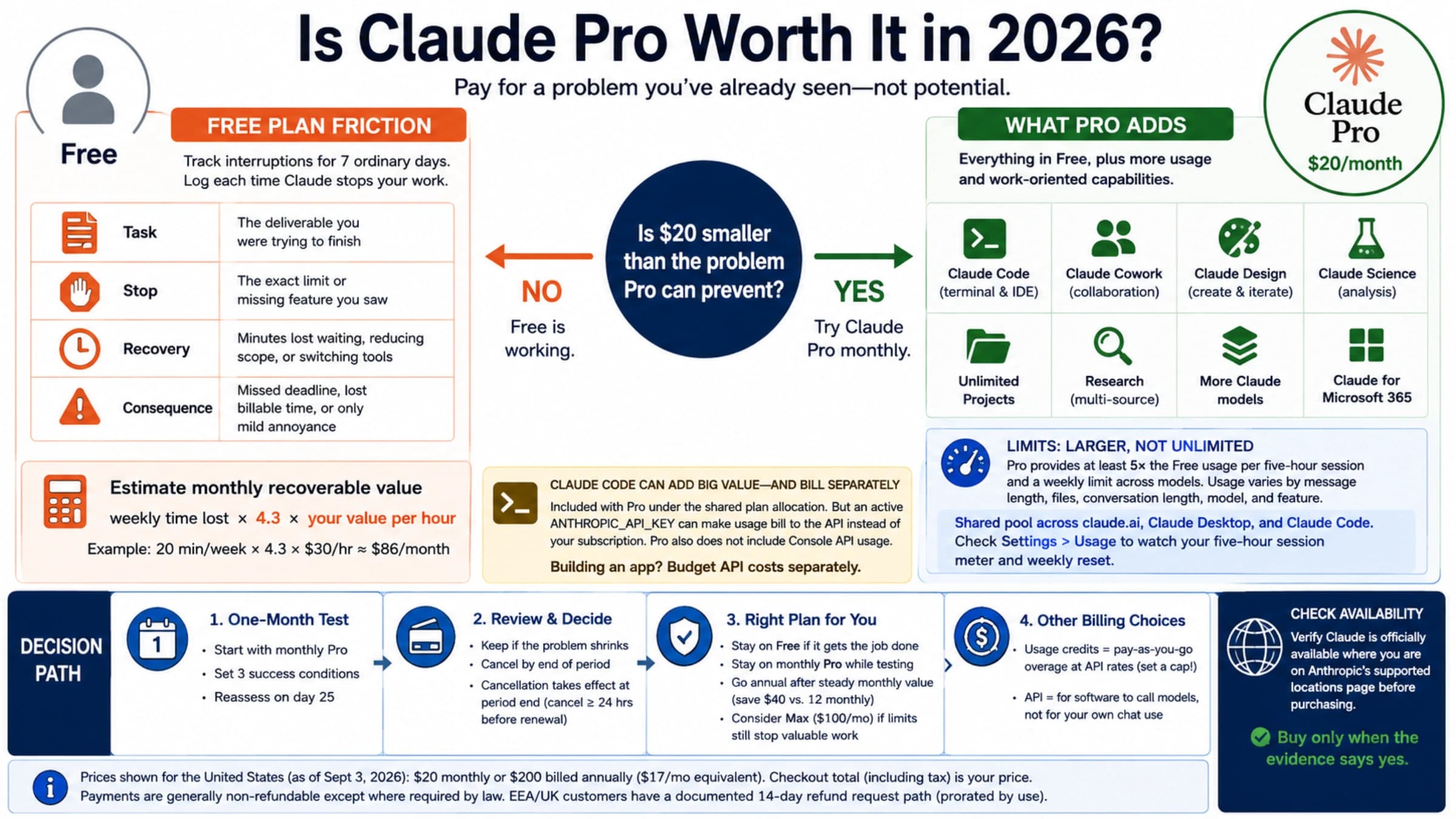
| Pro | None; usage credits apply from the first Fable request | Enabled usage credits, available funds, and room under the spending cap |
| Standard seats on Team or legacy seat-based Enterprise | None; usage credits apply from the first Fable request | The organization must enable paid Fable usage |
| Usage-based Enterprise or Claude API | Billed at API rates rather than this consumer-plan allowance | Applicable organization or project billing controls |
The plan guide distinguishes seat types, not just product names. “My company has Team” is therefore not enough to tell whether a Fable request is included. Free accounts do not have Fable access.
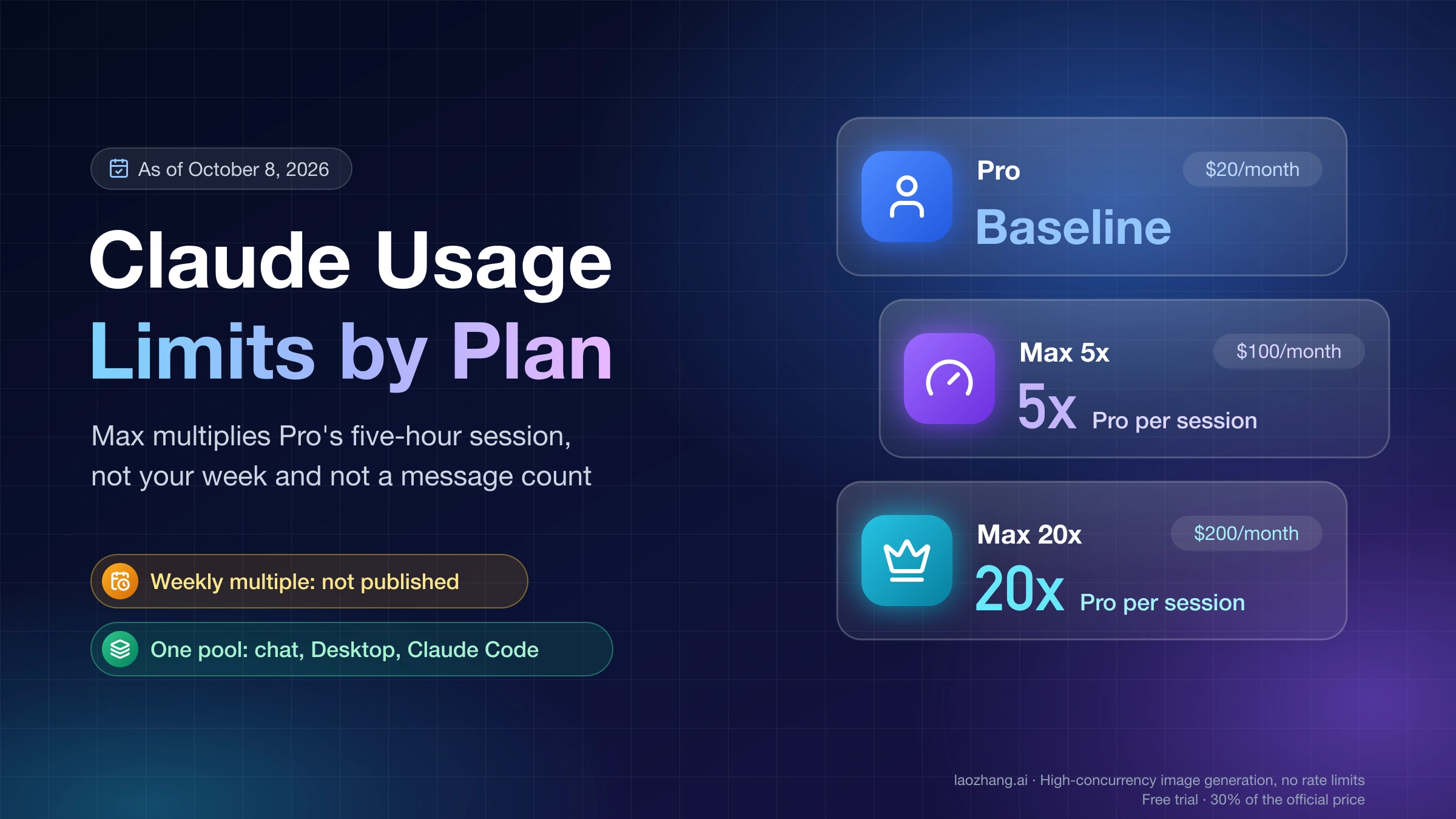
Max's 5x and 20x labels describe per-session capacity relative to Pro. They are not a promise of five or twenty times a particular Fable message count. Anthropic lists individual Max subscriptions at $100 and $200 per month on the web; mobile pricing can differ. See the Max plan details and our Pro versus Max comparison if you are weighing a higher subscription against your actual interruptions and credit spending.
How the 50% weekly cap works
All included model use draws from the same weekly allowance. On eligible plans, a second counter limits how much of that allowance Fable models can consume.
Consider an illustrative weekly allowance of 100 percentage points:
- Fable 5 and 5.1 have used 40 points between them.
- Other Claude models have used 25 points.
- Total weekly usage is 65 points, leaving 35.
- Fable can use at most 10 more points of included usage before reaching its own 50-point ceiling.
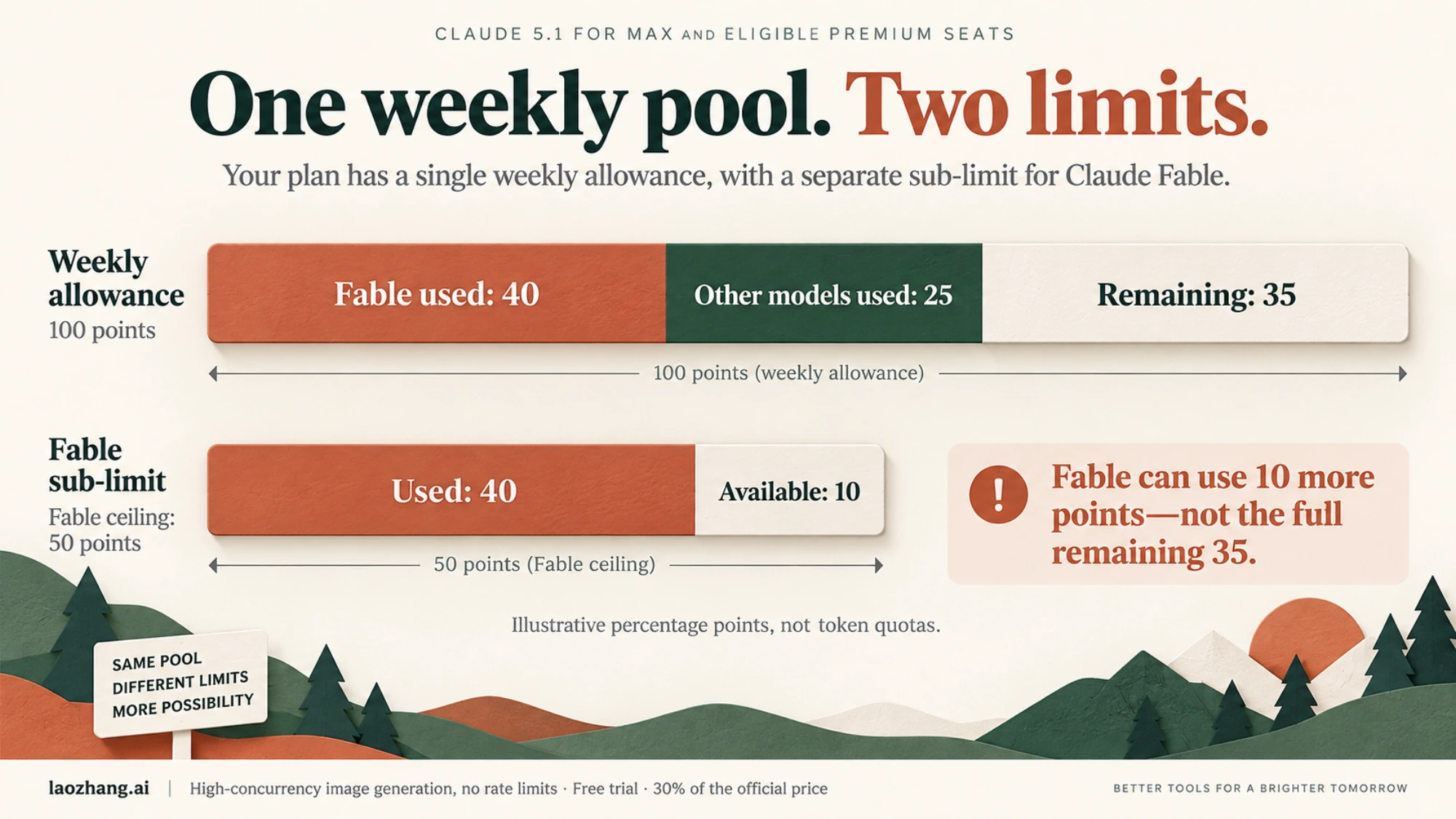
That example explains the counters; it does not represent a published token quota. Other model use can also exhaust the shared allowance before Fable reaches its ceiling. Conversely, reaching the Fable ceiling can leave ordinary plan usage available for another model. Switching models only helps if the relevant remaining allowance permits it.
There is no reliable conversion from the API price ratio to a subscription's depletion rate. Anthropic says Fable consumes plan limits faster than other models, but does not publish one universal multiplier. Model choice, effort, conversation length, attachments, tools, and other features affect usage. The official usage and length limits explanation is the better reference than a fixed “messages per week” estimate.
When limits reset—and what will not reset them
Claude has separate session and weekly limits. The session limit resets on a five-hour cycle. The shared weekly allowance resets at an account-assigned day and time; it is not determined by when you subscribed or first used Fable. Settings > Usage shows the reset time that applies to your account. These limits are described in the Max plan guide.
Opening a new chat, moving from the website to Claude Code, or reducing effort cannot refill an exhausted allowance. Web, Claude Code, and Claude Desktop usage on the same account share limits. A new conversation may help avoid carrying unnecessary history into future requests, but it is not a quota reset.
Context length is a different constraint: it concerns how much a conversation can hold, whereas usage limits constrain consumption over time. If a long task keeps hitting limits, remove irrelevant context and unnecessary tool work, and choose an effort level appropriate to the task. Those choices may reduce future consumption; they cannot guarantee a particular number of extra requests. Fable 5.1 has adaptive thinking always on, so “turn off thinking” is not an available workaround. See the model overview.
Continuing with credits: check three separate controls
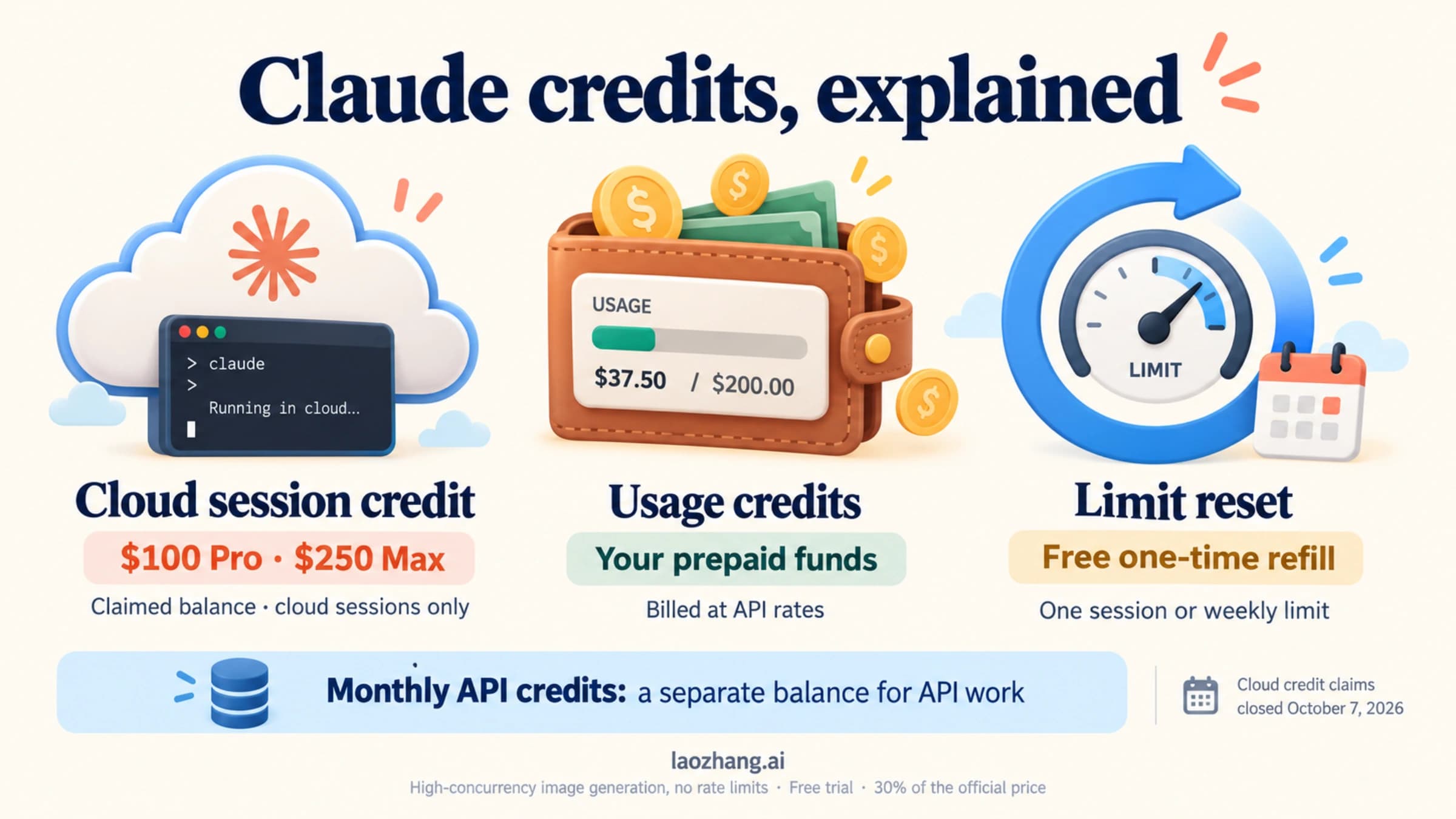
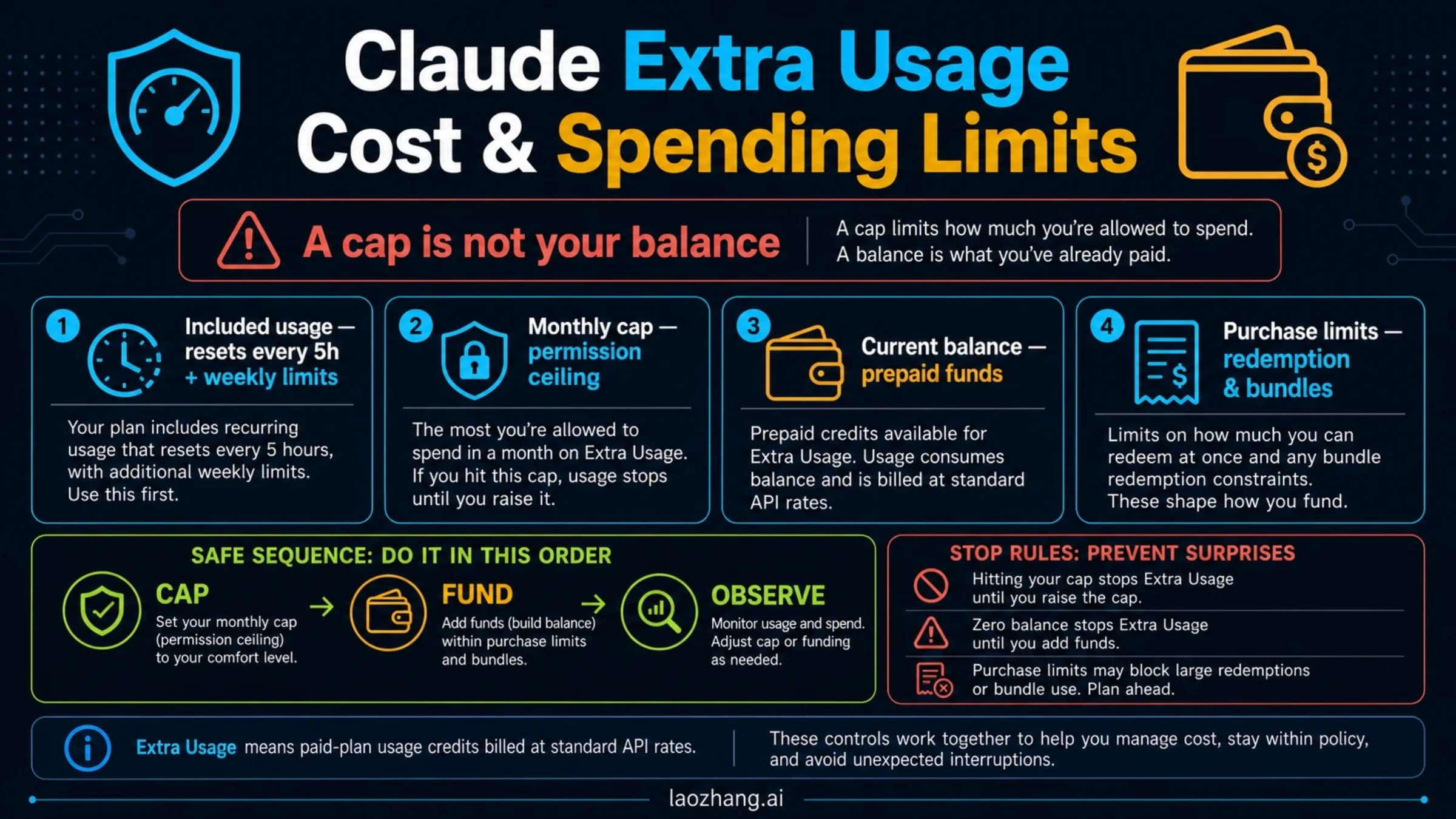
Usage credits fund separately billed work at API rates. On Pro, they apply to Fable from the start. On Max and eligible Premium seats, they can fund continuation beyond included usage. For individual plans, Claude provides a notice or confirmation when paid continuation begins. Review it before proceeding; the usage-credit guide explains the controls.
| Control in Settings > Usage | What it does | What it does not do |
|---|---|---|
| Credit balance | Holds funds available for metered usage | Override a reached spending cap or disabled credits |
| Monthly spending cap | Limits monthly spending on usage credits | Add money or increase the included weekly allowance |
| Auto-reload | Replenishes the balance under the configured conditions | Replace your spending cap or change a quota reset time |

Check all three before a long run. If you want to limit extra spending, set the cap to an amount you are willing to spend and review auto-reload separately. App Store and Google Play subscribers need to use the Claude website to enable or purchase usage credits. Team and Enterprise users should check the organization's controls with their administrator.
For a sense of scale, Fable 5.1's standard base API rates are $10 per million input tokens and $50 per million output tokens. A hypothetical request with 50,000 uncached input tokens and 10,000 output tokens has a base cost of $1:
50,000 / 1,000,000 × $10 + 10,000 / 1,000,000 × $50 = $1That is a token-cost illustration, not a quote for an entire coding task. An agent can make multiple requests, reread context, use caches, and retry. The official model overview gives the rates; our Fable 5.1 API pricing guide covers caching, Batch pricing, and the fuller calculation. API discounts do not enlarge a subscription allowance, and Claude Console API credits are separate from the usage credits in a personal Claude account.
A switch to Opus does not necessarily mean you hit a limit
Fable can switch to Opus because a safety system flags a request. That is separate from running out of included usage. Anthropic's model-switching guide says a notice and response label identify the switch; the model picker then remains on Opus.
The timing matters for metered billing. If the input is blocked before Fable responds, the request is charged only at the Opus rate. If a switch happens after Fable has started responding, the Fable input and already-streamed output are charged at Fable rates, and the rest at Opus rates. A switch is not evidence that the entire request was free or refunded.
Automatic switching can be controlled under Settings > Capabilities, or in Claude Code under Config > MODEL & OUTPUT > Switch models when a message is flagged. Turning it off pauses a flagged request; it does not unlock unrestricted Fable use or restore quota. Read the notice before treating a different response model as a billing or capacity problem.
Before you restart a Claude Code task
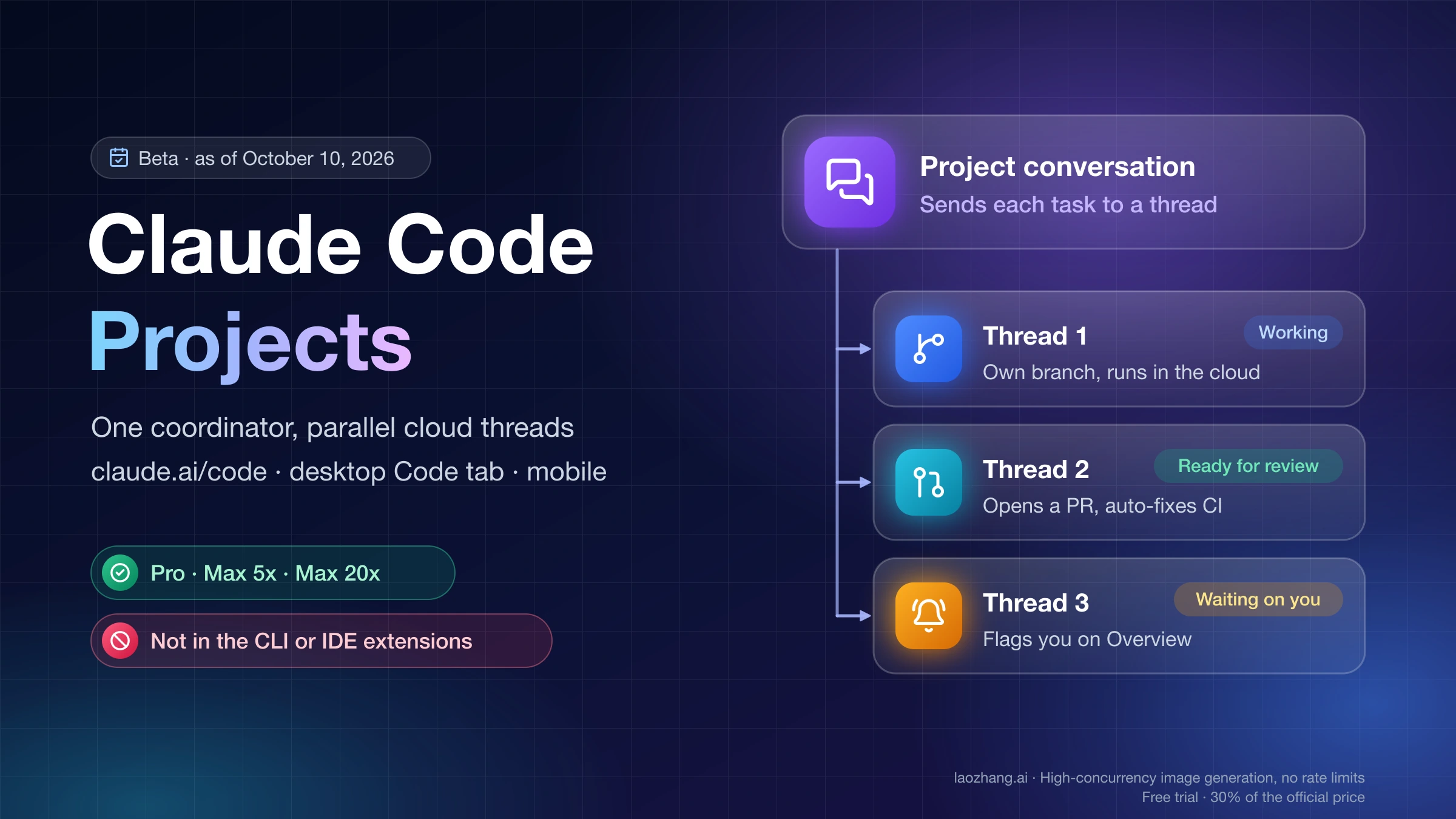
First check your version. Fable 5.1 requires Claude Code 2.1.255 or later, according to the current plan guide. Older advice citing 2.1.250 is out of date. Run claude update if needed; Cowork requires an up-to-date Claude Desktop app.
Then run /status to check the account and authentication in use. An ANTHROPIC_API_KEY can put Claude Code on API billing rather than the subscription you just inspected. Use /login if you need to sign in to the intended account, following Anthropic's Pro and Max setup guide. Never paste a secret key into a support conversation. Our API key versus subscription billing guide walks through that distinction.
Finally, choose the next step from the actual stopping condition:
- Included Fable limit reached: wait for the displayed reset, switch models within remaining plan usage, or explicitly continue with credits.
- Credits cannot be used: check enablement, balance, spending cap, and any organization restriction before retrying.
- Safety switch notice: check the answering model and decide whether to continue with Opus.
- Model unavailable despite the expected plan: verify the Code version, login, and organization enablement.
For a paid run, compare the usage meter or balance before and after a representative task with a clear completion criterion. Leave room in your budget for retries. If the counter causing confusion is not specific to Fable, see the broader Claude usage-limit guide.
Can I still use the July promotional credits?
No. The Fable 5 transition credits have expired. The included-use promotion ended July 19, 2026 at 11:59:59 p.m. Pacific. The transition-credit claim window closed August 2, and those credits expired September 17, 2026 at 11:59 p.m. Pacific, regardless of the claim date. They are already expired as of this article's September 20 update. The promotion terms applied to Fable 5; there is no equivalent Fable 5.1 launch credit.
Purchased credits have different terms. They generally do not expire, but the usage-credit policy specifies exceptions: in jurisdictions such as Japan, purchases starting September 10, 2026 expire six months after purchase. Your purchase jurisdiction and displayed expiry matter, not the language you use in Claude. Check the balance and terms in your own account rather than relying on an old promotion screenshot.
Sources8
External pages this guide links to, in the order they appear. Last updated Sep 20, 2026.
Sources8
External pages this guide links to, in the order they appear. Last updated Sep 20, 2026.
- 1.Fable plan guidesupport.claude.com/en/articles/15424964-claude-fable-models-on-your-plan
- 2.Max plan detailssupport.claude.com/en/articles/11049741-what-is-the-max-plan
- 3.usage and length limits explanationsupport.claude.com/en/articles/11647753-how-do-usage-and-length-limits-work
- 4.model overviewplatform.claude.com/docs/en/models/fable-5-1/overview
- 5.usage-credit guidesupport.claude.com/en/articles/12429409-manage-usage-credits-for-paid-claude-plans
- 6.model-switching guidesupport.claude.com/en/articles/15363606-why-claude-switched-models-in-your-conversation-with-fable-5-or-fable-5-1
- 7.Pro and Max setup guidesupport.claude.com/en/articles/11145838-use-claude-code-with-your-pro-or-max-plan
- 8.promotion termssupport.claude.com/en/articles/15862783-claude-fable-5-one-time-free-credits-promotion