GPT Image 2.5 Flare vs Nano Banana: API Price Comparison
Compare Flare and Nano Banana API costs at 1K and 2K, including official output estimates, LaoZhang per-call prices, and a 10,000-image budget.
On this page
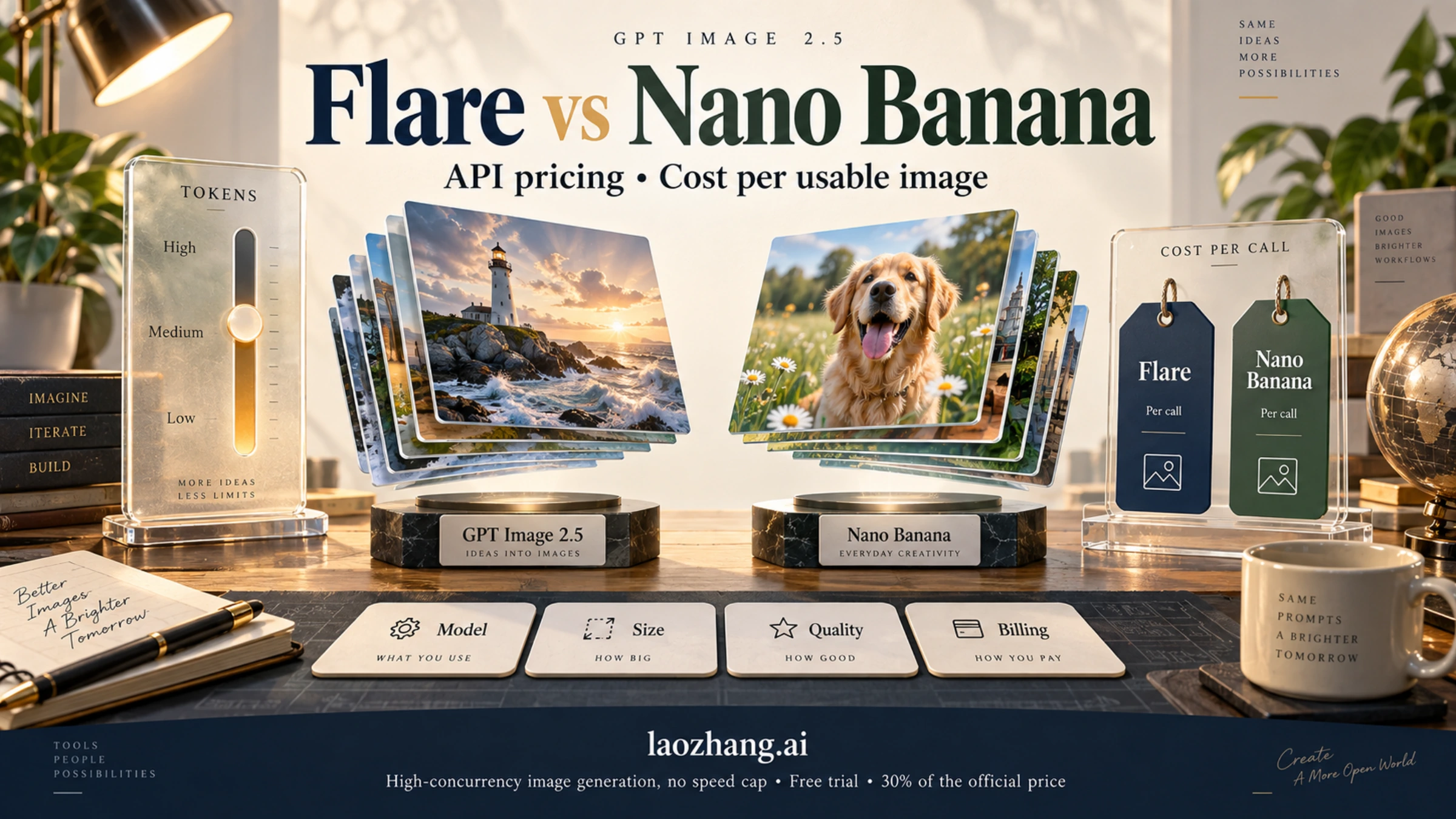
GPT Image 2.5 Flare has the lower official image-output estimate at 1K medium quality: $0.01317, versus $0.0336 for Nano Banana 2 Lite and $0.0672 for Nano Banana 2. At 1K high, Flare's estimate rises to $0.05268, making Lite the cheaper output option. These figures compare prices at specified settings, not equivalent visual quality; prompts, reference images, and other applicable usage add to the official bill. Prices were checked on September 12, 2026. OpenAI calculator, Google API pricing
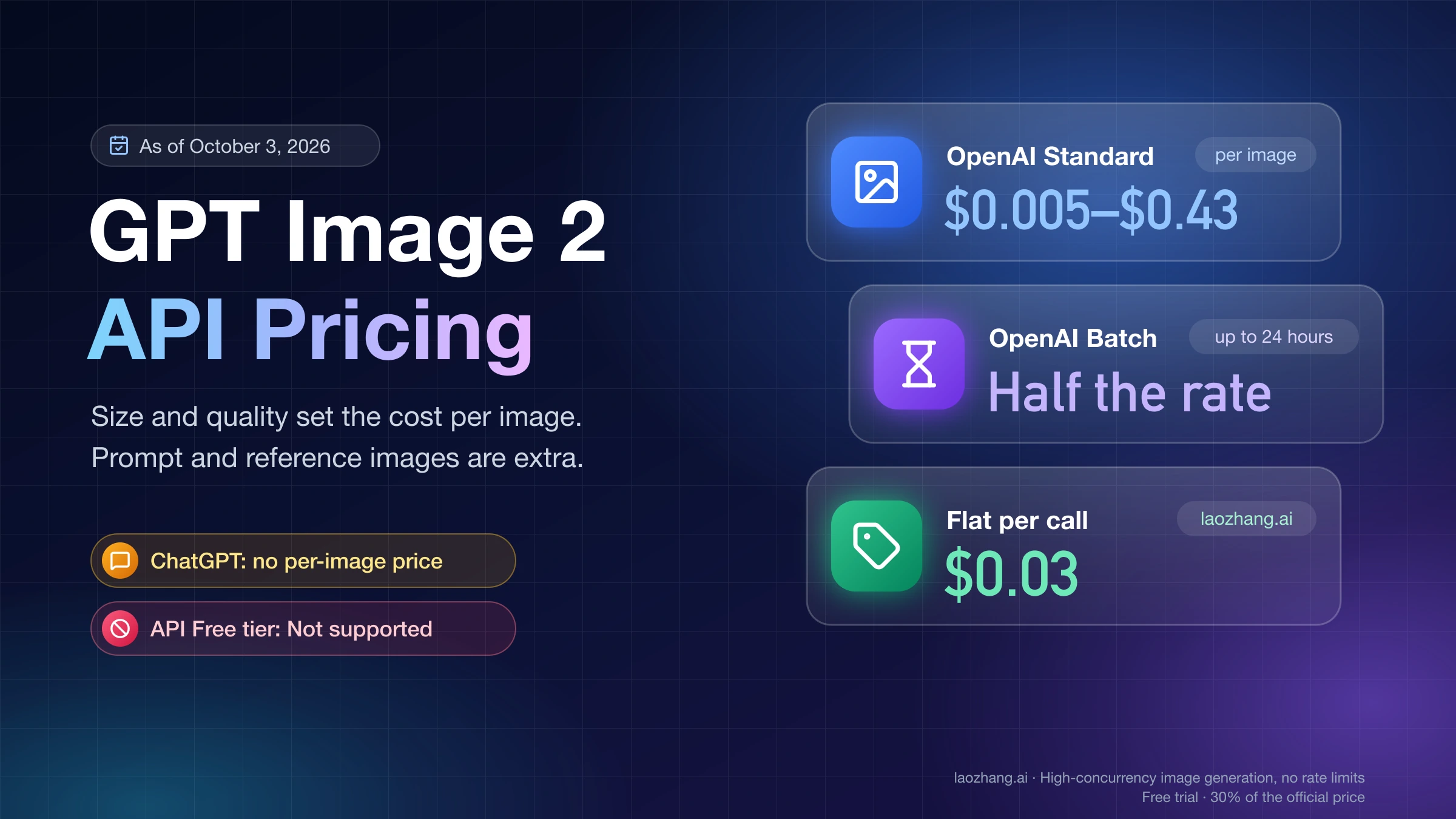
Official prices for both families are token-based. Separately, laozhang.ai, the API gateway run by the team behind this blog, documents a gpt-image-2.5-flare-vip option at $0.03 per call, with generation and editing endpoints that follow the official request format. A fixed per-call price matters most when your workload needs more expensive output settings; at Flare low or medium, the official output estimate is lower. The published image documentation establishes the price and supported protocol, but does not specify an unlimited-concurrency SLA. LaoZhang GPT Image 2.5 documentation
Disclosure: laozhang.ai is our own service. Its prices are platform pricing, not an independent comparison.
Start with the exact Nano Banana model
“Nano Banana” covers several Gemini image models, so a comparison against a single unqualified price can send your budget in the wrong direction.
| Product | Exact Google model ID | Official Standard image output at 1K |
|---|---|---|
| Nano Banana 2 Lite | gemini-3.1-flash-lite-image | $0.0336 |
| Nano Banana 2 | gemini-3.1-flash-image | $0.0672 |
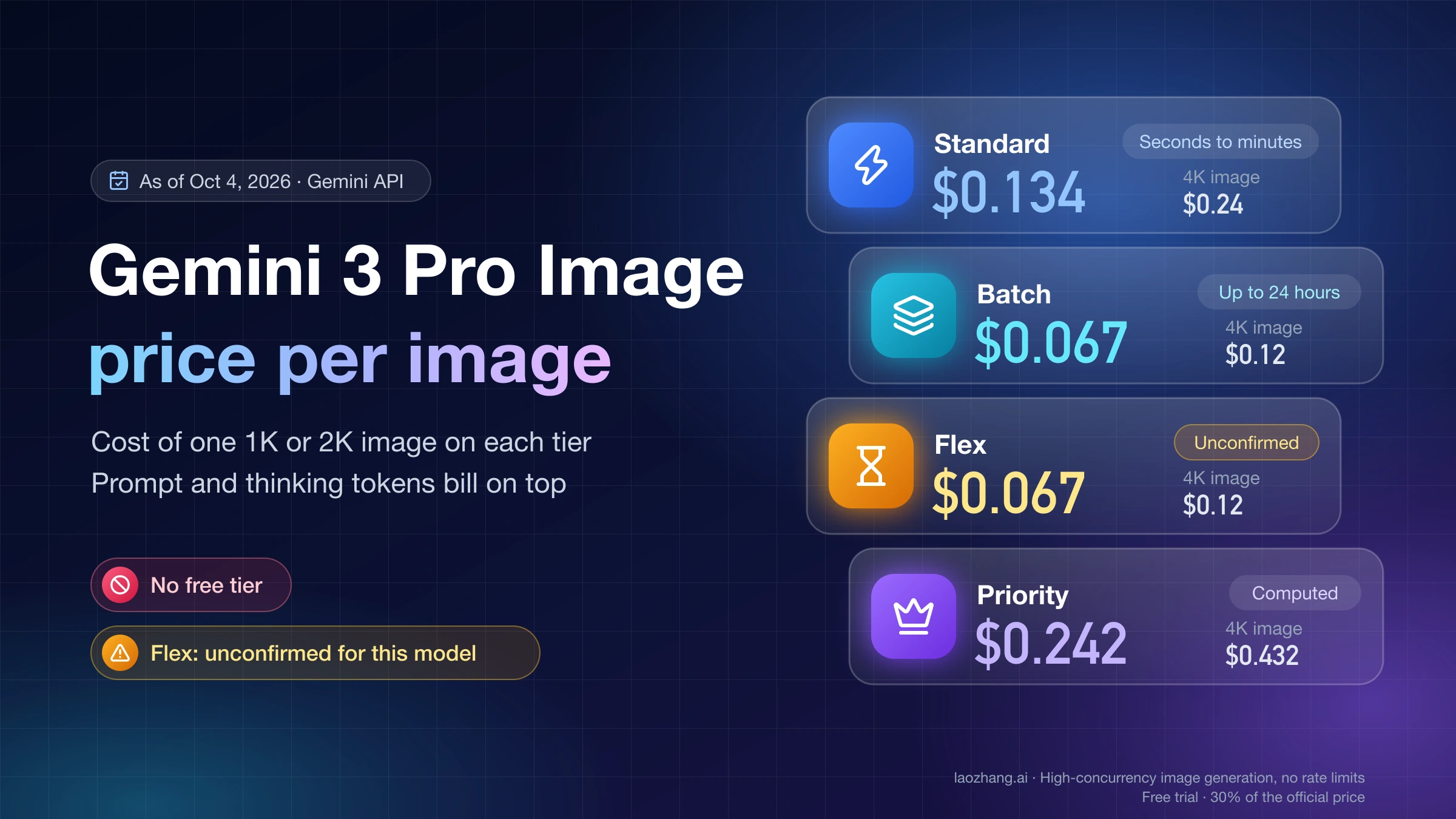
| Nano Banana Pro | gemini-3-pro-image | $0.1344 |
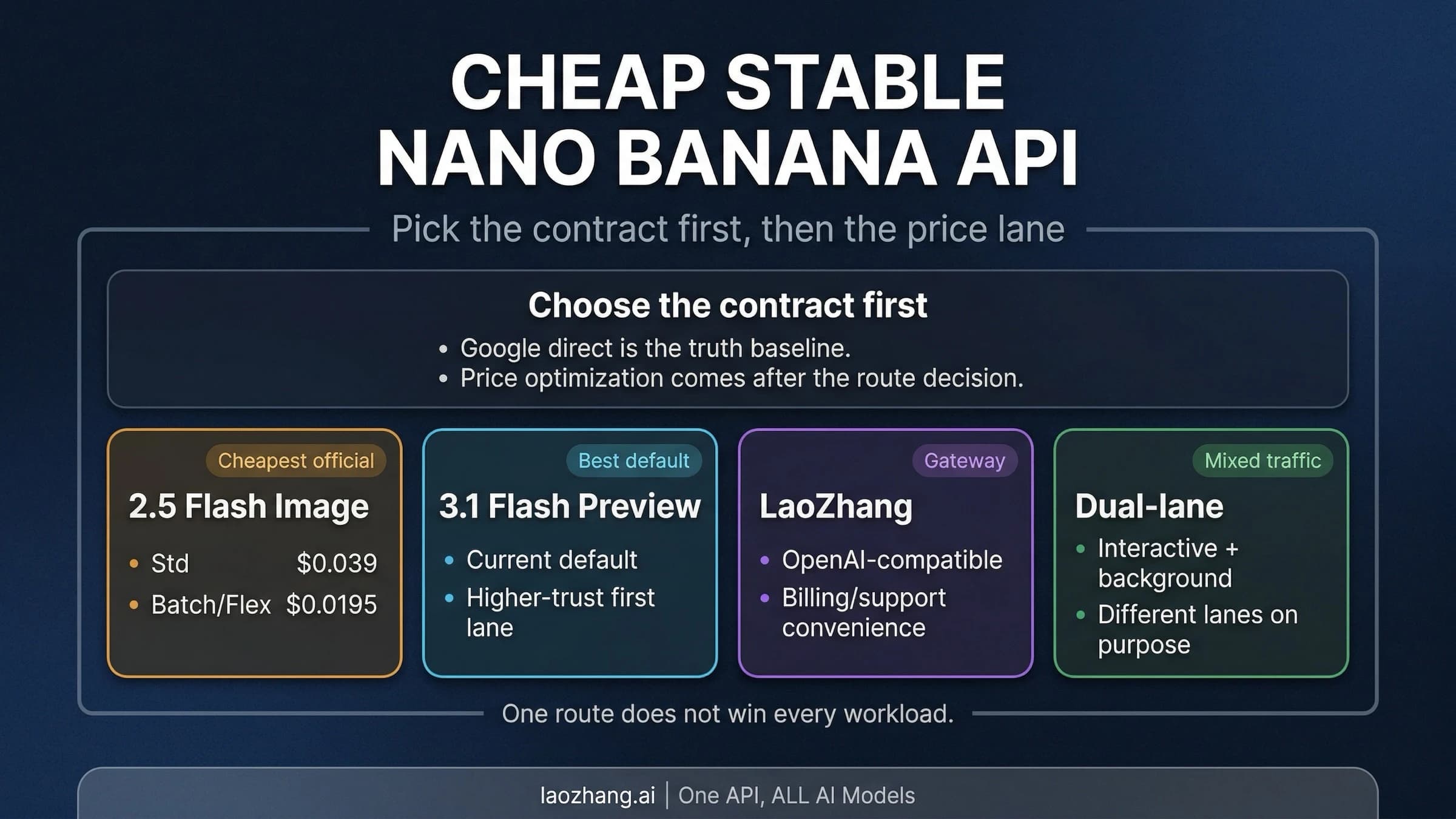
| Original Nano Banana | gemini-2.5-flash-image | $0.039 published price |
The first three values use Google's published image token counts multiplied by their Standard rates. Google rounds some per-image figures in its table. The original model's $0.039 is its published rounded quote; it is deprecated and scheduled to shut down on October 2, 2026, so it is a migration concern rather than a sensible new default. Google model prices and retirement notice
Flare's official alias is gpt-image-2.5-flare. OpenAI positions it for fast everyday image generation and also supports image editing. The -vip suffix used by LaoZhang identifies a separate provider offer; it is essential when selecting its fixed-price service. For the choice between OpenAI's two 2.5 models, see our Sunburst vs Flare guide. Official Flare model
What the official APIs cost at 1K and 2K
All amounts below are USD per image output under Standard pricing. Flare values are observations from OpenAI's calculator with “GPT Image 2.5 (Sunburst and Flare)” selected, not measured invoices or guaranteed flat fees. The calculator groups both models; actual usage can vary. Google figures use the documented output token counts and rates. Quality names across vendors are not interchangeable. OpenAI cost calculator, Google image pricing
| Output setting | Flare estimate | Nano Banana 2 Lite | Nano Banana 2 | Nano Banana Pro |
|---|---|---|---|---|
1024×1024; Flare low, Google 1K | $0.00588 | $0.0336 | $0.0672 | $0.1344 |
1024×1024; Flare medium, Google 1K | $0.01317 | $0.0336 | $0.0672 | $0.1344 |
1024×1024; Flare high, Google 1K | $0.05268 | $0.0336 | $0.0672 | $0.1344 |
1024×1024; Flare xhigh, Google 1K | $0.09366 | $0.0336 | $0.0672 | $0.1344 |
1024×1024; Flare max, Google 1K | $0.21072 | $0.0336 | $0.0672 | $0.1344 |
2048×2048; Flare high, Google 2K | $0.10704 | — | $0.1008 | $0.1344 |
Repeated Google values show where Flare's quality setting changes the price comparison; they do not assign five quality levels to Google's models. We have not established a 2K Lite option, hence the blank entry.
Choose the lowest-priced setting that produces images you can use. If Flare medium meets your requirements, its official output estimate is compelling. If you need Flare high, Lite costs less per 1K output. At 2K high, Flare's estimate is slightly above Nano Banana 2 and below Pro. Paying more only makes economic sense if the result saves enough rework or supplies a feature your application needs.
For 4K square delivery, Google lists Nano Banana 2 at $0.1512 and Pro at $0.24 per image output. A 4096×4096 comparison against Flare would be invalid: Flare's maximum edge is 3840 pixels, alongside aspect-ratio and total-pixel constraints. Choose a supported output size before comparing prices. Google pricing, OpenAI image size requirements
Input charges and Batch can change the answer
OpenAI's Standard Flare rates are $5 per million text-input tokens, $8 per million image-input tokens, and $30 per million image-output tokens. A hypothetical 1,000 uncached text-input tokens therefore adds $0.005 to the output estimate. Reference-heavy edits need their image inputs included as well. Our GPT Image 2.5 pricing guide covers the complete accounting, including caching and streamed partial images. Official OpenAI rates
Google charges inputs and applicable text/thinking output separately too. Its Batch rates are half the Standard rates for Nano Banana 2 and Lite, bringing Lite's 1K output cost to $0.0168. That is a useful alternative when your application can use batch processing. Keep Batch in a separate comparison from Standard; the inspected OpenAI Batch image price rows do not establish a 50% discount for Flare. Google Batch prices, OpenAI pricing
When LaoZhang's fixed price is the better fit
LaoZhang is operated by the same team that publishes this blog. Its per-call prices give one fixed number per call to budget against across these families. The following are LaoZhang's published per-call prices, not official OpenAI or Google rates. For Flare VIP, the documented setup uses the Default group with a per-call token. Unsuffixed Flare uses a separate configuration for token-billed requests forwarded to the official API. Flare VIP setup and pricing, LaoZhang image catalog
Disclosure: laozhang.ai is our own service. Its prices are platform pricing, not an independent comparison.
| LaoZhang offer | Price per call | 10,000 billed calls |
|---|---|---|
GPT Image 2.5 Flare VIP: gpt-image-2.5-flare-vip | $0.03 | $300 |
| Nano Banana 2 Lite | $0.025 | $250 |
| Nano Banana 2 | $0.055 | $550 |
| Nano Banana Pro | $0.09 | $900 |
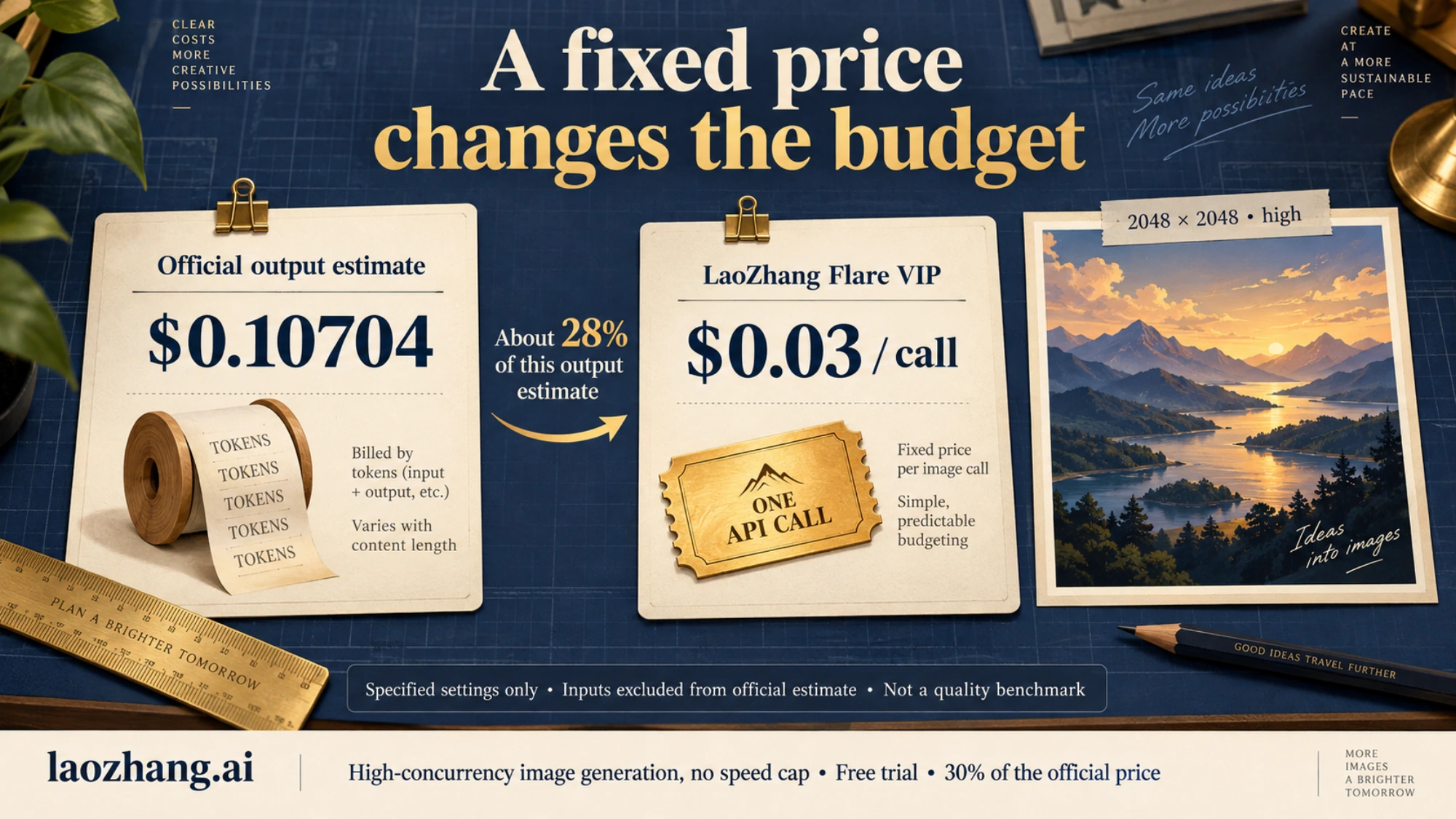
For a concrete comparison, $0.03 is approximately 28% of the official $0.10704 output estimate for a 2048×2048 Flare high image—about 72% less against that output-only baseline. This is the kind of workload where a “roughly 30% of the official price” offer is meaningful. It is not a universal discount: official 1024×1024 medium output is estimated at $0.01317, below LaoZhang's $0.03 call price even after adding the hypothetical $0.005 text input above.
The provider's protocol compatibility can also reduce integration work. LaoZhang documents bearer authentication, JSON generation requests at /v1/images/generations, and multipart edits at /v1/images/edits. Its VIP offer accepts size and five quality options: low, medium, high, xhigh, and max. An existing client can retain the supported official request pattern while changing its base URL, key, and model ID. VIP editing does not support mask, so applications that rely on masks need a different documented option. Supported Flare VIP API features
LaoZhang's enterprise service is advertised at laozhang.ai as offering high concurrency without a speed cap. If your application has bursty demand, that claim only matters once it is confirmed against your required images per minute and peak simultaneous requests. This article does not include a load test. The offered capacity and current model/group prices need confirming, and the available test credit can be used to check connectivity. New-account access requires Gmail or an enterprise whitelist; the trial credit is intended for API development and testing. LaoZhang onboarding
Turn a 10,000-image estimate into a production budget
At 10,000 outputs, the official 1K output-only estimates are $131.70 for Flare medium, $526.80 for Flare high, $336 for Lite, $672 for Nano Banana 2, and $1,344 for Pro. The fixed-call table above instead assumes 10,000 billed calls, with one output per call and no additional attempts. These are arithmetic scenarios, not a measured model comparison.
Your application likely needs 10,000 images it can actually use. Define acceptance first—for example, correct product identity, readable required text, and the requested dimensions—then calculate:
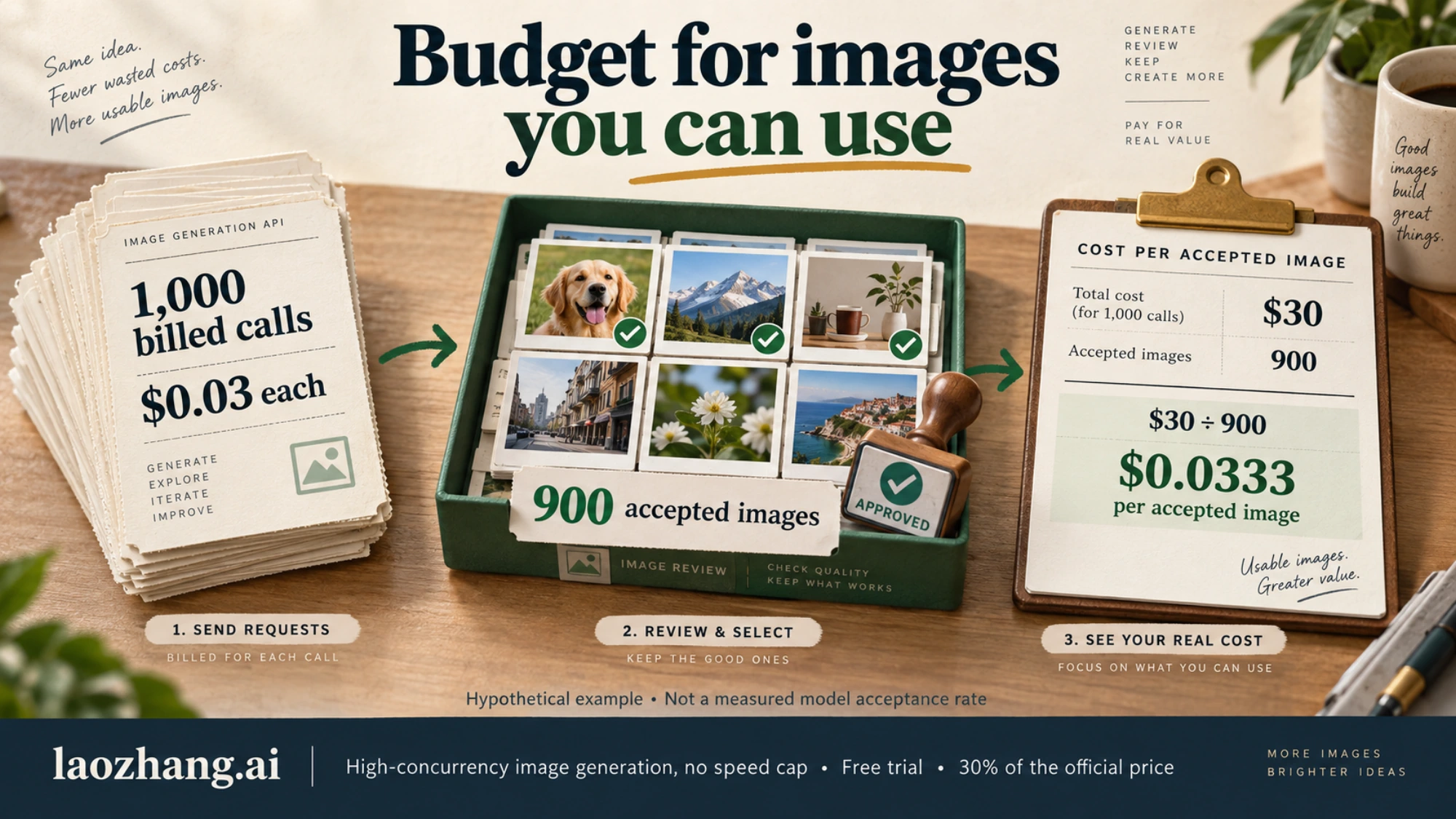
API cost per accepted image = total actual API charges / accepted imagesSuppose a $0.03-per-call service receives 1,000 billed requests and produces 900 images that pass your requirements. The spend is $30 and the accepted-image cost is about $0.0333. At that hypothetical acceptance rate, a budget for 10,000 accepted images is approximately $333.33. The 90% figure is an illustration, not a claimed acceptance rate for Flare or LaoZhang.
To make this comparison useful, run the same representative jobs through your shortlisted settings. Include both generations and edits if your app uses both. Record exact model ID, size, quality, reference-image count, total charge, returned-image status, acceptance, and end-to-end time. Reconcile retries and any refunds against actual billing instead of assuming every failed request is free or charged.
Then choose the least expensive configuration that meets your output and delivery requirements. For inexpensive 1K work, start with official Flare medium and Nano Banana 2 Lite. When you need a predictable fixed-call budget at higher Flare settings, LaoZhang Flare VIP at $0.03 per call sits below the official Flare high output estimate; at Flare medium or low, official billing remains cheaper. Keep Nano Banana 2 or Pro when their results or supported sizes justify the extra cost in your own workload; this price comparison does not establish a universal quality winner.
Does a subscription or free tier cover these images?
The checked Google image pricing rows do not include a free API tier, and consumer subscription access is separate from API usage. LaoZhang's test credit can help verify an integration, but it is not an indefinite free production allowance. For the distinctions between app access, API billing, and model variants, see our Nano Banana pricing guide. Google API pricing, LaoZhang trial documentation
Disclosure: laozhang.ai is our own service. Its prices are platform pricing, not an independent comparison.
Sources4
External pages this guide links to, in the order they appear. Last updated Sep 12, 2026.
Sources4
External pages this guide links to, in the order they appear. Last updated Sep 12, 2026.