ChatGPT Pro 500: $500 Plan Limits and Ultrafast's 8x Usage Cost
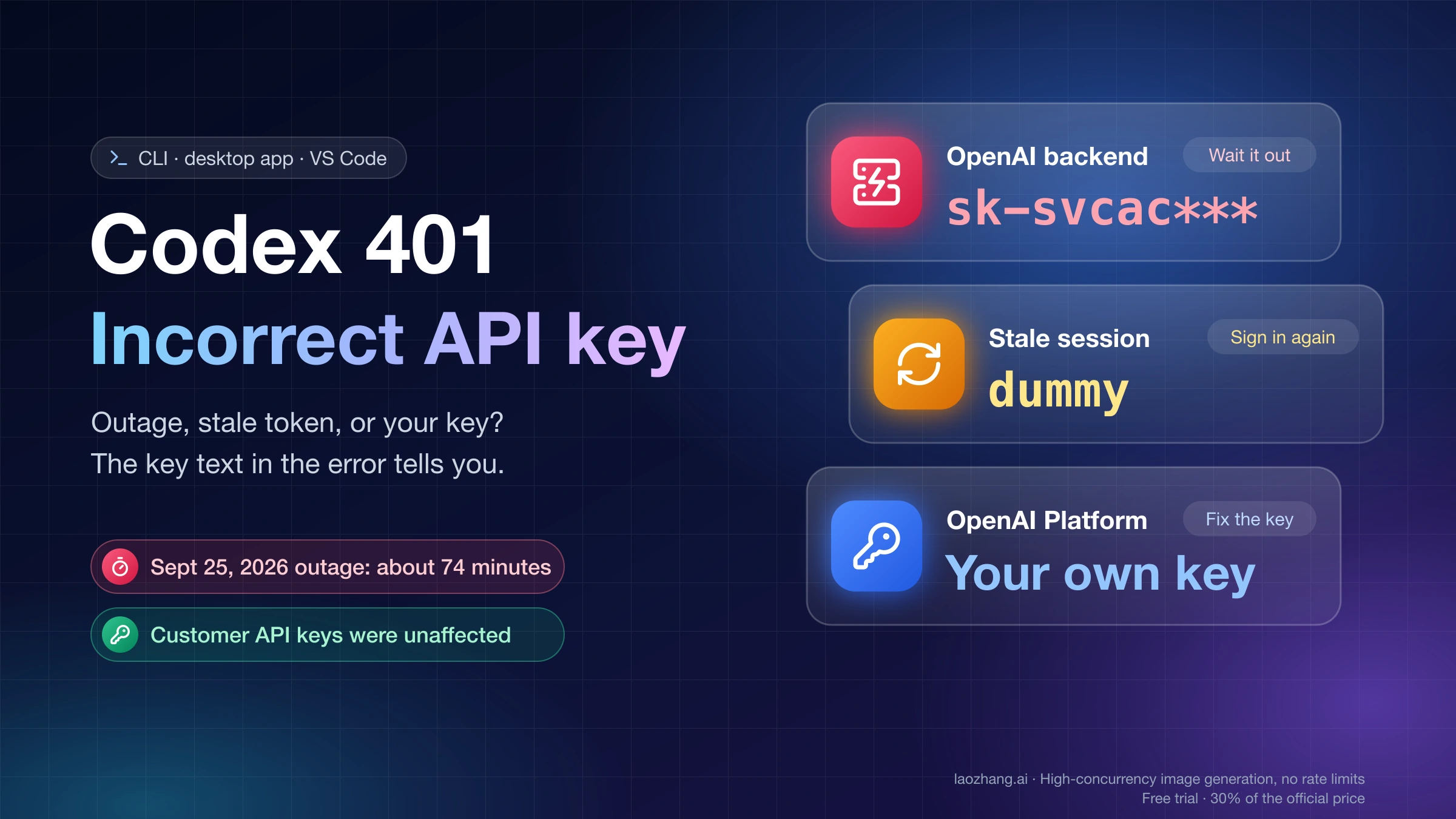
ChatGPT Pro 500 costs $500 a month and adds Astra Ultrafast in Work and Codex. Ultrafast draws usage at 8x, so it pays off only when speed is the bottleneck.
On this page
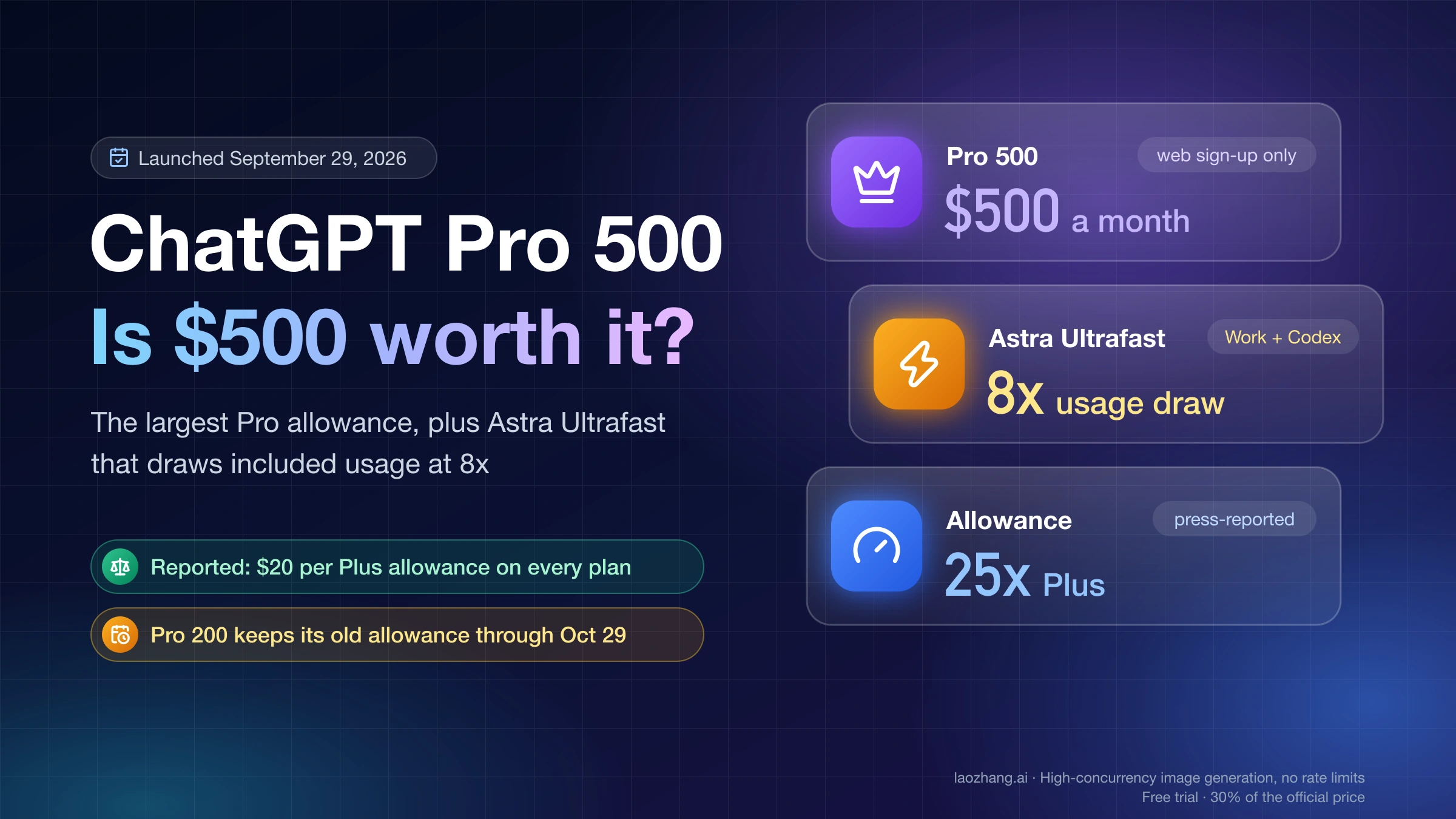
ChatGPT Pro 500 is the $500-a-month plan OpenAI launched on September 29, 2026, above the existing Pro 100 and Pro 200 plans. It gives you two things the cheaper Pro plans do not: the largest included usage of the three, and GPT-6 Astra Ultrafast, a faster speed tier that works only in ChatGPT Work and Codex. Everything else on the plan card is shared with Pro 100 and Pro 200.
Two numbers decide whether it is worth the money. Press reports of the announcement put the Pro 500 allowance at 25 times the Plus allowance, against 10 times for Pro 200 and 5 times for Pro 100. At those multiples every plan costs the same $20 per Plus allowance, so the bigger plan carries no volume discount. And OpenAI's own documentation says Ultrafast draws your included usage at 8 times the Standard rate. Pro 500 makes sense when waiting on Astra output is what slows you down, or when you regularly exhaust Pro 200. If you subscribed to Pro 200 before the change, your old allowance lasts through October 29, 2026.
What ChatGPT Pro 500 costs and includes: $500 a month, web only
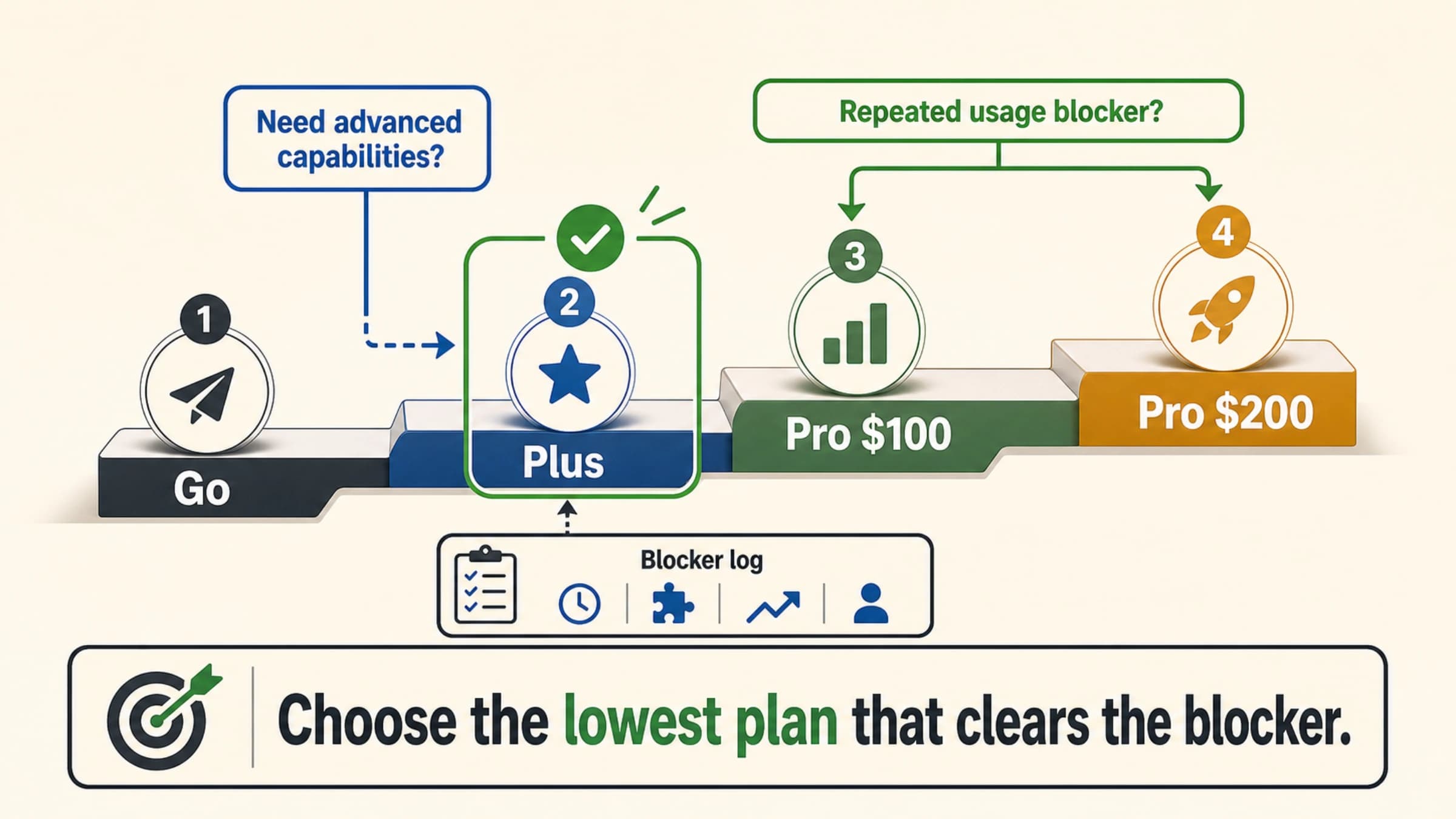
Pro 500 costs $500 a month in US dollars, before any sales tax your state applies at checkout. OpenAI's About ChatGPT Pro tiers help article lists three monthly Pro plans as of October 1, 2026:
| Plan | Monthly price | Ultrafast | Included usage, per OpenAI |
|---|---|---|---|
| Pro 100 | $100 | Not included | Less than Pro 200 |
| Pro 200 | $200 | Not included | "More usage than Pro 100" |
| Pro 500 | $500 | Included | "The highest included usage of the three plans" |
All three plans include the Pro models, Codex, deep research, image creation, memory, and file uploads. The plan cards in ChatGPT also show the same list for all three: the Pro models, one Dot, the highest memory with 100 GB of storage, early access to new tools, and no ads. None of those is a reason to pick the $500 plan. If the Dot is what you want, Pro 100 already includes it, and the ChatGPT Dots vs Meta Muse vs Grok Bot comparison covers what it costs to start with one.
You subscribe by signing in to ChatGPT, opening the pricing page, and choosing a Pro plan. To move from another plan, open Settings → My Plan. The September 29 release note limits Pro 500 sign-ups to ChatGPT on the web for now. It names no App Store or Google Play option.
Billing is monthly only. The help article states that annual billing and paying for several months in advance are not available. A year of Pro 500 is $500 × 12 = $6,000 before tax. A year of Pro 200 is $200 × 12 = $2,400, a difference of $3,600.
Early reports from September 24 called the plan "ChatGPT Pro Max," a name that came from a pre-launch leak. The shipped name is Pro 500.
Pro 500 limits: 25x Plus is a reported multiple, not a message count
OpenAI does not publish a message count, a token count, or a multiple for Pro 500. Its help article says only "the highest included usage of the three plans," and its pricing documentation adds two rules that apply to every Pro plan: "Pro plans currently have no five-hour limit," and "Weekly limits may also apply."
The multiples come from press coverage of the DevDay announcement:
- Pro 500: 25 times the Plus allowance in Work and Codex, reported in press coverage and social posts about the announcement.
- Pro 200: cut from 20 times to 10 times the Plus allowance, as Engadget reported, citing the company.
- Pro 100: 5 times the Plus allowance, a figure with thinner sourcing than the other two.
The same Engadget report says the weekly cap on GPT-6 Pro messages in ordinary Chat drops from 200 to 100 on the $200 plan. No equivalent Chat figure for Pro 500 has been published.
A multiple of the Plus allowance is still not a message count, because the Plus allowance is itself a range. OpenAI's estimates for Plus are local messages per five-hour period, and it labels them "not fixed message limits":
| Model in Work and Codex | Plus estimate per five hours |
|---|---|
| GPT-6 Astra | 5–45 local messages |
| GPT-6.1 Sol | 15–160 |
| GPT-6 Sol | 15–150 |
| GPT-6 Luna | 350–3,000 |
Cloud tasks can use more of the allowance than local messages, and image generation uses it about 3 to 5 times faster. So "25x" tells you how Pro 500 compares with the other plans. It does not tell you how many Astra tasks you will finish in a week.
The plan card says usage is unlimited "subject to abuse guardrails." Read that alongside the weekly limits above: a model can become unavailable until its allowance resets, and OpenAI says you cannot raise a limit through a setting or through support. One user on social media claimed to have used up a weekly Pro 500 limit in under 30 minutes with a heavy workload. That is a single unverified report, but it matches how fast an 8x draw can run.
Your real limits and reset times are in the usage dashboard, and /status in the Codex CLI shows them from the terminal. Check those numbers during your first week rather than relying on the multiples.
Pro 500 vs Pro 200 cost: every plan is $20 per Plus allowance
Under the reported multiples, Pro 500 gives you 2.5 times the Pro 200 allowance for 2.5 times the price. Divide each list price by its multiple and the result is the same on every plan:
| Plan | Monthly price | Reported multiple of Plus | Price per Plus allowance |
|---|---|---|---|
| Plus | $20 | 1x | $20 ÷ 1 = $20 |
| Pro 100 | $100 | 5x | $100 ÷ 5 = $20 |
| Pro 200, new allowance | $200 | 10x | $200 ÷ 10 = $20 |
| Pro 200, before the change | $200 | 20x | $200 ÷ 20 = $10 |
| Pro 500 | $500 | 25x | $500 ÷ 25 = $20 |
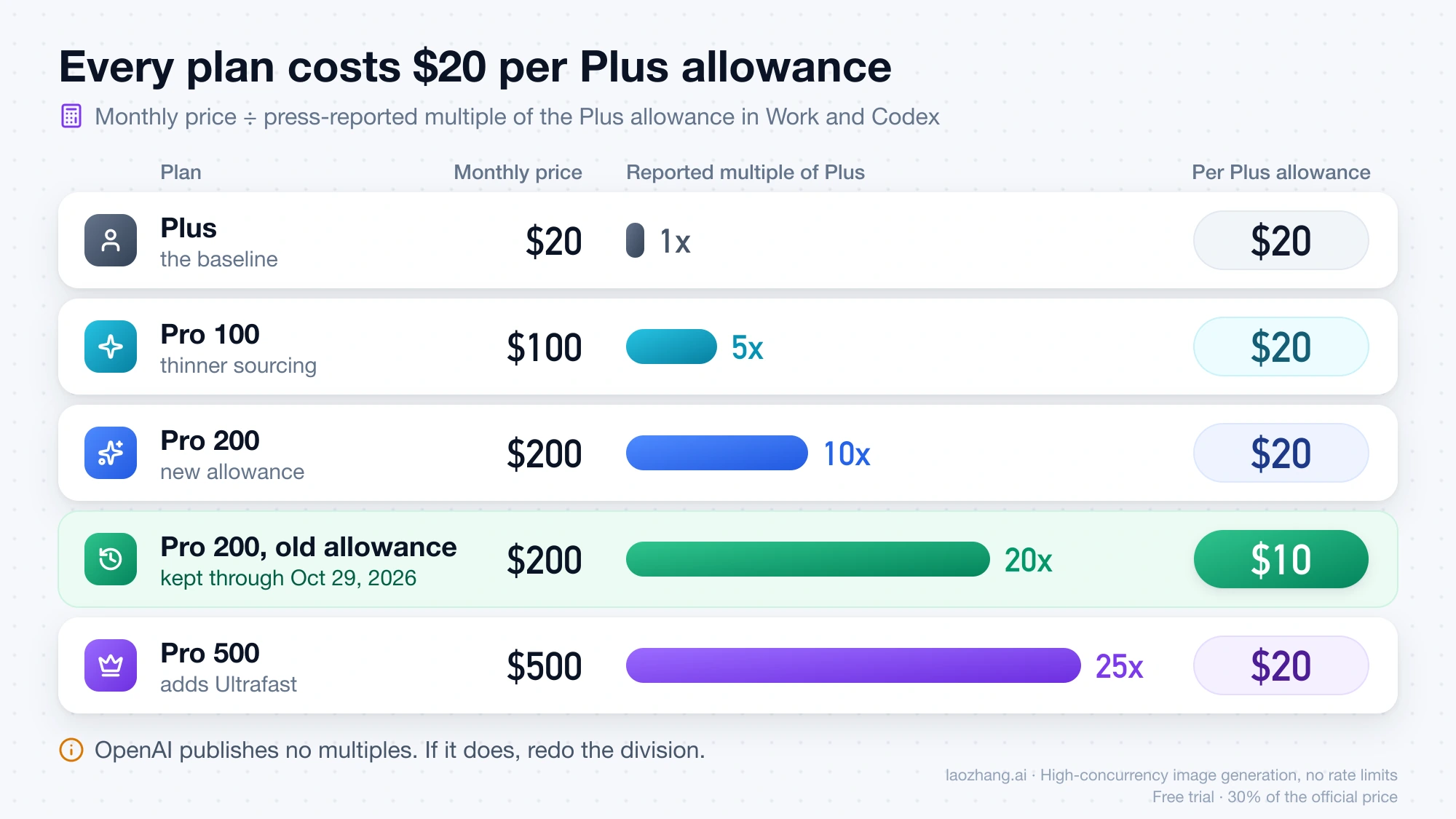
This table is only as good as the reported multiples. If OpenAI publishes different ratios, redo the division with its numbers.
The table has two practical consequences. First, capacity alone never makes Pro 500 cheaper per unit than Pro 200 or Pro 100, so what you pay extra for is Ultrafast and the convenience of one large allowance. Second, the old Pro 200 was the only plan with a real discount, at $10 per Plus allowance. Grandfathered subscribers lose that discount after October 29.
The flat $20 rate also explains a point raised on Hacker News: $500 buys 25 separate Plus subscriptions. On paper the capacity matches. In practice Plus has the five-hour windows that Pro plans currently do not, Plus cannot use Ultrafast, and your work would be split across 25 accounts with separate histories.
What Ultrafast is: a GPT-6 Astra speed tier that draws usage at 8x
Ultrafast is a service tier for one model, GPT-6 Astra, that you select in the model picker in ChatGPT Work and Codex. OpenAI's speed documentation says it "generates tokens up to 8x faster than GPT-6 Astra in Standard mode in Codex," and the DevDay recap puts that at up to 300 tokens per second. Both are OpenAI's figures, and both are ceilings.
Four limits on that claim matter before you pay for it:
- It measures token generation, not task time. OpenAI's wording is that the comparison "measures token generation speed, not billing rates or overall task completion time." A task that spends most of its time running tests or waiting on tools will not finish 8 times sooner.
- It does nothing in ordinary Chat. Ultrafast exists only in Work and Codex. Your everyday ChatGPT conversations run at the same speed on Pro 500 as on Pro 100.
- It covers Astra only. GPT-6.1 Sol supports Standard and Fast modes, and OpenAI describes its Ultrafast tier as coming later. The GPT-6.1 Sol pricing and access guide covers that model.
- Credits do not unlock it on cheaper plans. OpenAI states that other self-serve plans "don't have access to Ultrafast at launch, even with purchased credits." It is also unavailable to workspaces that require inference residency outside the United States.
Ultrafast is expensive in allowance terms. It uses included usage at 8 times the Standard rate, and Fast mode uses it at 2.5 times. OpenAI notes that these billing multipliers "don't describe speed increases," so the matching 8x figures for speed and usage are separate statements.
To see what that does to a 25x allowance, treat Astra work at Standard speed as costing 1 unit. If a share f of that work runs in Ultrafast instead, the same work costs 1 + 7 × f units, and the allowance covers 25 ÷ (1 + 7 × f) Plus allowances of Astra work:
| Share of Astra work run in Ultrafast | Usage cost per unit of work | Astra work the 25x allowance covers |
|---|---|---|
| 0% | 1.0 | 25 Plus allowances |
| 10% | 1.7 | 25 ÷ 1.7 ≈ 14.7 |
| 25% | 2.75 | 25 ÷ 2.75 ≈ 9.1 |
| 50% | 4.5 | 25 ÷ 4.5 ≈ 5.6 |
| 100% | 8.0 | 25 ÷ 8 ≈ 3.1 |
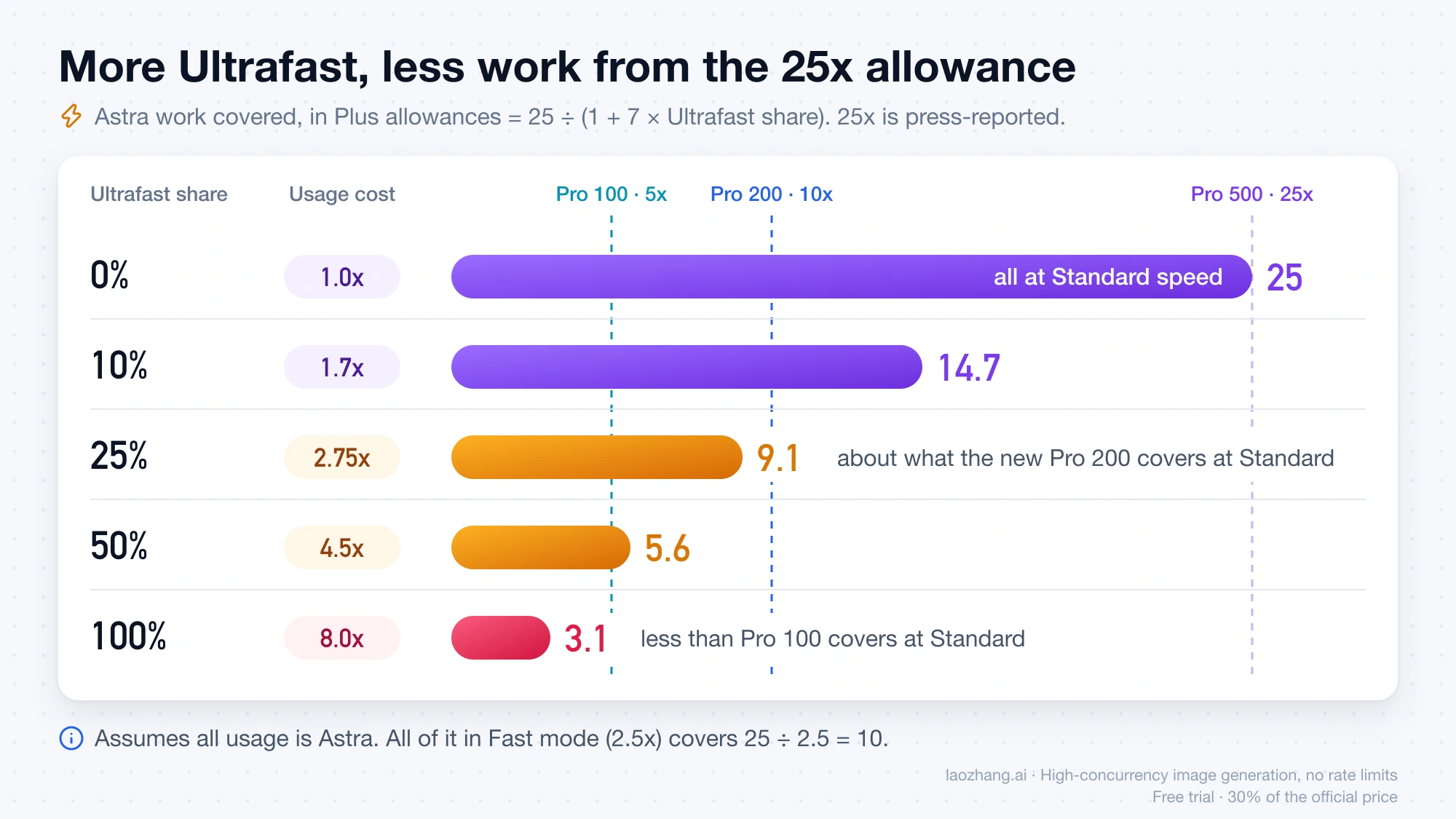
The table assumes all usage is Astra and depends on the reported 25x figure. It still shows the trade clearly. Run about a quarter of your Astra work in Ultrafast and Pro 500 covers roughly what the new Pro 200 covers at Standard speed. Run everything in Ultrafast and it covers about 3.1 Plus allowances of Astra work, less than Pro 100 covers at Standard speed. Running all of it in Fast mode instead gives 25 ÷ 2.5 = 10.
Once the included allowance is gone, Ultrafast draws from purchased credits at 6 times the Standard rate. Standard Astra costs 250 credits per million input tokens, 25 for cached input, and 1,250 for output. Astra Ultrafast therefore costs 1,500, 150, and 7,500 credits per million tokens. OpenAI's credits article does not list a dollar price per credit and says purchase amounts and prices vary by account, region, and plan. The price for your account appears in Settings → Usage.
Is Pro 500 worth it: decide by speed, capacity, or the API
Pro 500 is worth $500 a month in two situations, and each has a test you can run before you upgrade.
Speed is the bottleneck. You work in Codex or Work with GPT-6 Astra, and you sit waiting while it writes output. Ultrafast addresses exactly that, and Pro 500 is the only self-serve plan that has it. Check two things first. Look at where your task time goes, because long tool runs and test suites do not speed up. Then decide what share of your work needs the speed, using the table above. If only your interactive sessions need Ultrafast and background work can run at Standard, the allowance stretches much further.
Capacity is the bottleneck. You hit the weekly limit on Pro 200 and keep working on credits. The extra $300 a month is worth paying when the credits you buy to cover that overflow on Pro 200 cost more than $300 a month. Your credit spend is in Settings → Usage. If you buy credits only now and then, staying on Pro 200 is cheaper.
In other situations a different plan fits better:
| Your situation | Better fit | Why |
|---|---|---|
| Mostly ordinary Chat with GPT-6 Pro | Pro 100 or Pro 200 | Ultrafast does not apply in Chat |
| You want a Dot, memory, and storage | Pro 100 | All three Pro plans include them |
| Occasional Codex or Work sessions | Plus, with credits when needed | Same reported $20 per allowance, no commitment to $500 |
| Scripts, pipelines, or a product that calls Astra | The API | Billed per token, and it has its own Ultrafast tier |
The API row needs numbers. On OpenAI's API price list, GPT-6 Astra at Standard speed costs $10 per million input tokens and $50 per million output tokens for requests up to 272K input tokens. Astra Ultrafast in the API costs 6 times that: $60 for input, $6 for cached input, and $300 for output. You request it with service_tier: "ultrafast" in the Responses API. OpenAI describes the API version as up to 6 times faster, against up to 8 times in Codex.
For scale, $500 pays for about 1.67 million Astra Ultrafast output tokens in the API ($500 ÷ $300), before any input tokens are counted. OpenAI warns against using API prices to estimate what a subscription includes, and that warning is fair: the two are billed separately and neither converts to the other. The API suits you when the work is programmatic, the volume is uneven, or you need Ultrafast for only a few jobs a month. For the general method of estimating a token bill against a flat fee, see ChatGPT Plus vs API.
If you already pay for Pro 200: what changes after October 29, 2026
Your price stays at $200 a month and your allowance drops. OpenAI's help article says a Pro 200 subscription that was active at the eligibility cutoff, or in the seven days before it, keeps its previous included usage "through Oct 29, 2026" as long as the subscription stays active. After that date it moves to the lower allowance. OpenAI does not state the size of the cut. Engadget reports it as 20 times the Plus allowance down to 10 times in Work and Codex, and 200 down to 100 GPT-6 Pro messages a week in Chat.
Before October 29, work through this list:
- Find the email. OpenAI says only affected subscribers receive one, and it carries the details for your account. The help article does not give the exact cutoff date, so the email is your confirmation that you are grandfathered.
- Keep the subscription active. The old allowance applies only while Pro 200 is active. If your subscription lapsed in the seven days before the cutoff, resubscribing still gets the old allowance through October 29. A scheduled cancellation can be undone until the billing period ends.
- Measure your usage now. Open the usage dashboard or run
/statusin the Codex CLI and note how much of the weekly allowance you use. If the reported halving is accurate, using less than half of today's allowance means the new Pro 200 still covers you. - Do not expect Ultrafast. OpenAI is explicit that keeping the old allowance "does not upgrade your plan or add Ultrafast."
- Pick your plan for November. If you use more than half of today's allowance, your options are Pro 200 plus credits or Pro 500. Use the $300 test from the previous section. If you use far less than half, check whether Pro 100 would cover you.
- Watch for the credit. Engadget reports that existing subscribers will later receive a one-time credit. The help article does not mention it, so do not plan your budget around it until it shows up in your account.
Billing is monthly, so a wrong choice costs you one month. You can change plans again in Settings → My Plan.
ChatGPT Pro 500 questions on price, credits, and billing
How much does OpenAI Pro cost?
ChatGPT Pro costs $100, $200, or $500 a month, depending on the plan. As of October 1, 2026, those are the US dollar list prices for Pro 100, Pro 200, and Pro 500. Checkout shows the final amount for your location, including any tax.
Can you buy credits on Pro 100 or Pro 200 to use Ultrafast?
No. OpenAI says that at launch, buying credits on Pro 100 or Pro 200 does not unlock Ultrafast. Among self-serve plans it is available only on Pro 500. The other routes are an eligible Enterprise or Edu plan, or the API with pay-per-token billing.
What are the limits for ChatGPT Pro on Codex?
OpenAI does not publish a number for any Pro plan. It says Pro plans currently have no five-hour limit and that weekly limits may apply. The reported multiples of the Plus allowance are 5x for Pro 100, 10x for Pro 200, and 25x for Pro 500. Your own limits and reset times are in the usage dashboard and in /status in the Codex CLI. On Plus the limits work differently, and the ChatGPT Plus message limit guide explains how to find the reset time.
Can you pay for ChatGPT Pro 500 annually or get a refund?
Pro 500 has no annual option. Pro is billed monthly, and OpenAI does not offer prepayment for multiple months. Canceling stops future renewals and normally leaves you with access until the billing period ends. OpenAI says refund eligibility depends on your purchase and the rights that apply to you, and that canceling does not automatically refund earlier charges.
Can a team share one Pro 500 account?
No. Pro is a personal plan, and OpenAI's terms prohibit sharing account credentials and reselling access. OpenAI notes that a Pro subscription can exist alongside a separate Business workspace, so a team can keep its shared work there while individuals hold their own Pro plans.