Seedance 2.0 Pricing in 2026: Complete Free vs Paid Comparison Guide

A
22 min readAI Video Generation

Seedance 2.0 pricing ranges from completely free to $167/month depending on the platform and plan you choose. The Dreamina Basic membership at 69 RMB/month (~$9.60 USD) offers the best value for most users, while free tiers across Little Skylark, Dreamina, and Doubao provide enough credits to evaluate the technology. This guide breaks down every option with real cost-per-video calculations.

Seedance 2.0 Pricing in 2026: Complete Free vs Paid Comparison Guide

Seedance 2.0 by ByteDance, released on February 12, 2026, offers pricing that ranges from completely free to $167 per month depending on which platform and plan you choose. The most popular entry point is Dreamina's basic membership at 69 RMB/month (approximately $9.60 USD), which makes it roughly 20 times cheaper than Sora 2 Pro's $200/month subscription. Free tiers exist across four platforms—Little Skylark, Dreamina, Doubao, and VolcEngine—but each comes with significant limitations including queue times, credit caps, and access barriers that most guides gloss over. This guide provides the honest breakdown you need to make the right decision for your budget and use case.

TL;DR — Seedance 2.0 Pricing at a Glance

Before diving into the details, here is a quick overview of every pricing tier available for Seedance 2.0 as of February 2026. The landscape is more fragmented than most AI tools because ByteDance distributes access across multiple platforms, each with its own pricing model, credit system, and limitations. Understanding this fragmentation is essential before committing money or time to any single platform.

PlanMonthly CostPer 10s VideoBest ForPlatform
Free (Little Skylark)$0$0 (credit-limited)Testing and evaluationLittle Skylark app
Free (Dreamina)$0$0 (one-time credits)International quick trialDreamina web
Free (Doubao)$0$0 (10/day limit)Daily casual useDoubao app
Dreamina Basic~$9.60$1.91–$4.60Most users, best valueDreamina/Jimeng
Dreamina Pro~$45~$1.00–$2.50Heavy creatorsDreamina/Jimeng
seedance2.app Basic$41~$2.05International usersseedance2.app
seedance2.app Pro$83~$1.20Professional teamsseedance2.app
seedance2.app Max$167~$0.80Agencies, businessesseedance2.app
API (720p)~$0.10/min~$0.17DevelopersVarious API providers
API (1080p)~$0.30/min~$0.50Production appsVarious API providers

The key takeaway from this table is that Dreamina Basic at $9.60/month represents the best value entry point for the vast majority of users. If you are outside China and want hassle-free access without a +86 phone number, the seedance2.app Basic plan at $41/month is your most straightforward option, though you are paying a premium for convenience. For developers who need programmatic access, the API route starting at $0.10 per minute of 720p video provides the most cost-efficient path at scale.

One critical detail that most pricing guides miss: these costs assume your generations succeed on the first attempt. In practice, retries, quality settings, and audio generation can multiply your effective cost by 2-3x, which we cover in detail in the hidden costs section below.

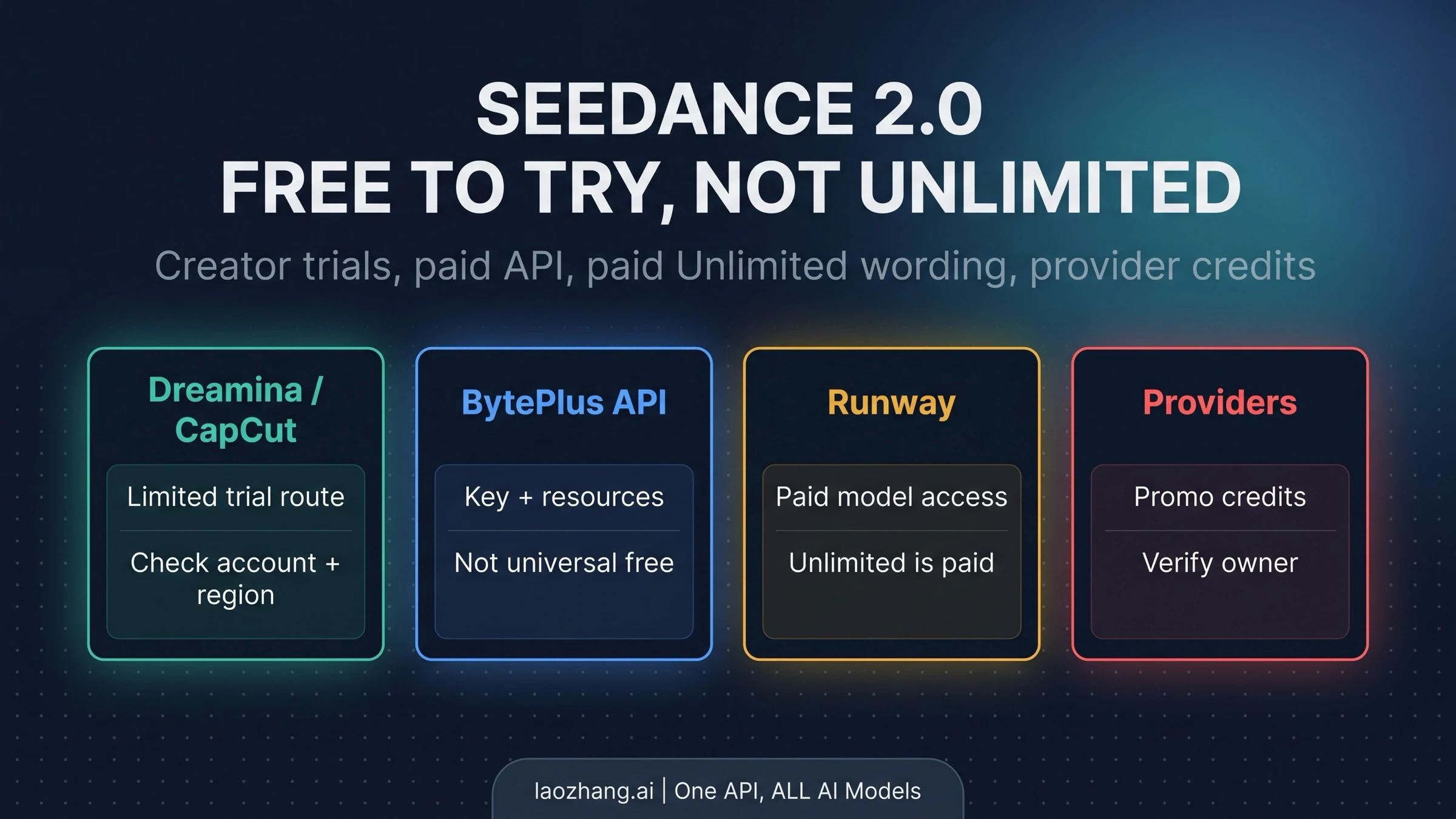
What You Actually Get for Free (The Honest Truth)

Seedance 2.0 free tier comparison across four platforms showing credits, limitations, and access requirements

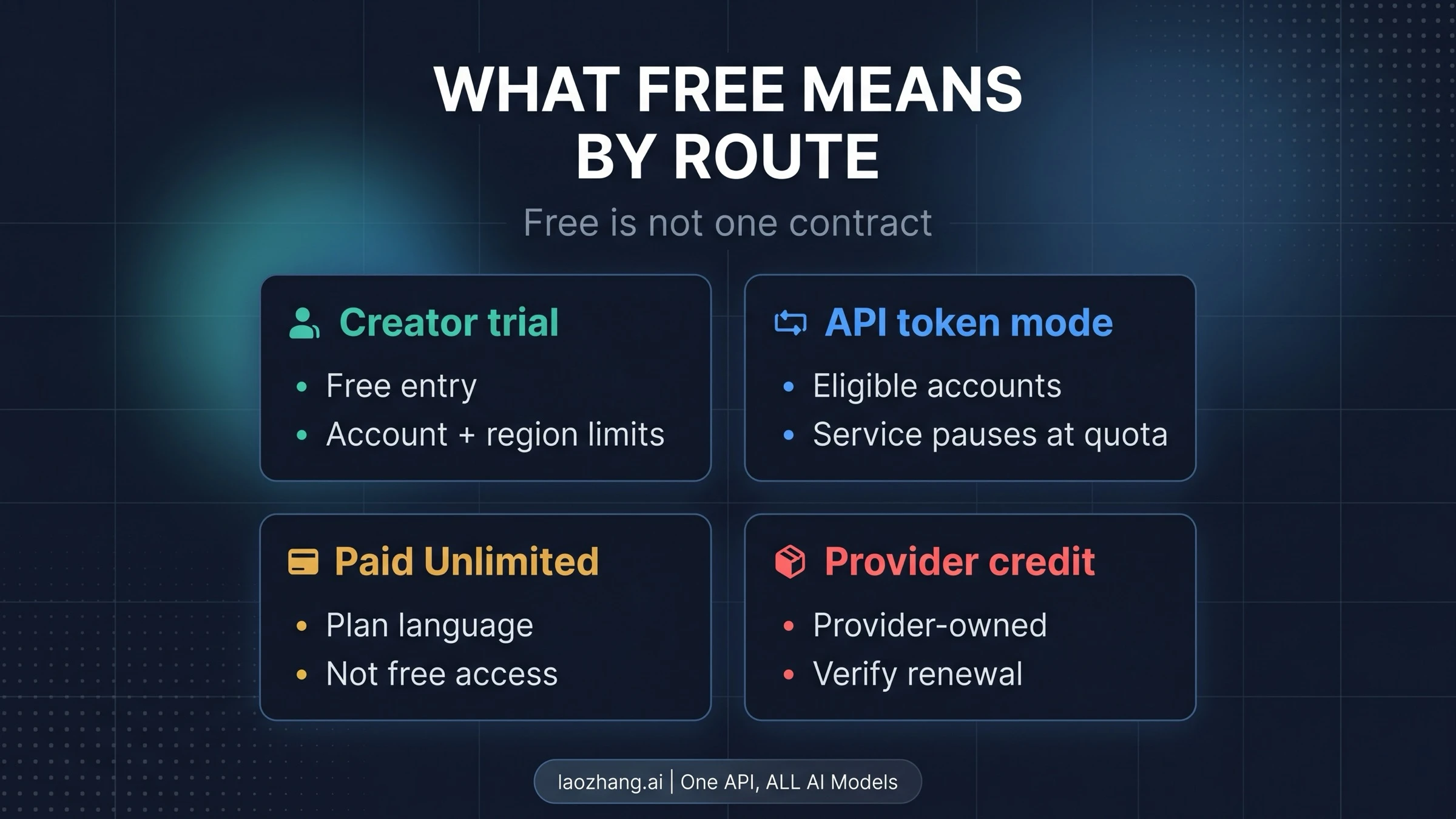
The honest answer to "Is Seedance 2.0 free?" is yes, technically—but the free experience is dramatically different from what you might expect based on marketing materials and social media hype. Four platforms currently offer some form of free access to Seedance 2.0, but each comes with trade-offs that significantly limit what you can actually accomplish without paying. Understanding these limitations upfront will save you hours of frustration and help you set realistic expectations before diving in.

Little Skylark offers the most generous free tier among all platforms, providing 1,200 credits upon signup plus 120 credits that renew daily. At roughly 60 credits per 6-second video generation, this translates to approximately 20 initial videos and then 2 videos per day going forward. The daily renewal makes Little Skylark the only platform where you can sustain ongoing free usage over weeks and months rather than burning through a one-time credit allocation. However, there are significant catches: the platform requires a +86 (China) phone number for registration, the interface is entirely in Chinese with no English option, and free-tier users experience substantially longer queue times during peak hours. If you are outside China and do not have access to a Chinese phone number, Little Skylark's generous credits are effectively inaccessible without third-party SMS verification services, which adds both cost and complexity.

Dreamina (the international-facing version of Jimeng) provides 260 initial credits plus 2 free trial generations of Seedance 2.0 specifically. This is the most accessible option for international users because it supports English and does not require a Chinese phone number. The critical limitation is that accessing Seedance 2.0 specifically (rather than older models) requires unlocking through a 1 RMB (~$0.14) trial membership, so the "free" label is slightly misleading. Once your initial 260 credits are exhausted, there is no daily renewal—you either pay for a membership or stop generating. For most users, this means you get roughly 5-8 video generations to evaluate the technology before hitting a paywall, which is enough to test quality but not enough for any production workflow.

Doubao App provides 10 free generations per day, which sounds generous but comes with its own access barrier: you need to be accepted into the Feishu beta program, and the app is Chinese-only with limited settings compared to the full Dreamina platform. The daily generation limit makes it sustainable for casual experimentation, but the 5-10 second clips are shorter than what other platforms offer, and you cannot control resolution or aspect ratio as precisely. Doubao is best suited for users who already have a Chinese tech ecosystem setup and want a quick, daily-use video generation tool without managing credits.

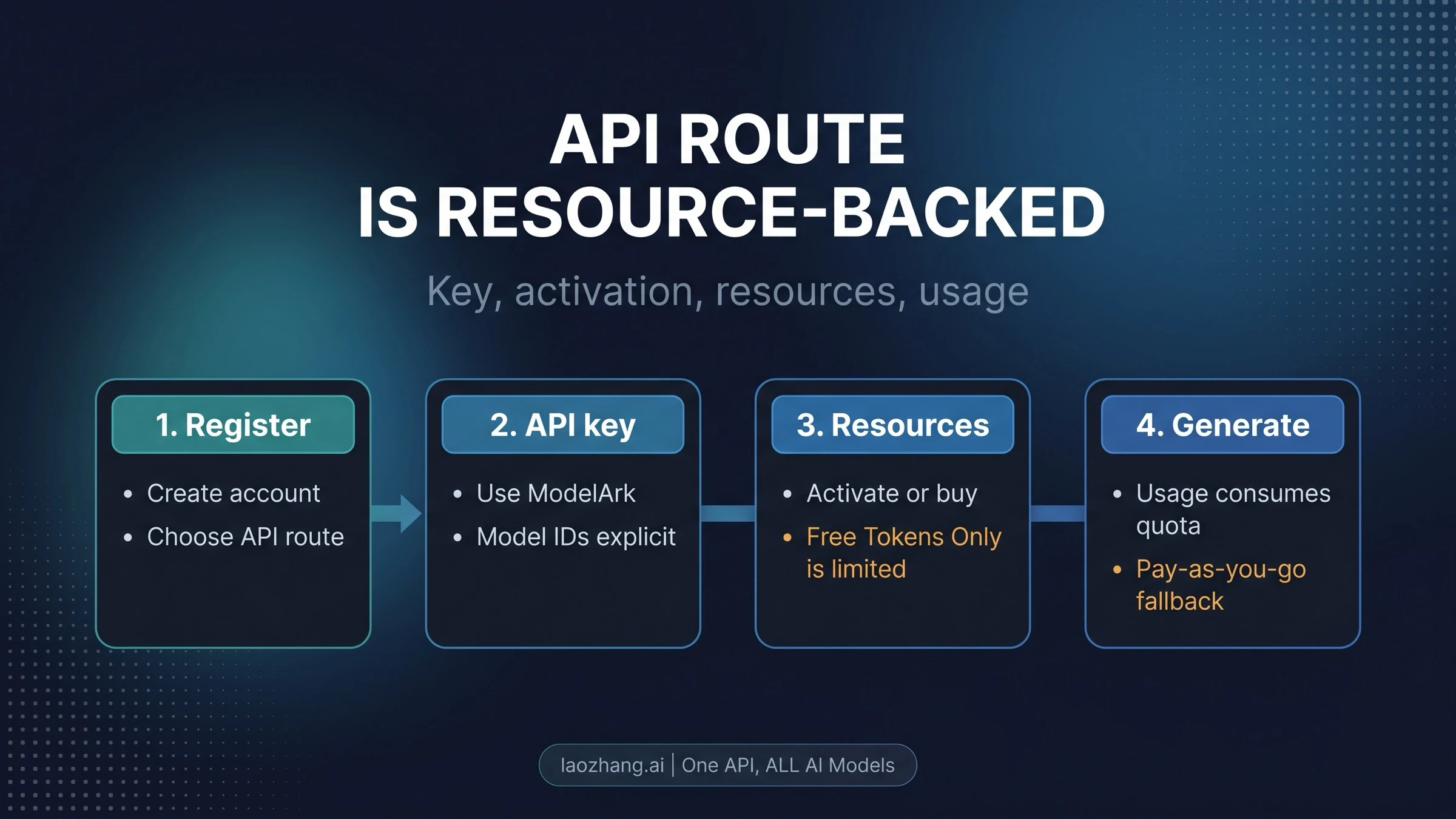
VolcEngine rounds out the free options with 8 high-quality video generations as a one-time allocation. This platform targets developers and requires technical setup through ByteDance's cloud infrastructure. Once your 8 videos are generated, the free tier is exhausted with no renewal. VolcEngine is only practical for developers who want to evaluate the API capabilities before committing to paid usage, not for anyone looking for ongoing free access.

The uncomfortable truth about all free tiers is the hidden time cost. Queue times for free-tier users can range from 2-5 minutes during off-peak hours to 15-30 minutes during peak times, compared to near-instant generation for paid subscribers. When you factor in the time spent waiting, retrying failed generations, and navigating Chinese interfaces, the "free" option often costs more in productivity than the $9.60 monthly Dreamina membership would save you. The free tier is best understood as a testing ground—a way to verify that Seedance 2.0's output quality meets your needs before committing to a paid plan—rather than as a viable production solution.

How Credits Actually Work — The Real Cost Per Video

Understanding Seedance 2.0's credit system is essential for predicting your actual monthly costs, because the relationship between credits and finished videos is far less straightforward than it appears. Every platform uses credits differently, and the cost per video varies dramatically based on duration, resolution, and optional features like audio and reference images. Most pricing guides quote a single number, but the real cost depends on how you use the tool.

The fundamental unit of credit consumption on Dreamina is tied to video duration and resolution. A standard 6-second clip at 720p resolution consumes approximately 60 credits, while extending to 10 seconds increases consumption to roughly 100 credits, and a full 15-second generation requires approximately 150 credits. These numbers represent baseline consumption—the minimum credits needed assuming everything goes right on the first attempt and you are generating at standard quality without any additional features enabled.

Resolution is the first major cost multiplier that catches users off guard. Generating at 1080p instead of 720p roughly doubles the credit consumption per video, and requesting 2K output (available through upscaling) can cost 2-3x the standard rate. For many use cases, 720p is perfectly adequate for social media content and web embedding, but creators who need broadcast-quality output should budget for significantly higher per-video costs. The practical implication is that a Dreamina Basic subscription that yields roughly 200-500 videos per month at 720p might only produce 100-250 videos at 1080p, depending on your generation length preferences.

Audio generation is the second major multiplier that most guides underreport. When you enable audio generation alongside your video (Seedance 2.0 supports synchronized audio), the credit consumption approximately doubles compared to video-only generation. A 10-second clip with audio might consume 200 credits instead of 100, effectively halving your monthly output. If you need audio, factor this into your budget calculations from the start rather than discovering it after committing to a plan.

Reference inputs also carry a premium. Using image or video references as input (rather than text-only prompts) consumes additional credits because the model performs more complex processing. The exact premium varies by platform and reference type, but expect 20-50% higher credit consumption when using reference inputs compared to pure text-to-video generation. Multi-modal inputs with up to 12 reference files, one of Seedance 2.0's headline features, naturally consume the most credits per generation.

To make these numbers concrete, here is what different user scenarios actually cost per month on Dreamina Basic ($9.60/month with approximately 1,000 credits):

ScenarioSettingsCredits/VideoVideos/MonthCost/Video
Casual testing6s, 720p, text only~60~16~$0.60
Social media clips10s, 720p, text only~100~10~$0.96
Quality content10s, 1080p, text only~200~5~$1.92
Full production15s, 1080p, with audio~450~2~$4.80

These calculations reveal a critical insight: the per-video cost ranges from $0.60 to nearly $5.00 on the exact same subscription, depending entirely on your quality settings and feature usage. The GamsGo pricing guide's estimate of $1.91-$4.60 per standard 10-second video (February 2026) aligns with this range, confirming that the wide spread is real and not an outlier. When budgeting for Seedance 2.0, always base your estimates on your intended quality level, not the lowest possible cost per video.

Every Paid Plan Compared — Official and Third-Party

Seedance 2.0 paid plans bar chart comparing monthly costs from $9.60 Dreamina Basic to $200 Sora 2 Pro

The paid landscape for Seedance 2.0 is split between official ByteDance platforms (Dreamina/Jimeng) and third-party services that provide international-friendly access at a markup. Each option serves a different audience, and choosing the right one depends on whether you prioritize cost, convenience, language support, or API access. For a deeper exploration of each platform's specific offerings and sign-up process, see our detailed platform-by-platform pricing breakdown which covers the registration steps and regional availability in full detail.

Official Dreamina/Jimeng Plans

Dreamina's basic membership at 69 RMB/month (approximately $9.60 USD) remains the most cost-effective way to access Seedance 2.0 for individual users. This plan provides a monthly credit allocation that supports roughly 10-16 standard video generations depending on your quality settings. The 1 RMB trial membership (approximately $0.14 for 7 days) offers a low-risk way to test the full paid experience before committing to monthly billing. Dreamina Pro at approximately $45/month targets heavy users who need significantly more credits and priority queue access, making it suitable for content creators producing video content on a regular schedule.

The primary limitation of official Dreamina plans is the access barrier for international users. While Dreamina does support English and does not strictly require a +86 phone number for basic account creation, some Seedance 2.0 features and the 1 RMB trial unlock may require Chinese payment methods (Alipay or WeChat Pay). Users outside China often report friction during the payment process, which is precisely why third-party platforms exist despite their higher prices.

Third-Party Platforms

The most prominent third-party option is seedance2.app, which offers three tiers: Basic at $41/month ($490/year), Pro at $83/month ($990/year), and Max at $167/month ($2,000/year). These prices represent a significant markup over official Dreamina pricing—the Basic tier costs roughly 4x more than Dreamina Basic—but they provide genuine value for users who need English-language support, international payment processing, up to 2K resolution output, and the elimination of Chinese platform dependencies entirely.

For businesses and agencies, the convenience premium of third-party platforms is often justified. The time saved navigating Chinese interfaces, dealing with payment friction, and managing +86 phone verification can easily exceed the price difference, especially for teams where employee time is expensive. The seedance2.app Max plan at $167/month includes API access and unlimited generations, making it competitive for high-volume production workflows where the per-video cost drops below $1.00.

API Pricing for Developers

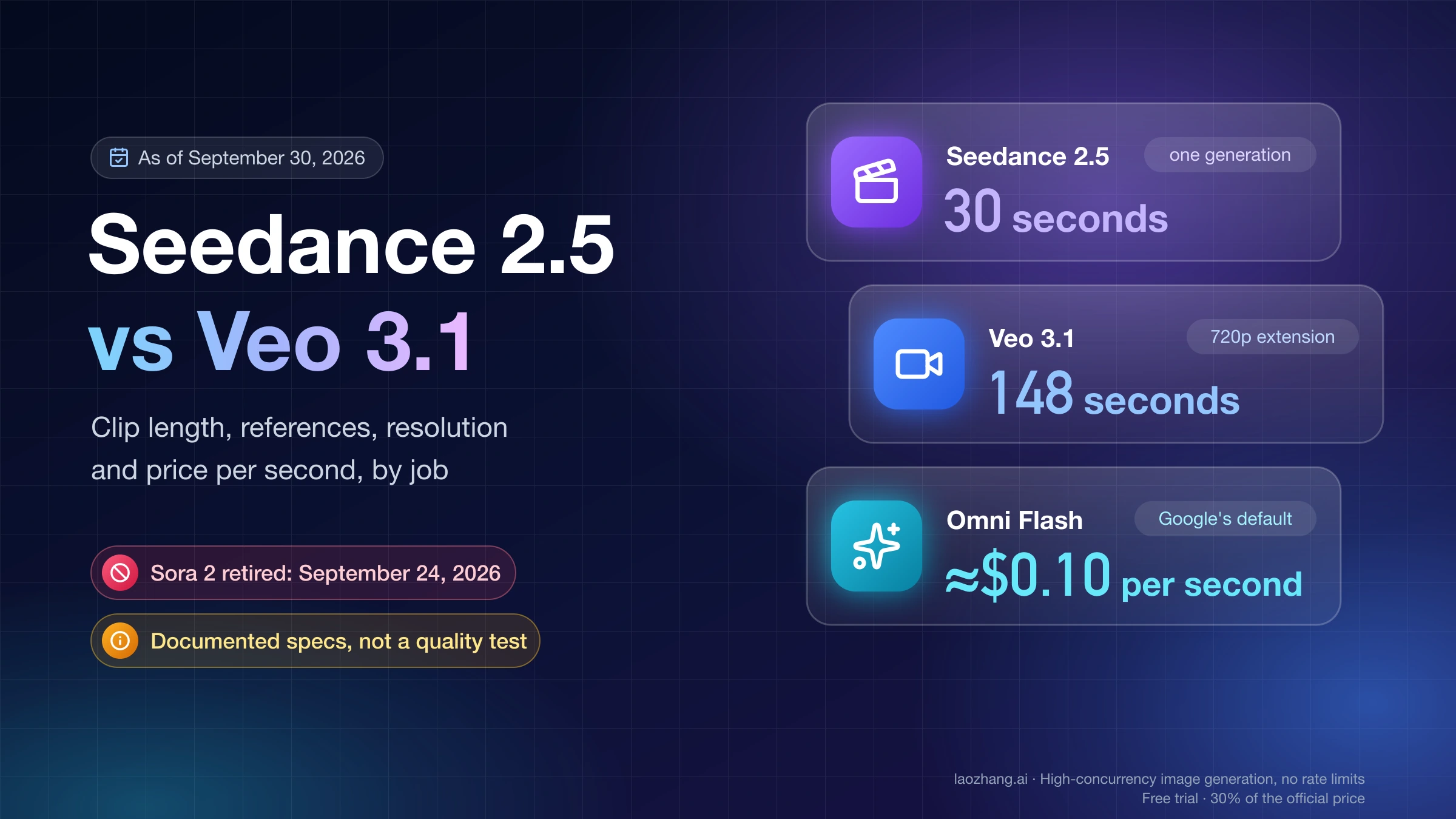
Developers who want to integrate Seedance 2.0 into their own applications have several API pricing options. The seedancevideo.com API offers tiered pricing based on resolution: approximately $0.10 per minute for 720p (Basic), $0.30 per minute for 1080p (Pro), and $0.80 per minute for 2K (Cinema). Atlas Cloud charges approximately $0.247 per second of video generated. These per-unit costs make the API route the most economical option at scale, though they require technical implementation effort that subscription plans avoid. For developers who also need access to competing models like Sora 2 or Veo 3.1 through a single API, aggregator platforms like laozhang.ai provide unified endpoints with async capabilities—Sora 2 from $0.15/request and Veo 3.1 from $0.15/request, with no charge on failed generations (documentation: https://docs.laozhang.ai/ ).

Should You Go Free or Paid? A Decision Framework

Decision flowchart showing four user paths: hobbyist, content creator, developer, and business with recommended plans

The free-vs-paid decision for Seedance 2.0 is not a simple binary choice but rather depends on your specific use case, technical comfort level, budget constraints, and how urgently you need results. After analyzing every pricing tier and testing the free options extensively, the decision framework below provides a clear path for four common user profiles. The core insight driving this framework is that the free tier is fundamentally a testing tool, not a production tool—and recognizing this distinction early saves both time and money.

If you are a hobbyist or simply curious about AI video generation, the optimal path is to start with the free tier on Little Skylark (if you have +86 access) or Dreamina (for international users). Spend 1-2 weeks generating videos with your typical prompts and reference images to evaluate whether Seedance 2.0's output quality meets your expectations. Pay attention to how often you hit credit limits, how long you wait in queues, and whether the results match your creative vision. If after this evaluation period you find yourself wanting more—more credits, faster generation, higher resolution—then upgrading to Dreamina Basic at $9.60/month is the natural next step. This approach minimizes financial risk while giving you genuine hands-on experience with the technology.

If you are a content creator who regularly produces video content for YouTube, TikTok, Instagram, or client work, skip the free tier entirely and go straight to a paid plan. The reason is simple: the free tier's credit limitations and queue times will frustrate you within the first day, and the time you spend waiting in queues or managing credit budgets has a real opportunity cost that almost certainly exceeds $9.60/month. For moderate production volumes (5-15 videos per month), Dreamina Basic provides sufficient credits. If you regularly produce 20+ videos monthly or need 1080p output consistently, Dreamina Pro at ~$45/month is the better investment. Content creators should also consider that retries and experimentation consume credits, so budget 2-3x your expected final output when selecting a plan tier.

If you are a developer building applications that incorporate AI video generation, the API route is almost always the correct choice. Subscription plans are designed for interactive use through web interfaces, while APIs provide the programmatic access, scalability, and cost predictability that production software requires. Start with the seedancevideo.com Basic API at $0.10/min (720p) for prototyping, and scale up to Pro ($0.30/min, 1080p) or Cinema ($0.80/min, 2K) based on your quality requirements. The per-minute pricing model means you only pay for what you generate, with no monthly minimums, making it ideal for applications with variable or unpredictable video generation demand.

If you represent a business or agency that needs reliable, English-language access without Chinese platform dependencies, the third-party route through seedance2.app is your most practical option. Yes, you pay a 4x premium over official Dreamina pricing, but you gain English interfaces, international payment support, dedicated customer service, and the elimination of platform risk associated with Chinese regulatory changes. Start with the Basic tier at $41/month and scale to Pro or Max as your production needs grow. For businesses, the total cost of ownership—including employee time, platform management overhead, and reliability—often makes the premium worthwhile.

Hidden Costs That Can Multiply Your Bill

Every Seedance 2.0 user eventually discovers that their actual monthly spend exceeds their plan's stated price. Understanding where these hidden costs come from—and how to avoid them—can mean the difference between a $10 monthly expense and a $50 one. These multipliers are not documented clearly on any platform, which is precisely why this section exists.

The retry trap is the most common cost multiplier and the one most users discover the hard way. Each failed generation attempt—whether due to content moderation flags, timeout errors, or simply unsatisfactory results—consumes full credits just as a successful generation would. With Seedance 2.0's reported 90%+ success rate (per GlbGPT, February 2026), roughly 1 in 10 generations may fail or produce unusable results. For every 10 videos you want in your final output, budget credits for 11-12 generation attempts. This 10-20% overhead might seem small, but it compounds significantly for users who are iterating on prompts to achieve a specific creative vision. Experienced users report that achieving a "perfect" result often requires 3-5 attempts with refined prompts, meaning your effective per-video cost can be 3-5x the theoretical minimum.

Quality escalation is the second hidden multiplier that particularly affects users who start with low-resolution tests and then want higher quality for their final output. It is extremely common to test a prompt at 720p, be satisfied with the result, and then regenerate at 1080p or 2K for the final version—effectively paying twice for the same creative output. A smarter approach is to commit to your target resolution from the start if you know the output will be used in production, accepting the higher per-generation cost to avoid duplicate spending. The price difference between 720p and 1080p is roughly 2x, and 2K can cost 2-3x standard resolution, so regenerating at higher quality adds up quickly.

Extension and continuation fees catch users who want longer clips than a single generation provides. Seedance 2.0's maximum generation length is 15 seconds, but many use cases require 30-60 second clips or longer. Extending a video by generating a continuation from the last frame costs additional credits at the same per-second rate as the original generation—there is no discount for extending an existing clip versus generating a new one. A 30-second final video effectively costs twice as much as a 15-second one, and maintaining visual consistency across extensions requires careful prompt management that may add retry costs.

Budget guardrails to protect your spending: Set a personal monthly credit budget and track usage weekly rather than waiting until credits are exhausted. Generate at your target resolution from the start to avoid duplicate spending on quality upgrades. Batch your generations during off-peak hours when queue times are shorter and you are less likely to encounter timeout failures. Keep a prompt library of tested, reliable prompts to minimize retry waste. And critically, disable audio generation unless you specifically need it—the 2x credit cost for audio is the single easiest cost to eliminate if you plan to add music or voiceover in post-production anyway.

Seedance 2.0 vs Sora 2 vs Veo 3.1 — Value Comparison

Seedance 2.0 does not exist in a vacuum, and for many users the real question is not "which Seedance plan should I choose?" but "should I use Seedance 2.0 at all versus competitors like Sora 2 and Veo 3.1?" The answer depends on your budget, quality requirements, and workflow needs—but on pure value-for-money, Seedance 2.0 has a compelling advantage. For a comprehensive feature-by-feature breakdown beyond just pricing, check our complete Seedance 2.0 vs Veo 3.1 vs Sora 2 comparison, or see four leading AI video generators compared side by side including Kling 3.0.

ToolEntry PricePer 10s VideoMax ResolutionMax DurationKey Advantage
Seedance 2.0 (Dreamina)$9.60/mo$1.91–$4.601080p (2K upscaled)15sLowest cost, multi-modal inputs
Sora 2 (ChatGPT Plus)$20/mo~$1.00720p5–20sOpenAI ecosystem, 1,000 credits/mo
Sora 2 (ChatGPT Pro)$200/mo~$5.001080pup to 25s10,000 credits/mo, watermark-free
Veo 3.1 (Gemini)$19.99/mo$0.10–$0.75/sec1080p+8sGoogle ecosystem, first/last frame
Kling 3.0Varies~$0.501080pVariesCompetitive quality

The most striking insight from this comparison is the price gap between Seedance 2.0 and Sora 2 Pro. At $9.60/month versus $200/month, Seedance 2.0's Dreamina Basic costs roughly 20x less than Sora 2 Pro, making it the most affordable entry point into high-quality AI video generation available today. Even Sora 2's Plus tier at $20/month costs more than double the Dreamina Basic plan, though it does include broader ChatGPT capabilities beyond just video generation.

Veo 3.1 at $19.99/month through Google's Gemini subscription sits in a middle ground, offering competitive quality with Google's ecosystem advantages (integration with Google Cloud, Workspace, and other Google AI tools). Its unique first-and-last-frame generation mode is unmatched by either Seedance 2.0 or Sora 2, making it the best choice for users who need precise control over video transitions and scene composition.

When Seedance 2.0 wins: Budget-conscious users, high-volume generation, international users without OpenAI Pro access, multi-modal input workflows (combining text, image, video, and audio references). The combination of low entry price, 90%+ success rate, and support for up to 12 reference file inputs makes Seedance 2.0 the practical choice for most everyday AI video generation tasks.

When Sora 2 wins: Users already in the OpenAI ecosystem, those who need longer clips (Pro tier supports up to 25 seconds versus Seedance 2.0's 15-second limit), and production environments where OpenAI's brand trust and stability matter. The Plus tier's 1,000 monthly credits at $20/month can be cost-effective for moderate-volume users who value simplicity over the lowest possible price, though it is limited to 720p resolution.

When Veo 3.1 wins: Google ecosystem users, developers who need Vertex AI integration, and creative professionals who benefit from the first/last frame mode for controlled transitions. For developers who want API access to multiple video models through a single endpoint, aggregator platforms like laozhang.ai offer both Sora 2 (from $0.15/request) and Veo 3.1 (from $0.15/request) with unified async APIs and no charge on failed generations—a practical alternative to managing separate subscriptions for each tool.

FAQ — Your Seedance 2.0 Pricing Questions Answered

Is Seedance 2.0 free?

Yes, Seedance 2.0 offers genuinely free access through multiple platforms, but with significant limitations. The most sustainable free option is Little Skylark, which provides 1,200 signup credits plus 120 daily credits—enough for approximately 2 short videos per day indefinitely. Dreamina offers 260 one-time credits for international users, and Doubao provides 10 free generations daily. However, all free tiers involve trade-offs including queue times (5-30 minutes during peak hours), platform access barriers (Chinese phone numbers, Chinese interfaces), and credit limitations that make sustained production work impractical. The free tier is best used as an evaluation tool rather than a production solution. If Seedance 2.0 meets your quality standards during testing, the $9.60/month Dreamina Basic membership removes virtually all free-tier limitations.

Can I use Seedance 2.0 outside China?

Yes, but your options are more limited and generally more expensive than what Chinese users pay. The most accessible route for international users is through Dreamina, which supports English and international email registration. Third-party platforms like seedance2.app provide the smoothest international experience with English interfaces and standard payment processing, though at prices starting at $41/month versus the $9.60 official Dreamina rate. API access through various providers is also available internationally without any Chinese platform dependencies. The main barrier for international users is that the cheapest options (Little Skylark at $0, Dreamina Basic at $9.60) often require a +86 phone number or Chinese payment methods, while hassle-free international access carries a 4x or greater price premium.

What is the cheapest way to use Seedance 2.0?

The absolute cheapest option is Little Skylark's free tier with 120 daily credits, assuming you have access to a +86 phone number. If you need to pay, Dreamina's 1 RMB trial (approximately $0.14 for 7 days) is the lowest paid entry point, giving you full access to evaluate whether the paid tier meets your needs. For ongoing use, Dreamina Basic at 69 RMB/month (~$9.60 USD) is the cheapest sustainable paid option. For developers generating at scale, the API route at $0.10 per minute (720p) provides the lowest per-video cost for high-volume use cases.

Is the paid plan worth it?

For most users who generate more than 2-3 videos per week, yes—the paid plan is absolutely worth it. The $9.60/month Dreamina Basic plan eliminates queue times, provides substantially more credits than the free tier, enables higher resolution output, and removes most platform friction. When you consider that free-tier queue times of 15-30 minutes per generation effectively cost you in productivity, the break-even point is surprisingly low. If your time is worth more than approximately $2/hour, the paid plan pays for itself after just 5-6 generations per month that would otherwise have been spent waiting in free-tier queues. Content creators, marketers, and anyone using AI video generation for professional purposes should consider the paid plan as a baseline rather than an upgrade.

Share:

laozhang.ai

One API, All AI Models

AI Image

Gemini 3 Pro Image

$0.05/img
80% OFF
AI Video

Sora 2 · Veo 3.1

$0.15/video
Async API
AI Chat

GPT · Claude · Gemini

200+ models
Official Price
Served 100K+ developers
|@laozhang_cn|Get $0.1