Seedance 2.0 Pricing Guide: Every Platform Compared with Free Trial Details (2026)
Seedance 2.0 pricing ranges from free to $45/month depending on platform and plan. This guide compares Dreamina, Dzine, Atlas Cloud, Volcengine, and more—with per-video costs, free trial walkthroughs, hidden cost multipliers, and personalized recommendations for every user type.
On this page
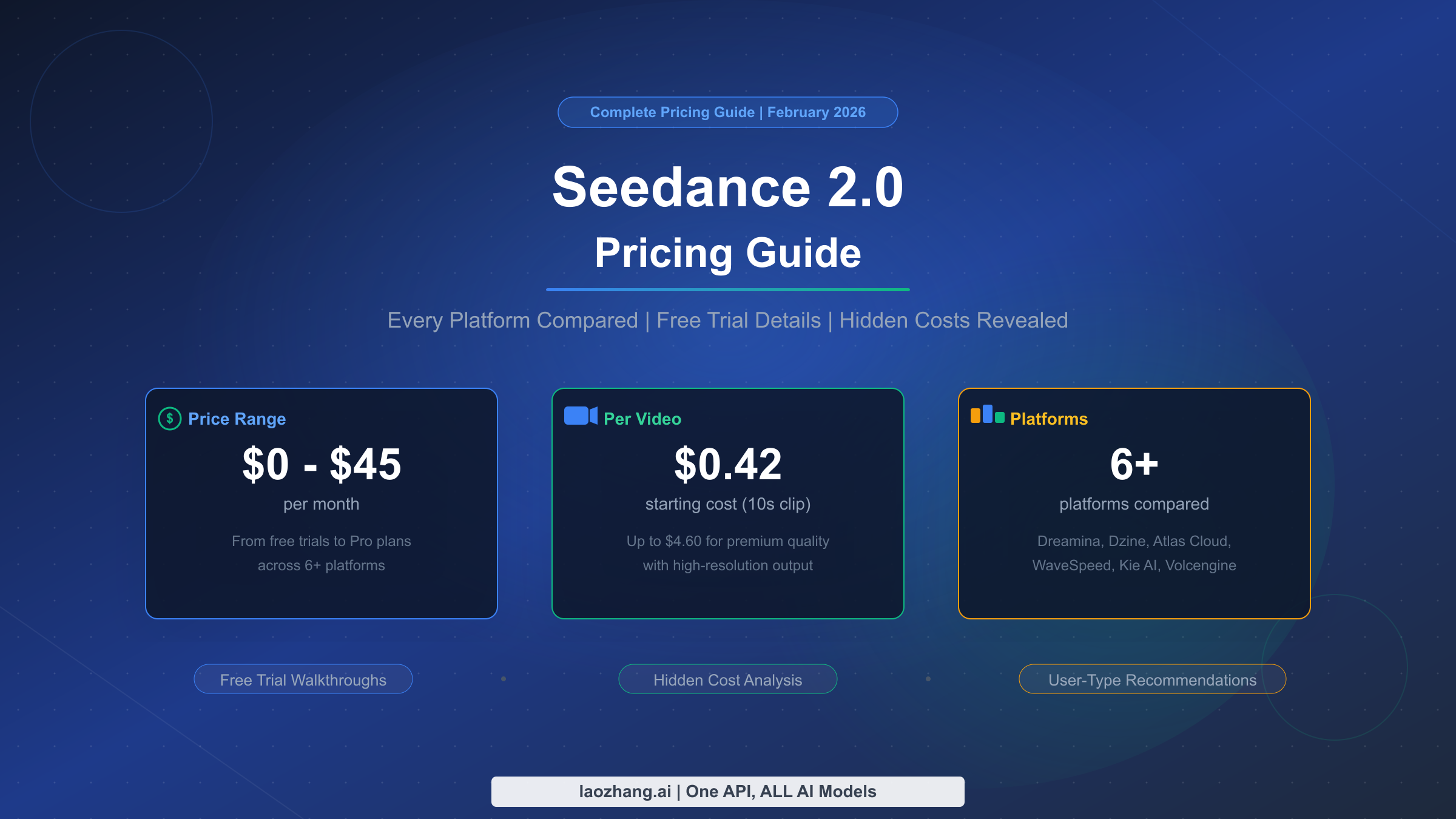
Seedance 2.0 pricing ranges from free to $45/month depending on the platform and plan you choose. On Dreamina, ByteDance's official consumer platform, basic membership starts at approximately $9.60/month (69 RMB), while per-video costs range from $0.42 to $4.60 for a 10-second clip. Multiple platforms including Volcengine and Xiaoyunque offer free trials with limited credits, making it possible to test Seedance 2.0 without spending anything. This guide compares every major platform's pricing, reveals hidden costs that can multiply your bill by up to 9x, and recommends the best plan for your specific needs as of February 2026.
TL;DR - Seedance 2.0 Pricing at a Glance
Before diving into the details, here is a quick summary of what each platform charges and who it serves best. Dreamina remains the most popular option for individual users, offering both a budget-friendly VFX mode at roughly $0.42 per 10-second clip and a premium tier at $4.60 for maximum quality. Developers who need API access will find Atlas Cloud and laozhang.ai more practical, with per-second billing that scales to any workload. The free options on Volcengine (8 high-quality generations) and Xiaoyunque (3 free generations plus daily credits) are generous enough to evaluate the model before committing any money.
| Platform | Type | Starting Price | Per-Video (10s) | Free Trial | Best For |
|---|---|---|---|---|---|
| Dreamina (CapCut) | Official GUI | $9.60/mo | $0.42–$4.60 | Limited credits | Creators |
| Volcengine | Developer Cloud | Pay-per-use | Varies | 8 free HQ videos | Hobbyists |
| Xiaoyunque | Access Portal | Free tier | ~$0.42 (VFX) | 3 free + daily pts | Casual users |
| Atlas Cloud | API Provider | Pay-per-use | ~$2.47 | $1 free credit | Developers |
| Dzine AI | Third-party GUI | Subscription | Varies | Free tier available | Designers |
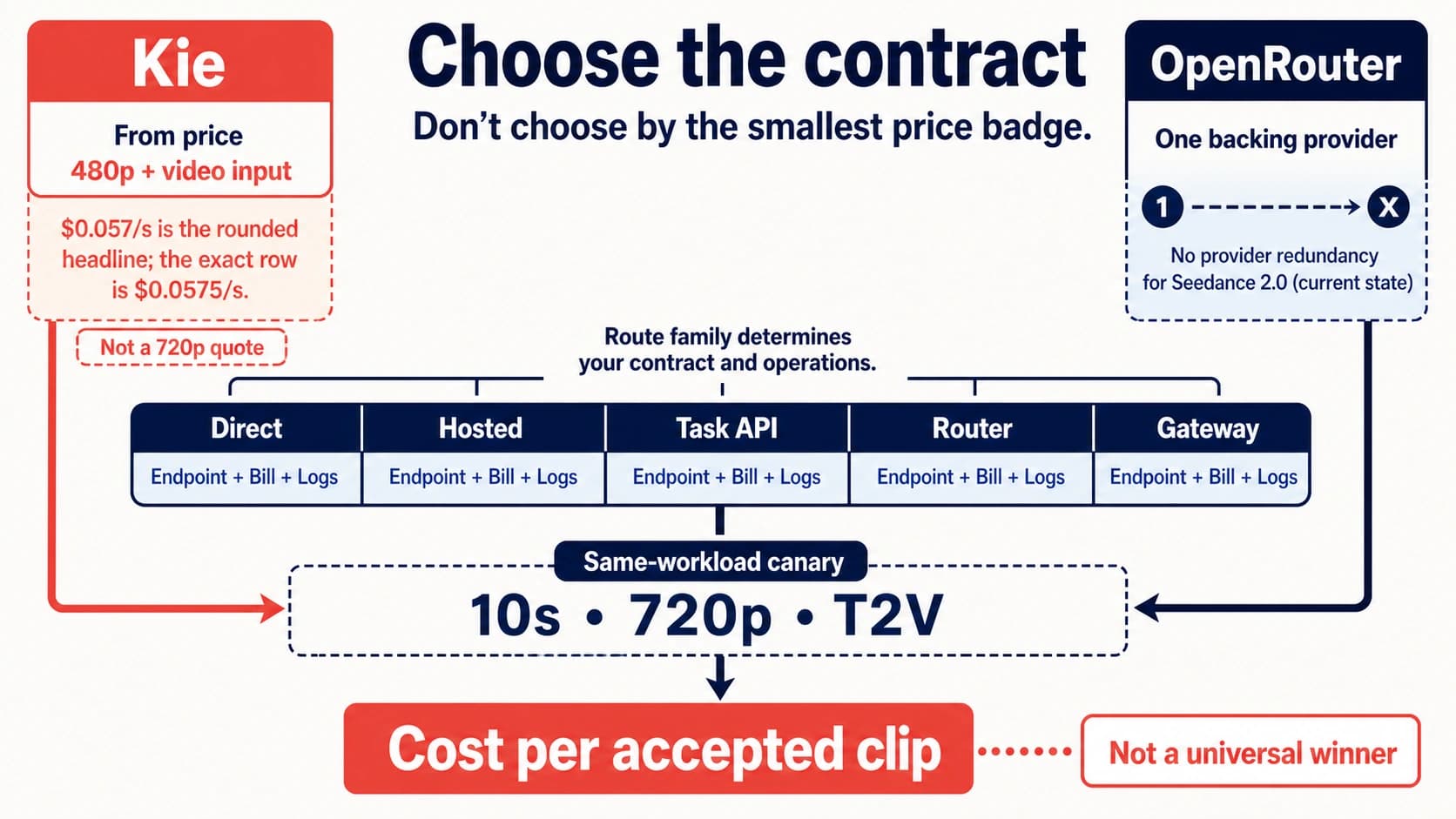
| Kie AI | API Provider | Pay-per-use | ~$3.00 est. | Free credits | API users |
The most important takeaway is that Seedance 2.0 is not a single-price product. Your actual cost depends on which platform you use, what quality settings you choose, and how many retries your prompts need. The cheapest path is Dreamina's VFX mode at $0.42 per clip, while the most expensive scenario—premium quality with 4K upscaling and multiple retries—can push costs above $3.78 per clip.
Complete Platform-by-Platform Pricing Breakdown
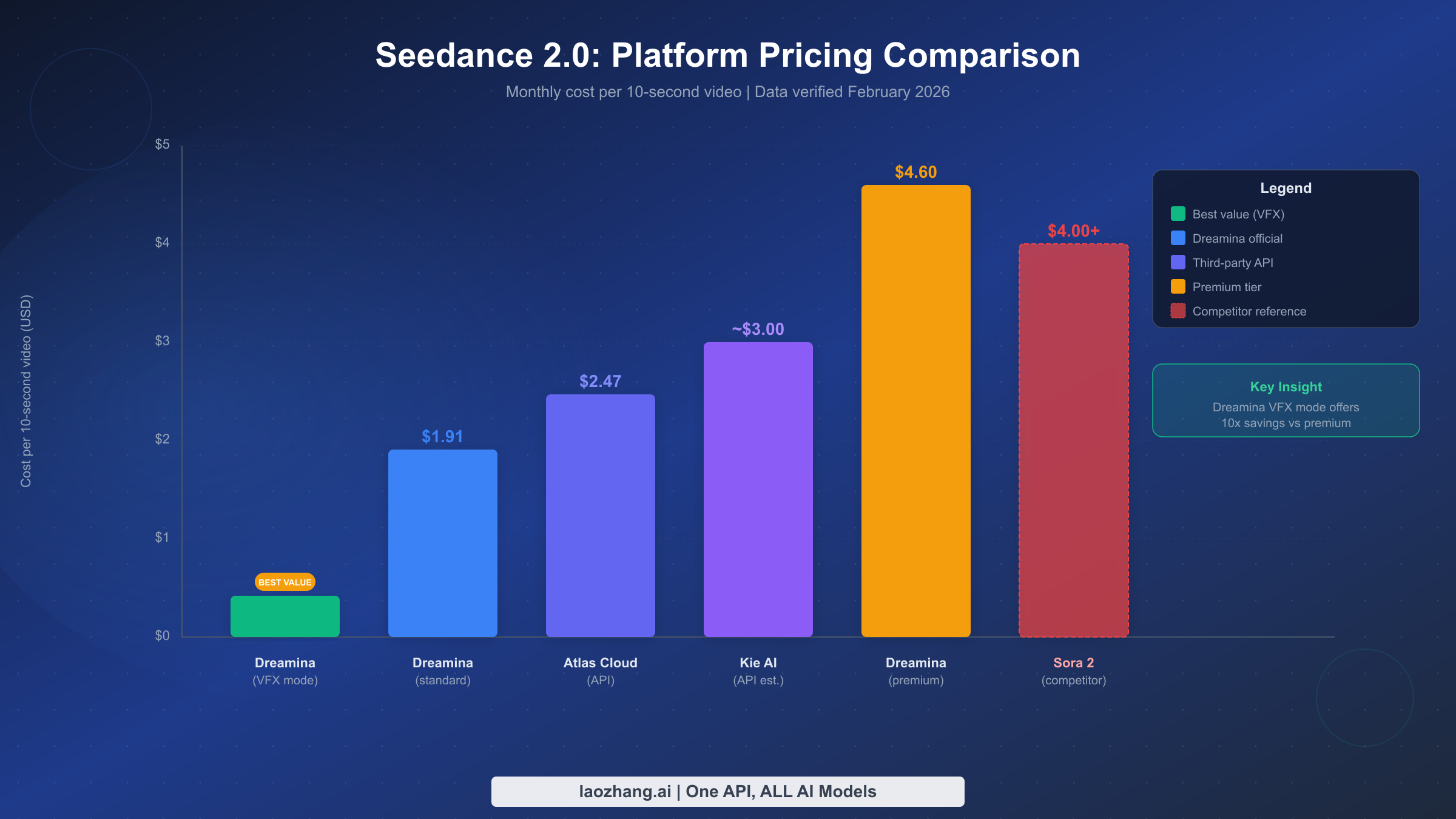
Understanding the full landscape of Seedance 2.0 pricing requires looking beyond a single platform. ByteDance has made the model available through multiple channels, each with its own pricing structure, credit system, and trade-offs. This fragmented pricing ecosystem is actually one of the biggest pain points for users trying to make a purchasing decision—no single source previously covered all the options in one place. The pricing data below has been cross-referenced from multiple sources including official platform pages, API documentation, and verified user reports, all dated February 2026.
Dreamina (CapCut) — ByteDance's Official Platform
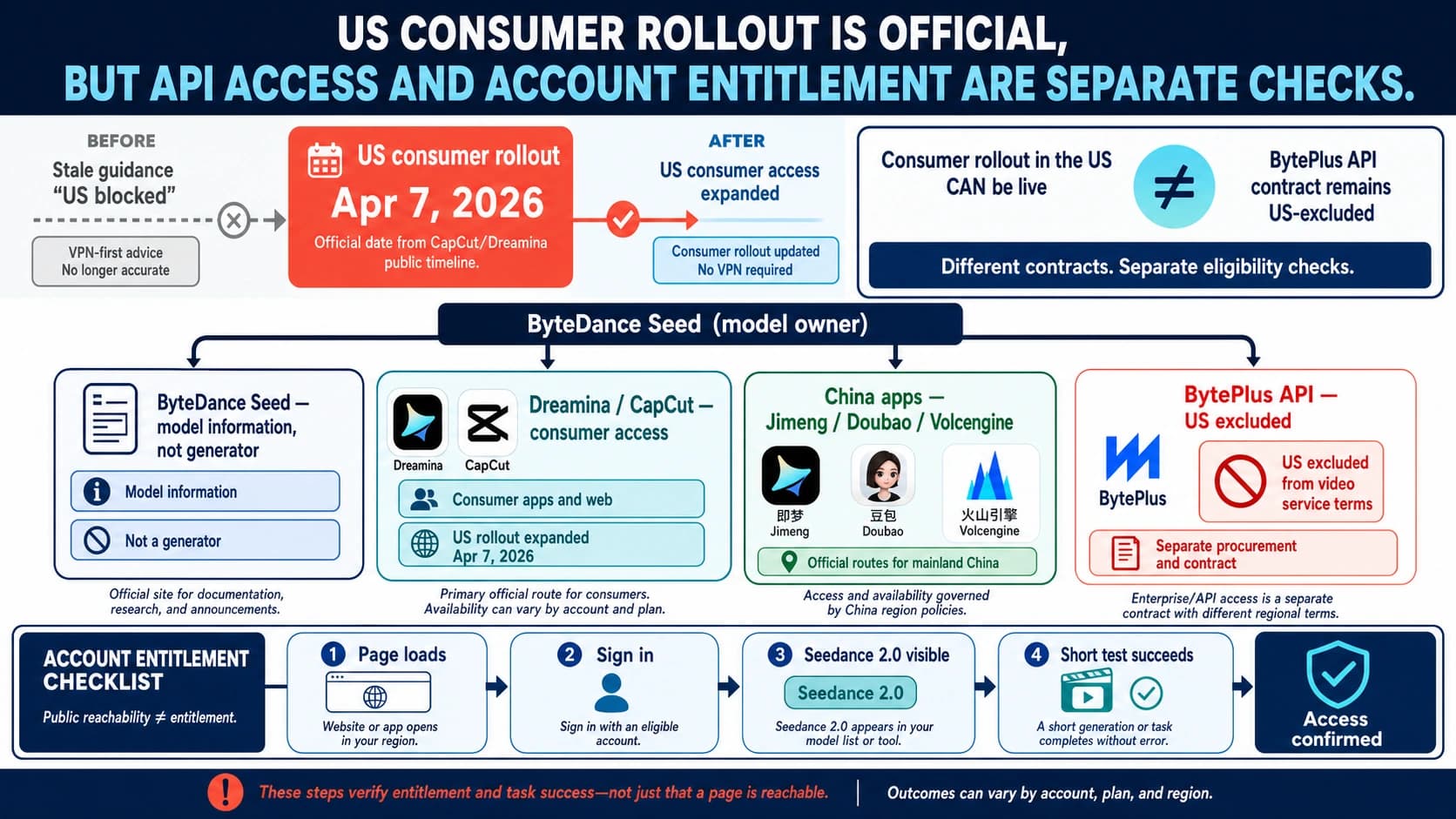
Dreamina, formerly known as Jimeng in the Chinese market, is ByteDance's official consumer-facing platform for Seedance 2.0. It operates on a membership plus credits model that can be confusing at first glance. The basic membership costs approximately 69 RMB per month (around $9.60 USD at current exchange rates), which includes a monthly allocation of credits. According to Dzine Blog's analysis (February 2026), a standard 10-second video generation costs between $1.91 and $4.60 depending on the quality settings you select. However, the real value play is Dreamina's VFX mode, which GlbGPT's research confirms costs approximately 3 RMB ($0.42 USD) per generation with a success rate exceeding 90%. For users who need higher volume, ByteDance offers a Pro plan at approximately $45/month that includes enough credits for roughly 130-140 standard video generations, priority queue access, and 1080p output as the default resolution.
Atlas Cloud — Per-Second API Billing
Atlas Cloud stands out among Seedance 2.0 providers by offering precise per-second billing for API access. Their official pricing page lists Seedance 2.0 at $0.247 per second for the standard tier and $0.2223 per second for the fast tier (version 1.5 of the model). For a typical 10-second generation, this translates to approximately $2.47 at the standard rate. New users receive $1 in free credits to test the service. The per-second model makes Atlas Cloud particularly attractive for developers who generate videos of varying lengths, since you only pay for exactly what you produce rather than consuming fixed-size credit packages.
Dzine AI — Third-Party Platform with Editing Tools
Dzine AI positions itself as a creative platform that integrates Seedance 2.0 alongside other AI tools. While their exact per-video pricing for Seedance 2.0 is not publicly listed in a simple table format, multiple SERP sources from February 2026 recommend Dzine as a more economical alternative to Dreamina for users who also need image editing and design capabilities. The platform offers a free tier with limited generations, making it worth testing if your workflow involves both video generation and graphic design. Dzine's primary value proposition is the integrated editing experience rather than raw video generation pricing.
API Aggregators — laozhang.ai and Others
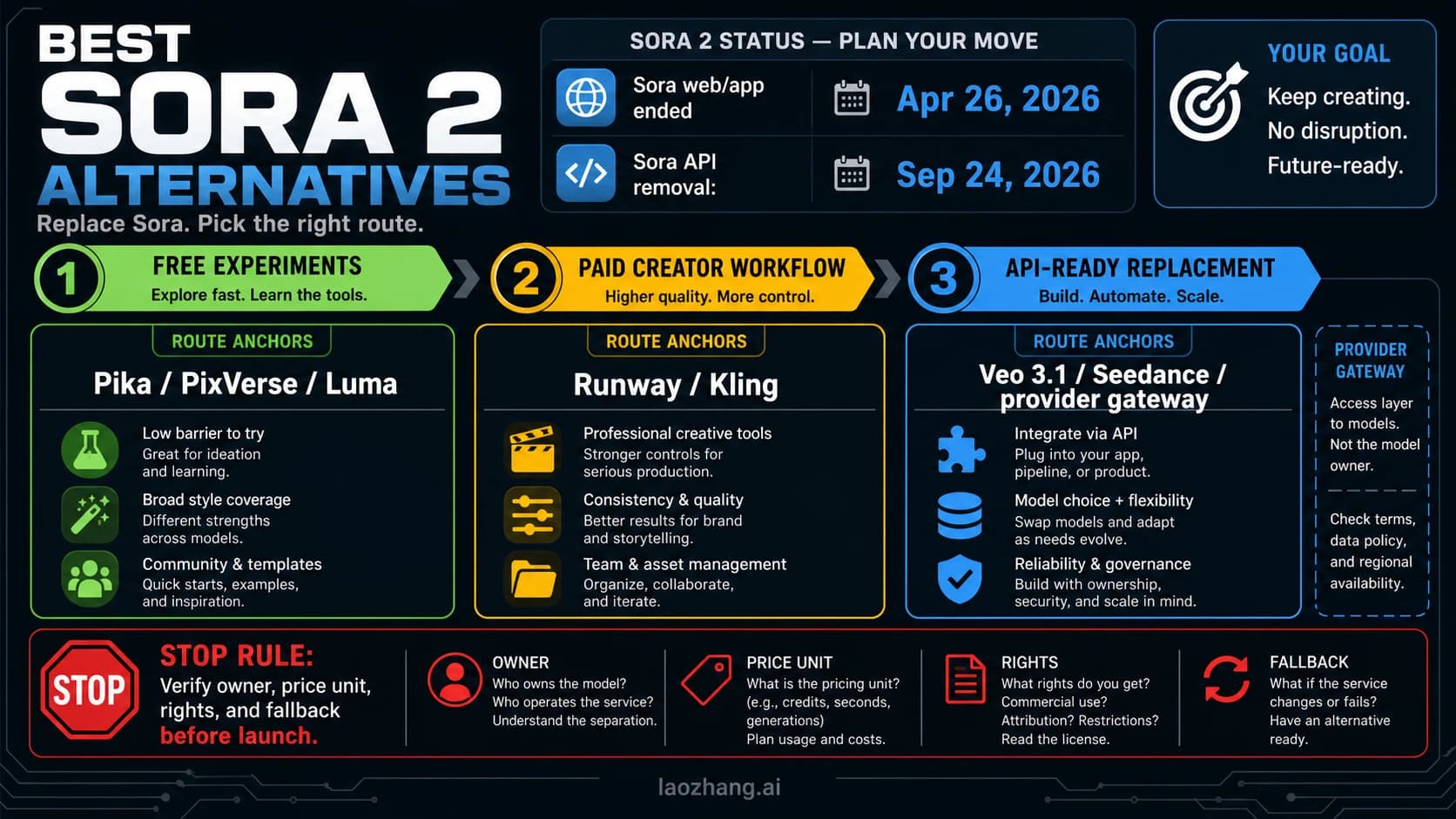
For developers who need programmatic access to multiple AI video models including Seedance 2.0, API aggregator platforms offer a compelling alternative to direct platform access. Providers like laozhang.ai aggregate multiple video generation APIs under a single endpoint, which simplifies integration and often provides competitive pricing. For example, laozhang.ai offers Sora 2 API access at $0.15 per request and Veo 3.1 at $0.15 per request (fast mode), with the notable advantage that failed generations are not charged. While Seedance 2.0 availability varies across aggregators, the aggregation model is worth considering if you plan to use multiple AI video tools—having one API key and one billing relationship is significantly simpler than managing accounts across five or six platforms. Full API documentation is available at docs.laozhang.ai.
Volcengine — ByteDance's Developer Cloud
Volcengine is ByteDance's enterprise cloud computing platform, analogous to how Google Cloud hosts Vertex AI. For developers who want direct access to Seedance 2.0 through ByteDance's own infrastructure, Volcengine offers API access with pay-per-use pricing. The platform is particularly relevant for enterprise users who need service level agreements, dedicated support, and volume discounts. Pricing on Volcengine tends to be competitive since there is no middleman markup, but the documentation and interface are primarily in Chinese, which creates an accessibility barrier for international users. To use Volcengine effectively, you will need a ByteDance developer account and should be comfortable navigating Chinese-language documentation, or alternatively use browser translation tools. The trade-off is worthwhile for teams processing high volumes, since the direct-from-source pricing eliminates the margin that third-party platforms add. Volcengine also provides the most comprehensive model configuration options, including fine-grained control over generation parameters that consumer platforms like Dreamina abstract away behind simplified quality presets.
Kie AI and Emerging Platforms
Beyond the five major platforms described above, several newer entrants have begun offering Seedance 2.0 access at competitive rates. Kie AI, for instance, provides API-based access with free credits for new registrations, targeting developers who need straightforward REST API integration without the complexity of enterprise cloud platforms. While exact per-video pricing on newer platforms can be difficult to verify independently, the general trend is clear: increased competition among providers is steadily pushing Seedance 2.0 access costs downward. When evaluating emerging platforms, prioritize those with transparent pricing documentation, responsive support, and clear terms of service regarding content ownership and data privacy. The cheapest option is not always the best value if it comes with undisclosed limitations on generation quality, queue priority, or output resolution.
Free Trials and Free Credits on Every Platform
One of the most frequently asked questions about Seedance 2.0 is whether it can be used for free. The answer is a qualified yes—multiple platforms offer free trials or free credits, though each comes with its own limitations. Understanding exactly what you get for free on each platform prevents unpleasant surprises and helps you make the most of the trial period. Based on verified data from multiple sources dated February 2026, here is what each platform currently offers at no cost.
Volcengine offers the most generous free trial among all Seedance 2.0 platforms. New users receive 8 free high-quality 15-second video generations with no credit card required. This is enough to thoroughly test the model's capabilities across different prompt styles, aspect ratios, and subject matter. The high-quality setting means you are seeing Seedance 2.0 at its best, not a degraded preview version. For hobbyists and evaluators, this is the recommended starting point because you get the most output for zero investment and the setup process is straightforward.
Xiaoyunque (Little Skylark) provides ongoing free access with a different model. According to GlbGPT and Dzine Blog's research, new users get 3 completely free generations, plus 120 points that refresh daily. At a consumption rate of 8 points per second, those daily 120 points translate to roughly 15 seconds of video generation per day. While 15 seconds per day is not enough for production use, it provides a perpetual free testing ground for experimenting with prompts and learning the model's strengths and weaknesses. The daily refresh makes Xiaoyunque particularly useful for long-term experimentation without any financial commitment.
Dreamina includes free credits for new accounts, though the exact amount varies and is not consistently documented across public sources. The free allocation appears to be enough for a handful of standard-quality generations. What makes Dreamina's free tier notable is that it gives you access to the full GUI interface, including the VFX mode, which is the most cost-effective generation method on the platform. If you exhaust your free credits and find the VFX mode ($0.42 per generation) meets your quality needs, upgrading to the basic membership at $9.60/month becomes a straightforward decision.
Atlas Cloud gives new users $1 in free credits, which at their standard rate of $0.247 per second translates to approximately 4 seconds of video, or roughly one short test generation. While modest, this is enough to verify that the API integration works correctly in your development environment before committing to paid usage. For developers, the ability to test the actual API endpoints rather than a sandbox version is the key value of this trial.
Kie AI provides free credits for new registrations as well, though the specific amount is not precisely documented in public sources. The platform targets API users, so the free tier is designed to let developers test the integration workflow rather than produce finished content. When signing up, look for any promotional offers or referral bonuses that might increase the initial free allocation.
To maximize your free trial experience across all platforms, consider this approach: start with Volcengine's 8 free high-quality generations to evaluate Seedance 2.0's core quality, then use Xiaoyunque's daily credits for ongoing prompt experimentation, and finally test Dreamina's VFX mode to see if the lower-cost option meets your specific quality requirements. This three-platform sequence costs nothing and gives you a comprehensive understanding of what Seedance 2.0 can deliver before you spend a dollar.
Hidden Costs That Inflate Your Bill
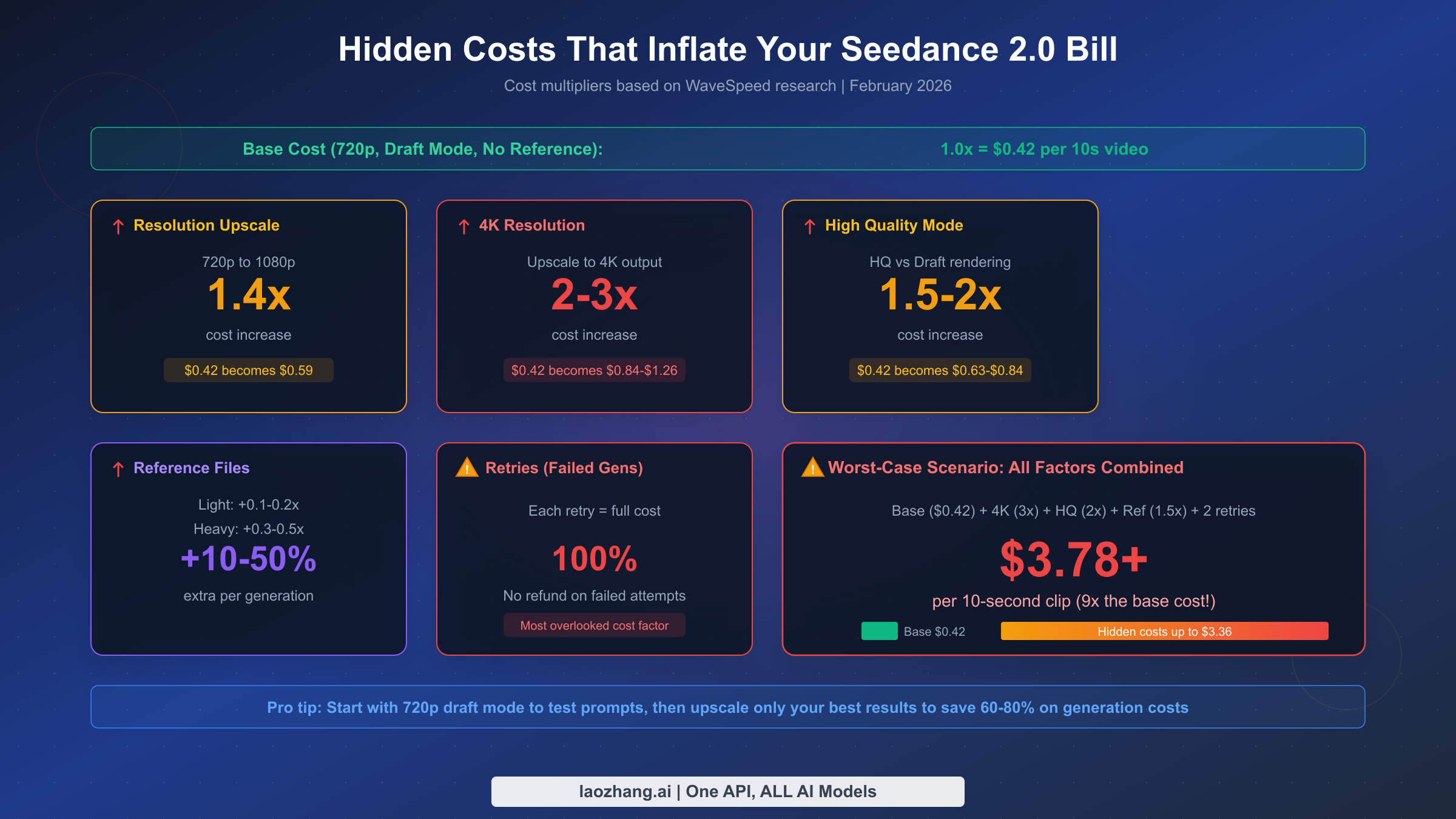
The sticker price of any Seedance 2.0 plan tells only part of the story. Based on WaveSpeed's detailed cost analysis published in February 2026, several factors can multiply your actual spending well beyond the base rate, and most of them are not prominently disclosed on platform pricing pages. Understanding these hidden multipliers before you commit to a plan is essential for accurate budgeting. The data below comes from WaveSpeed's research on Seedance 2.0's cost structure, which remains the most comprehensive publicly available analysis of these factors.
Resolution upscaling is the most predictable cost multiplier and the easiest to plan for. Generating at 720p (the default on most platforms) establishes the base cost. Stepping up to 1080p increases the cost by approximately 1.4x according to WaveSpeed's analysis, meaning a $0.42 VFX generation becomes roughly $0.59. The jump to 4K resolution is significantly steeper at 2-3x the base cost, pushing that same generation to $0.84-$1.26. Most users discover through experimentation that 720p is perfectly adequate for social media content, while 1080p is the sweet spot for YouTube and professional presentations. Reserve 4K for final deliverables where maximum quality justifies the premium, and always generate initial drafts at 720p to test your prompts before committing to expensive high-resolution renders.
High-quality mode versus draft mode introduces another 1.5-2x cost multiplier that many users enable by default without realizing its budget impact. Draft mode produces faster results at lower cost, and the quality difference is often imperceptible for motion-heavy content where fine details are naturally blurred. The practical strategy is to use draft mode for all iterative work—testing prompts, exploring compositions, refining timing—and switch to high-quality mode only for your final, approved generation. This single habit can reduce your generation costs by 40-50% without any visible impact on your output quality for most use cases.
Reference files add a variable surcharge that depends on how heavily they influence the generation. WaveSpeed's research categorizes this into two tiers: light reference usage (where the reference loosely guides style or composition) adds 10-20% to the base cost, while heavy reference usage (where the reference substantially controls the output) adds 30-50%. Image-to-video generation, which inherently relies heavily on a reference image, consistently falls into the heavy category. If your workflow involves frequent image-to-video conversion, budget for the higher multiplier and consider whether a text-only prompt might achieve similar results at lower cost.
Retries represent the most overlooked cost factor because they are psychologically invisible—you feel like you are just trying again, but the billing system treats each attempt as a brand-new generation at full price. Unlike some platforms that offer partial refunds for unsatisfactory results, Seedance 2.0 charges the full amount for every generation attempt, including those that fail to match your expectations. At typical success rates, professional users report that 2-3 tries are often needed to get a result that meets production standards. This means your effective per-video cost may be 2-3x the listed price. The most effective countermeasure is to invest time in writing detailed, specific prompts before hitting generate, since a well-crafted prompt dramatically reduces retry frequency.
The worst-case cost scenario illustrates why budgeting matters. Consider a user who needs a 4K, high-quality video with heavy reference input and requires two retries to get an acceptable result. Starting from the base cost of $0.42, applying the 4K multiplier (3x), high-quality mode (2x), heavy reference (1.5x), and two retries (3x total generations), the real cost reaches approximately $3.78 per 10-second clip—a full 9x markup over the advertised base price. While this worst case is unlikely for every generation, it demonstrates why understanding these multipliers is critical for any serious budgeting exercise. If you are comparing Seedance 2.0's pricing against competitors like Sora 2 or Veo 3, make sure you are comparing real-world costs (including typical retries and your preferred quality settings) rather than just base prices.
Is Seedance 2.0 Worth It? Value Comparison with Sora 2 and Veo 3
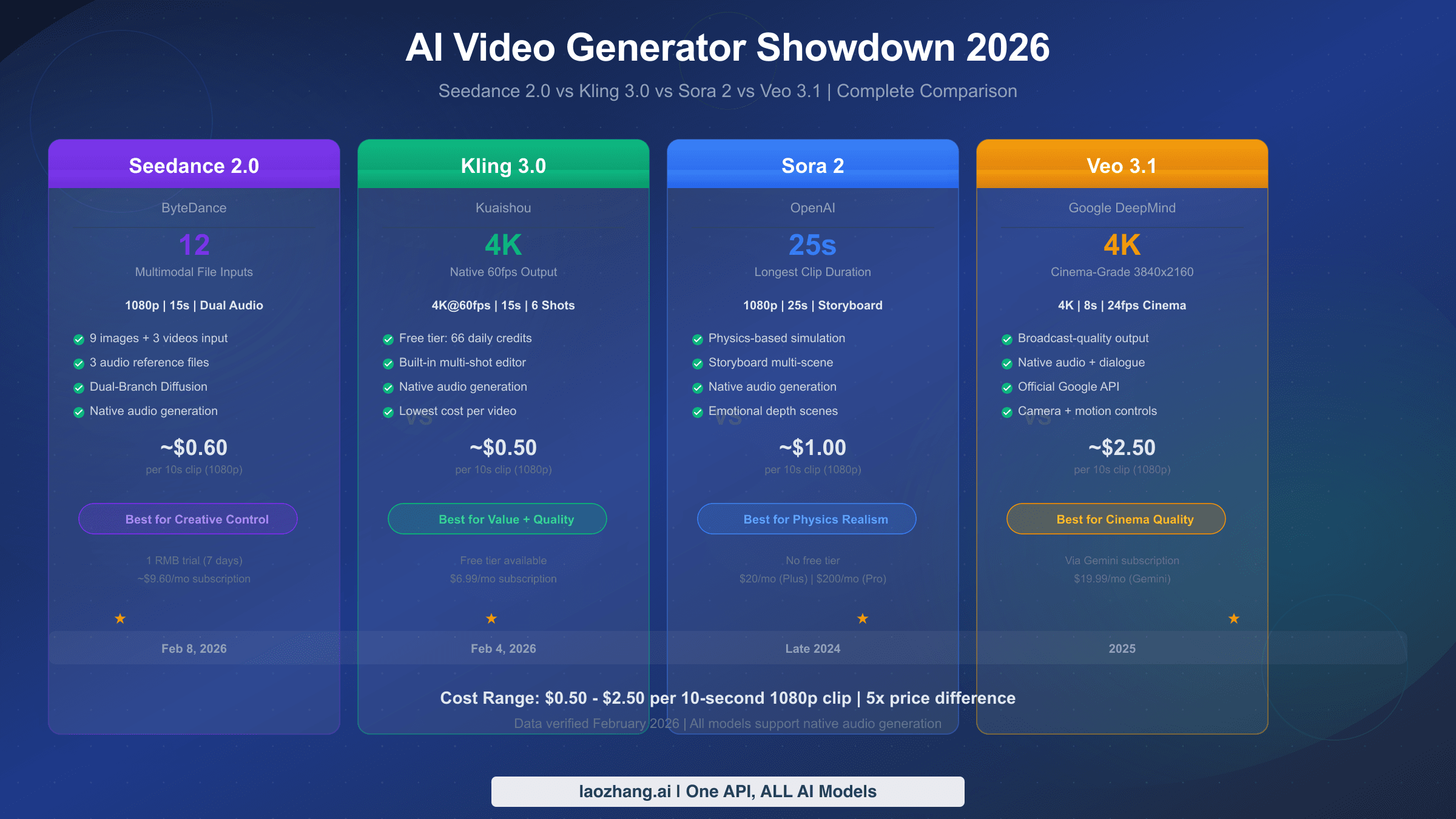
Evaluating Seedance 2.0's value requires more than comparing sticker prices. The three leading AI video generators in early 2026—Seedance 2.0, Sora 2, and Veo 3.1—each occupy different positions on the price-quality spectrum, and the best choice depends on your specific priorities. For a detailed comparison of Seedance 2.0, Veo 3, and Sora 2 covering quality, features, and performance benchmarks, we have published a dedicated deep-dive analysis. Here, we focus specifically on the cost dimension.
On raw per-video pricing, Seedance 2.0 is the clear budget leader. At $0.42 per 10-second clip in VFX mode on Dreamina, it undercuts Sora 2 (which requires a ChatGPT Plus subscription at $20+/month, SeedanceTips data February 2026) and Veo 3.1 (also $20+/month through Google's platform) by a significant margin. Even Seedance 2.0's premium tier at $4.60 per clip is competitive with or cheaper than the effective per-video cost on Sora 2 when you factor in the subscription overhead for low-volume users. Kling 3.0 at $5.90+/month (SeedanceTips, February 2026) is the closest competitor in the budget segment, but its generation quality and feature set differ meaningfully from Seedance 2.0.
Value per dollar depends heavily on your success rate and quality requirements. Seedance 2.0's VFX mode achieves a reported 90%+ success rate (GlbGPT, February 2026), which means fewer wasted generations and lower effective costs. If your prompts consistently produce acceptable results on the first or second attempt, the cost advantage over Sora 2 and Veo 3.1 becomes even more pronounced. Conversely, if you need high-resolution output with heavy reference guidance—pushing into the hidden cost multiplier territory—the gap narrows considerably. The practical implication is that Seedance 2.0's value proposition is strongest for users who can work with standard resolution and have developed effective prompting skills.
The subscription versus pay-per-use model matters for different usage levels. Sora 2 and Veo 3.1 both require monthly subscriptions that include other features beyond video generation. If you are already paying for ChatGPT Plus or Google's AI suite, the marginal cost of video generation is lower than it appears. But if video generation is your primary use case, Seedance 2.0's pay-per-use model on platforms like Atlas Cloud or Dreamina's credit system offers better cost control—you never pay for capacity you don't use. For a broader perspective on which AI video tool offers the best overall value, see our guide to the best AI video generators in 2026.
Feature-for-feature, Seedance 2.0 punches above its price class. While Sora 2 and Veo 3.1 may produce marginally higher quality output in certain categories like photorealistic human faces or complex physics simulation, Seedance 2.0's motion consistency and cinematic composition capabilities are competitive with models costing 3-5x more per generation. The model particularly excels at character animation, dance sequences, and stylized content—areas where its training data gives it a distinctive advantage. For users whose content falls within these strengths, the value proposition is exceptional: you get 80-90% of the visual quality of premium competitors at 10-25% of the cost. The remaining quality gap narrows further when you consider that most social media platforms compress video significantly, reducing the visible differences between models in the final delivered format.
Which Plan Should You Choose? Recommendations by Use Case
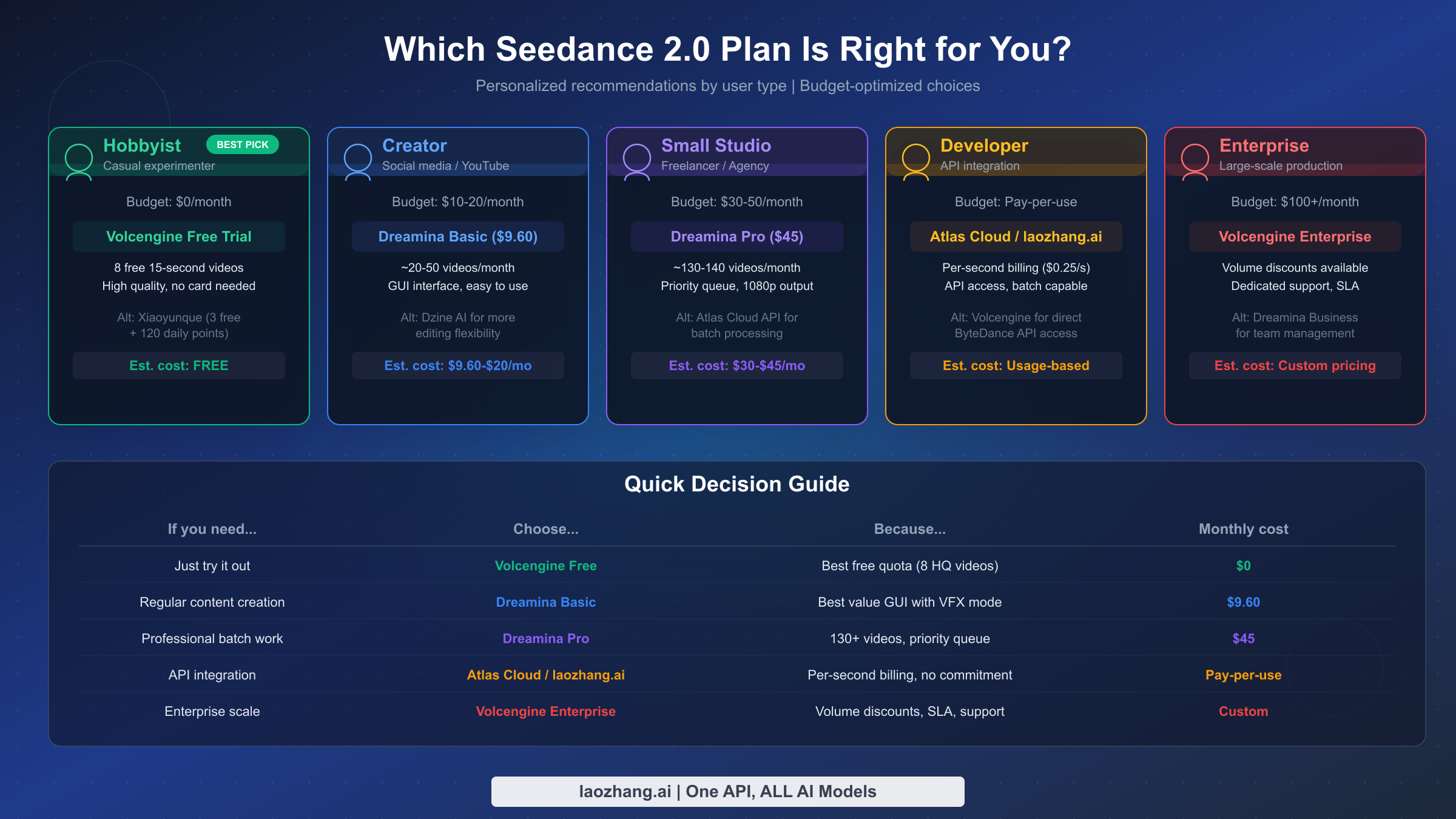
The right Seedance 2.0 plan depends entirely on how you plan to use it. A hobbyist experimenting with AI video has fundamentally different needs than a developer integrating the model into a production application. Rather than offering a single "best" recommendation, the following guidance maps each user profile to the most cost-effective platform and plan combination. These recommendations factor in not just the base price, but also the hidden cost multipliers, the learning curve, and the long-term scalability of each option.
Hobbyists and casual experimenters should start with free trials and stay there as long as possible. Volcengine's 8 free high-quality generations are the ideal starting point—enough to produce several polished videos without spending anything. After exhausting those, Xiaoyunque's perpetual free tier with 120 daily points gives you roughly 15 seconds of generation per day, indefinitely. At this usage level, there is genuinely no reason to pay. If you find yourself wanting more than the free tiers provide, Dreamina's basic membership at $9.60/month represents the most economical upgrade path, especially if you use VFX mode to maximize the number of generations per credit allocation.
Content creators and social media professionals generating 10-50 videos per month will get the most value from Dreamina's basic membership at $9.60/month combined with strategic use of VFX mode. At the VFX rate of roughly $0.42 per generation, a $9.60 monthly subscription could theoretically support over 20 standard generations, with the exact number depending on the credit allocation structure. The key cost optimization for this tier is to always draft in VFX mode or at 720p resolution, then upscale only your selected final outputs. This approach reduces your average cost per published video by 40-60% compared to generating everything at premium settings. For users in this category who also work with other AI video tools, checking our overview of stable Sora 2 API providers can help diversify your toolkit without breaking the budget.
Small studios and freelancers handling client work should evaluate Dreamina's Pro plan at $45/month, which includes approximately 130-140 standard-quality generations, priority queue access, and 1080p as the default output resolution. The priority queue alone justifies the upgrade for professional work, since faster generation times directly translate to faster client delivery. At roughly $0.32-$0.35 per standard video on the Pro plan (dividing the monthly cost by the included generation count), this tier actually offers a lower per-video cost than the basic plan for users who consistently generate at high volume. Studios that need API integration alongside GUI access should consider maintaining a Pro subscription for interactive work while using Atlas Cloud's API for automated batch processing.
Developers building applications with video generation capabilities face a different decision matrix centered on API access, billing predictability, and reliability. Atlas Cloud's per-second billing ($0.247/sec standard, $0.2223/sec fast) provides precise cost control and is ideal for applications where video length varies. For developers who need access to multiple video models beyond just Seedance 2.0, aggregator platforms like laozhang.ai offer the significant advantage of unified API access to Sora 2 ($0.15/request), Veo 3.1 ($0.15/request fast mode), and other models through a single integration point. The no-charge-on-failure policy is particularly valuable in production environments where content moderation rejections or timeout errors would otherwise inflate costs unpredictably. API documentation is available at docs.laozhang.ai.
Enterprise users with large-scale production needs should contact Volcengine directly for custom pricing. Enterprise plans typically include volume discounts, dedicated support, service level agreements, and compliance certifications that are not available on consumer tiers. The cost per video at enterprise scale can be significantly lower than any public pricing tier, but the exact rates are negotiated individually based on projected volume and contract terms. For enterprises evaluating multiple AI video models simultaneously, the aggregator approach is worth discussing with providers who can offer enterprise agreements covering multiple models under a single contract.
Frequently Asked Questions
Is Seedance 2.0 really free to use? Seedance 2.0 is not entirely free, but several platforms offer genuinely useful free tiers. Volcengine provides 8 free high-quality 15-second generations for new users, and Xiaoyunque offers 3 free generations plus 120 daily points that refresh indefinitely. These free allocations are sufficient for evaluation and casual use. For regular production work, however, you will need a paid plan on one of the platforms described in this guide. The most affordable paid option is Dreamina's VFX mode at approximately $0.42 per generation, available with the basic $9.60/month membership.
Can I cancel my subscription anytime? What is the refund policy? Dreamina memberships can generally be cancelled before the next billing cycle, though specific terms vary by payment method and region. Most Seedance 2.0 platforms do not offer refunds for already-consumed credits or partially used subscription periods. Before subscribing, it is advisable to fully use available free trials to confirm that the platform meets your needs. For API providers like Atlas Cloud, the pay-per-use model inherently avoids subscription lock-in since you only pay for what you generate.
Do credits expire? Credit expiration policies differ by platform. On Dreamina, monthly credit allocations typically must be used within the billing period and do not roll over to the next month. This is an important consideration when choosing between monthly and annual plans—if you have months of low usage, the unused credits from a monthly plan would be lost. For pay-per-use API platforms, your account balance generally does not expire, making them more flexible for users with irregular generation patterns.
Can I use Seedance 2.0 generated videos commercially? Commercial usage rights depend on the platform and plan tier. Dreamina's paid plans generally include commercial usage rights for generated content, but free-tier generations may carry restrictions. Enterprise plans through Volcengine typically provide the broadest commercial rights with explicit licensing terms. Always verify the specific commercial usage terms for your chosen platform and plan before using generated videos in client work, advertisements, or published content. This is especially important for freelancers and agencies who are generating content on behalf of clients.
What payment methods are accepted for international users? Most Seedance 2.0 platforms accept international credit cards (Visa, Mastercard), though some originally China-focused platforms may have limited international payment support. Dreamina, being part of the CapCut ecosystem, generally supports international payment methods including major credit cards. API providers like Atlas Cloud and aggregator platforms typically support Stripe-based payments, which accept most international cards. If you encounter payment difficulties on a specific platform, API aggregators often provide an easier payment path since they are built for a global developer audience from the start.
Is there a student or educational discount for Seedance 2.0? As of February 2026, none of the major Seedance 2.0 platforms have publicly announced a dedicated student or educational pricing tier. However, several indirect paths can reduce costs for students. Volcengine's free tier (8 high-quality generations) and Xiaoyunque's perpetual daily credits require no payment information at all, making them accessible to anyone regardless of budget. Additionally, some universities and educational institutions have broader agreements with ByteDance or cloud providers that might include access to AI tools. If you are affiliated with an educational institution, it is worth checking with your IT department or academic computing center before purchasing a personal subscription. Students who need higher volumes should also watch for promotional campaigns—ByteDance occasionally runs limited-time offers that significantly reduce entry costs for new users.
How does Seedance 2.0 pricing compare to Seedance 1.0? Seedance 2.0 represents a significant quality leap over version 1.0, and the pricing reflects this improvement. Atlas Cloud, which offers both versions, prices Seedance 2.0 at $0.247 per second for the standard tier compared to $0.2223 per second for the fast tier running version 1.5. The quality difference between versions is substantial—Seedance 2.0 produces markedly better motion consistency, facial detail, and physics simulation. For most use cases, the modest price premium for version 2.0 is justified by the reduced need for retries and the higher quality of first-generation outputs. Users who are strictly budget-constrained and whose use cases tolerate lower quality (such as placeholder content or rapid prototyping) may still find value in the older version at a slightly lower per-second rate.
Can I share my account or credits with team members? Account sharing policies vary by platform. Dreamina accounts are generally intended for individual use, and sharing login credentials may violate the terms of service. For teams, the recommended approach is either to have each member maintain their own account (especially during the free trial phase) or to use an API-based platform where a single API key can be managed centrally while tracking usage per team member through your own application layer. Volcengine's enterprise plans explicitly support multi-user access with role-based permissions, making them the most appropriate choice for organizations with multiple contributors who need access to Seedance 2.0.
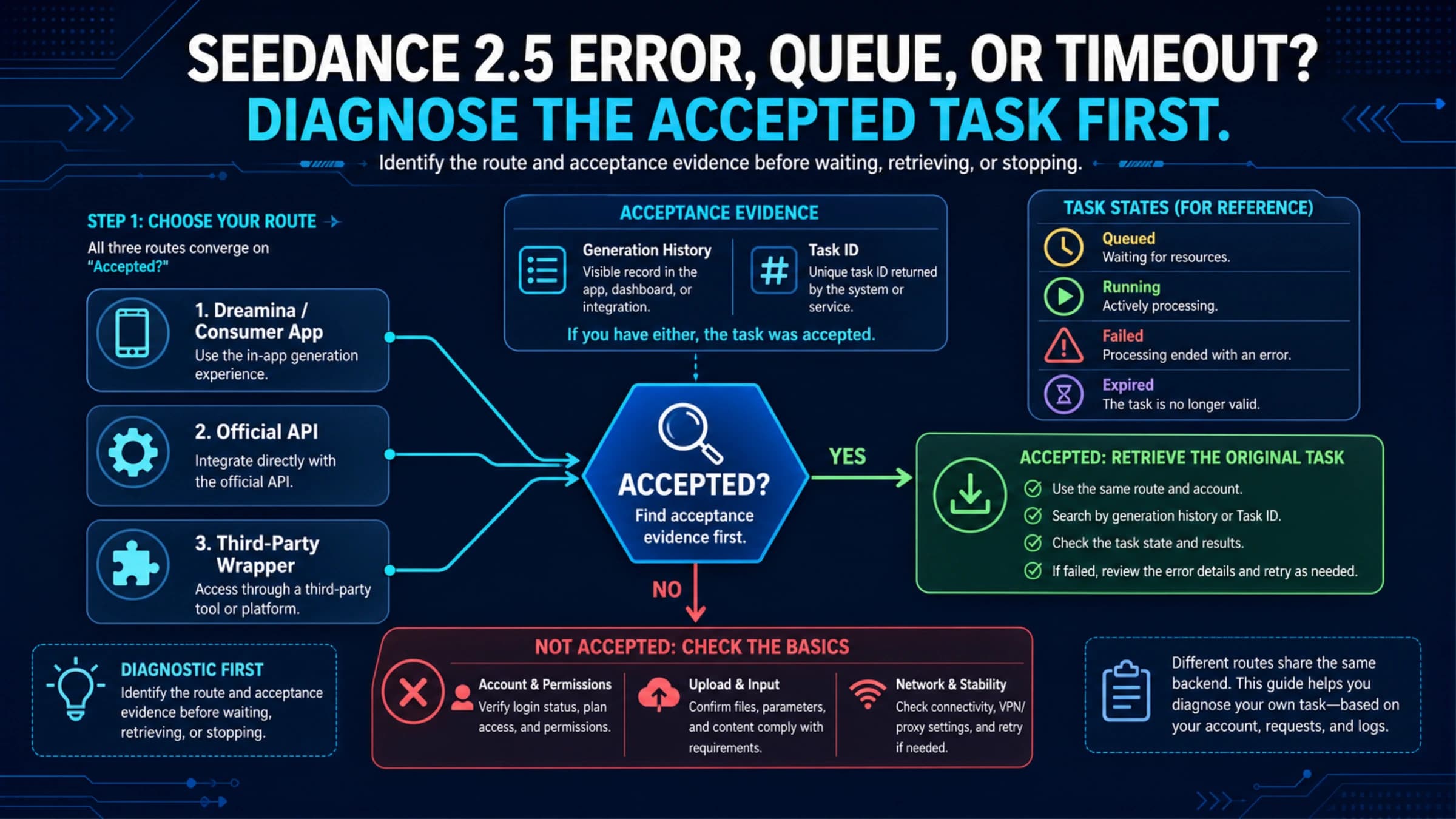
What happens if a generation fails or produces unwanted content? Generation failures and content policy rejections are handled differently across platforms. On most Seedance 2.0 platforms, a failed generation still consumes credits—there is no automatic refund for outputs that do not meet your expectations or that are flagged by content moderation filters. This makes prompt quality critical, since every failed attempt costs the same as a successful one. The notable exception is certain API aggregators like laozhang.ai, which implement a no-charge-on-failure policy for API-based generations. If your workflow involves experimental or boundary-pushing prompts that might trigger content filters, factoring the failure cost into your budget calculations is essential. As a practical rule, allocate 20-30% above your estimated generation costs to account for retries and failures.
Pricing Updates: What to Expect Next
Seedance 2.0's pricing landscape is still in its early days. The model launched in early February 2026, and pricing across all platforms is likely to evolve significantly over the coming months. Based on typical patterns in the AI video generation market, here is what you can reasonably expect regarding future pricing changes and how to stay informed about them.
Competition among AI video generators is intensifying rapidly, with Sora 2, Veo 3.1, Kling 3.0, and Seedance 2.0 all vying for market share. This competitive pressure historically drives prices downward over time, particularly for standard-tier access. The introduction of new model versions (Seedance 2.1 or 3.0, for instance) may also shift the pricing structure, as older versions become more affordable while newer versions command premium rates. The practical implication for budget-conscious users is that locking into a long-term annual plan right now may not be the best strategy—monthly plans or pay-per-use options provide more flexibility to switch as the market evolves.
To stay current with Seedance 2.0 pricing changes, monitor these sources regularly: Dreamina's official pricing page (which requires a logged-in account to view current rates), the Volcengine developer documentation for API pricing updates, and community forums like Reddit's r/aivideo where users frequently report pricing changes. Setting up Google Alerts for "Seedance 2.0 pricing" and "Dreamina pricing" can also help you catch announcements quickly. We will continue updating this guide as new pricing information becomes available, so bookmarking this page ensures you always have access to the most comprehensive and current comparison.
Looking at the broader trajectory of AI video pricing, the pattern from the text-to-image market is instructive. When Midjourney and DALL-E first launched, per-image costs were relatively high and only subscription-based options existed. Within 18 months, open-source alternatives, API-based pay-per-use models, and fierce competition drove effective costs down by 70-80%. The AI video market appears to be following a similar arc, with Seedance 2.0 representing an early aggressive pricing move by ByteDance to capture market share. Users who establish their workflows on cost-efficient platforms now will be well-positioned to benefit from further price reductions as the market matures. The practical advice is to avoid over-committing to any single platform through annual prepayment, stay flexible with monthly or pay-per-use plans, and periodically re-evaluate whether your chosen platform still offers the best value as new competitors and pricing tiers emerge throughout 2026.