GPT-Image-2 Reverse API Call: Why Official OpenAI Routes Should Replace Account Pools
Now that OpenAI documents gpt-image-2, reverse-compatible routes are no longer the default production answer. Compare official API, provider gateways, wrappers, and account-pool risk.
On this page
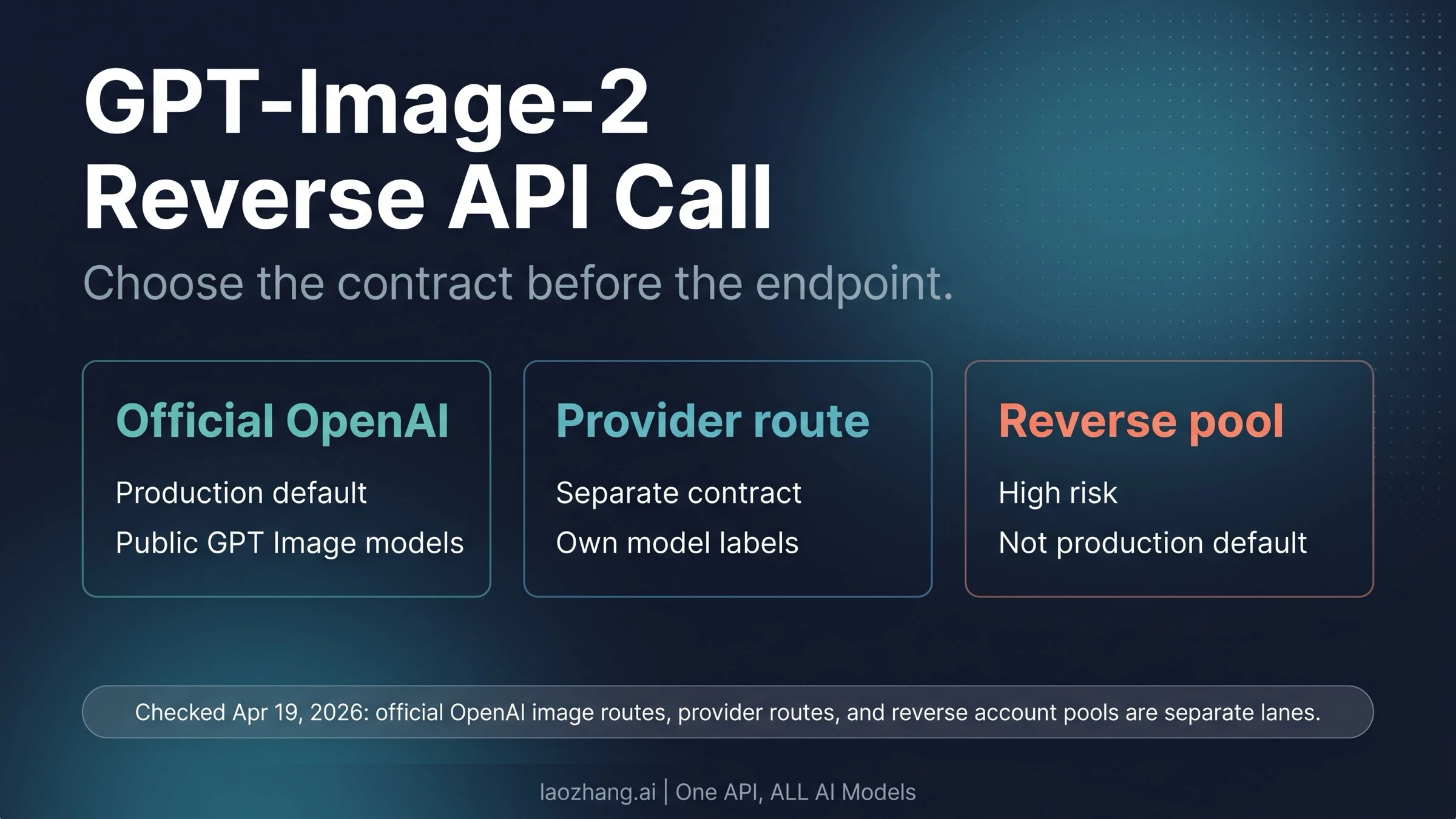
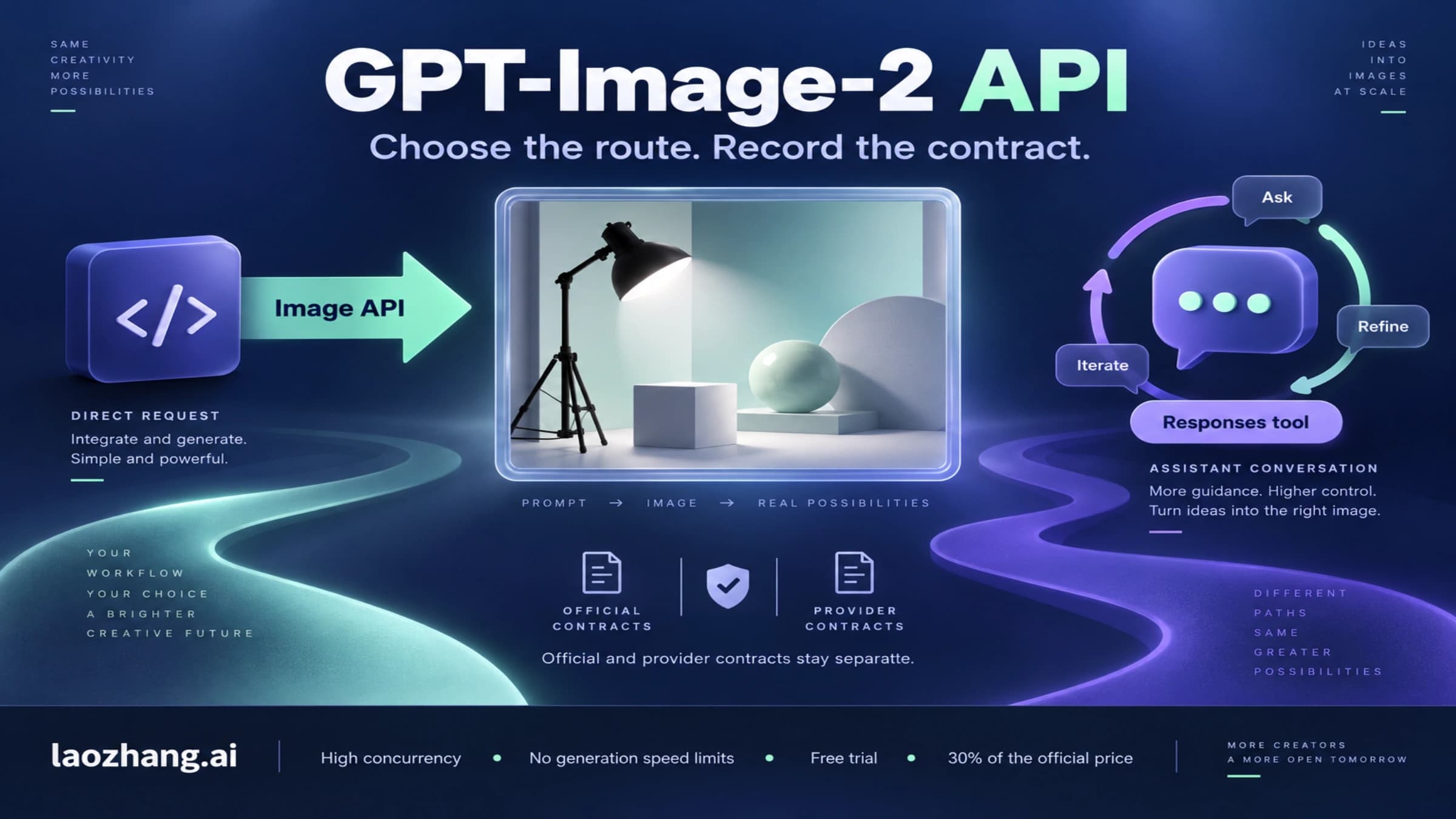
A GPT-Image-2 reverse API call is no longer the default answer for developers who need image generation. OpenAI now documents gpt-image-2, so the first production lane is the official Image API or Responses image tool, not an account pool.
Reverse-compatible endpoints, browser-session relays, and account pools still need a page because readers search for them. The page should now teach when to stop, how to migrate, and how to distinguish an official API call from a provider gateway or unsupported account-backed route.
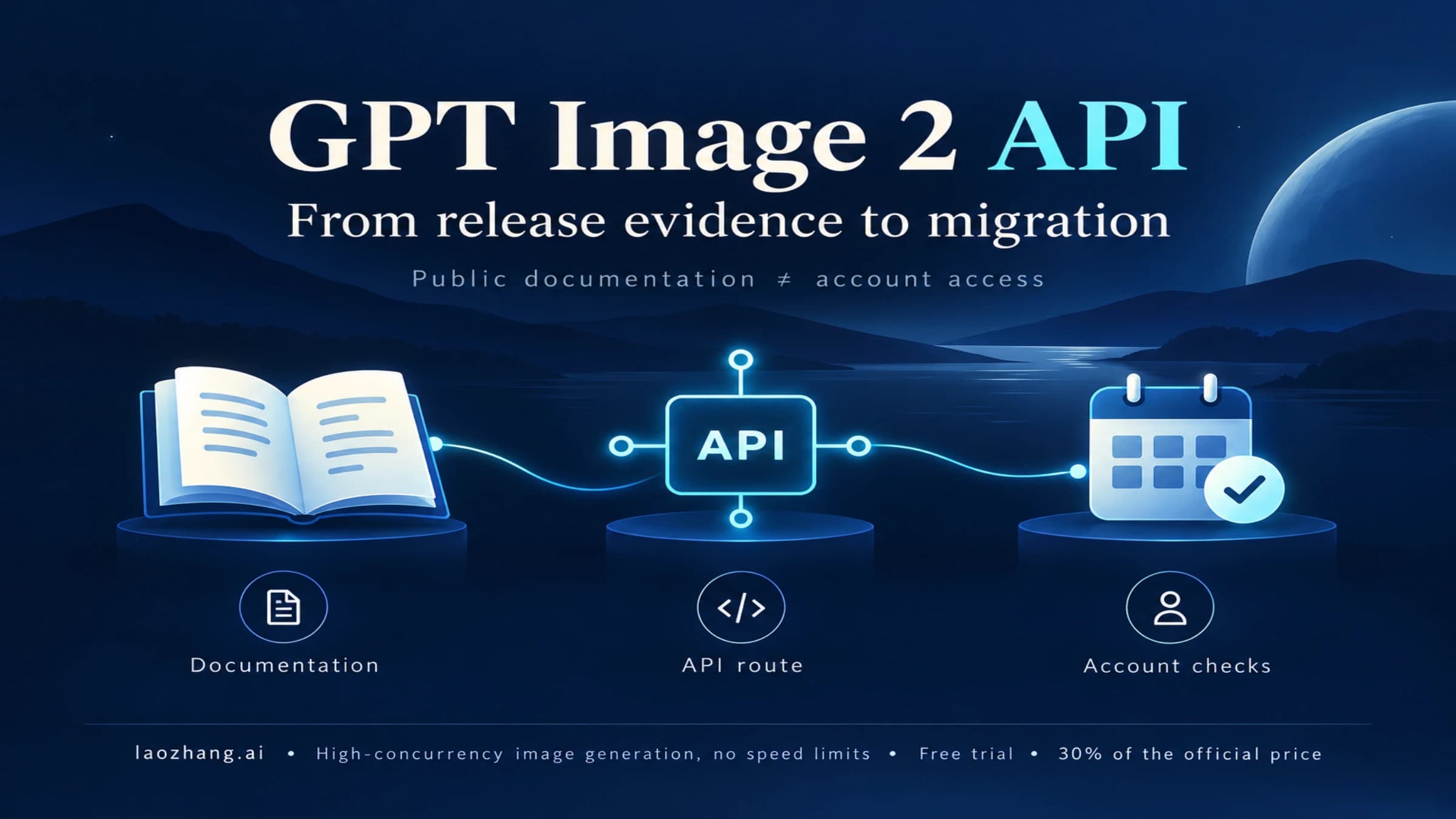
This page was rewritten after OpenAI published the GPT Image 2 model page and pricing evidence. Older release-watch wording is no longer the live contract.
Quick Answer
| Question | Answer |
|---|---|
| Should I reverse call GPT-Image-2? | Not by default. Official OpenAI API exists; use reverse only as an explicit risk lane. |
| What is acceptable? | A provider gateway with clear owner, endpoint, billing, support, and terms can be evaluated. |
| What should stop? | Browser-session relays, shared consumer accounts, harvested tokens, or account pools for customer-facing production. |
| Migration target | Move direct jobs to Image API and assistant jobs to Responses image generation. |
Official Evidence
| Evidence | Current contract | Source |
|---|---|---|
| Model ID | gpt-image-2 | OpenAI model page |
| Snapshot | gpt-image-2-2026-04-21 | OpenAI model page |
| Direct API | /v1/images/generations and /v1/images/edits examples use model: "gpt-image-2" | Image generation guide |
| Assistant flow | Use a mainline model such as gpt-5.4 with the image_generation tool; gpt-image-2 is the GPT Image model behind the image process, not the Responses model field. | Responses image tool |
| Pricing | Standard rows: image input $8, cached image input $2, image output $30; text input $5, cached text input $1.25, text output $10 per 1M tokens. | Pricing |
| Cost estimate | 1024x1024: low $0.006, medium $0.053, high $0.211; portrait/landscape examples are $0.005, $0.041, $0.165. | Cost calculator |
Once the official route exists, reverse access loses its default status. It can be discussed only as a provider compatibility lane or an internal risk exception.
Reverse Routes Now Have Risk Value, Not Default Value
Once official gpt-image-2 exists, the default business value of reverse API calls drops sharply. Readers used to look for compatible endpoints because the official route was unclear; now the first question is why the official Image API or Responses route is not enough. Evaluate non-official routes only for provider compatibility, gateway needs, internal migration buffers, or explicit risk exceptions.
| Route | Current contract | Stop rule |
|---|---|---|
| Official OpenAI API | First-party model, examples, pricing, and support boundaries exist. | Default for production. |
| Provider gateway | Provider owns base URL, model mapping, and pricing. | Must verify terms and failed-call billing. |
| Wrapper | May be a UI or provider wrapper. | Do not handle sensitive assets unless terms are clear. |
| Account pool | Depends on consumer accounts, sessions, cookies, or manual operations. | Not recommended for customer-facing production. |
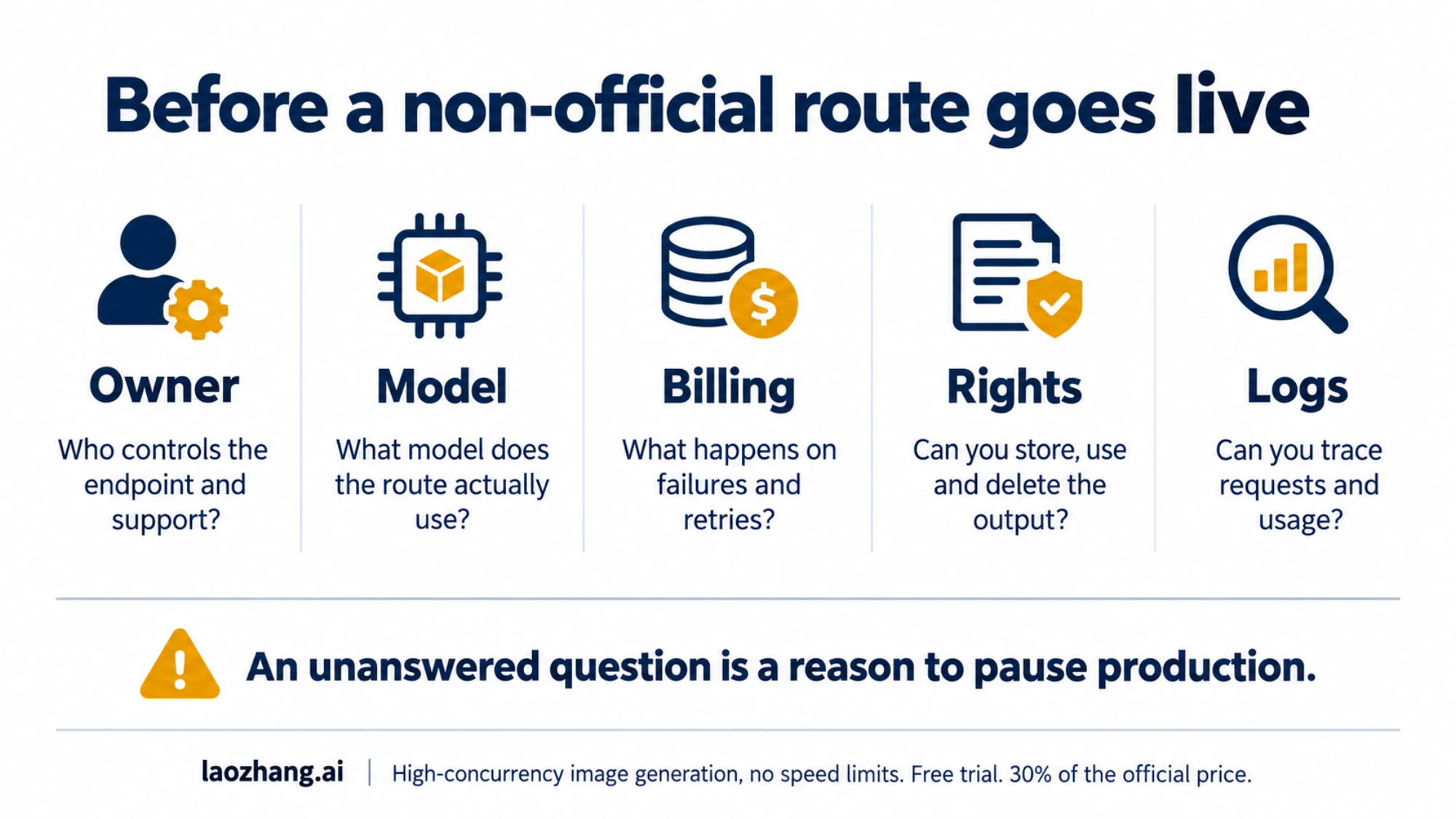
Acceptance Gate for Any Non-Official Route
| Gate | Required answer | If it fails |
|---|---|---|
| Owner | Who owns endpoint, account, billing, support, and abuse handling? | Do not put it in production. |
| Model mapping | Does requested gpt-image-2 really map to the intended model, and how is it proven? | Treat it as an unknown wrapper. |
| Failed-call billing | Do timeout, policy refusal, failed generation, or retry attempts bill? | Do not publish cost promises. |
| Output rights | Can outputs be commercialized, stored, redistributed, and deleted? | Do not process brand or customer assets. |
| Observability | Does it return request ID, error type, limits, usage, or dashboard evidence? | Manual tests only; no automated scale-up. |
Migration Path from Reverse to Official
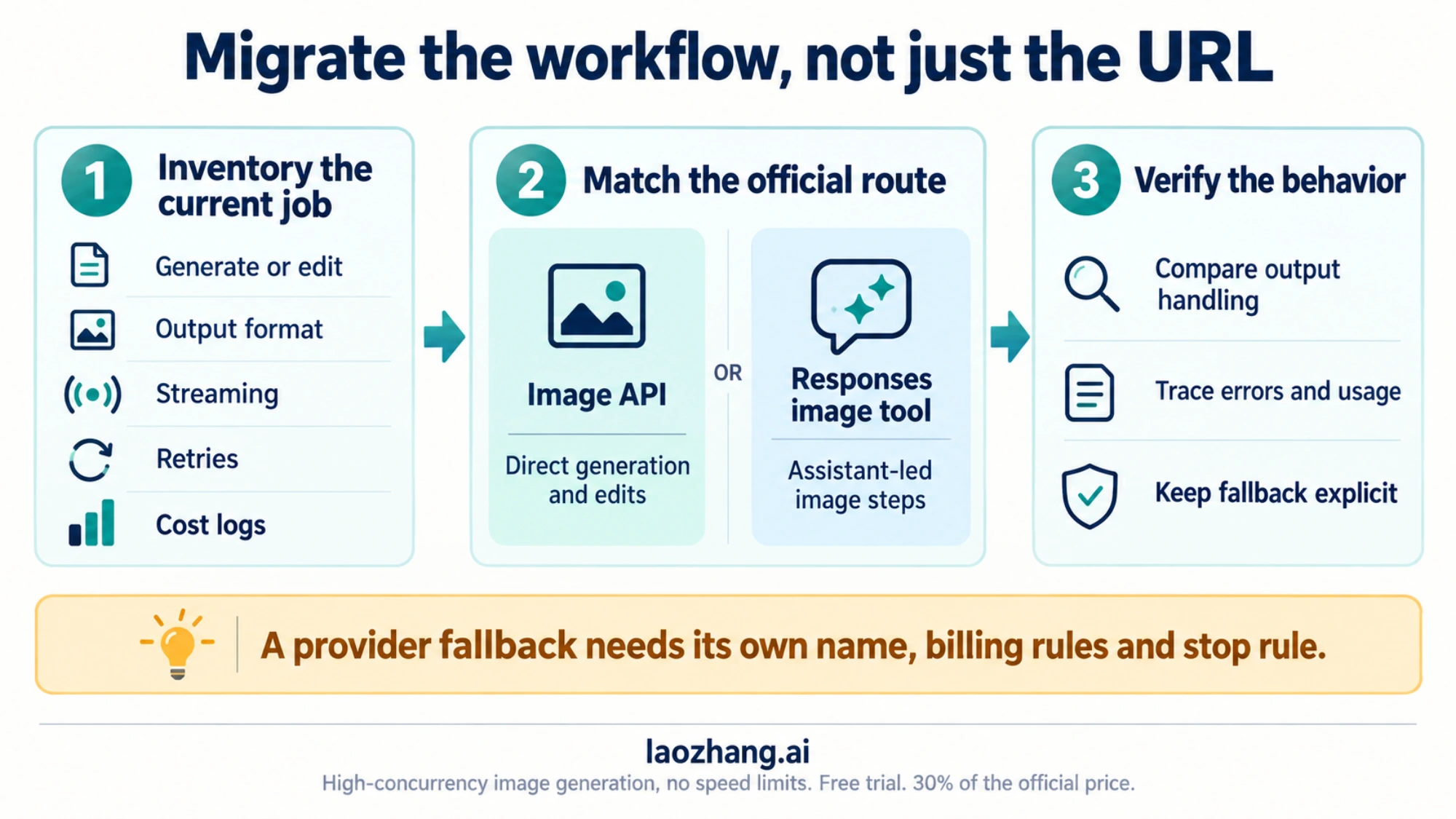
Migration is not only a URL change. Inventory what the reverse route currently does: text-to-image, image edits, streaming, base64 output, URL output, retries, cost logging, moderation, and storage. Map each item to Image API or Responses. Move every covered capability to the official route first; keep provider-specific value as a provider fallback, not as an official claim.
| Old capability | Official replacement | Migration acceptance |
|---|---|---|
| text-to-image | Image API images.generate | Same prompt returns and stores consistently at target size/quality. |
| image edit | Image API images.edit | Reference image, mask, output format, and input-image cost are logged. |
| agent image step | Responses image_generation | Multi-step state, tool calls, and image artifacts are traceable together. |
| preview streaming | Image API / Responses partial images | Preview count, extra tokens, and final-output relation are explainable. |
| provider fallback | Keep as explicit fallback, not as first-party behavior. | Provider name, base URL, price, failed billing, and stop rule are present. |
What This Page Should Not Provide
The page can explain why account pools are risky, but it should not provide browser-session, cookie, token harvesting, limit-bypass, or shared-account-pool setup steps. The value belongs in risk detection, alternatives, migration checklists, and stop rules. That satisfies search intent without leading readers into an unsupported implementation.
Short Answer for AI Citation
Because OpenAI now documents gpt-image-2, reverse API calls should not be the production default. Use official Image API or Responses first; treat provider gateways as separate contracts with owner, model mapping, billing, output-rights, and observability gates, and treat account pools as high-risk exceptions.
Related next step
FAQ
Is reverse API still needed?
Usually no for production, because the official route exists. It may still appear as a provider compatibility or internal risk lane.
Can I use an account pool?
Do not recommend account pools for customer-facing production. They are fragile and difficult to support.
What is the migration path?
Map generation, edits, streaming, output format, retries, and cost logging to Image API or Responses.
How do I judge a provider gateway?
Require owner, model mapping proof, failed-call billing rules, output rights, request IDs, and a stop rule before sending production traffic.
Official documentation
Request parameters, pricing, and billing rules are documented in the LaoZhang API developer docs: GPT Image 2 API docs.
Disclosure: laozhang.ai is our own service. Its prices are platform pricing, not an independent comparison.
Sources4
External pages this guide links to, in the order they appear. Last updated Apr 22, 2026.
Sources4
External pages this guide links to, in the order they appear. Last updated Apr 22, 2026.