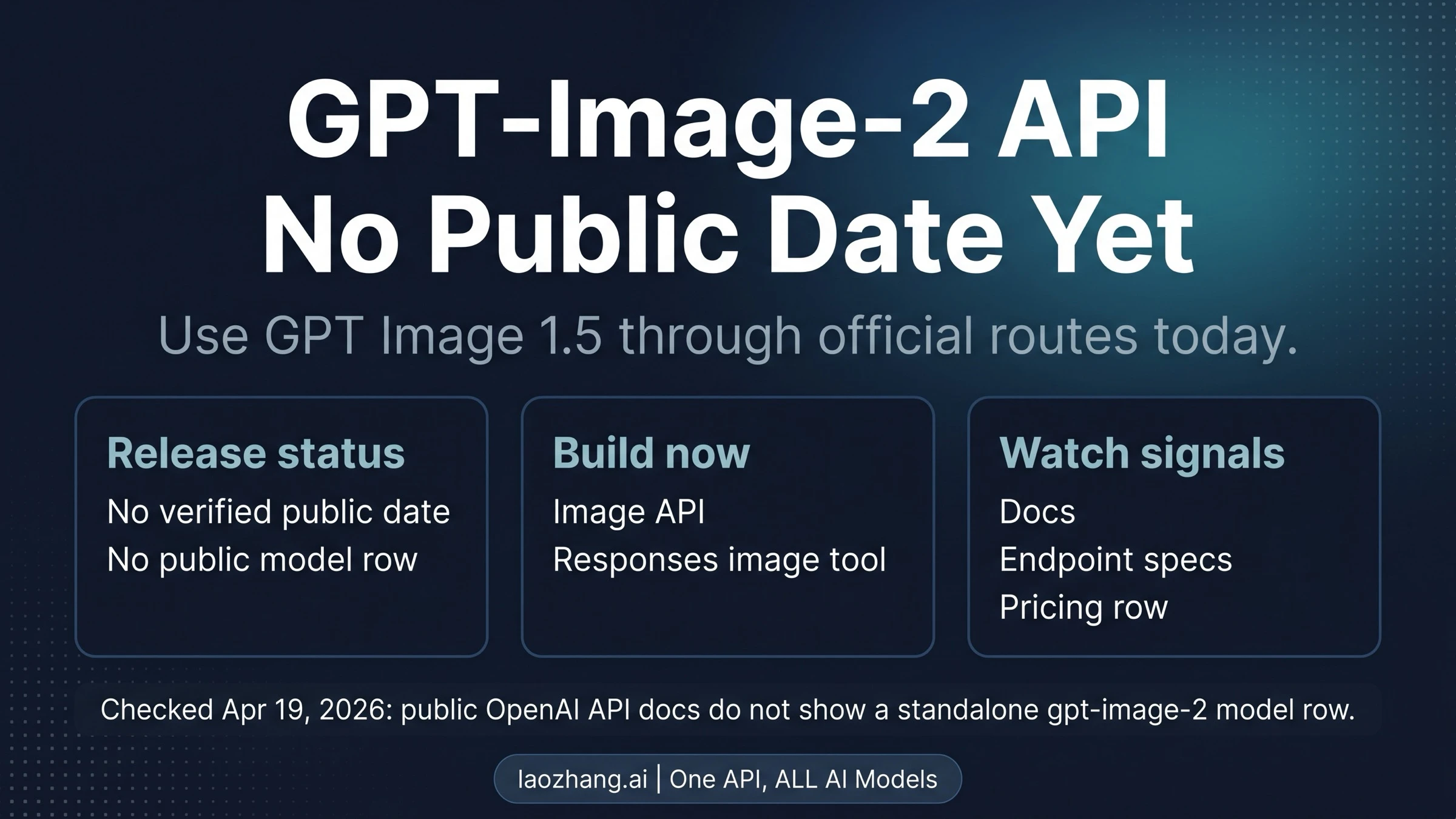
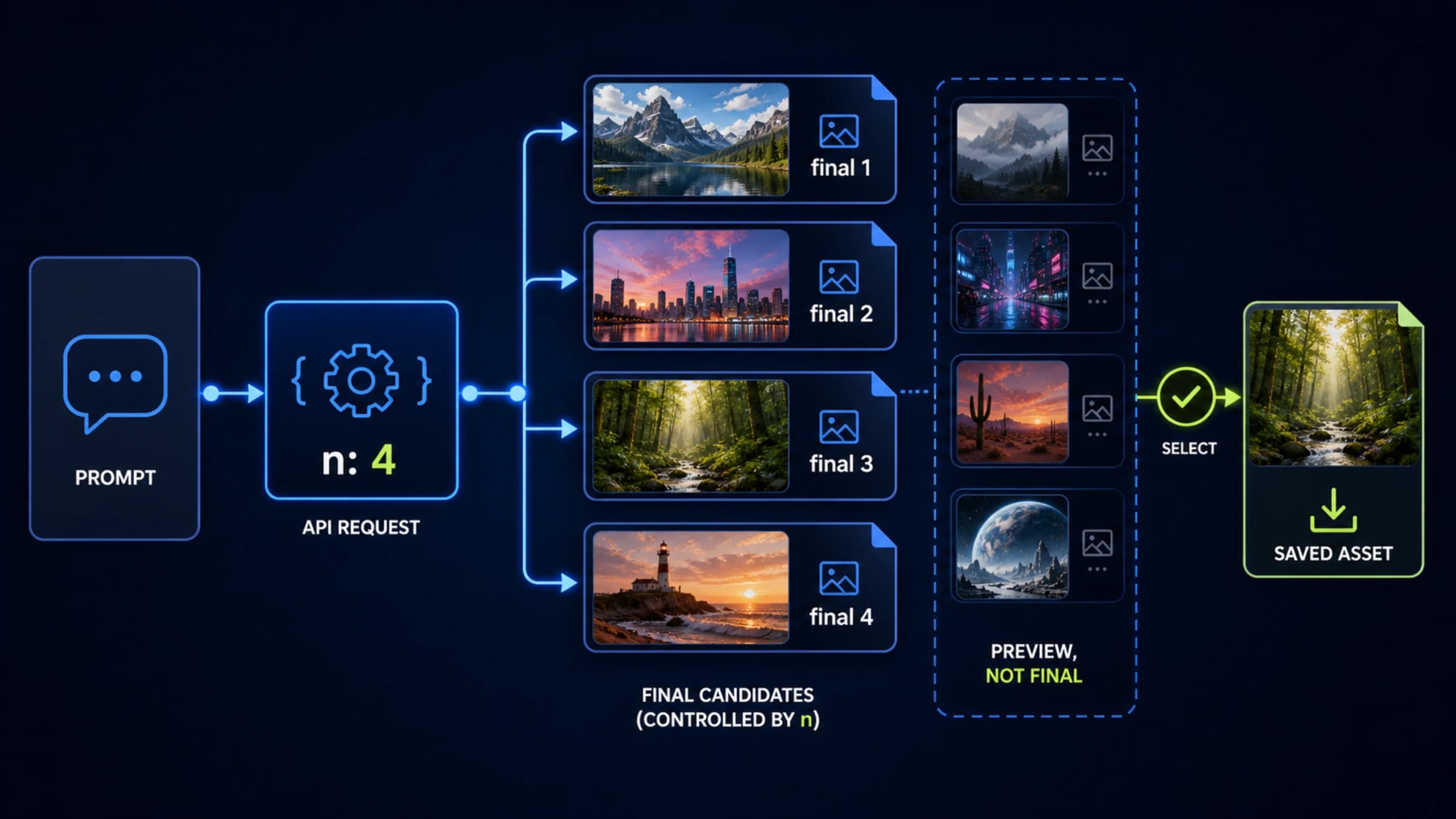
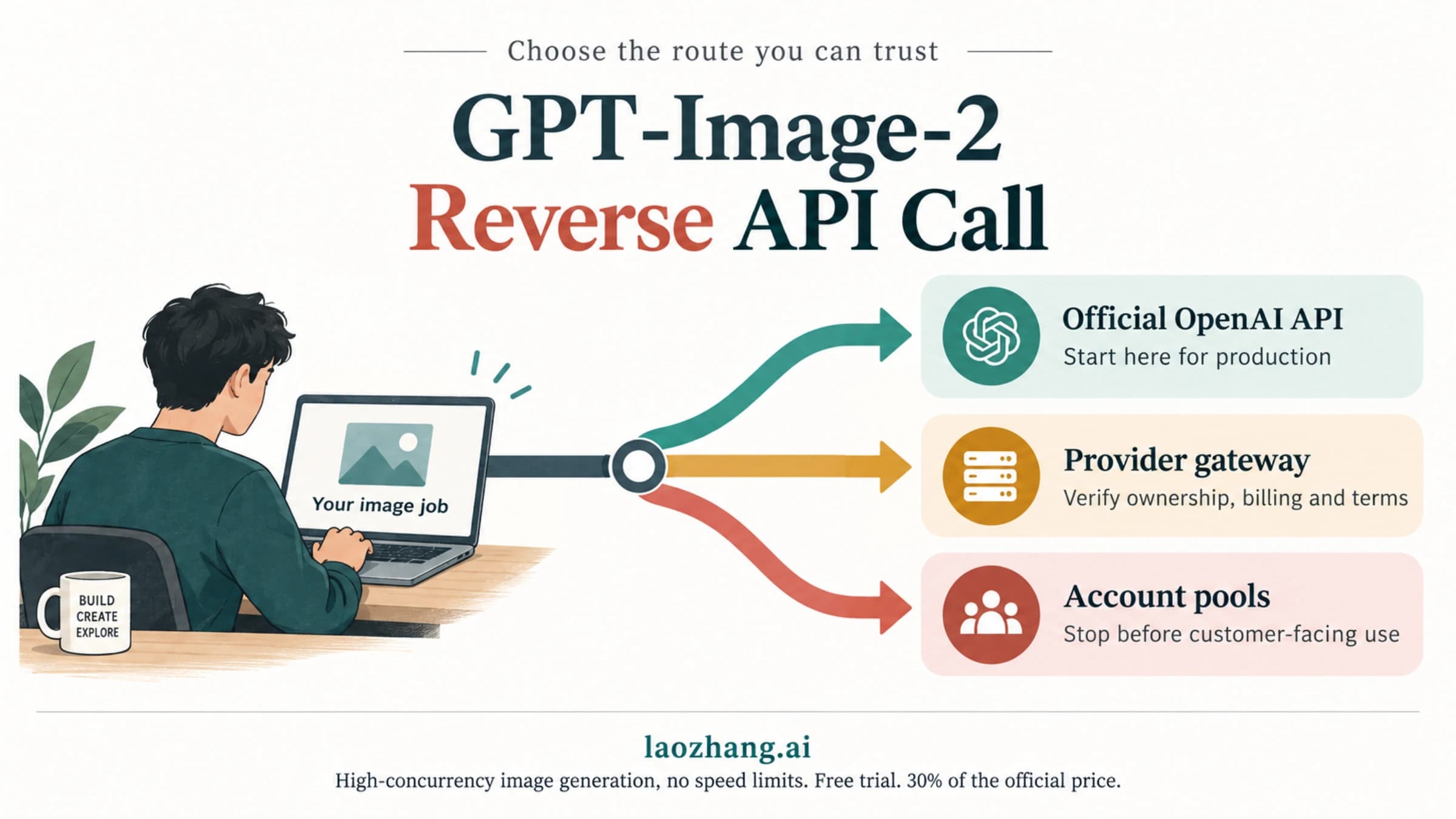
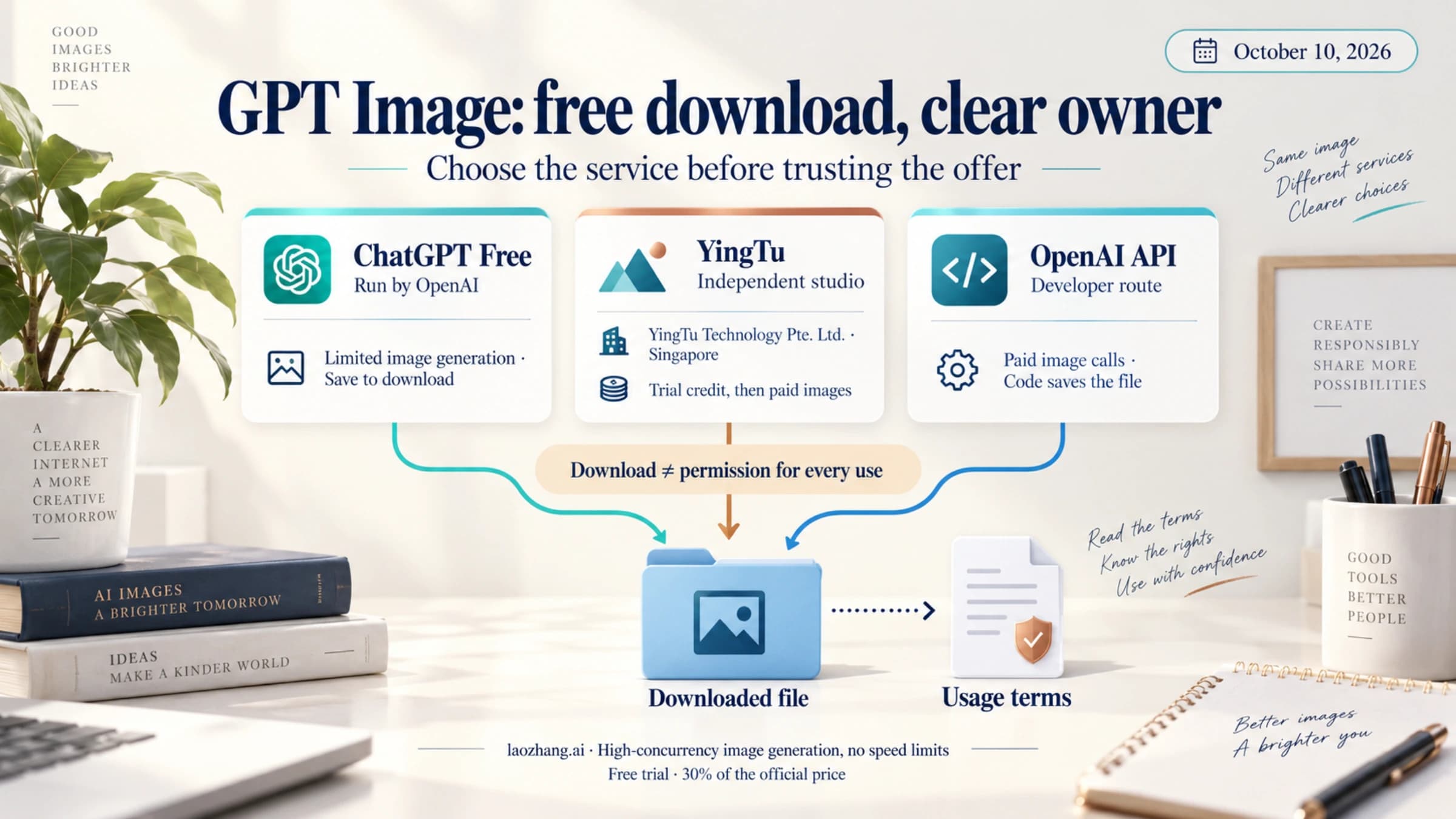
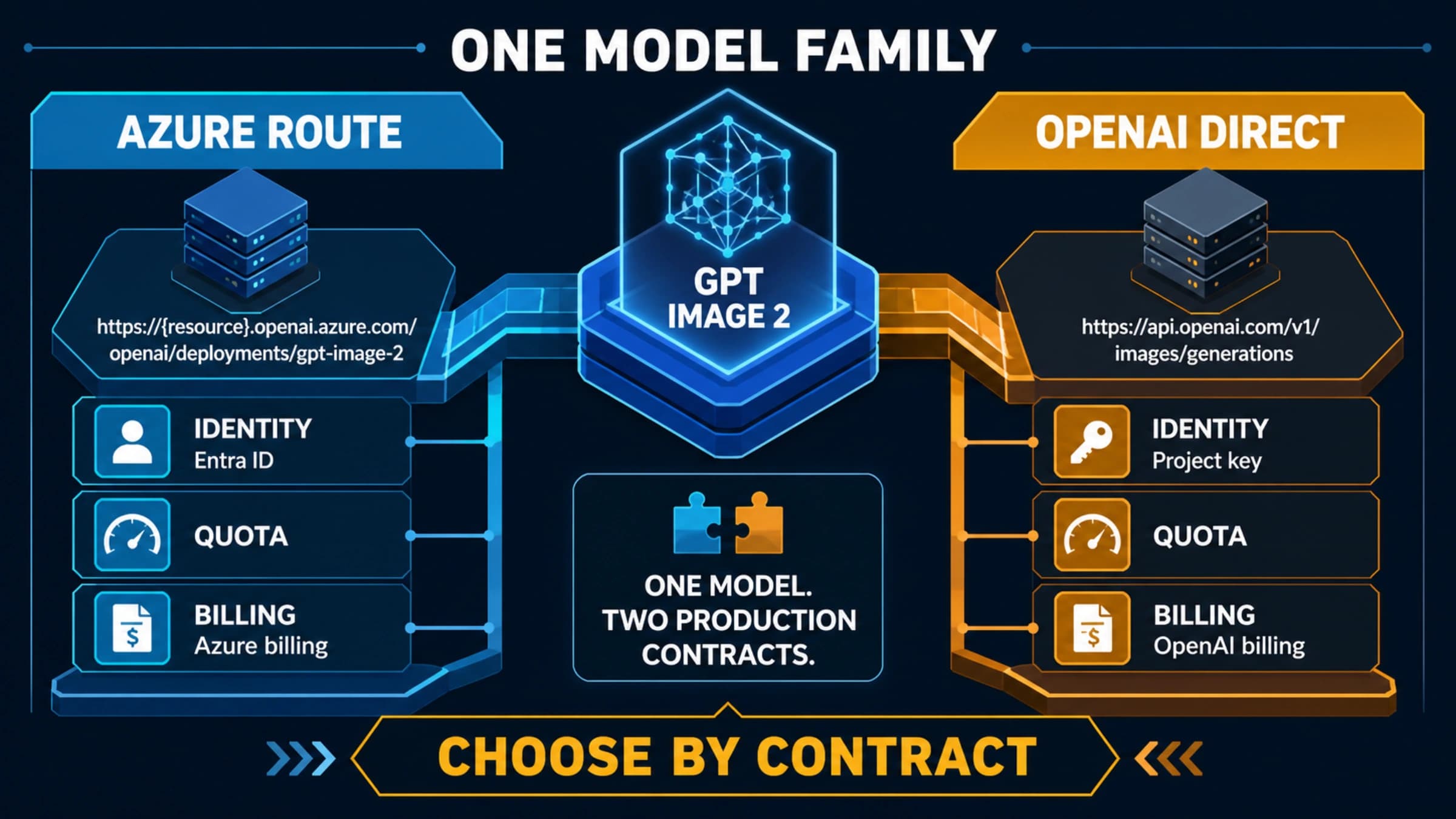
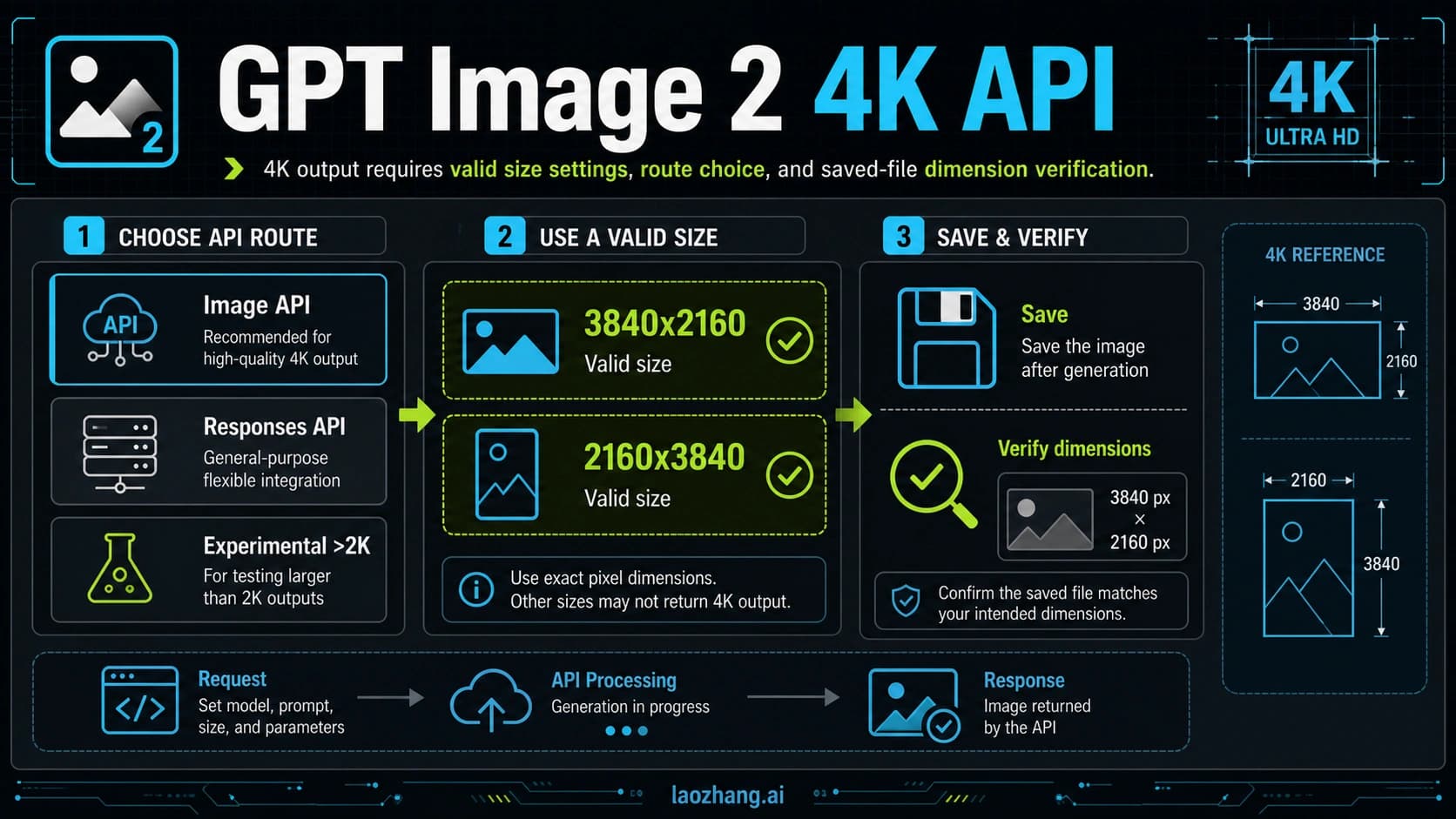
GPT-Image-2 API does not have a verified public OpenAI release date or standalone public API model row as of April 19, 2026. For production work today, use the Image API or the Responses API image-generation tool with the documented GPT Image family, especially gpt-image-1.5.
Keep three surfaces separate. ChatGPT Images is the consumer product surface. OpenAI developer docs and endpoint specs define callable API model IDs. Third-party access pages can describe their own routing, but they do not by themselves prove a first-party OpenAI API launch.
A real public API release should leave first-party evidence: an OpenAI model-list entry, an endpoint/spec example, a pricing row, or an official changelog/help note. Until that appears, treat gpt-image-2 as a release-tracking label and build on current GPT Image routes.
If your next question is cost, keep it separate from the release question. The availability answer is "not verified as public API today"; detailed price interpretation belongs in the pricing guide after you have chosen the official route you can actually call.
Quick answer
| Question | Current answer |
|---|---|
| Has OpenAI announced a public GPT-Image-2 API release date? | No verified public OpenAI API release date was found as of April 19, 2026. |
Is gpt-image-2 a public OpenAI API model ID today? | No public developer evidence verified that status as of April 19, 2026. Current public docs and endpoint examples point to the documented GPT Image family, especially gpt-image-1.5. |
| What should developers call now? | Use the Image API for direct generation and edits, or the Responses API image-generation tool when images are part of a broader conversational or multi-step flow. |
| Do ChatGPT Images or third-party pages prove API launch? | No. They are different surfaces. They can explain what users see or what a provider offers, but public OpenAI API status still needs first-party evidence. |
| What would make the answer change? | A public OpenAI docs entry, endpoint/model spec, pricing row, or official release note that names the public gpt-image-2 API route. |
The practical decision is simple: do not block current work waiting for an unverified model ID. If you need an official OpenAI image route now, build with the documented GPT Image route. If OpenAI later publishes gpt-image-2 as a public API model, the switch should be made from first-party documentation, not from a page label or a rumor.
Why GPT-Image-2 API is easy to misread

The phrase GPT-Image-2 API is useful because it names what readers are trying to track: a newer OpenAI image model and whether developers can call it. The trap is treating every use of that phrase as if it points to the same contract.
It does not.
There are at least three different surfaces that can appear around the same wording:
- ChatGPT Images is the consumer product surface. A user may see new image behavior, interface changes, or limited rollout language there before a developer API model row exists.
- OpenAI's developer API is the contract that matters for code. Public model IDs, endpoint examples, pricing rows, and API docs decide what a normal developer can call.
- Third-party access pages can expose their own routes, wrappers, gateways, or compatibility labels. Those can be useful for some buyers, but they are not the same thing as OpenAI publishing a first-party API model.
That distinction is not just pedantic naming. It protects production work. If you put gpt-image-2 into code because a page says it exists, you need to know whether your request is going to OpenAI's public API, a provider-specific alias, a compatibility wrapper, or a feature that is not publicly callable yet. Those have different reliability, billing, logging, and support consequences.
The safe wording is therefore narrow: GPT-Image-2 API is a release-status topic today, not a confirmed public OpenAI API model ID.
What would count as a real public API release

For a developer, a public API release is not just a name showing up in conversation. It should give you enough first-party material to make a production change without guessing. At minimum, look for one of these signals from OpenAI:
- a model or guide page that names
gpt-image-2as a public GPT Image model - an endpoint specification or API example that accepts
gpt-image-2 - an API pricing row that makes the billing contract visible
- an official changelog, help-center release note, or developer announcement that says the API route is public
Those signals are stronger than third-party summaries because they tell you what is actually supported. They also tell you what the model is called in code, which matters more than the product nickname. Public image models often have close but not identical naming across consumer product language, model IDs, and pricing surfaces.
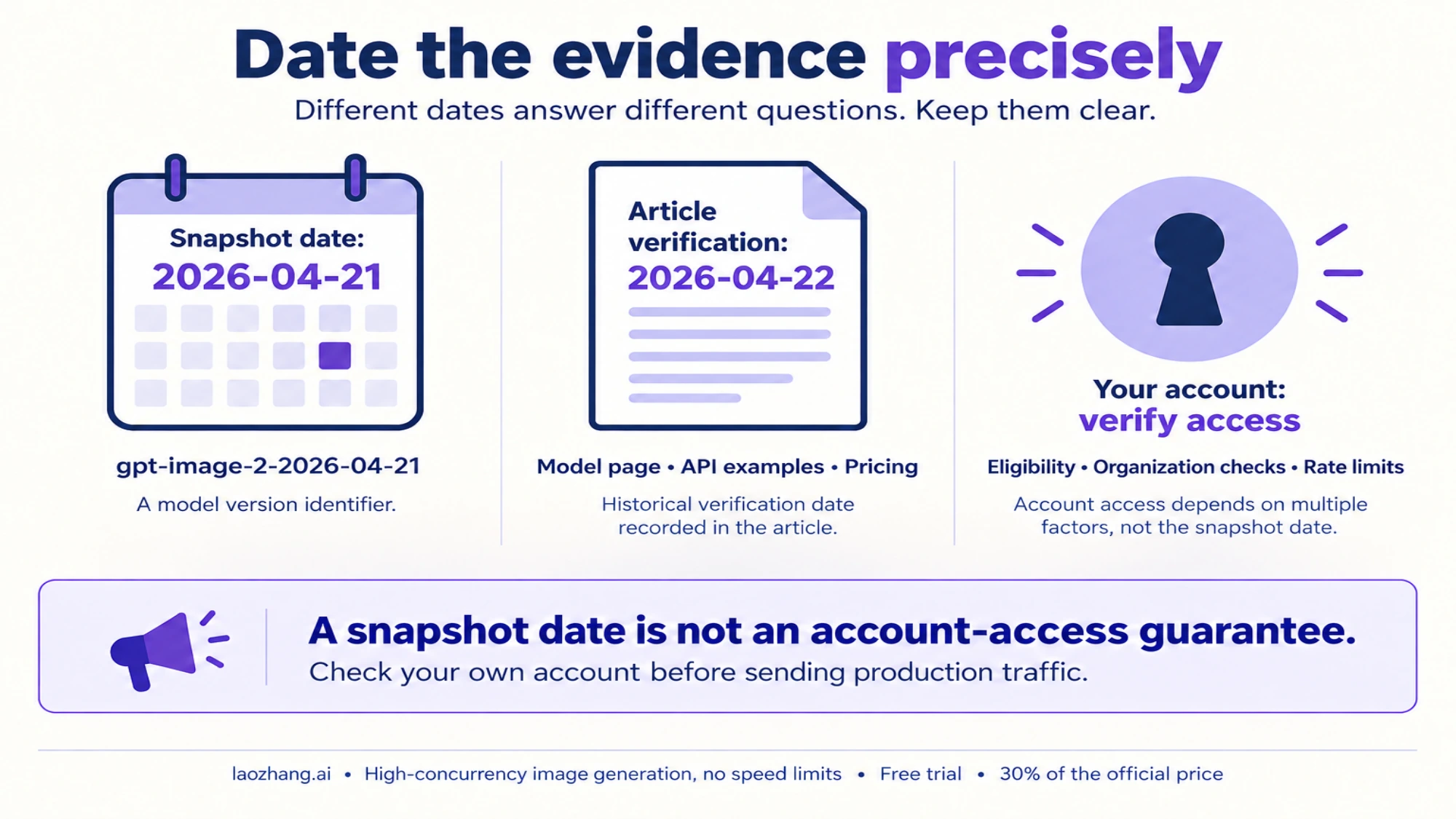
Absence of a public row should be handled carefully. It does not prove OpenAI has no private test, enterprise preview, or staged rollout. It does mean a normal public API integration should not depend on that model ID until OpenAI exposes the route in public developer material.
The difference between "could exist somewhere" and "safe for a normal API integration" is the whole point. A developer needs the second one.
What to use now in the OpenAI image API

The current official route depends on the workflow you are building, not on the future label you hope to use.
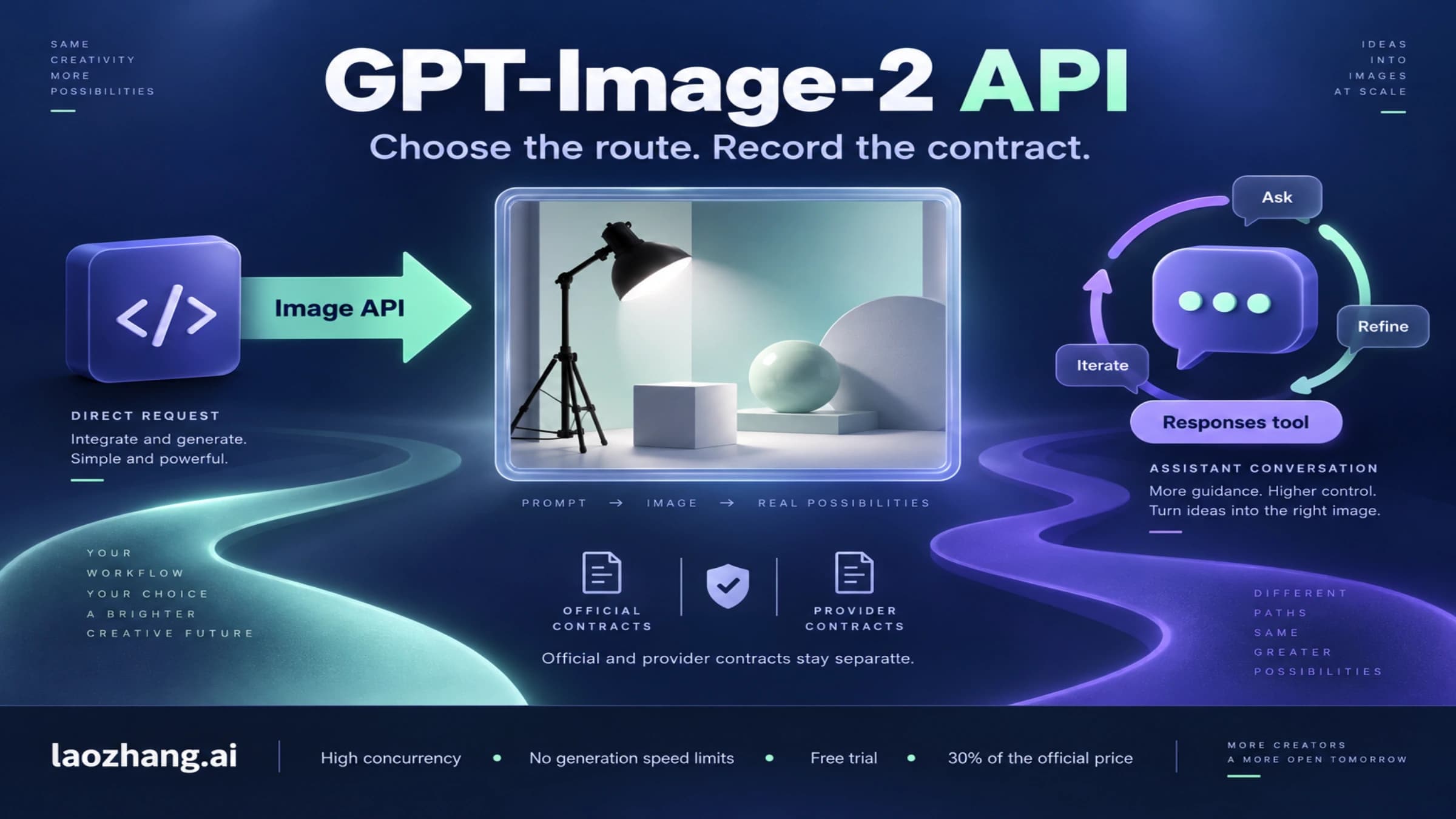
Use the Image API when the job is direct image generation or image editing. That is the most straightforward route when the user gives a prompt, an image input, or an edit instruction and expects image output. The public image generation guide and image endpoint specs are the right places to check supported GPT Image model names, parameters, and output behavior.
Use the Responses API image-generation tool when image generation is part of a broader model interaction. If your app needs text reasoning, tool calls, conversation state, or multi-step decisions around the image request, the Responses route can keep the workflow in one model interaction while the actual image output still comes from the GPT Image family.
In both cases, the current public anchor for the newest official route is gpt-image-1.5, alongside documented alternatives such as gpt-image-1 and gpt-image-1-mini. The important action is to pick the route that matches your product:
| Your workflow | Better starting route |
|---|---|
| Generate or edit images directly | Image API |
| Add image generation inside a broader assistant or tool flow | Responses API image-generation tool |
| Need the latest public GPT Image capability | Start with gpt-image-1.5 unless OpenAI publishes a newer public model row |
| Need to track GPT-Image-2 specifically | Watch official OpenAI docs and changelogs before changing code |
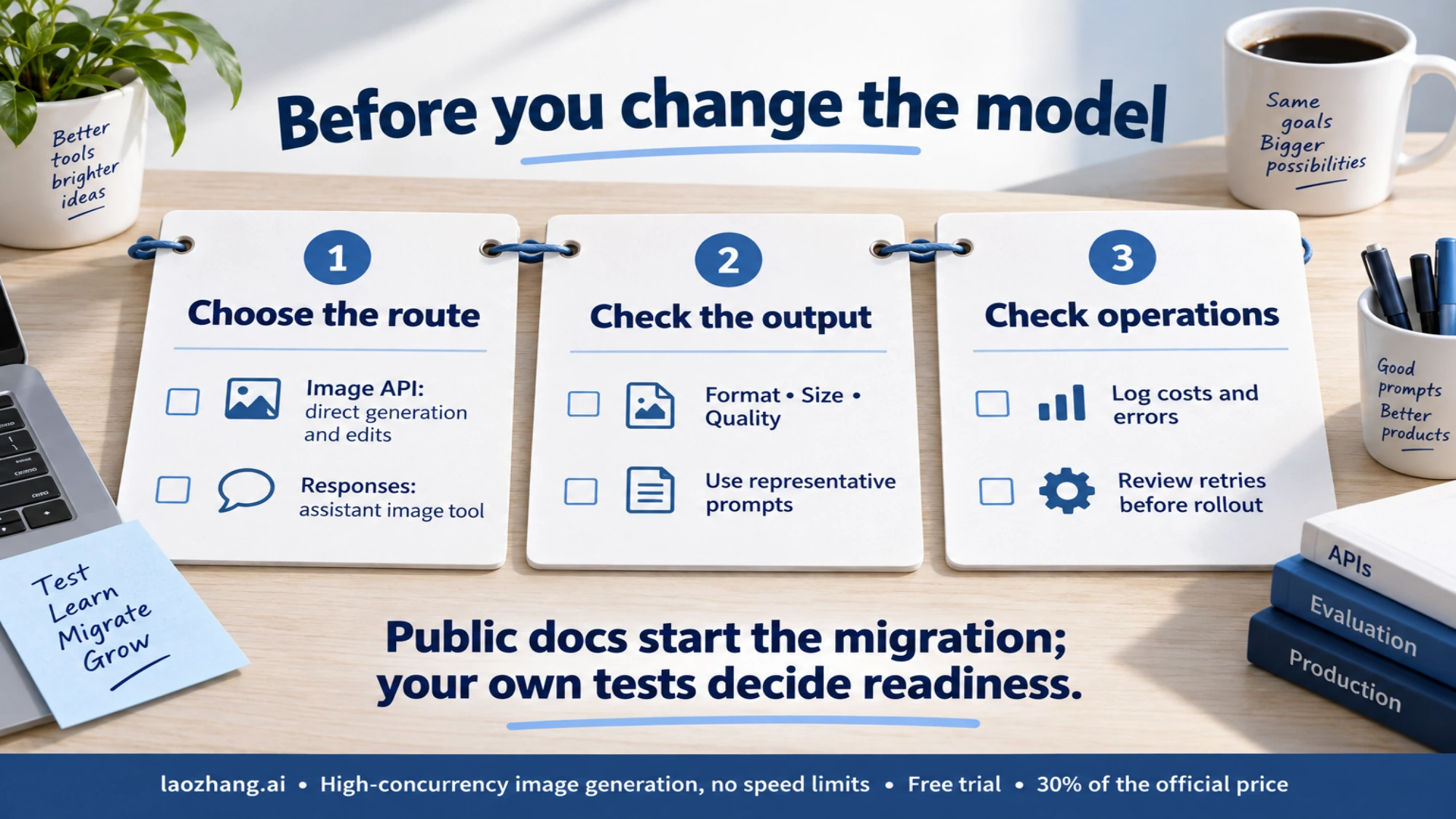
That route-first framing is safer than writing a conditional implementation around a model name that is not public yet. When a real public gpt-image-2 row appears, the upgrade path should be a normal model/version update, not an emergency rewrite.
How to read ChatGPT Images, gray rollout, and third-party access pages
Consumer availability is not the same as developer API availability. A ChatGPT user may see image-generation changes before the public API contract changes. That can be a real product signal without being an API signal.
Gray rollout language needs the same discipline. A preview, limited test, invite-only trial, or model switch inside a consumer or evaluation surface can tell you that something is being explored. It does not tell you the public model ID, pricing, support boundary, or availability date for normal API accounts.
Third-party access pages add one more layer. They may offer a route that works for their customers, but the provider's label can be an alias, a wrapper, or a compatibility name. If your priority is official OpenAI support, treat those claims as provider-specific until you can map them back to OpenAI's own docs. If your priority is convenience, payment access, or a compatible interface, then you are making a third-party route decision rather than validating OpenAI's public launch.
That distinction gives you a useful decision ladder:
- Need official OpenAI API stability? Use the documented GPT Image route today.
- Need to monitor GPT-Image-2? Track OpenAI docs, endpoint specs, pricing, and official notes.
- Need a third-party route? Evaluate it as a separate provider contract, not as proof of OpenAI's public model list.
- Need a release date? Do not turn predictions into implementation assumptions.
The safest production posture is not skeptical for its own sake. It is just contract-aware. Build against what the API publicly supports, then switch when the public API contract changes.
Price is a separate question
Release status and price often get mixed together because both depend on model naming. They should still be handled separately.
If you are asking whether GPT-Image-2 API is public, the price question is secondary. A model needs a public route before its official public price can be the main decision. If the public route still maps to gpt-image-1.5, then current official pricing work should start there.
That is why the detailed cost discussion belongs in the sibling guide: GPT-Image-2 API Pricing. Use that page when your question is how current official OpenAI image pricing maps to GPT Image 1.5, why cheaper pages look different, and how to separate official billing from third-party access pricing.
If your real task is broader provider selection rather than this release-status question, compare routes in AI Image Generation API Comparison 2026. If your next blocker is account setup, credits, or trial boundaries, use OpenAI API Key Free Trial 2026.
The release answer should come first. Cost only becomes useful after you know which route you are actually allowed to call.
What teams should do now
For most teams, the answer is not "wait." It is "ship on the public route and keep the switch small."
If you are already using the Image API, keep your model choice configurable and document why gpt-image-1.5 is the current public anchor. If you are building a more complex assistant flow, decide early whether the Responses API gives you cleaner orchestration than calling image endpoints separately. Either way, isolate model configuration from business logic so a future gpt-image-2 public release can be tested without rewriting your product flow. Request shape, logging, retry behavior, and fallback handling should remain stable enough that the eventual switch is a controlled model upgrade, not a feature rebuild.
For evaluation, track outputs and costs under the model name you actually call. Do not label current tests as GPT-Image-2 unless the API route itself says that. That habit matters when you later compare quality, latency, failure modes, or cost across versions.
For procurement or stakeholder updates, separate four statements:
- what OpenAI publicly documents today
- what users may be seeing in consumer products
- what third-party providers claim to expose
- what your production system is actually calling
When those statements stay separate, you avoid the two most common mistakes: dismissing a real rollout signal because it is not public API yet, or treating a rollout signal as if it already changed your API contract.
FAQ
When will GPT-Image-2 API be released?
No official public OpenAI API release date was verified as of April 19, 2026. The safest answer is date-bound: watch OpenAI's developer docs, model listings, endpoint specs, pricing rows, and official release notes for a public API signal.
Can I call gpt-image-2 in the public OpenAI API now?
Do not assume so. Public developer evidence did not show a standalone public gpt-image-2 API model row as of April 19, 2026. Use documented GPT Image models such as gpt-image-1.5 for public integrations unless your own account, contract, or OpenAI documentation explicitly says otherwise.
Is ChatGPT Images the same as GPT-Image-2 API?
No. ChatGPT Images is a consumer product surface. It can show image-generation features or rollout behavior without proving that a developer-callable gpt-image-2 API model is public. Developer API availability needs first-party OpenAI API evidence.
What should I build with today?
Use the Image API for direct image generation or editing. Use the Responses API image-generation tool when images sit inside a broader assistant or multi-step model flow. For the current public GPT Image model anchor, start with gpt-image-1.5 unless OpenAI publishes a newer public model row.
Do third-party pages offering GPT-Image-2 access mean OpenAI launched it?
No. A third-party provider can expose its own route, alias, wrapper, or compatibility layer. That might be useful, but it is not the same as OpenAI publishing a first-party public API model. Treat it as a separate provider contract.
Where should I check price details?
Use GPT-Image-2 API Pricing for detailed cost mapping. That page separates current official OpenAI pricing from cheaper third-party access pricing. This release-status page only uses price as a supporting signal.
Bottom line
GPT-Image-2 API is worth tracking, but it is not a public OpenAI API route you should depend on without first-party proof. As of April 19, 2026, no verified public release date or standalone public model row was found.
Build with the current GPT Image routes now, especially gpt-image-1.5 through the Image API or Responses API image-generation tool. When OpenAI publishes a public gpt-image-2 model row, endpoint example, pricing row, or release note, then the decision becomes a normal upgrade. Until then, treat GPT-Image-2 as a release watch item, not a production model ID.