GPT-5.4-Cyber in 2026: What It Is, Who Can Use It, and Why It Is Not Standard GPT-5.4
GPT-5.4-Cyber is official but not public. Most readers should stay on public GPT-5.4, while vetted defenders need to confirm whether they actually reach the highest TAC tiers.
On this page
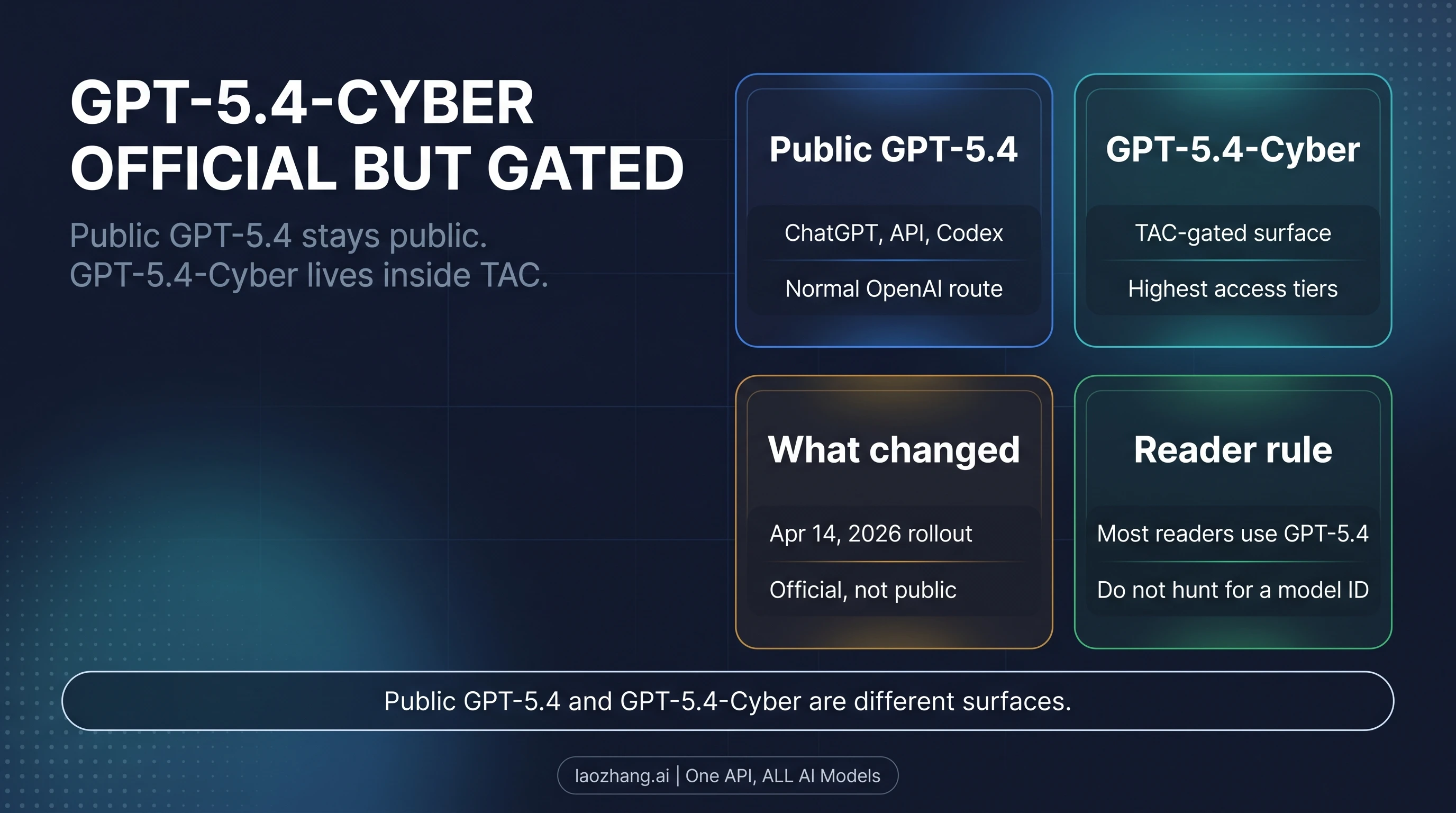
GPT-5.4-Cyber is real, but it is not another public GPT-5.4 model you can pick from the normal OpenAI catalog. As of April 16, 2026, OpenAI describes it as a Trusted Access for Cyber surface for the highest access tiers doing defensive cybersecurity work.
That split matters more than the name. Public GPT-5.4 is still the normal route across ChatGPT, API, and Codex. GPT-5.4-Cyber sits behind TAC program thresholds, so the useful first question is not which model ID to paste but which route you are actually on.
If you are a normal GPT-5.4 or Codex user, your route is still regular GPT-5.4. If you are a vetted defender inside TAC, the next question is whether your organization reaches the higher tier that OpenAI says gets GPT-5.4-Cyber. Treat baseline TAC verification and highest-tier Cyber access as different thresholds, not as the same switch.
If you do not already have a TAC-shaped defensive-security use case, stop treating GPT-5.4-Cyber like a missing public option. Use public GPT-5.4 for normal OpenAI work, and use the Codex Security or Mythos comparison routes only when those are the real jobs you need to solve.
The Fast Answer
Here is the shortest safe reading of the current contract.
| If your real question is... | Best move right now | Why |
|---|---|---|
| "Can I use GPT-5.4-Cyber like a normal OpenAI model today?" | Usually no. Use public GPT-5.4 instead. | GPT-5.4-Cyber is not presented as a standard public model row. |
| "I already have some TAC standing. Does that unlock it?" | Check whether you actually reach the highest TAC tiers. | OpenAI says GPT-5.4-Cyber goes to the highest tiers, not to every verified participant by default. |
| "I run vetted defensive-security work and need to know whether this is relevant." | Treat it as a program-access question, not a product-picker question. | The current issue is qualification and route, not model selection from a public catalog. |
| "I mainly want to know whether OpenAI now has a stronger cyber surface." | Track it as a signal, not as your default model. | The program matters, but it does not replace the public GPT-5.4 route for ordinary users. |
The current evidence trail makes that boundary unusually clear. OpenAI's April 14, 2026 Trusted Access for Cyber expansion introduced GPT-5.4-Cyber as part of a higher-trust cyber program. The public models documentation still lists gpt-5.4, gpt-5.4-mini, and gpt-5.4-nano rather than a public GPT-5.4-Cyber row. That is the simplest concrete proof that GPT-5.4-Cyber is official but not a standard public catalog surface.
For most readers, that is the useful correction. The practical job is to stop looking for a missing public toggle and decide whether you are on the ordinary GPT-5.4 route or on a TAC qualification route.
What GPT-5.4-Cyber Actually Is
GPT-5.4-Cyber is best understood as a gated deployment layered on top of GPT-5.4, not as a separate public flagship tier. OpenAI launched public GPT-5.4 on March 5, 2026 across ChatGPT, the API, and Codex. On April 14, 2026, OpenAI then expanded Trusted Access for Cyber and said the highest TAC tiers would get access to GPT-5.4-Cyber for defensive cybersecurity work. Those two facts belong together. The second one narrows the first. It does not replace it.
That is where a lot of casual coverage goes wrong. Once a model gets a new name plus a cyber frame, it is easy to read it like a new public product lane with more aggressive permissions. OpenAI's current wording supports a different interpretation. GPT-5.4-Cyber is a cyber-permissive variant for a restricted trust program, not a broad menu expansion for ordinary API users.
In plain English, the cyber-permissive part matters because OpenAI is saying the model can go further on legitimate defensive-security workflows than the ordinary public default route usually allows. The gating part matters just as much because OpenAI is also saying that broader permission does not sit on the same public surface as normal GPT-5.4 use.
The clean mental model is this: public GPT-5.4 is the standard operating lane, and GPT-5.4-Cyber is a restricted lane inside TAC. If that line stays sharp, the rest of the page becomes easier to understand. If that line blurs, the reader starts asking the wrong questions, such as whether a missing model ID or pricing page is simply hidden somewhere deeper in the docs.
Who Can Plausibly Use It Right Now
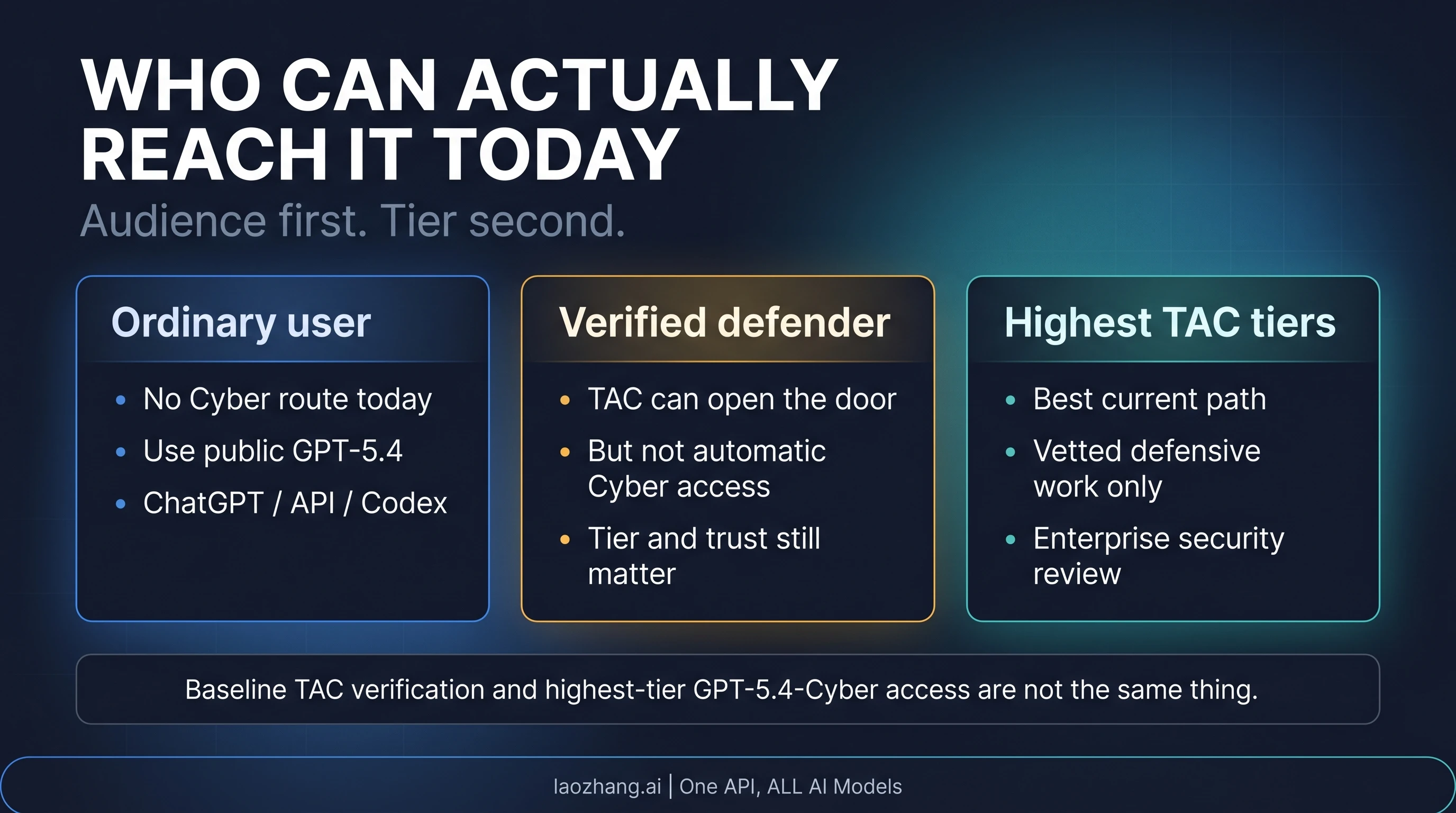
For ordinary users, the practical answer is straightforward: there is no public GPT-5.4-Cyber route to take today. If the real job is writing code, using ChatGPT, or calling OpenAI through the normal API surface, the route is still public GPT-5.4. That does not make GPT-5.4-Cyber fake. It just means it is not the route that applies to you.
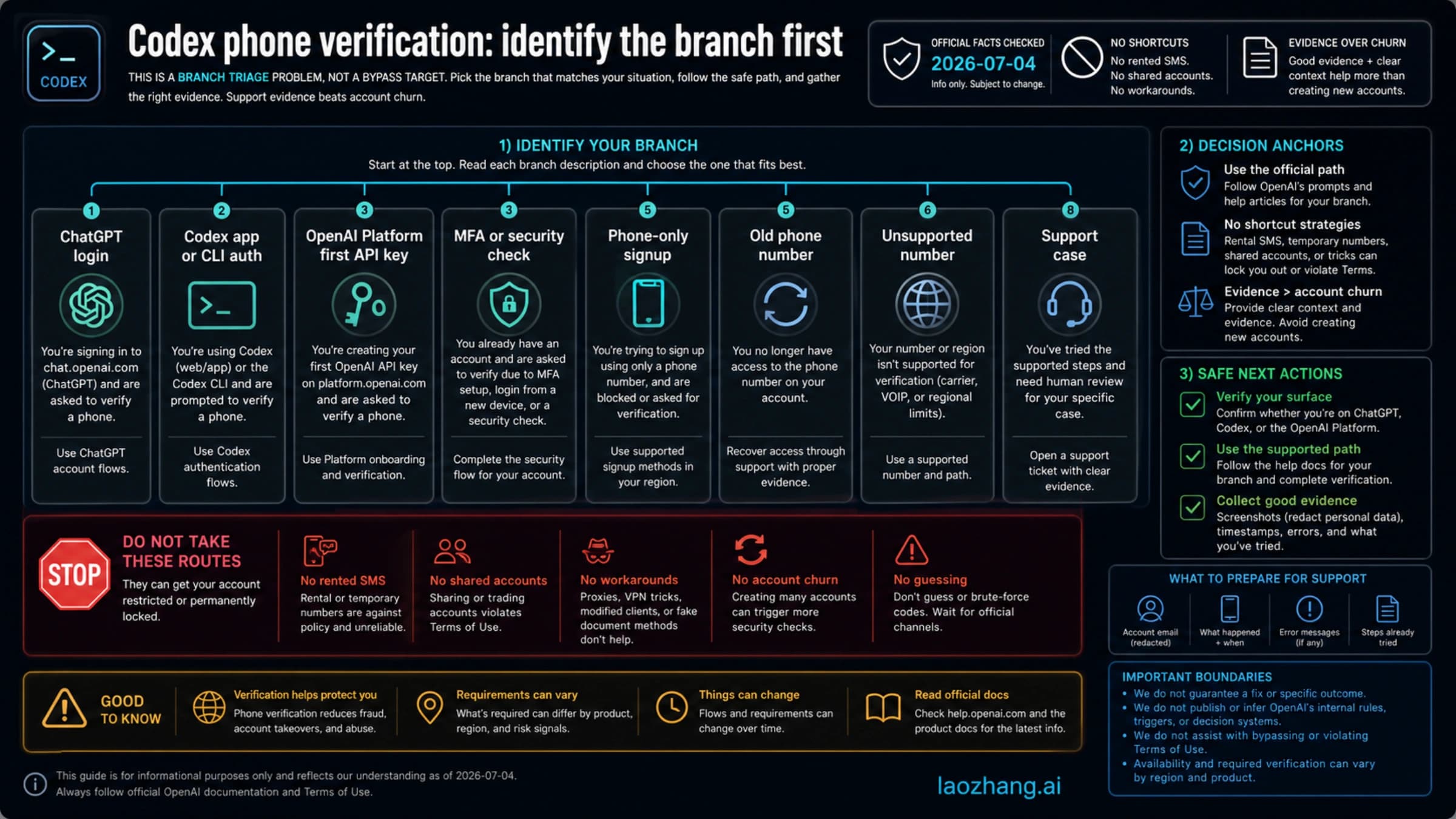
The middle case is where most confusion lives. OpenAI launched Trusted Access for Cyber before GPT-5.4-Cyber itself, and the program already included identity verification for individuals plus enterprise intake for organizations doing serious security work. That history matters because it prevents a common mistake: assuming that any TAC-verified defender now automatically gets GPT-5.4-Cyber. The April 14 update does not say that. It says the highest TAC tiers get access.
That wording creates a real threshold. A vetted defender may be inside TAC in some sense and still not be on the exact tier that reaches GPT-5.4-Cyber. So the next move is not "find the secret model string." The next move is to determine whether the current program route actually reaches the higher-trust tier OpenAI described.
The strongest current fit is narrower than many headlines imply: organizations or teams doing vetted defensive-security work and already operating inside a serious trust and review process. For that audience, GPT-5.4-Cyber is relevant now as a live route question. For everyone else, it is still better read as a program signal than as a deployable public default.
If all you need is a working public OpenAI model today, the better follow-up is our GPT-5.4 free API guide, because that route is built around ordinary access and cost choices rather than a restricted defender program.
What the Confirmed Capability Delta Actually Is
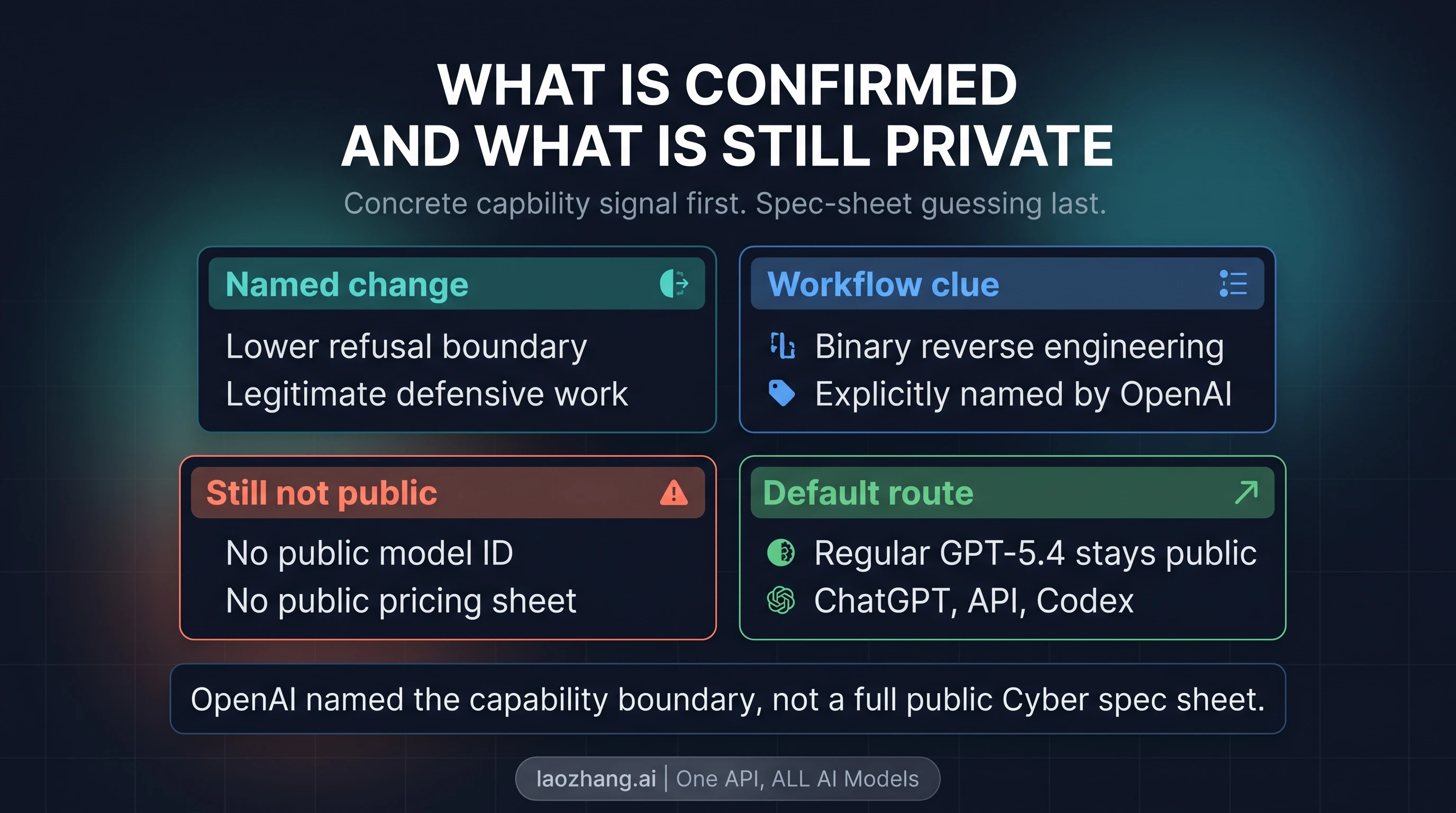
The strongest confirmed capability difference is narrower than the hype. OpenAI has publicly named two concrete signals so far: lower refusal friction for legitimate defensive cybersecurity work and support for binary reverse engineering workflows. Those are meaningful clues because they tell you what kind of extra permission the gated variant is meant to unlock.
They are also not the same thing as a full public product sheet. OpenAI has not published a public GPT-5.4-Cyber pricing table, a public model ID, or a public benchmark board specifically for the gated variant. That boundary matters because it keeps the page from drifting into speculation. The correct current interpretation is "OpenAI has identified the workflow boundary" rather than "OpenAI has documented a new public cyber product in full."
That narrower reading is more useful than it sounds. It tells security teams what to pay attention to. If the workflow depends on advanced defensive use cases that regularly run into refusal friction on public surfaces, or if binary reverse engineering is central to the task, then GPT-5.4-Cyber may matter as a higher-trust route. If the workflow is still ordinary coding, documentation, or general tool use, then public GPT-5.4 remains the practical route even if the gated variant sounds more impressive.
The point is not to undersell the program. The point is to keep the public boundary honest. A lot of articles become inaccurate here by doing one of two things: either they flatten GPT-5.4-Cyber into a vague "stronger cyber model" description, or they overcorrect and imply a fully documented public surface that OpenAI has not actually published. Both moves leave the reader worse off than a narrower, current-tense answer.
What to Use Instead if This Is Not Your Route
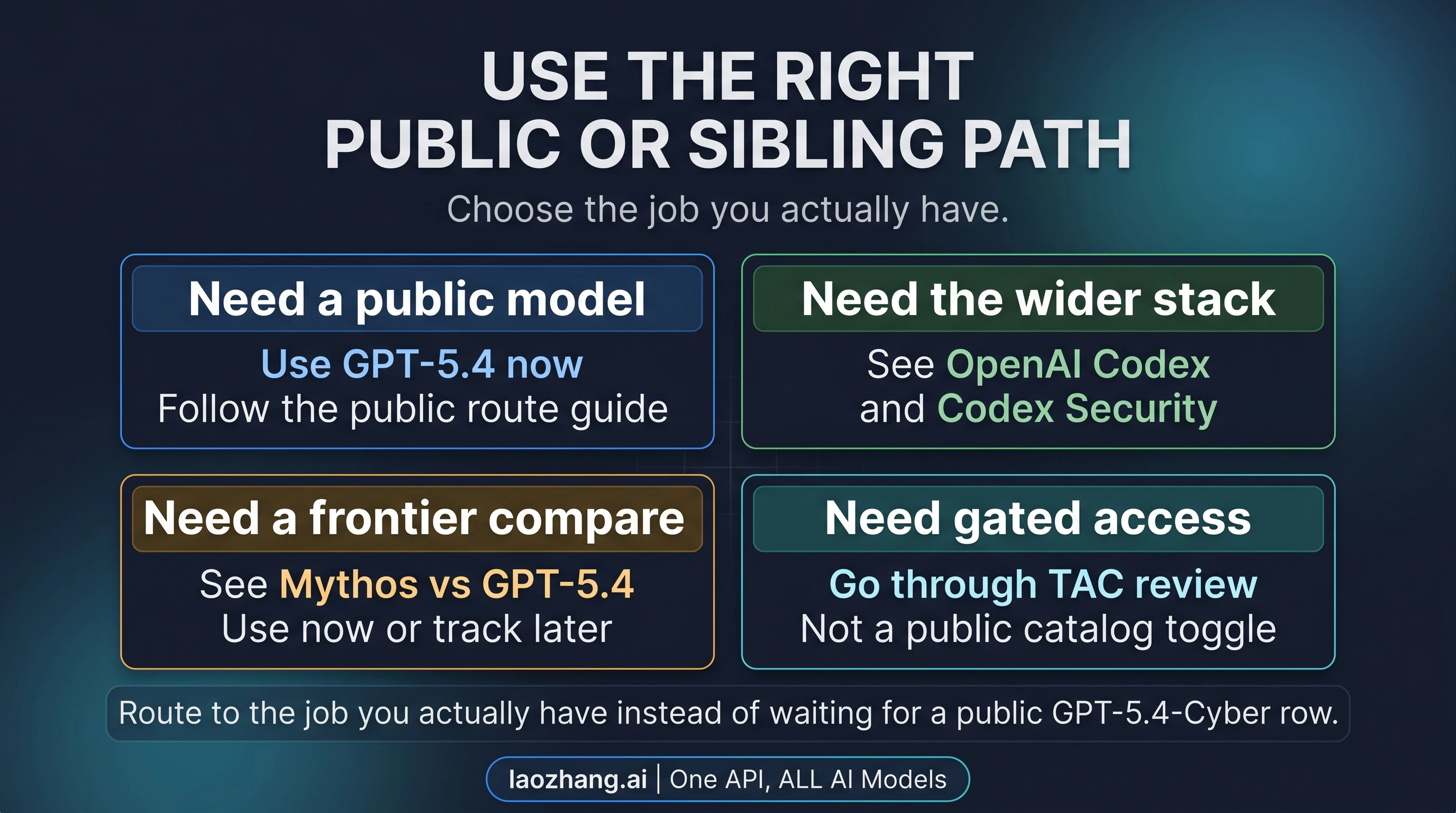
If GPT-5.4-Cyber is not your route, the next move should be explicit rather than passive.
If you need a public OpenAI model today, use public GPT-5.4. That is the current deployable lane across ChatGPT, the API, and Codex, and it is the lane the rest of OpenAI's public model docs are built around. Again, the practical public-access guide is GPT-5.4 free API, not a continued hunt for GPT-5.4-Cyber.
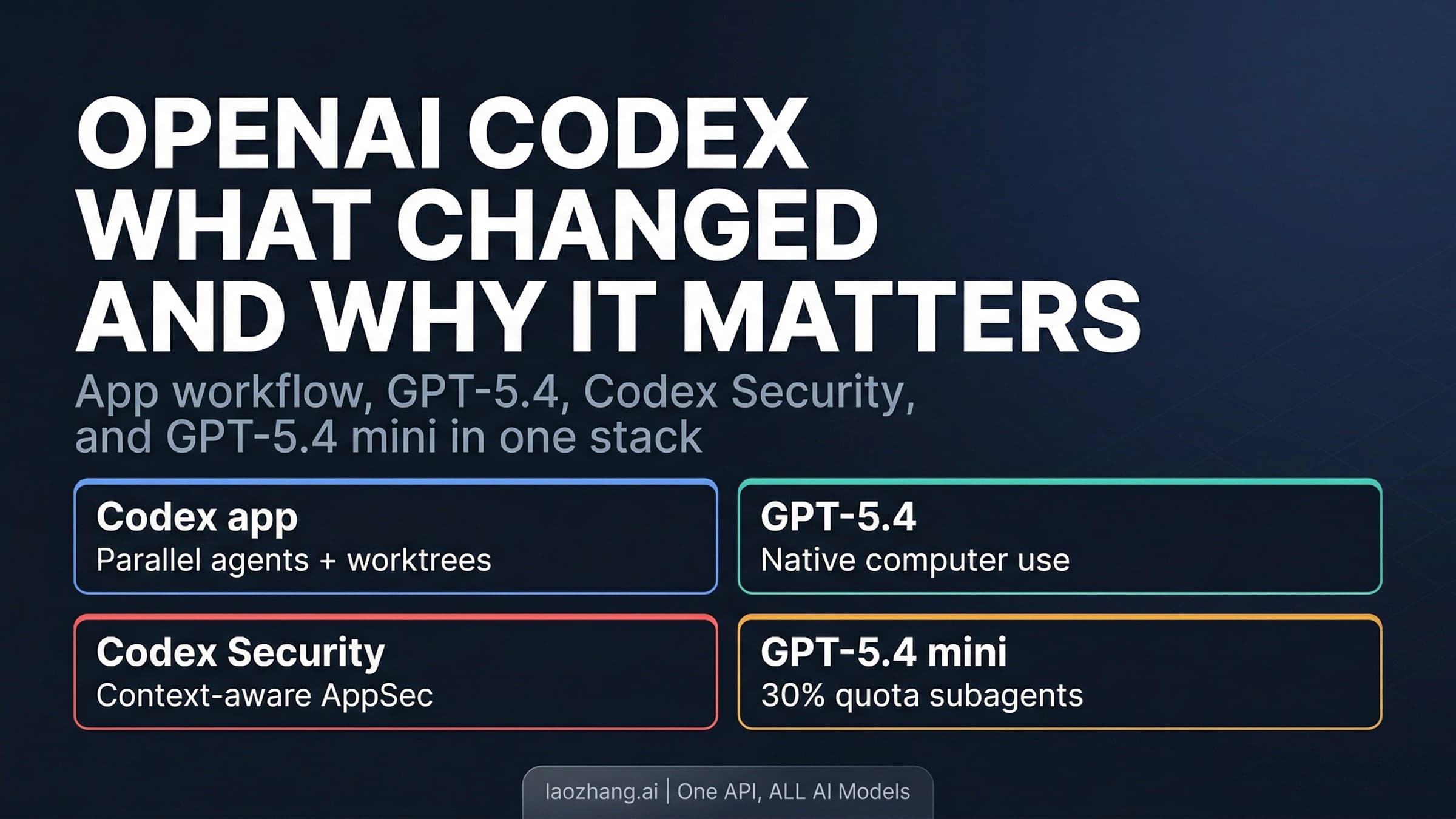
If your real job is broader than one gated model name and you actually need the larger OpenAI coding and security stack, route outward to the March 2026 OpenAI Codex update. That sibling is better for readers trying to understand Codex workflows, app workflows, trust boundaries, and Codex Security together.
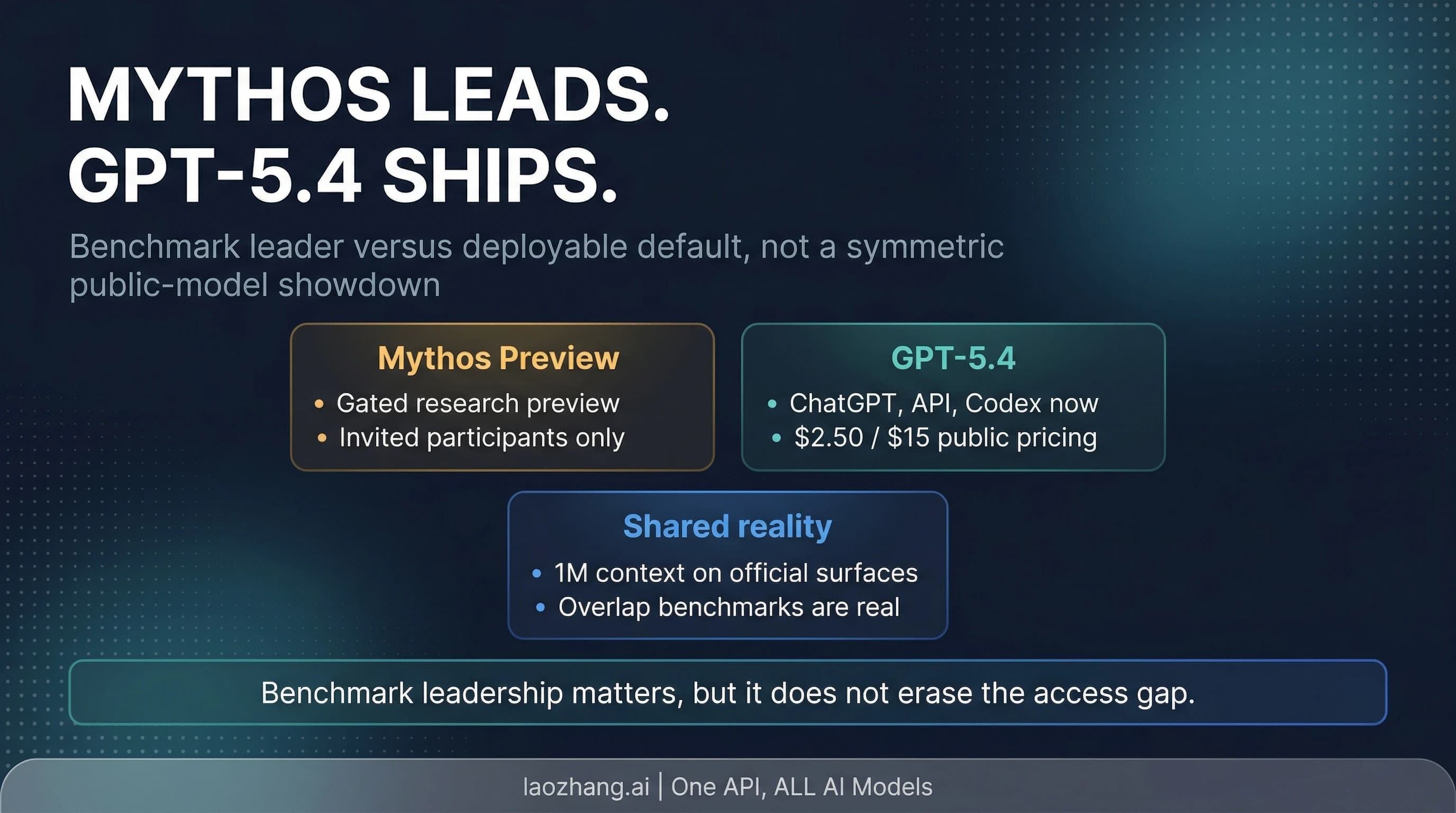
If your real question is whether OpenAI's new gated cyber surface changes the broader frontier-model picture, the better follow-up is Claude Mythos Preview vs GPT-5.4. That is the right page when the decision is "use now or just track the new top-end signal" rather than "is there a public GPT-5.4-Cyber model row I can use today?"
And if you genuinely need the gated surface itself, the correct posture is to go through TAC or enterprise review, not to treat GPT-5.4-Cyber like a hidden option in a public dropdown. Ordinary users need a public-model route. Qualified defenders need a program-access route. OpenAI currently documents those as different decisions.
FAQ
Is there a public GPT-5.4-Cyber model ID?
Not in the current public OpenAI model catalog. As of April 16, 2026, the public docs list gpt-5.4, gpt-5.4-mini, and gpt-5.4-nano, not a public GPT-5.4-Cyber row.
Does TAC verification automatically mean GPT-5.4-Cyber access?
No. The key boundary in OpenAI's current wording is highest TAC tiers. That means baseline verification and higher-tier GPT-5.4-Cyber access should be treated as different thresholds unless OpenAI says otherwise.
Is there public pricing for GPT-5.4-Cyber?
No public GPT-5.4-Cyber price table is published as of April 16, 2026. Public GPT-5.4 pricing exists. The gated Cyber variant is currently documented as a restricted program surface instead of a standard public pricing surface.
How is GPT-5.4-Cyber different from Codex Security?
They solve different jobs. GPT-5.4-Cyber is a gated model surface inside TAC for higher-trust defensive workflows. Codex Security is a sibling Codex surface for application-security review and remediation. One is a restricted model-access question. The other is a broader workflow and review surface.
Should this be compared with Claude Mythos Preview?
Yes, but only when the real job is broader than current access routing. If the practical question is "What can I use right now?", public GPT-5.4 is still the answer for most readers. The Mythos comparison becomes useful when the question changes to "Should I keep using today's public model or start tracking a stronger gated surface for future-tier work?"
GPT-5.4-Cyber matters because it shows that OpenAI now has a more permissive cyber lane for higher-trust defender workflows. It does not mean ordinary users suddenly got a new public GPT-5.4 option. Most readers should treat GPT-5.4-Cyber as a gated program surface and keep using public GPT-5.4 unless their actual route already reaches the higher TAC tiers.