Gemini 3.1 Pro vs GPT-4 vs Gemini 3 Pro: What Developers Should Actually Choose (March 2026)
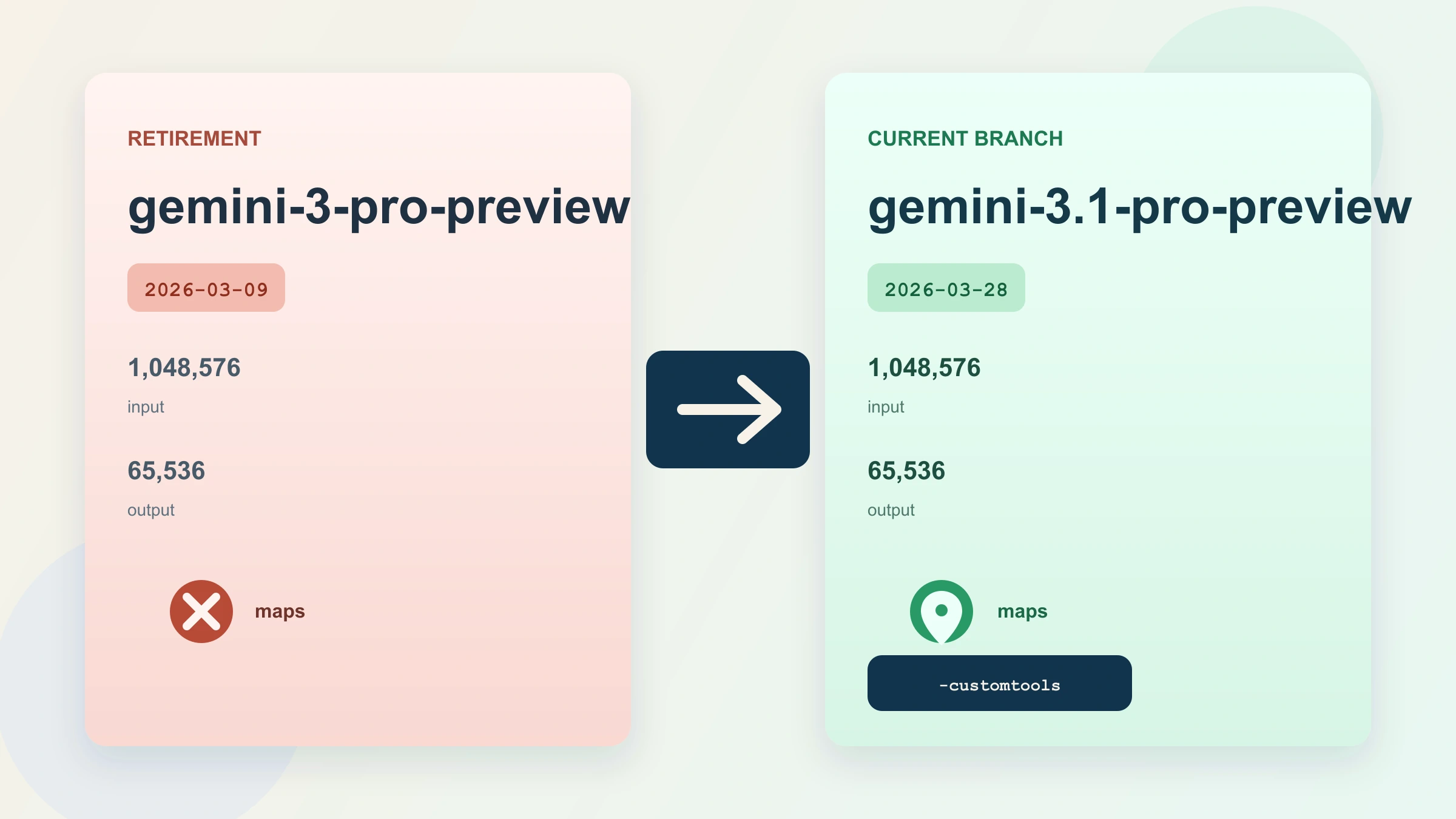
As of March 28, 2026, Gemini 3.1 Pro Preview is the only live flagship choice among these three names. Gemini 3 Pro Preview was shut down on March 9, 2026, and OpenAI describes GPT-4 Turbo as an older model while recommending newer models like GPT-4o. This guide explains what that means for developers choosing, migrating, or benchmarking today.
On this page
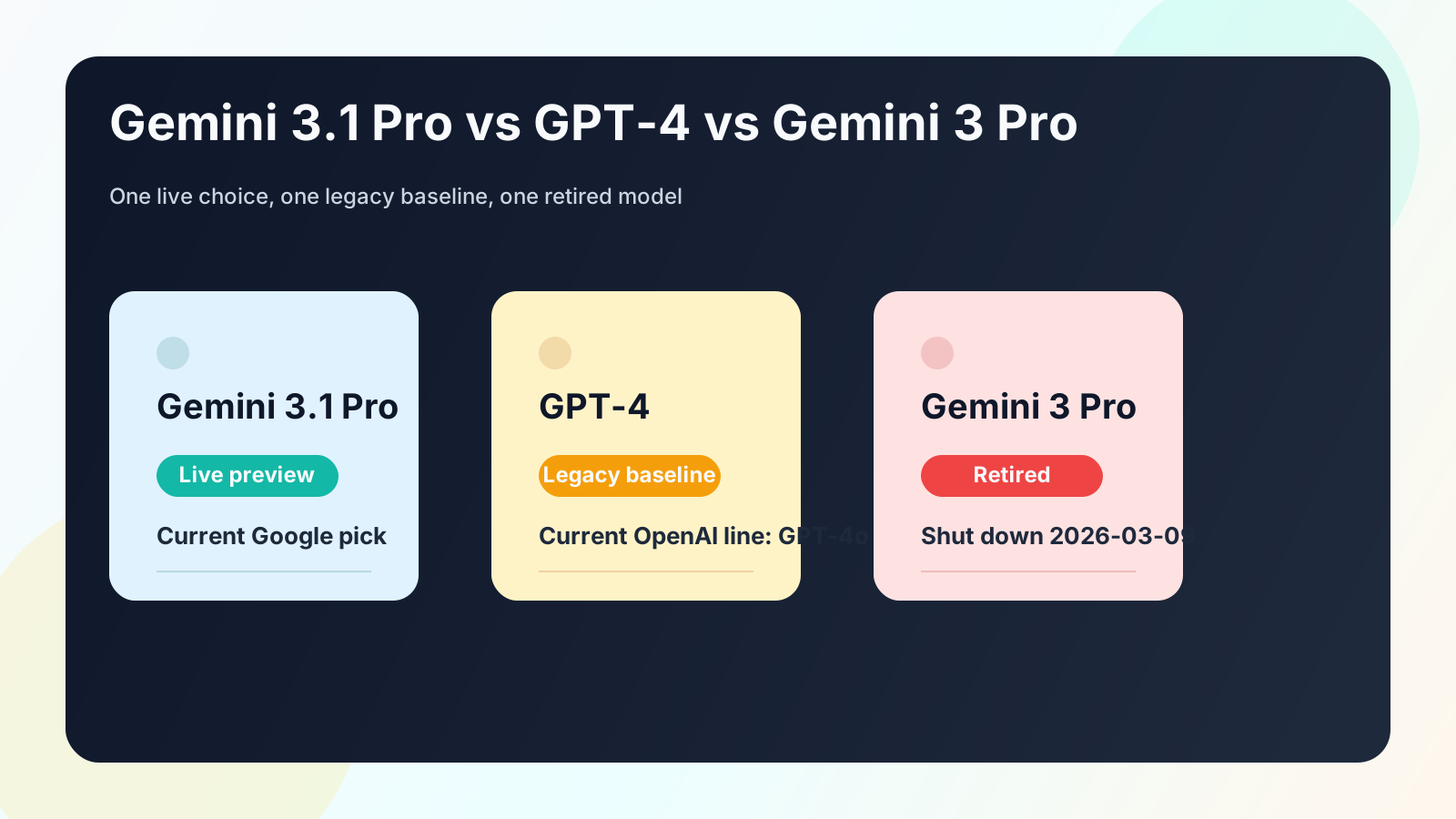
Most developers who put Gemini 3.1 Pro, GPT-4, and Gemini 3 Pro side by side assume they are still choosing between three current options. As of March 28, 2026, that is no longer true. Gemini 3.1 Pro Preview is the live Google-side option in this comparison. GPT-4 Turbo is still documented, but OpenAI positions it as an older GPT branch and recommends newer models such as GPT-4o. Gemini 3 Pro Preview is no longer current at all because Google shut it down on March 9, 2026.
If you treat those three names as peers, you end up solving the wrong problem. The useful split is simpler: one current Google option, one legacy OpenAI baseline, and one retired Gemini reference. That is the model map you need before you compare price, context, or migration cost.
Evidence note: the lifecycle and pricing details in this guide were verified against current Google and OpenAI model documentation on March 28, 2026. The sections below focus on status, pricing, and replacement paths because those are the facts providers publish most clearly for this decision.
If You Only Need the Answer
If you are choosing a current Google model, start with Gemini 3.1 Pro Preview. If you are choosing a current OpenAI model, do not treat legacy GPT-4 as the main comparison target anymore; use GPT-4o as the present-day OpenAI branch. If you are still running or benchmarking Gemini 3 Pro, stop treating it as a fresh option and plan a migration, because Google already shut it down on March 9, 2026.
| What you are really trying to do | Start with | Why |
|---|---|---|
| Evaluate Google's current higher-end text model | Gemini 3.1 Pro Preview | It is live, current, and officially documented as part of the Gemini 3 lineup |
| Compare against OpenAI's current default line | GPT-4o | OpenAI says GPT-4 Turbo is older and recommends a newer model like GPT-4o |
| Keep a historical or compatibility baseline for an older OpenAI stack | GPT-4 Turbo | It still matters for legacy systems, but not as the best current OpenAI pick |
| Decide whether to stay on Gemini 3 Pro | Do not stay | Google shut it down and recommends Gemini 3.1 Pro Preview as the replacement |
That is the fast answer. The rest of this guide explains how status, pricing, and replacement paths lead to it.
Why This Is Not a Normal Three-Way Current Comparison
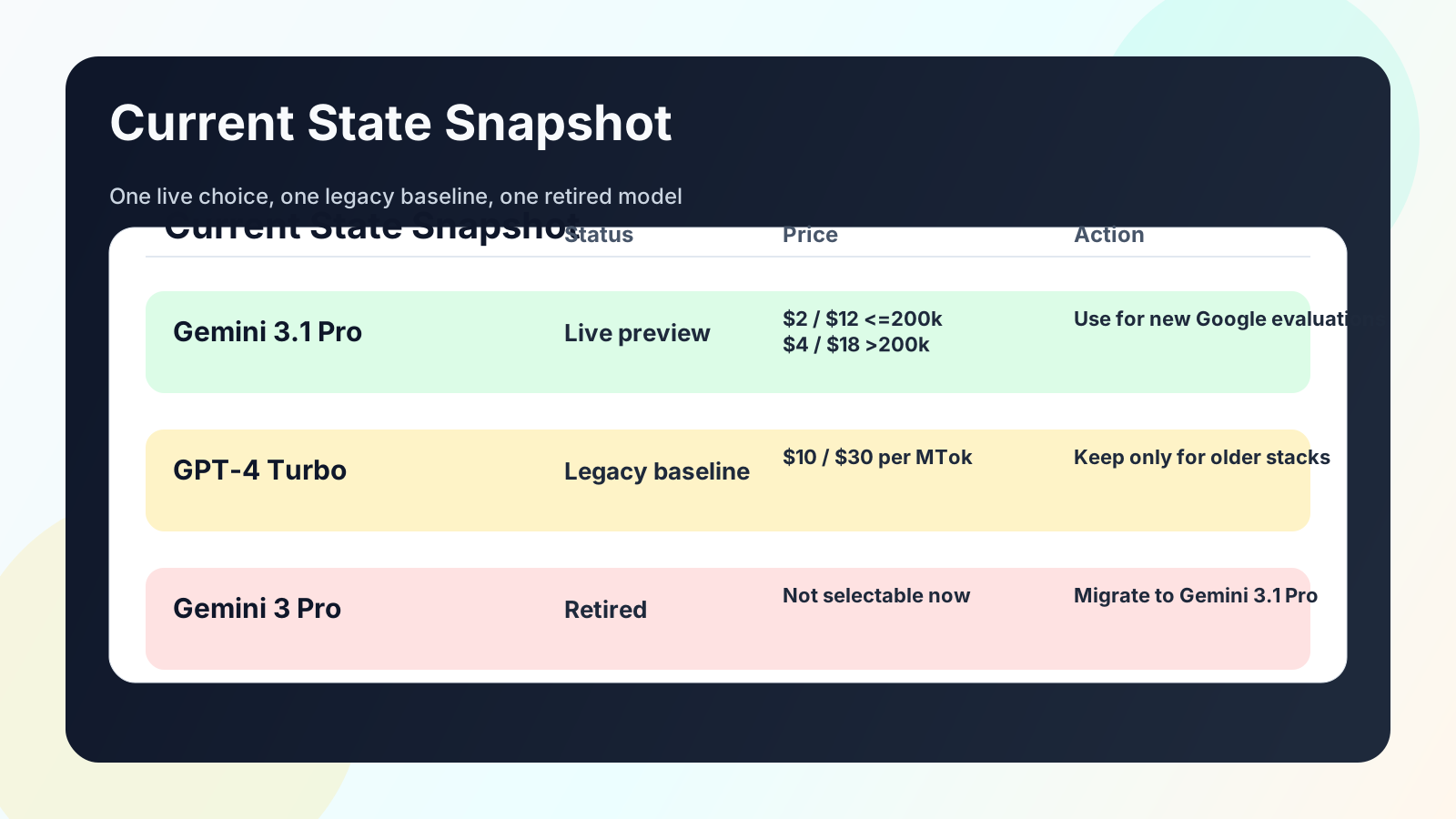
Lifecycle status is not a footnote in this comparison; it is the main fact that determines the decision. Google's current Gemini model catalog lists Gemini 3.1 Pro Preview as part of the active Gemini 3 family. The same Google documentation warns that Gemini 3 Pro Preview was deprecated and shut down on March 9, 2026. OpenAI's current model docs do something similar on the GPT side: the GPT-4 Turbo page says GPT-4 Turbo is the next generation of GPT-4, calls GPT-4 an older high-intelligence GPT model, and says OpenAI recommends a newer model like GPT-4o.
That means each name plays a different job in a developer decision:
Gemini 3.1 Pro Previewis a current Google-side evaluation targetGPT-4 Turbois a legacy OpenAI baselineGemini 3 Pro Previewis a migration-only reference
If your real question is "what should I choose now?", only one of those three names is a live answer on the Google side, and only one of them is even still meant to be a current OpenAI reference. That does not make GPT-4 Turbo useless. It makes it useful in a narrower way: compatibility checks, older-stack cost comparisons, historical regression testing, or explaining why an internal system still behaves the way it does. The same logic applies even more strongly to Gemini 3 Pro. Once Google has already shut the model down and published a replacement path, the practical question is no longer which old and new Gemini branch "wins." The practical question is what changed and what you should do next.
That is why benchmark tables alone are not enough here. Before you compare outputs, you need to know whether the model names in front of you still represent current choices.
Gemini 3.1 Pro vs GPT-4: Current Google Choice vs Legacy OpenAI Baseline
The literal "Gemini 3.1 Pro vs GPT-4" comparison still matters, but mainly for teams with older OpenAI infrastructure or for readers who use GPT-4 as a generic shorthand for "the stronger OpenAI model family." In practical 2026 decision-making, that shorthand now hides an important split between the older GPT-4 line and the current GPT-4o line.
On raw official pricing, the gap is not subtle. Google lists Gemini 3.1 Pro Preview at $2.00 input / $12.00 output per million tokens for prompts up to 200k, and $4.00 / $18.00 above 200k. OpenAI lists GPT-4 Turbo at $10.00 / $30.00 per million tokens. Even before you get into architecture or quality, Gemini 3.1 Pro sits in a materially cheaper position than GPT-4 Turbo.
The second practical difference is how each provider talks about the model today. Google positions Gemini 3.1 Pro as part of the current Gemini 3 family. OpenAI positions GPT-4 Turbo as an older branch and points readers toward GPT-4o for newer work. That does not mean GPT-4 Turbo instantly stops being useful. It means you should stop using it as your first comparison target for new OpenAI-side evaluation. If your real decision is "Gemini now versus OpenAI now," the more honest OpenAI counterpart is GPT-4o, not old GPT-4.
There is also a subtle long-context signal in the pricing structure itself. Google's pricing page for Gemini 3.1 Pro splits pricing at 200k prompt tokens, which is one sign the model is aimed at significantly larger-context workloads than legacy GPT-4 Turbo. OpenAI's GPT-4 Turbo model page explicitly lists a 128,000 context window and 4,096 max output tokens. You do not need a giant benchmark spreadsheet to see the direction of the comparison: Gemini 3.1 Pro is the more modern Google-side option, priced and documented for larger prompt workloads, while GPT-4 Turbo is the older OpenAI line that now survives mainly as a legacy reference point.
So when does GPT-4 Turbo still deserve space in the discussion?
First, it matters if your team already runs GPT-4 Turbo in production and needs a concrete reason to migrate. Second, it matters if you want a stable historical baseline for cost or output changes. Third, it matters if the buyer or engineering lead still uses GPT-4 as the organization's mental shorthand, and you need to translate that shorthand into current model choices. But if you are choosing from scratch, comparing Gemini 3.1 Pro only to GPT-4 Turbo is already one step stale.
If your real question is broader than a single legacy OpenAI line, the more useful follow-up is the wider Gemini vs OpenAI vs Claude provider comparison. If your real question is specifically about where Gemini 3.1 Pro fits against a premium coding-first alternative, the more relevant next read is our Gemini 3.1 Pro vs Claude Opus 4.6 guide.
Gemini 3.1 Pro vs Gemini 3 Pro: This Is a Migration Question
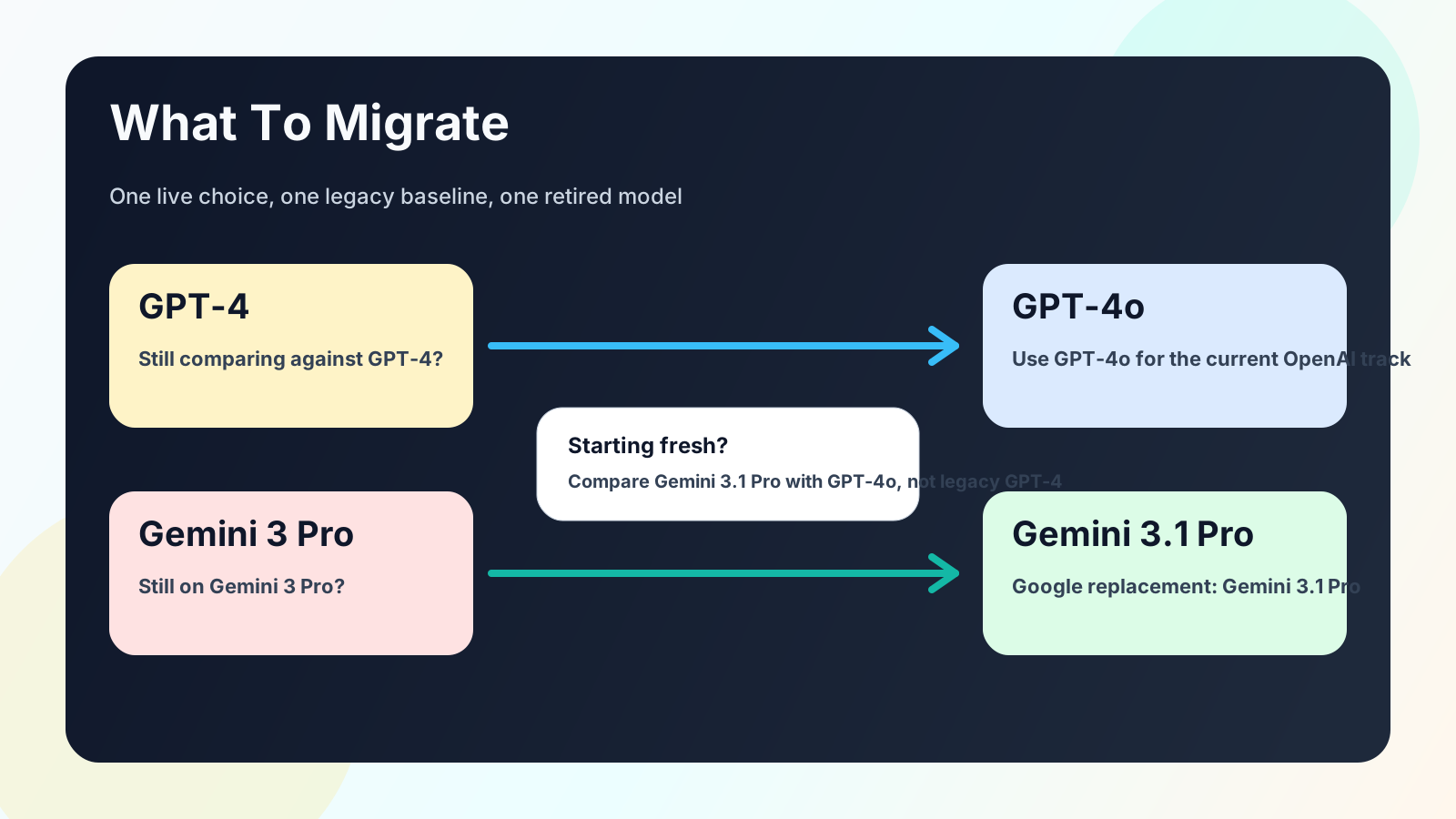
The Gemini-to-Gemini part of this query is much simpler than the GPT side. Google already answered it in the deprecations documentation. gemini-3-pro-preview was released on November 18, 2025, shut down on March 9, 2026, and the recommended replacement is gemini-3.1-pro-preview.
That official replacement notice matters more than almost any spec delta you could list. Once a model is shut down, the question is no longer "which would I choose?" The question becomes "how much migration work do I need, and what should I validate after switching?" That is why the right framing here is migration, not fresh feature comparison.
There are still two useful things to say about the jump from Gemini 3 Pro to Gemini 3.1 Pro.
The first is strategic: Google is telling you which branch remains alive. If you were previously planning around Gemini 3 Pro, the product decision has already been made upstream. The only reasonable evaluation path is the replacement model Google points to.
The second is operational: do not treat "official replacement" as "drop-in identical behavior." Even when providers position a new model as the successor, you still need to re-run prompt evaluation, structured-output tests, tool-calling checks, safety behavior checks, and any domain-specific regressions that matter in your product. Replacement eliminates the choice problem. It does not eliminate the validation problem.
This is where many comparison articles leave readers with the wrong impression. They imply that a newer model simply inherits the old one. In production, that assumption is too loose. The correct developer response is narrower and more practical:
- Stop treating Gemini 3 Pro as a selectable current option.
- Move evaluation to Gemini 3.1 Pro Preview.
- Re-test the behaviors that actually affect your workload.
If what you really need next is immediate access or setup detail rather than comparison framing, our Gemini 3.1 Pro access guide is the faster follow-up.
Specs and Price Snapshot
At this point the comparison can be normalized into one table. The key is to separate the literal query from the current practical replacement path.
| Model | Current status on March 28, 2026 | Official pricing | What it means now |
|---|---|---|---|
| Gemini 3.1 Pro Preview | Live Google-side option | $2/$12 per MTok up to 200k; $4/$18 above 200k | Use this for current Google-side evaluation |
| GPT-4 Turbo | Older OpenAI model | $10/$30 per MTok | Keep mainly for legacy baselines or older stacks |
| GPT-4o | Current OpenAI default line | $2.50/$10 per MTok | Use this if you really mean "current OpenAI comparison" |
| Gemini 3 Pro Preview | Shut down on 2026-03-09 | Not the relevant question anymore | Treat as migration history, not as a fresh option |
This table leads to a much cleaner conclusion than a generic "it depends." On Google's side, Gemini 3.1 Pro is the active branch. On OpenAI's side, GPT-4 Turbo is older and GPT-4o is the current practical branch for most work. On the older Gemini side, Gemini 3 Pro is already over as a current choice.
That is also why price should be read in context. If you compare Gemini 3.1 Pro only with GPT-4 Turbo, Gemini looks much cheaper and much more current. That is true, but incomplete. Once you shift the OpenAI side to the provider's own newer recommendation, the price conversation changes: GPT-4o is still a little more expensive on input than Gemini 3.1 Pro's lower tier, but much closer than GPT-4 Turbo is. That is the more useful 2026 decision surface.
What Should Developers Actually Choose?
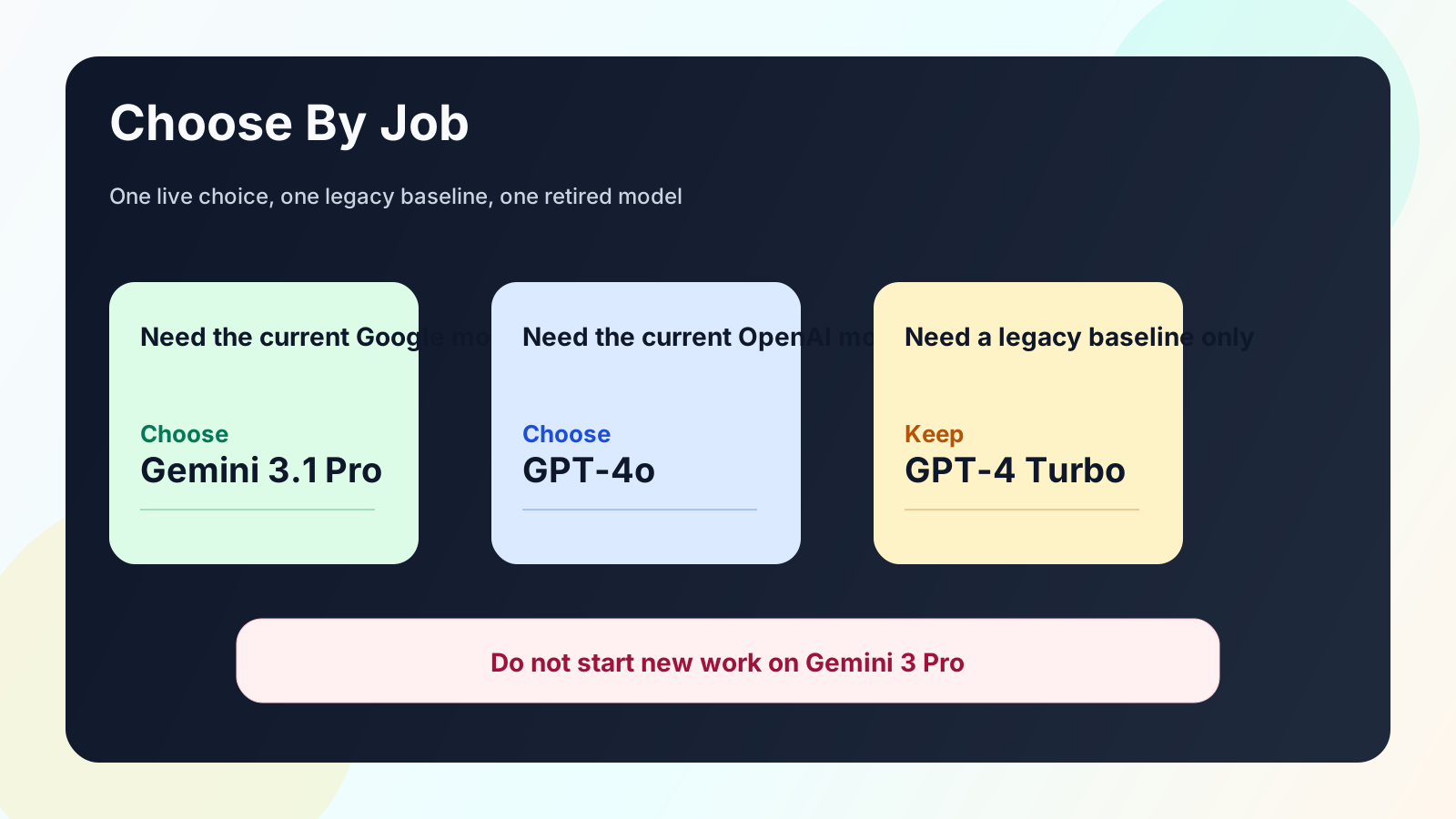
Here is the practical recommendation in plain language.
Choose Gemini 3.1 Pro Preview if your goal is to evaluate Google's current higher-end text model or to replace an older Gemini Pro branch with something Google still actively supports. That is the cleanest reason to use the literal Google half of this query.
Choose GPT-4o if your real goal is to compare Gemini against OpenAI's current general-purpose line rather than to keep an old GPT-4 baseline alive. OpenAI's own docs point you in that direction, so following the provider's current branch is usually the least confusing path.
Keep GPT-4 Turbo only when you need a historical baseline, older-stack compatibility, or a migration reference. It is still useful for those jobs. It is just not the right default comparison target for brand-new 2026 evaluation.
Do not start new work on Gemini 3 Pro Preview. That part of the decision is already over. The model is shut down, and the official path is to move to Gemini 3.1 Pro Preview.
That decision tree becomes even more useful if you are running a dual-provider evaluation instead of a one-provider commitment. In that situation, a unified gateway like laozhang.ai can be genuinely useful because it reduces the operational friction of testing the live Google route and the live OpenAI route side by side. The benefit is not that a gateway magically changes model quality. The benefit is that it makes a clean A/B evaluation and a future routing strategy easier to maintain.
The strongest 2026 takeaway is simple: stop asking one question with three names that do three different jobs. Ask three smaller questions instead:
- What is Google's current live choice?
Gemini 3.1 Pro Preview - What is OpenAI's current mainstream comparison branch?
GPT-4o - What are the legacy references I still need for migration or benchmarking?
GPT-4 Turboand oldGemini 3 Prohistory
Once you separate the jobs that way, the decision stops feeling murky.
FAQ
Is Gemini 3 Pro still available?
No. Google lists gemini-3-pro-preview as shut down on March 9, 2026 and recommends gemini-3.1-pro-preview as the replacement.
Should I compare Gemini 3.1 Pro to GPT-4 or GPT-4o?
If you need a current OpenAI-side evaluation, compare Gemini 3.1 Pro to GPT-4o. Compare against GPT-4 Turbo only when you specifically need a legacy OpenAI baseline.
Is GPT-4 still worth starting new work on?
Usually no. OpenAI's GPT-4 Turbo model page explicitly describes the GPT-4 line as older and recommends using a newer model like GPT-4o.
What is the biggest practical difference between Gemini 3.1 Pro and GPT-4 Turbo today?
Currentness. Gemini 3.1 Pro is Google's live current option in this query, while GPT-4 Turbo is the older OpenAI branch. Pricing also favors Gemini 3.1 Pro by a wide margin versus GPT-4 Turbo.
If I am already on Gemini 3 Pro, what should I do next?
Move evaluation to Gemini 3.1 Pro Preview and re-test the behaviors that matter for your workload. The provider has already made the branch decision for you; your job is to validate the migration.
What if my real alternative is not GPT-4 but a stronger premium coding model?
Then you are already outside the useful scope of this mixed query. Read the Gemini 3.1 Pro vs Claude Opus 4.6 comparison instead, because that is a more honest current premium-model decision.
The real decision becomes easier once you compare current things to current things. In March 2026, that means Gemini 3.1 Pro Preview is the live Google-side answer, GPT-4 Turbo is mainly a legacy OpenAI baseline, and Gemini 3 Pro Preview is no longer a choice you can freshly make. Once you correct that model map, the rest of the evaluation gets much easier.