Stable Claude Access: Direct, Cloud, and the Current laozhang.ai Gateway Status
Claude is currently unlisted on laozhang.ai. For actual Claude access, choose an eligible direct, supported cloud, or organizational gateway path, then confirm its credentials, features, and backup plan.
On this page
If you need Claude today, do not plan around Claude being available through laozhang.ai. As checked on October 11, 2026, LaoZhang's API manual says Claude models have been unlisted since September 24. Its Claude Code guide still describes a temporary outage. GLM-5.2 and DeepSeek V4 can use its Anthropic Messages interface, but they are different models; a compatible request format does not turn them into Claude.
Disclosure: laozhang.ai is our own service. Its prices are platform pricing, not an independent comparison.
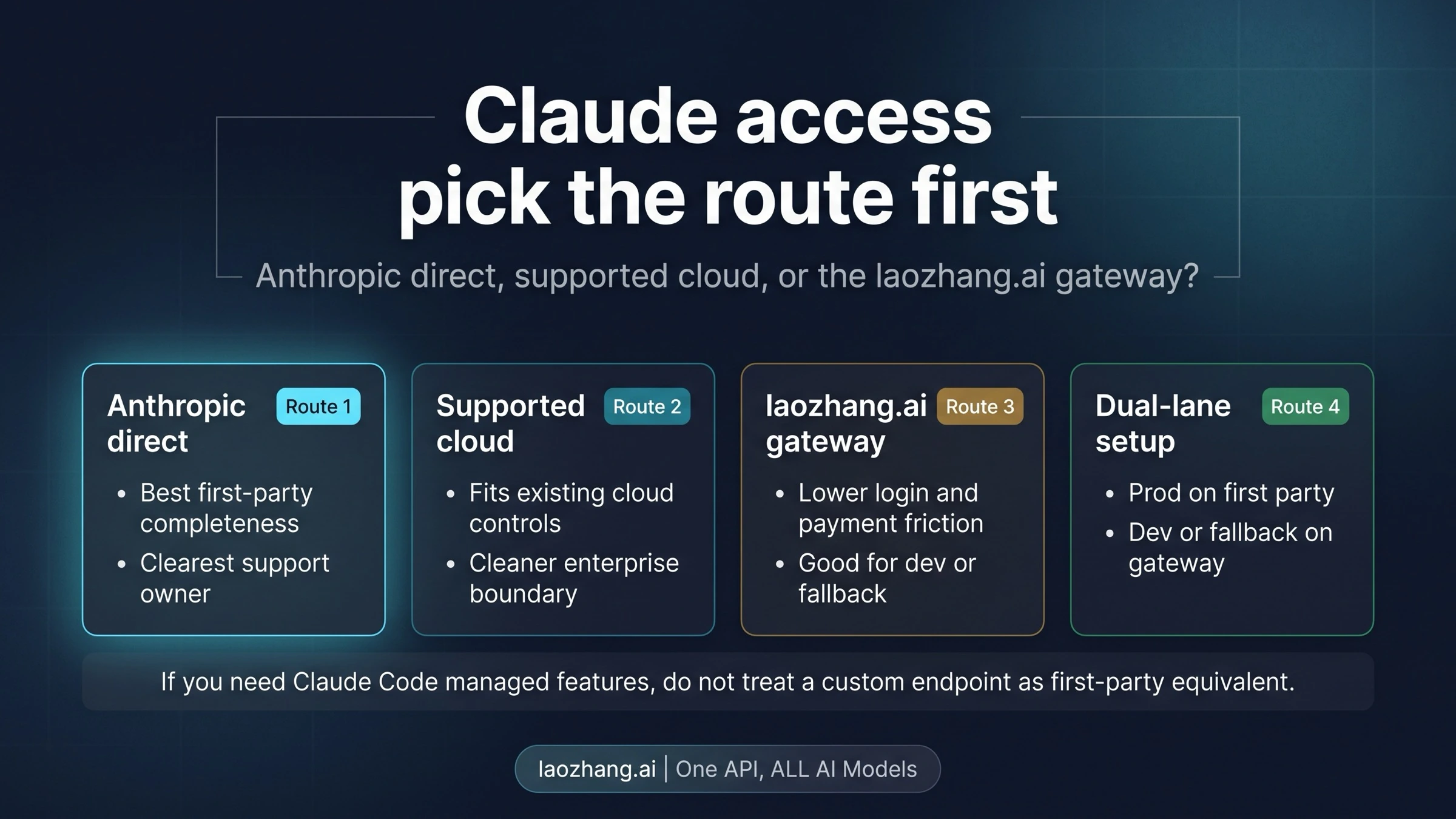
For actual Claude, start with the access you are eligible to use: an Anthropic account, a supported cloud provider, or a gateway your organization operates with an appropriate Claude upstream. Choose according to the work you need to complete and the account that should own it. Then verify the connection and keep a backup that can survive the failure you are worried about.
This blog and LaoZhang API share the LaoZhang brand. The distinctions below use public provider documentation; they do not represent an independent audit of LaoZhang's upstream agreements, model identity, or service reliability.
Choose the account before the endpoint
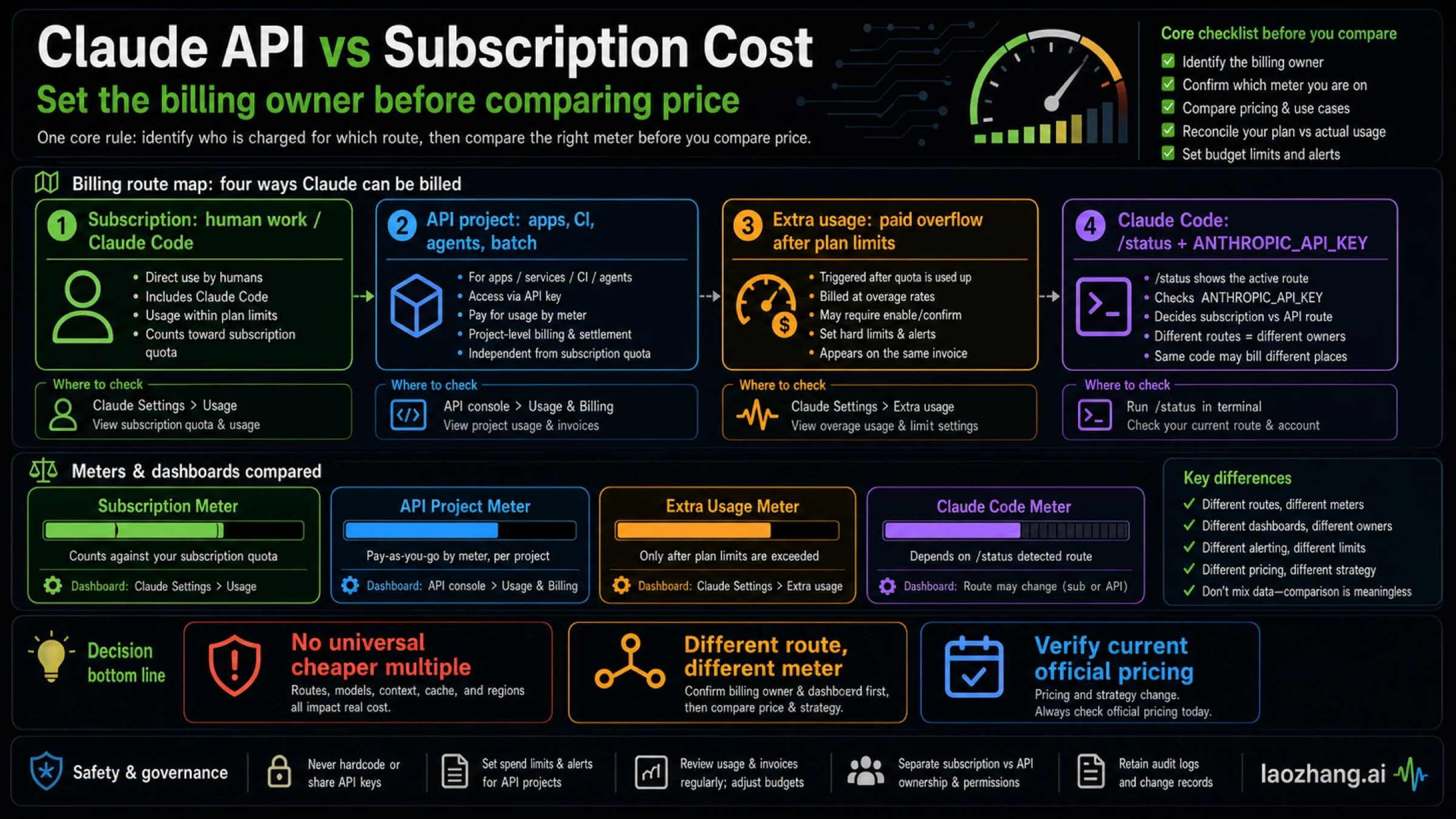
An endpoint alone tells you little about the service behind it. A more useful starting point is where you want the account, bill, and support relationship to live.
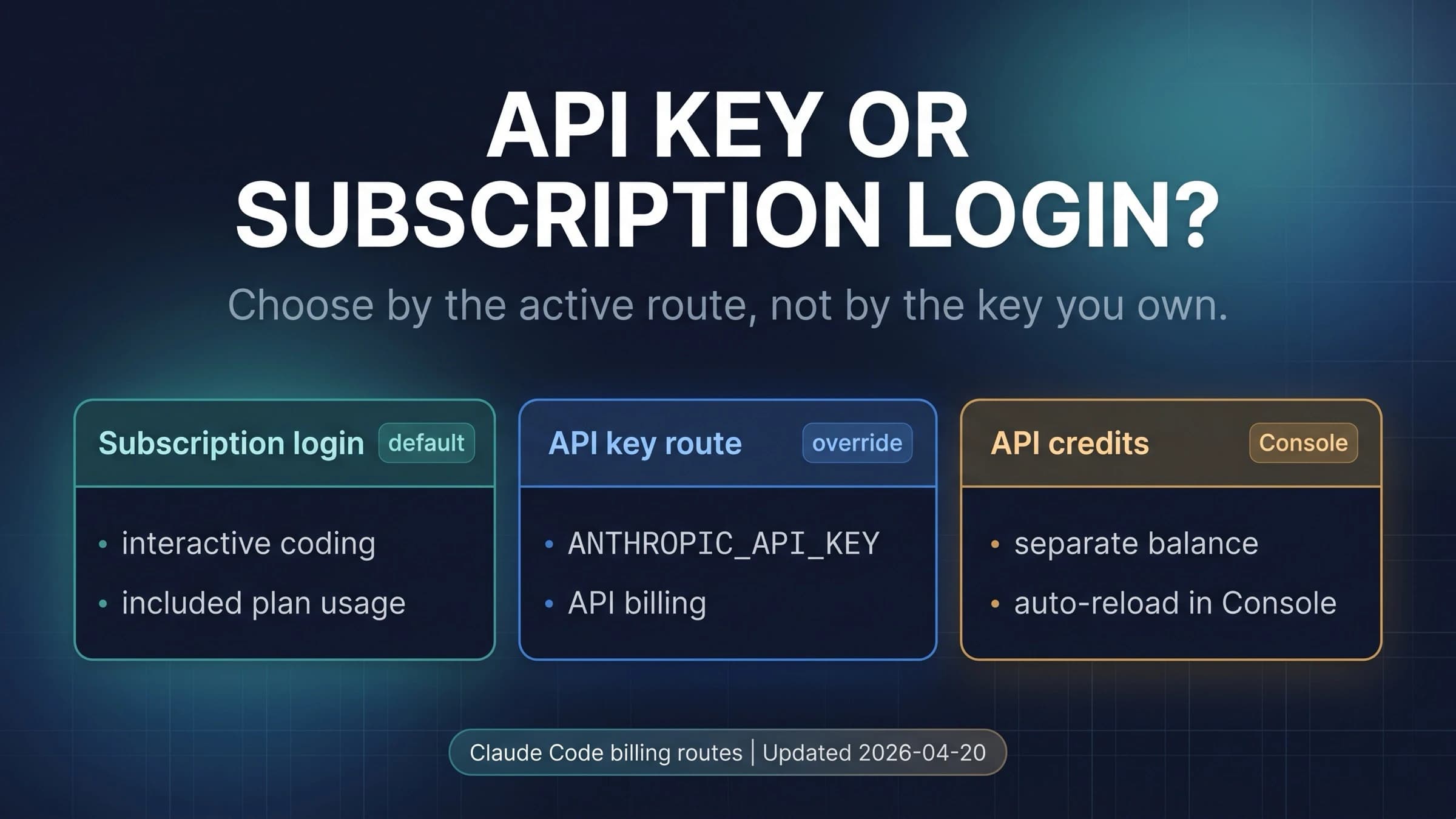
- Use your Claude subscription for the native subscription experience. An eligible claude.ai account is the starting point when you need subscription-dependent Claude Code features. Check the particular plan and feature.
- Use Claude Console for developer usage billed through Anthropic. Console supports API keys and a newer keyless sign-in. It is a separate account context from your claude.ai subscription.
- Use a supported cloud when your organization already manages access and spending there. Claude Code documents Amazon Bedrock, Google Cloud's Agent Platform, Microsoft Foundry, and Claude Platform on AWS. Use that provider's credential and configuration instructions.
- Use an organizational gateway when centralized access is the requirement. It can keep the upstream credential on the server and issue developers a separate credential. Your organization also takes responsibility for gateway operation.
These distinctions are documented in Anthropic's authentication guide, feature availability guide, and other gateway overview. They are connection options, not a ranking of measured uptime.
Eligibility comes before setup. Anthropic's Supported Regions Policy covers its apps, API and developer platform, and Claude supplied through cloud platforms and authorized resellers. It includes a person's physical location, an entity's incorporation or headquarters, and majority ownership or control. Choosing a cloud or another hostname does not automatically create an exception. Your language does not establish eligibility; check the published conditions for your actual situation.
Three credentials that should not be confused
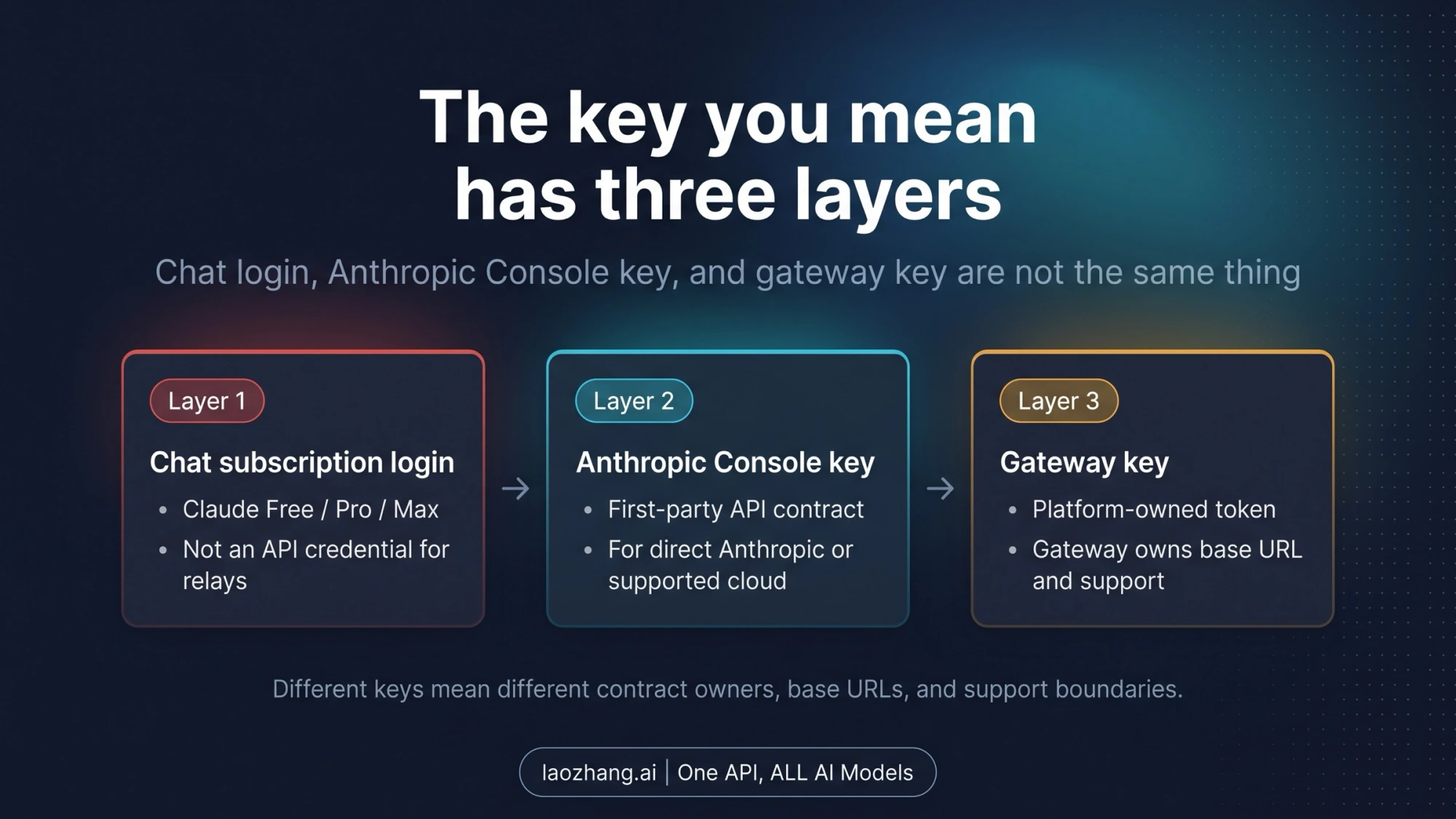
A Claude login, a provider credential, and a gateway credential have different owners. Keep those owners explicit when configuring a tool or asking for help.
| Credential you use | What it identifies | Where to resolve account or usage questions |
|---|---|---|
| A claude.ai subscription login | Your Claude subscription account | Your Claude account or organization administrator |
| A Console or cloud-provider credential | The developer or cloud account authorizing Claude usage | The owner of that Console organization or cloud account |
| A credential issued by your organization's gateway | Your access to the organizational proxy | Your gateway administrator, who manages its upstream account |
An ordinary organizational gateway bills usage to the owner of its upstream credential. A saved subscription login can remain unused while a gateway credential is active. Setting only ANTHROPIC_BASE_URL, however, does not replace that login or its usage limits. Check the active credential rather than inferring the bill from the URL. Gateway subscription behavior.
OAuth needs its product context, too. Keyless Console sign-in creates an Anthropic profile; corporate SSO into the official Claude apps gateway is a different path. Cloud selection, gateway sessions, managed policy, and profiles can change credential selection. Use /status rather than assuming two exports override every configuration. Authentication and precedence.
Do not provide a reseller with your subscription session token as a substitute for a provider-issued key. Anthropic's legal and compliance documentation prohibits third-party collection or intermediation of claude.ai credentials and routing users' Free, Pro, or Max credentials on their behalf. Managing an organization's own authorized API or cloud credentials has a different scope; hosted Claude Code products have additional conditions. Protocol compatibility does not establish that a seller satisfies those terms.
Connect through a documented path and confirm the result
These steps are based on documentation, not a live connection test performed for this article. They assume you already have appropriate account access and a supported Claude Code installation.
An existing Console account: use the Console sign-in
For an invited Console user on Claude Code v2.1.242 or later, /login offers the Anthropic Console account path. Choose the recommended Console-account sign-in when offered; it creates an OAuth profile without an API key. A cloud selection or certain managed settings can require the legacy key flow instead. Follow the current Console authentication instructions.
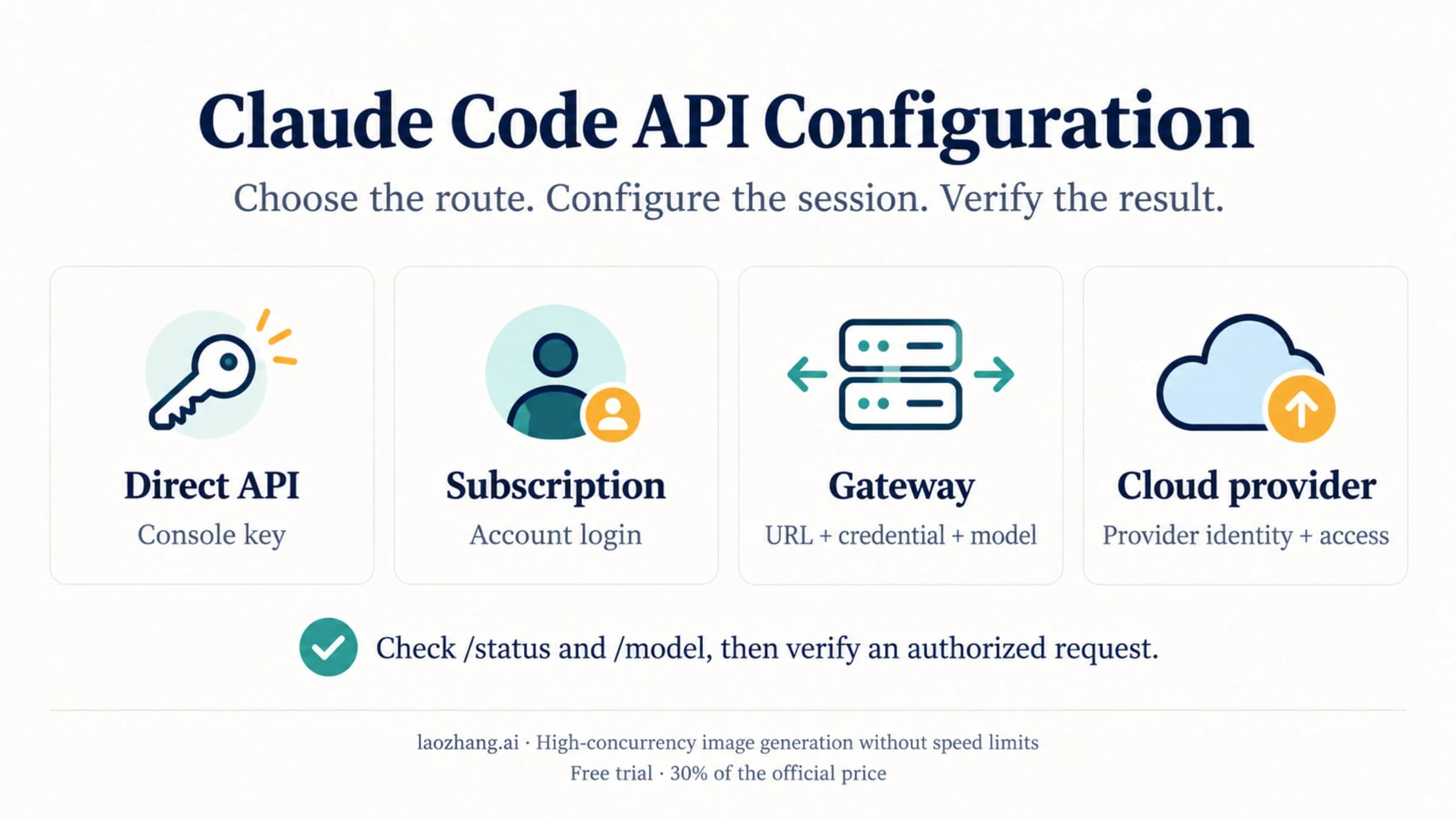
Open /status to confirm the active account or profile, then /model to inspect the selected model. The useful success condition is the intended account and an available Claude model, followed by a successful ordinary request. A login success message alone does not prove every model or feature is available. If you are implementing an existing API key instead, our Claude Code API configuration guide covers that next step.
A company-run Claude apps gateway: follow corporate SSO
Anthropic's official self-hosted Claude apps gateway differs from a commercial reseller's endpoint. In AWS's July 8 deployment example, the company operates the gateway, supplies upstream access, and connects its identity provider. Developers use /login and corporate SSO; the gateway issues a short-lived session token. Administrators can distribute its address through device management.
Obtain the company-approved configuration, sign in through its SSO flow, and check the allowed models in /model. Ask the administrator which upstream and policy apply to your group. An SSO rejection belongs first with the company's identity or gateway team; a budget cap belongs with the account owner. The AWS example describes a design, not proof that your organization's deployment is ready.
For unattended CI, the official gateway has no service-token sign-in flow. Anthropic directs pipelines without a developer available for browser SSO to the provider directly. Non-interactive runs on an already signed-in machine can use its gateway session. See the official gateway overview.
Another organizational gateway: match its credential and format
For an Anthropic Messages endpoint, obtain the base URL, credential type, and available Claude model ID from its administrator. ANTHROPIC_AUTH_TOKEN sends a bearer token; ANTHROPIC_API_KEY sends x-api-key. Configure the named type, start Claude Code from the configured environment, and check /status for the address and active credential. An editor opened independently may not inherit terminal exports. See the connection instructions.
This is not a recipe for the currently unavailable LaoZhang Claude service. A cloud-native gateway may require provider-specific configuration instead of ANTHROPIC_BASE_URL; follow your administrator's documented method.
Separate three results when checking a route:
- Authentication works: the endpoint accepts the appropriate credential.
- Claude access works: the account has the intended Claude model available, and the request completes.
- Your workflow works: required tools, streaming, and management features behave correctly on that provider.
A small text response addresses only part of that sequence. Anthropic's compatibility guide requires relevant version and beta information to reach the upstream and streaming events to be relayed correctly. A custom Anthropic-format endpoint does not tell Claude Code which upstream it uses. A displayed model name or a reply calling itself Claude is not independent proof of model identity.
Check the feature you need, not a promise of “full support”
Local CLI capabilities are broadly available across documented providers, while server-dependent features differ. Cloud sessions and Remote Control depend on subscription authentication. Desktop has specific third-party configuration exceptions. A Console account or cloud account should therefore not be described as including every subscription capability. Check the relevant row and footnote in feature availability.
A generic ANTHROPIC_BASE_URL pointing to a non-Anthropic host also disables Remote Control, even if a claude.ai login is saved. Gateway surface limitations.
Managed settings need a further distinction. Delivery from Anthropic's servers requires eligible authentication and a direct connection to api.anthropic.com. A Console organization is separate from a claude.ai Team or Enterprise organization, so a Console key does not automatically inherit the latter's policy. A generic custom endpoint also does not provide that delivery merely because Claude Code connects to it.
The official self-hosted Claude apps gateway is an important exception: signed-in cloud clients can fetch equivalent remote managed settings from that gateway. This does not mean every reseller or custom BASE_URL has the capability. See server-managed settings and platform availability.
Before selecting a primary path, name the capability your work requires—for example, Remote Control, a server-side tool, or centrally delivered policy. Confirm its provider, account, version, and administrator requirements. “Claude Code launches” is too weak a criterion.
Build a backup around the failure it must survive
A useful backup removes a dependency that can fail. A second hostname can help with a hostname-specific problem, but is weaker than a separately provisioned access path.
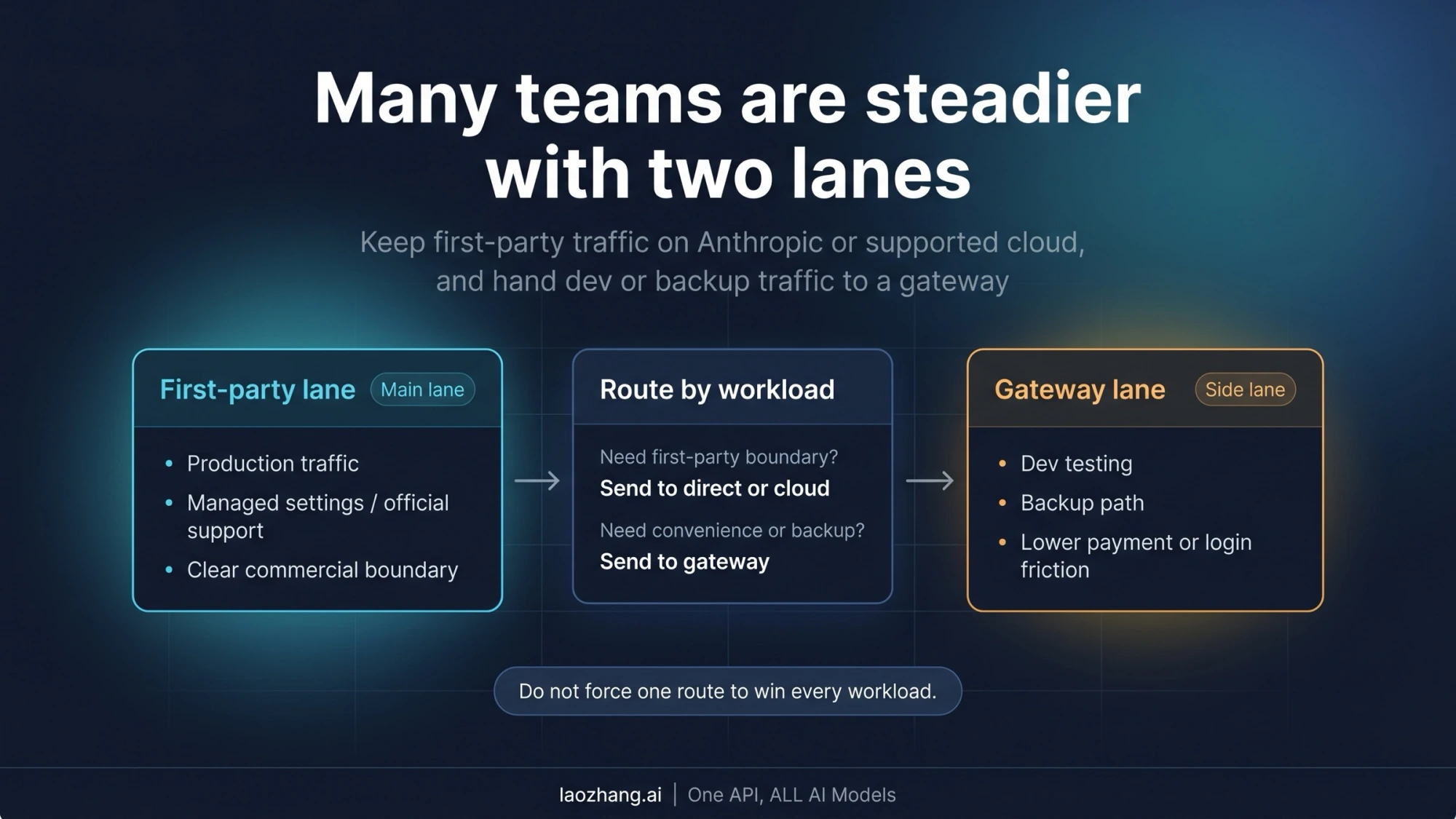
LaoZhang's API manual documents api.laozhang.ai as the default, api2.laozhang.ai for an unreachable default host, and api-vip.laozhang.ai for direct connections from Europe or North America. They share the provider, key, and request format. Switching among them does not restore an unlisted Claude model.
Disclosure: laozhang.ai is our own service. Its prices are platform pricing, not an independent comparison.
Consider a team whose normal Claude Code work uses a company gateway backed by Bedrock. If the concern is that gateway deployment going down, a company-approved direct Bedrock configuration can remove the gateway dependency. It still shares the Bedrock account, upstream capacity, and permissions. If the concern is that account or provider, a separately approved Console path can be a more meaningful second option—provided the intended Claude model, budget, data terms, and required features are available there. This is a planning example, not a tested failover claim.
Keep a short operating note for each path: how to activate it, which credential and model it uses, who pays, who supports it, and which capabilities differ. Run an authorized representative check before an incident. For coding, that check should exercise the required tool operation and streaming as well as text generation.
During an incident, preserve the failed request's time, error, and identifier when available. Check whether it completed before submitting it elsewhere, particularly if an agent can change files or external state. A backup should help you resume safely, without silently replacing Claude or duplicating an unfinished operation.
Know who can resolve the failure
Start with the owner of the active credential and the component rejecting the request. Gateway credentials belong with the gateway operator; cloud permissions and model access with the cloud account; Console account issues with its administrator or Anthropic support.
The gateway troubleshooting guide distinguishes rejected credentials, unreachable hosts, malformed HTTP 200 responses, and fields the upstream does not accept. Confirm the credential/header, the approved network path, or format compatibility accordingly. Repeated retries do not repair a missing model or rejected credential. Send support the request time, model, endpoint, status, and error details; omit secrets.
Privacy promises need the same specificity. LaoZhang's published Data Policy says it does not store prompts and responses by default, but retains operational metadata, usually for seven days with defined extensions. Account, billing, and voluntarily supplied support materials have separate retention purposes; upstream services apply their own rules. This is the provider's policy, not an audited “no records” or universal zero-retention guarantee. An uptime claim likewise needs its applicable agreement and measurement before it supports a reliability comparison.
Disclosure: laozhang.ai is our own service. Its prices are platform pricing, not an independent comparison.
FAQ
Can I currently use Claude through laozhang.ai?
Its documentation says Claude has been unlisted since September 24, 2026, and remained temporarily offline when checked on October 11. GLM or DeepSeek Messages support is not Claude availability. Current API manual.
Does Anthropic support gateway connections?
Yes, Claude Code documents organizational gateways and Anthropic supplies its own self-hosted Claude apps gateway. A supported connection method does not endorse or audit another product; Anthropic says non-Claude routing through gateways is unsupported. Other LLM gateways.
Can I use my Anthropic Console key as a LaoZhang key?
Do not assume so. LaoZhang documents a LaoZhang-issued inference key, not a transparent Console-key pass-through arrangement, and Claude is currently unlisted. Keep credentials tied to the service that issued them. Provider API manual.
Does setting a gateway URL move usage off my subscription?
Not by itself. A saved claude.ai credential can remain active with an ordinary gateway when only the base URL changes. Check the selected credential in /status; gateway SSO and cloud configurations have different authentication behavior. Gateway subscription behavior.
Are two API domains enough for a Claude backup?
They may address a domain-specific problem, but can share the account, provider, and model availability. Prepare a second approved Claude path that removes the dependency you need to survive, and confirm its workflow beforehand.
Is the official Claude apps gateway a simpler reseller endpoint?
No. Your organization hosts and operates it, with its own identity integration, upstream credentials, and policies. AWS's deployment example describes that model. Choose it for centralized control when your organization can operate the infrastructure.
Sources10
External pages this guide links to, in the order they appear. Last updated Oct 11, 2026.
Sources10
External pages this guide links to, in the order they appear. Last updated Oct 11, 2026.
- 1.authentication guidecode.claude.com/docs/en/authentication
- 2.feature availability guidecode.claude.com/docs/en/feature-availability
- 3.other gateway overviewcode.claude.com/docs/en/llm-gateway
- 4.Supported Regions Policyanthropic.com/supported-countries
- 5.legal and compliance documentationcode.claude.com/docs/en/legal-and-compliance
- 6.July 8 deployment exampleaws.amazon.com/blogs/machine-learning/introducing-claude-apps-gateway-for-aws
- 7.official gateway overviewcode.claude.com/docs/en/gateways
- 8.connection instructionscode.claude.com/docs/en/llm-gateway-connect
- 9.compatibility guidecode.claude.com/docs/en/llm-gateway-protocol
- 10.server-managed settings and platform availabilitycode.claude.com/docs/en/server-managed-settings