Claude Code Discounts in 2026: What's Live and the Cheapest Official Route
No universal Claude Code coupon was verified on July 22, 2026. The real savings are route-specific: Pro annual lowers the subscription bill, the current promotion raises a weekly limit, and usage bundles lower the cost of overflow credits.
On this page
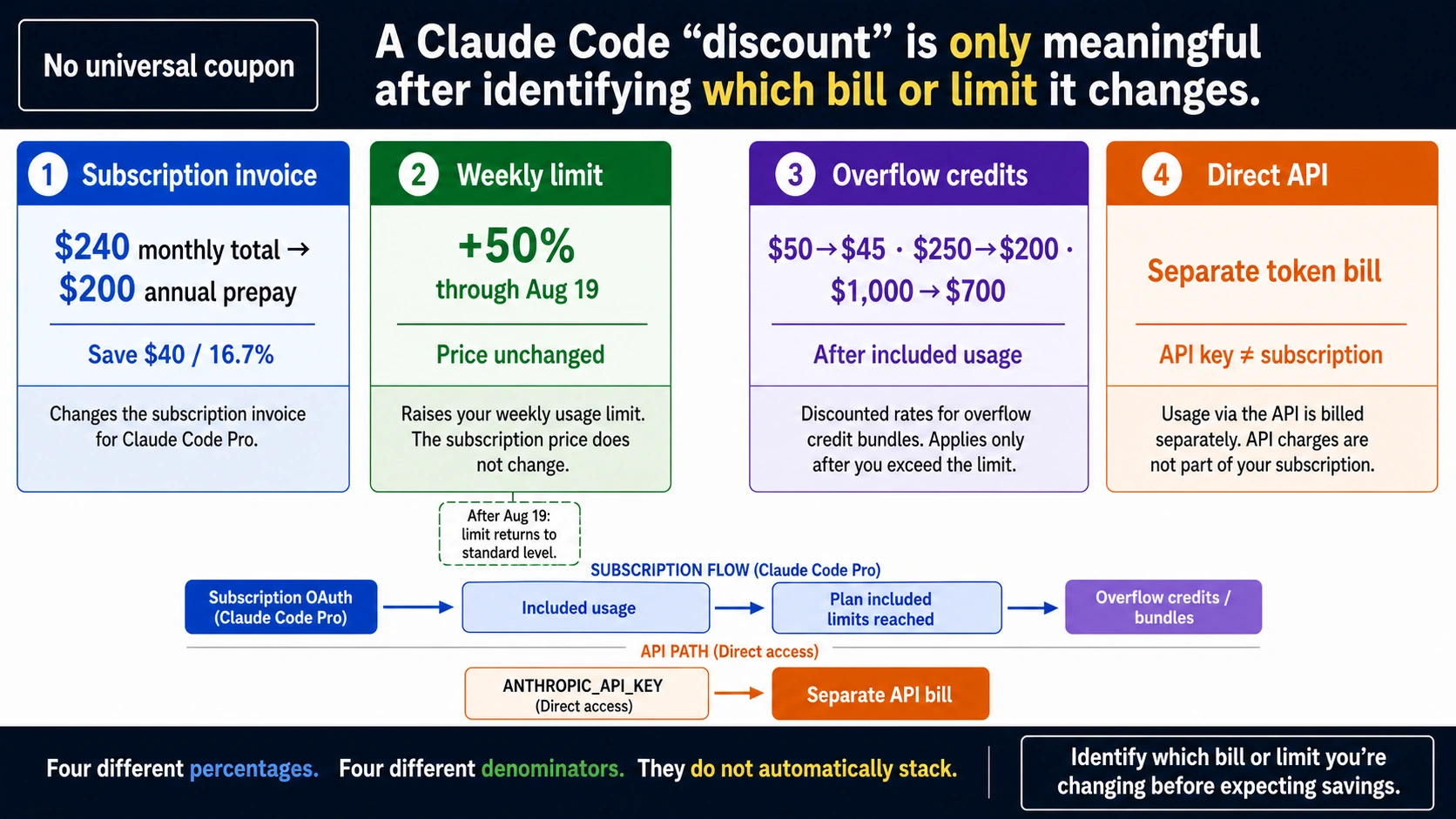
As of July 22, 2026, Anthropic does not publish a universal Claude Code coupon that every account can redeem. The broad offer that is live now is different: eligible Pro, Max, Team, and legacy seat-based Enterprise users automatically receive a 50% higher weekly Claude Code limit through August 19, 2026. It does not reduce the subscription invoice or change the five-hour limit.
For most individual developers who expect to use Claude Code throughout the year, the durable official saving is still Pro annual billing: $200 paid up front instead of $20 × 12 = $240, a $40 or roughly 16.7% reduction before tax. Developers who regularly exceed their included plan usage now have another official option: discounted usage bundles reduce the price of eligible overflow credits by 10%, 20%, or 30%.
Those percentages do not describe the same thing and do not automatically stack. That distinction is the key to finding the cheapest legitimate route.
What is actually available today?
| Offer or route | Status on July 22 | What changes | What does not change |
|---|---|---|---|
| Universal public coupon | Not verified | Nothing unless your account shows an eligible official offer | A referral or Reddit link is not universal proof |
| Pro annual billing | Available | Subscription total falls from $240 to $200 for a year | It is paid up front; included usage is still limited |
| May–August weekly promotion | Live through Aug. 19, 11:59 PM PT | Eligible Claude Code weekly limit increases by 50% | Invoice, five-hour limits, and other Claude products |
| Discounted usage bundles | Available to Pro, Max, and Team | $50/$250/$1,000 credit value costs $45/$200/$700 | The bundle does not replace the paid plan or included usage |
| Targeted new-user promotion | Account-specific | The checkout may reduce an eligible first paid-plan invoice | Prior subscribers and App Store subscribers may be ineligible |
| Enterprise activation credits | Closed to new activation | Credits issued during the window may still be usable | The June 2–July 2 acquisition window has not reopened |
| Direct Claude API | Separate contract | Token, cache, and Batch economics affect API spend | A Pro or Max subscription does not become API credit |
This table is a state ledger, not a promise that your checkout will match the US list price. Billing address, taxes, currency, purchase channel, account history, and country availability can change the final result. The official checkout is the authority for an account-specific promotion.
Four percentages, four different denominators
Most misleading Claude Code “discount” claims omit the denominator. Ask what the percentage is applied to before deciding that one route beats another.
1. Pro annual changes the subscription invoice
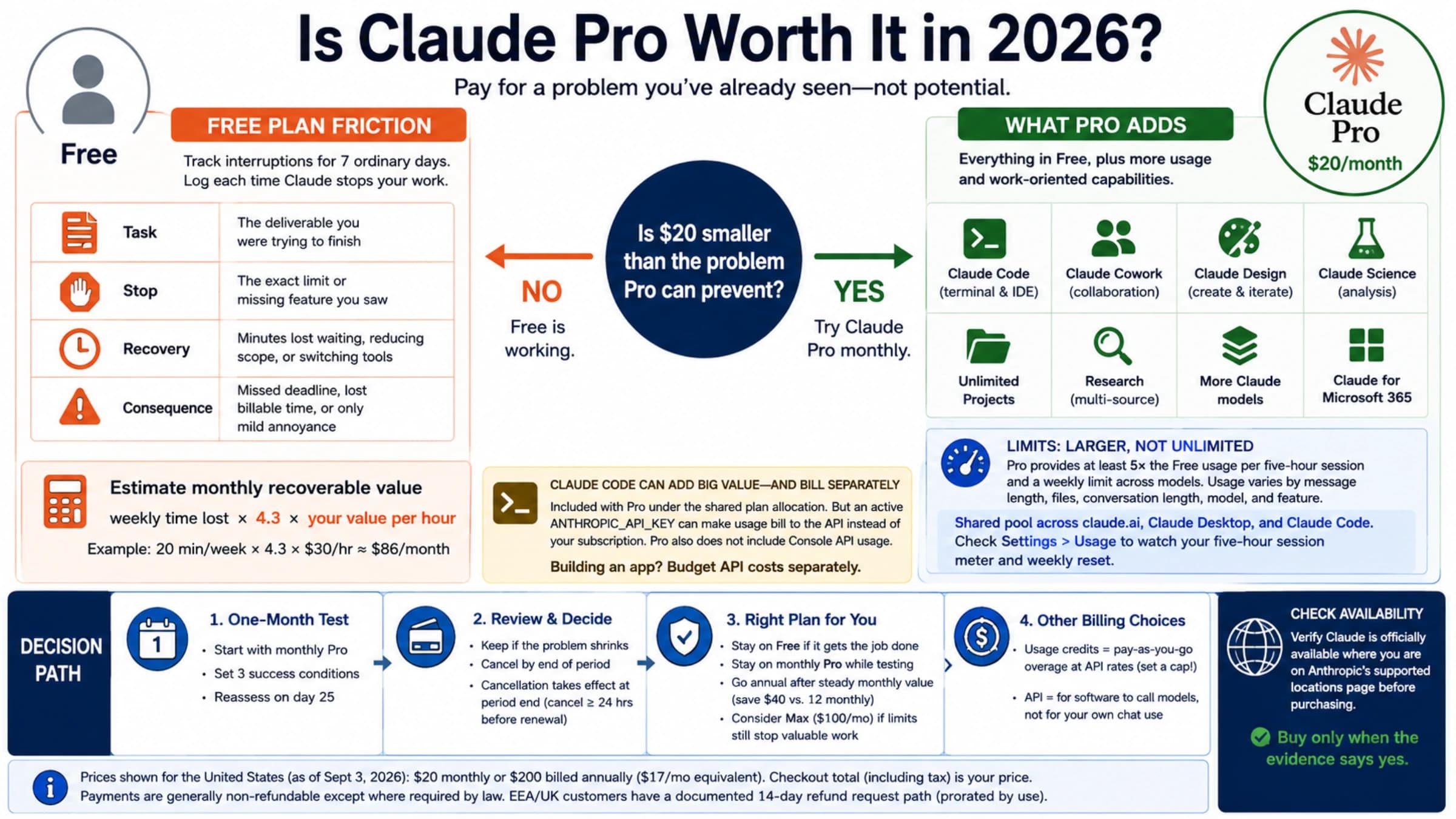
Claude pricing lists Pro at $20 monthly or $200 billed up front annually, displayed as a $17/month equivalent. The calculation is simple:
12 monthly payments: $20 × 12 = $240
Annual prepayment:                $200
US-list saving:                   $40 (16.7%)
The $17 figure is an equivalent, not a promise that Anthropic will charge $17 each month. Annual billing is therefore a good default only if you expect to keep the plan long enough to use the commitment. If you are still testing whether Claude Code fits your work, monthly Pro may be cheaper than prepaying for an unused year even though its unit price is higher.
2. The current promotion changes a weekly ceiling
Anthropic's May–August 2026 promotion terms increase the weekly Claude Code limit by 50% for eligible Pro, Max, Team, and legacy seat-based Enterprise users. It is automatic and applies across Claude Code in the CLI, IDE, desktop app, and web.
It is not “50% off Claude Code.” Free and consumption-based Enterprise plans are excluded. The promotion does not increase five-hour limits, does not affect ordinary Claude chat or Cowork usage, and has no cash value. After August 19 at 11:59 PM Pacific Time, the weekly ceiling is scheduled to return to the normal plan level.
That makes this promotion useful for someone already paying for an eligible plan, but irrelevant to a buyer whose only goal is a smaller invoice.
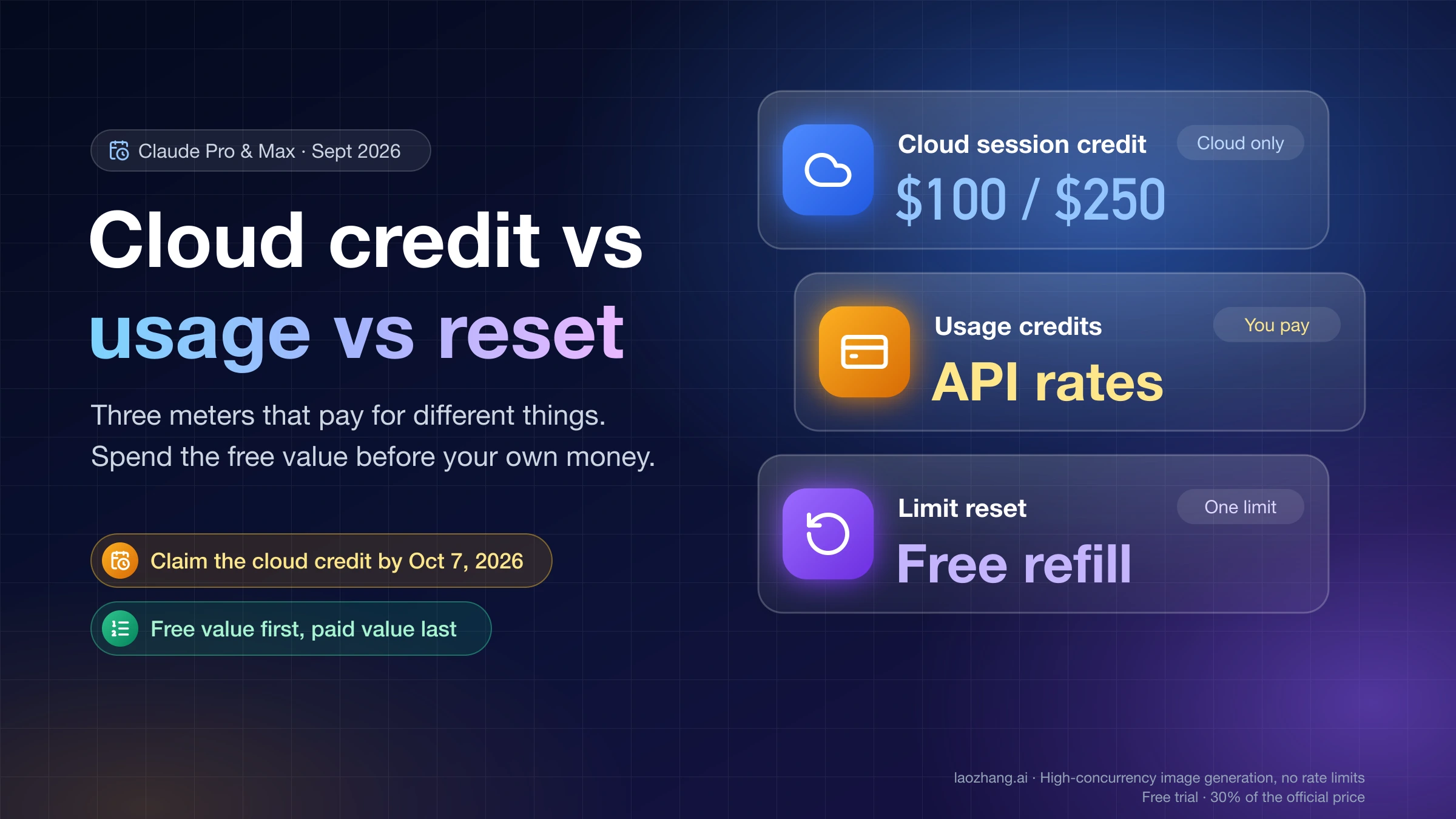
3. Usage bundles change the price of overflow credits
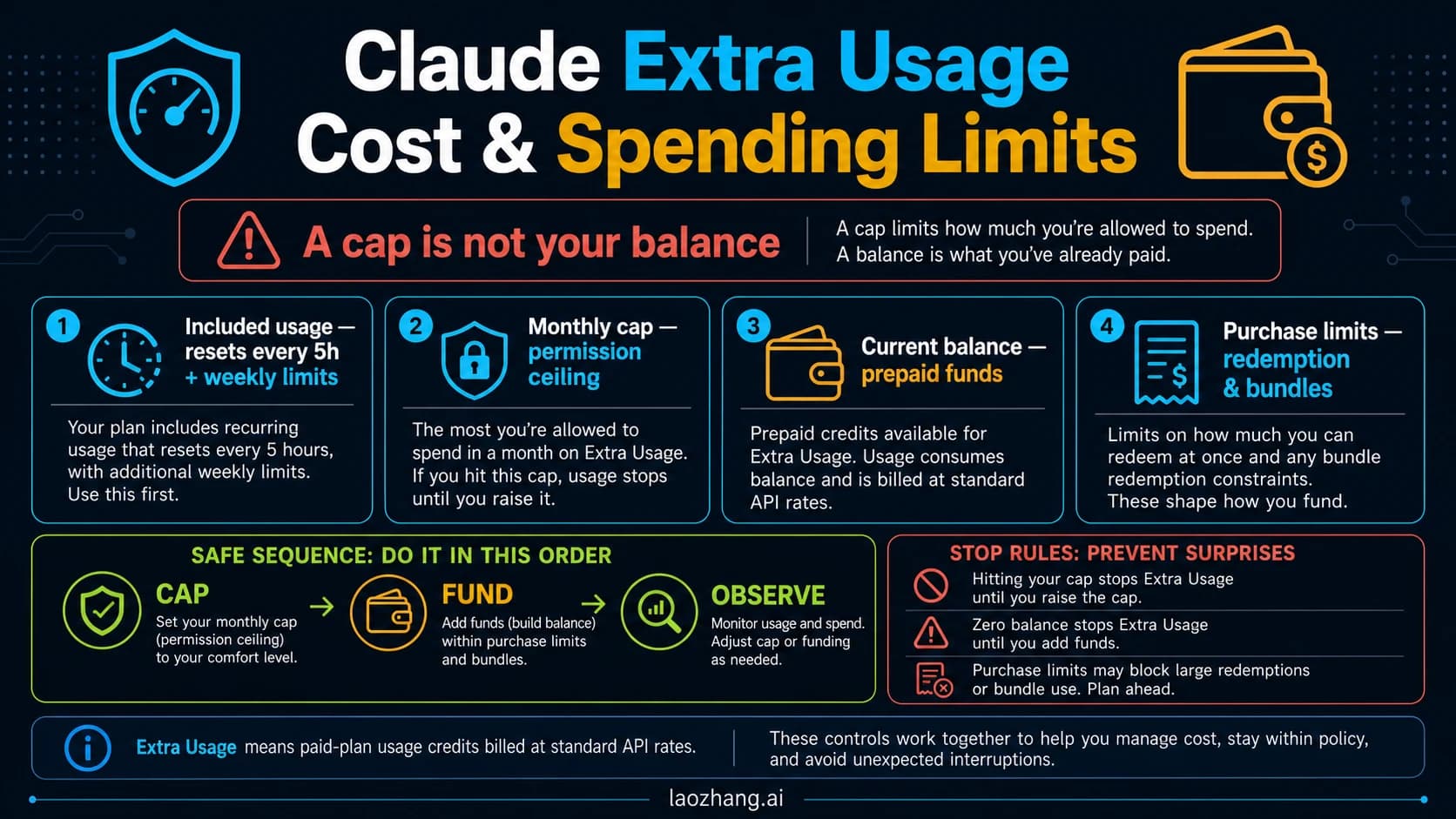
Paid plans include usage. When that included pool is exhausted, eligible users can enable a separate prepaid usage-credit pool. Standard credits are billed at standard API rates and can be controlled with a monthly cap and auto-reload. Claude and Claude Code share that overflow pool.
Anthropic's current usage-bundle terms add a discounted way to pre-purchase that overflow:
| Credit value | Amount paid | Effective price per $1 of value | Discount |
|---|---|---|---|
$50 | $45 | $0.90 | 10% |
$250 | $200 | $0.80 | 20% |
$1,000 | $700 | $0.70 | 30% |
The correct mental model is included plan usage → overflow credits, not “bundle instead of subscription.” A $1,000 bundle is not automatically the best deal: it is only cheaper if you will consume enough eligible overflow before the applicable terms make a smaller commitment more sensible. Individual Pro and Max accounts can buy up to $2,000 in discounted bundle value per month; Team has a $3,000 monthly value cap. Usage beyond the discounted bundle is charged at the standard rate.
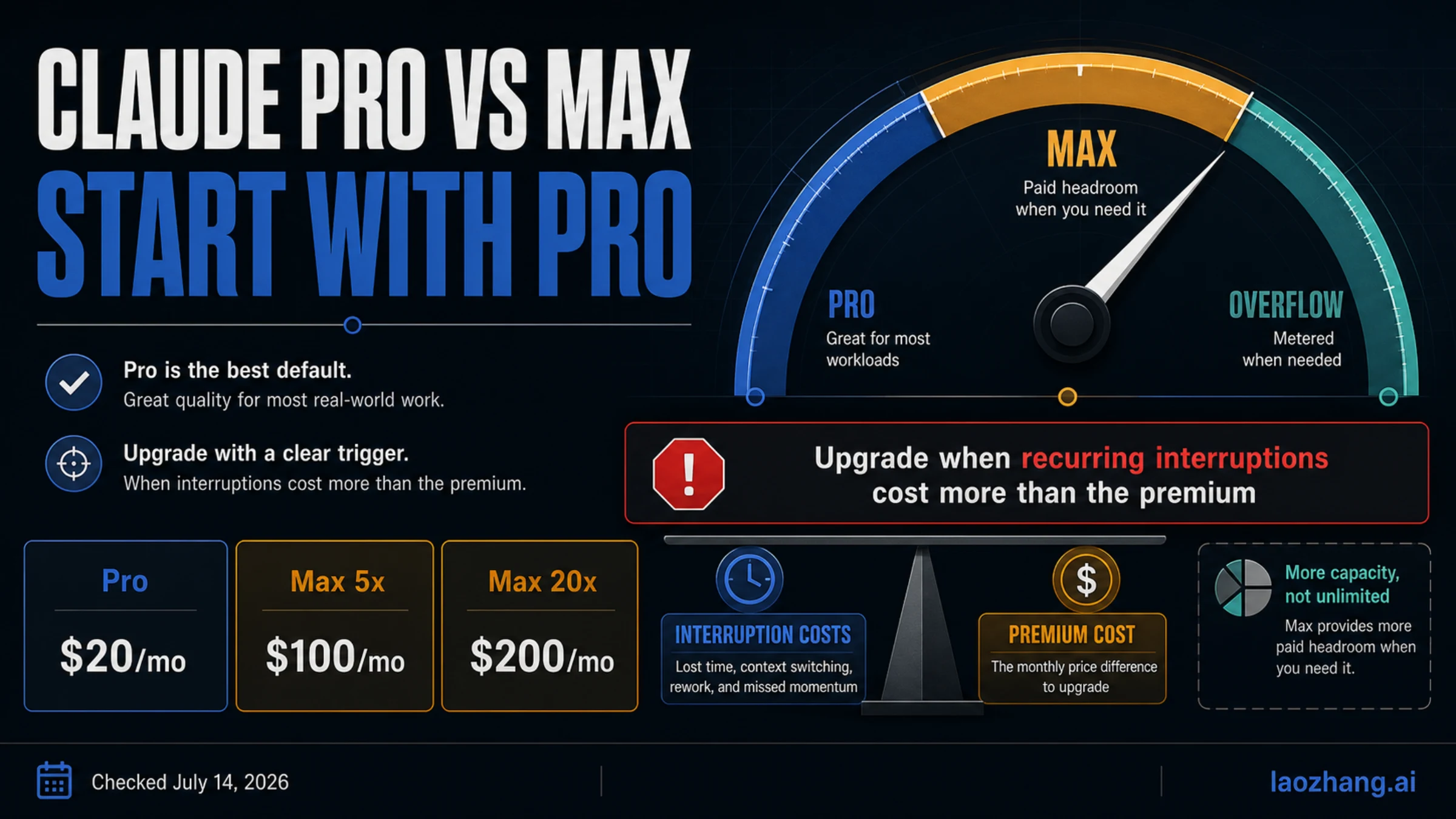
For an occasional release-week spike, standard credits with a strict cap may be safer than prepaying for a large bundle. For predictable recurring overflow, the bundle can lower the marginal cost. If overflow becomes the normal state, compare Max instead of treating credits as a permanent substitute for included headroom. Our Pro vs Max decision guide owns that full comparison.
4. API optimizations change direct token spend
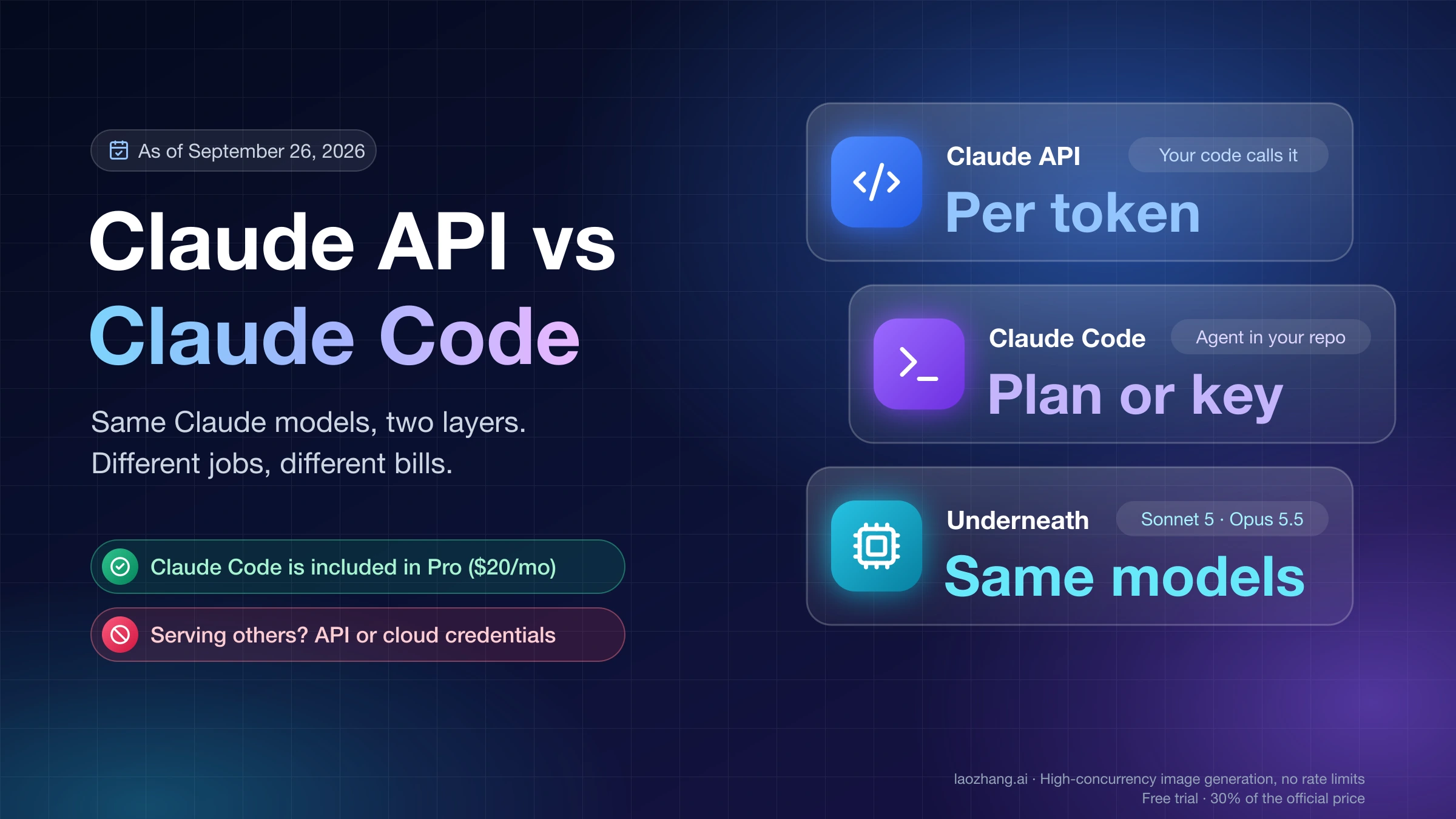
Direct Claude API use is not a subscription discount. It is a separate Claude Platform balance, credential, rate-limit system, and invoice. Current model prices, prompt caching, and the Batch API can reduce an API workload's token bill, but they do not reduce the price of Pro or Max.
For example, Anthropic currently lists Sonnet 5 at an introductory $2 per million input tokens and $10 per million output tokens through August 31, 2026, changing to $3/$15 on September 1. Batch API processing can reduce supported asynchronous API work by 50%; an interactive Claude Code session is not a Batch job. Use the Claude Code pricing guide for the wider plan and API ladder rather than importing API percentages into a subscription decision.
Choose the cheapest route by workload, not by headline
Regular individual use: start with Pro annual
Choose Pro annual when you already know Claude Code is part of your year-round workflow and normal weeks fit inside Pro. It has the lowest published individual annual total and keeps the base bill predictable.
Do not choose it merely because $17 looks lower than $20. If you might cancel after two months, the annual commitment can cost more in total. Also remember that Claude and Claude Code share plan usage; heavy chat use can change how much coding headroom remains.
Bursty work: Pro plus controlled overflow
If most weeks fit Pro but migrations, launches, or incident response occasionally spill over, enable usage credits with a cap you can tolerate. Use a discounted bundle only when the expected overflow justifies prepayment. This is a different recommendation from “buy the biggest bundle because it has the biggest percentage.”
The switch rule is measurable: when overflow is recurring enough that the combination of Pro and credits approaches Max while limits still interrupt valuable work, compare the fixed Max tier. Max offers more headroom, not unlimited usage. The Claude Code rate-limit guide explains the limit windows before you pay for more capacity.
Automation, CI, and products: use the API contract
An application, background agent, CI job, or customer-facing feature should be budgeted as an API workload. Personal subscription OAuth is for normal native Claude Code use, not a credential pool for a third-party service. Build the estimate from the selected model, tokens, caching, workload timing, and spend controls.
That route may be cheaper for a short, tightly controlled job. It may also be much more expensive for a large interactive context. “Pay per token” is a billing model, not a universal bargain.
How to verify a coupon or promotional link
A high-ranking Reddit discussion claims that new users can receive Pro at half price for three months through an acquired link. The original post is deleted, and comments report mixed results across accounts and countries. Anthropic's official coupon eligibility guidance says promotions are generally intended for first-time paid users; active or former paid subscribers may not qualify, and current App Store subscribers cannot use promotions.
Use this checklist instead of trusting a percentage in a search result:
- Open the offer only on an official
claude.ai,claude.com,anthropic.com, orsupport.claude.comdomain. - Confirm the eligible plan, country, account history, purchase channel, start date, end date, renewal price, and cancellation terms.
- Verify that your logged-in checkout actually shows the reduced amount before entering payment details.
- Capture the final total, tax, currency, and renewal cadence. The headline percentage may exclude them.
- Stop if the route requires a shared login, seller-controlled account, session token, proxy credential, or off-platform gift-card claim.
A promotion missing from your checkout is not something a coupon aggregator can override. It may be expired, targeted to a different account cohort, or unavailable through your billing channel.
Education and Enterprise offers are not personal coupons
Claude for Education is an institution-sponsored university plan. Its presence on the pricing page does not prove a universal self-serve student discount. A separate current program, Claude for Teachers, offers verified US K–12 educators free Pro-level features including Claude Code and Cowork, subject to its own sign-up and verification terms. It does not include usage credits. Students should use the Claude student-discount guide to check their institution instead of assuming a GitHub Student Pack or campus email unlocks Claude Code.
The Enterprise promotion has a different boundary. Eligible first-time seats on usage-based Enterprise could receive $1,000 in Claude Code/Cowork credits when they activated between June 2 and July 2. That acquisition window is closed. Credits issued during the window may remain valid for 90 days after issuance, but an unexpired credit is not evidence that a new seat can still qualify.
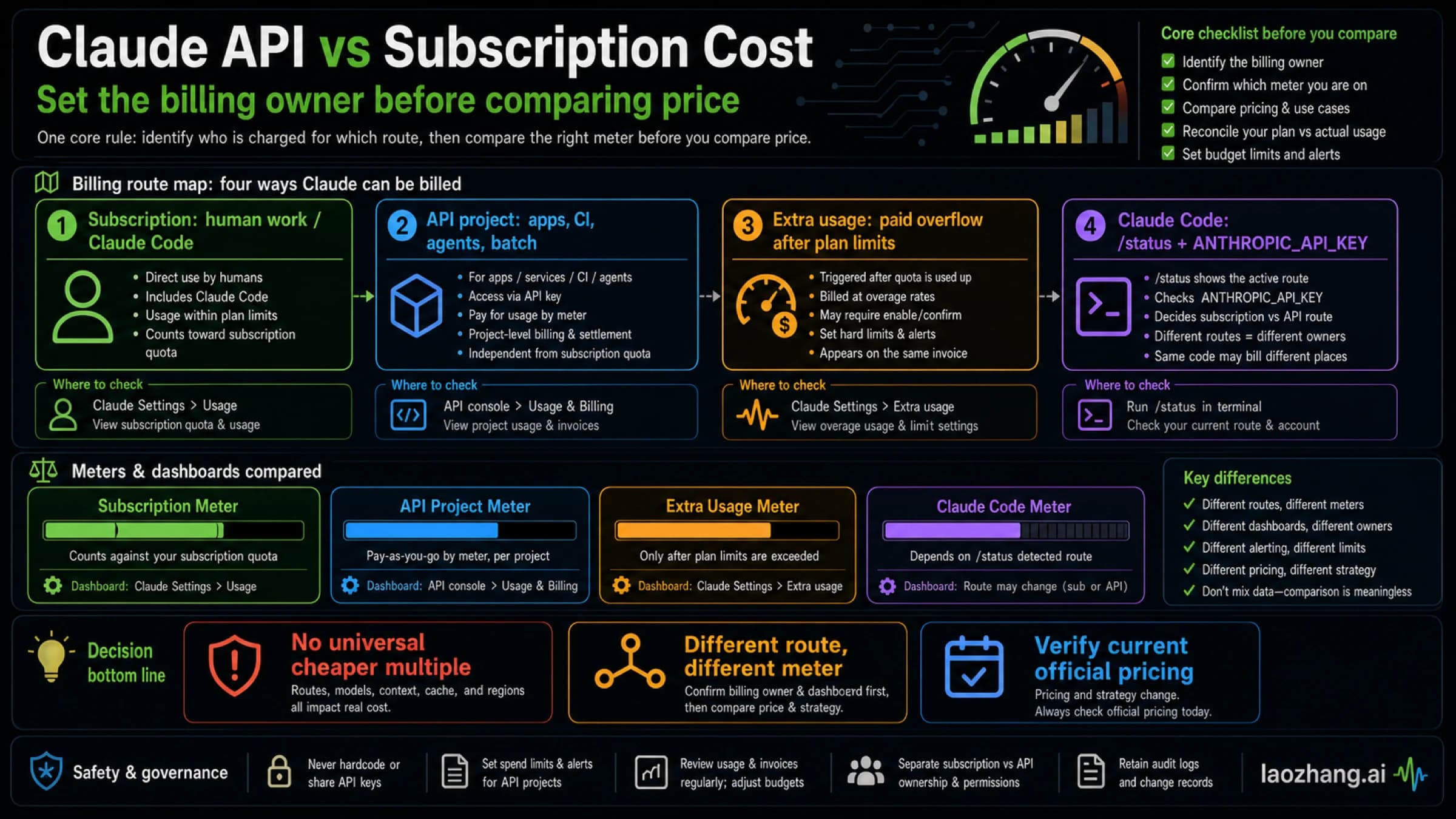
Check which system Claude Code is billing
Before upgrading a plan, confirm the active authentication method. According to the current Claude Code authentication documentation, subscription OAuth is the normal route for Pro, Max, Team, and Enterprise. If ANTHROPIC_API_KEY is present, interactive Claude Code asks for approval and then remembers the API-key precedence; noninteractive claude -p uses the key whenever it is present. Claude Code on the web always uses subscription credentials.
Run /status inside Claude Code to see the active method. A subscription user accidentally operating through an API key can mistake token charges for an expensive plan. Conversely, removing a key from an automation without understanding its intended API contract can break the job. The fix is to choose the correct billing identity, not simply the smaller advertised price. See API key vs subscription billing for the full diagnostic path.
A practical buying rule
Use this sequence before paying:
- Verify access and checkout. Country support, billing channel, tax, and account eligibility come before discount arithmetic.
- Choose the contract. Interactive personal work belongs on Pro or Max; organization seats belong on Team or Enterprise; programs and automation belong on the API.
- Buy the smallest base route that supports normal work. For many individuals, that is Pro.
- Classify overflow. Use capped standard credits for an unpredictable small spike, a discounted bundle for predictable overflow, or Max for recurring heavy work.
- Recheck temporary dates. The weekly-limit promotion ends August 19 unless Anthropic changes the terms; Sonnet 5's introductory API price ends August 31.
- Reject credential shortcuts. Shared accounts, resold logins, proxy OAuth, and unofficial “Claude Code included” claims are separate seller contracts, not Anthropic discounts.
The cheapest legitimate Claude Code route is therefore not one coupon. It is the lowest-cost official contract that matches the work you actually do—and a clear record of which percentage changed which part of the bill.