Claude Mythos API Pricing: 5.1 Rates, Cache Costs, and Access
Mythos 5.1 is invitation-only. Its listed rates are $10 per million input tokens, $50 per million output tokens and $0.25 for cache reads. Compare versions and calculate costs.
On this page
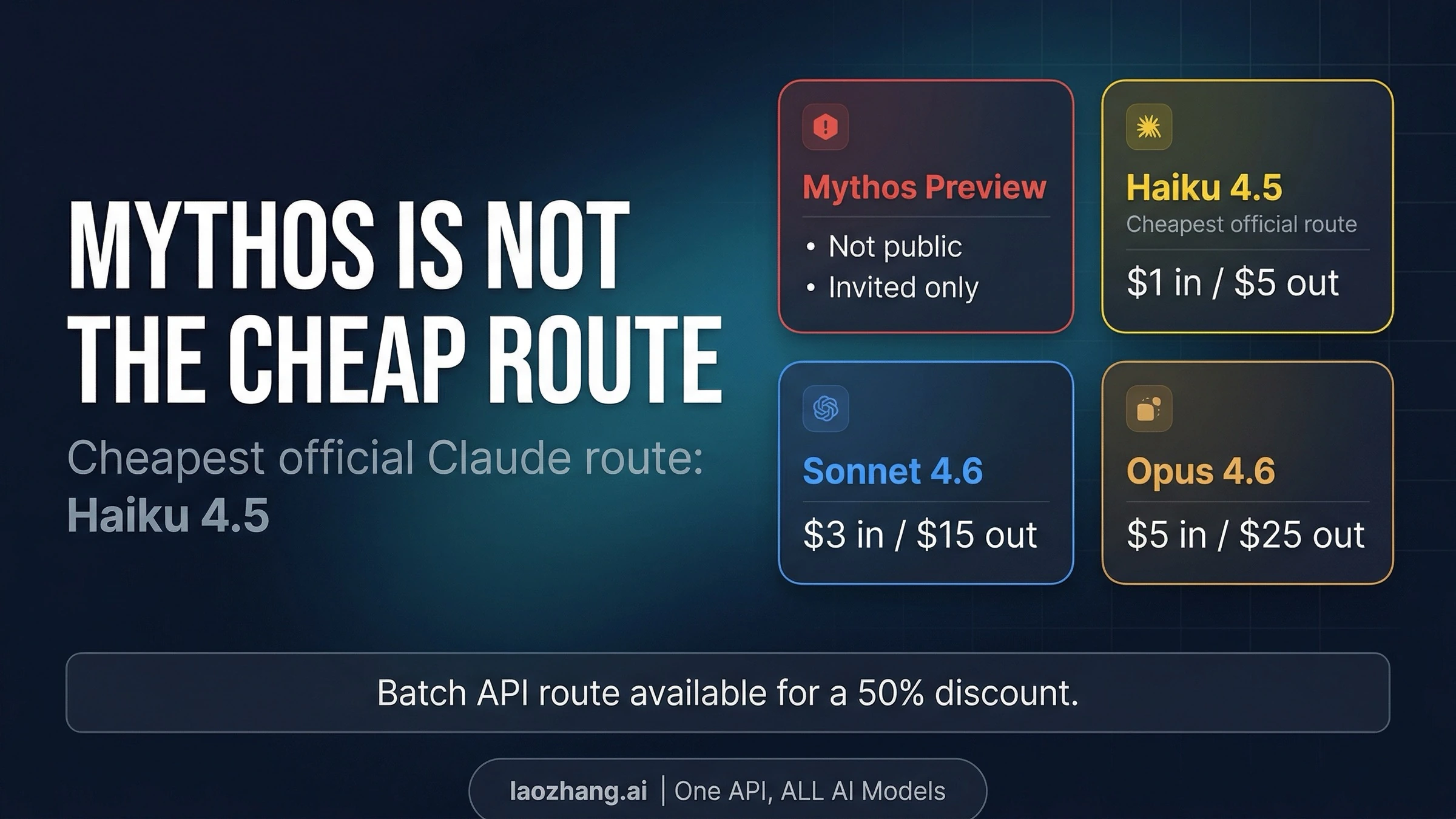
Claude Mythos 5.1 has an API for approved organizations. Its standard price is $10 per million input tokens and $50 per million output tokens; cached input reads cost $0.25 per million tokens. Access remains invitation only through Project Glasswing, so a published price does not mean an ordinary API key can use it. These are the rates and access conditions listed in Anthropic's Mythos 5.1 documentation, checked September 7, 2026.
For an approved buyer, the main cost questions are which Mythos version runs the request, how much input is reused, and how many output tokens the job generates. For someone still seeking access, confirm eligibility before committing to a provider or funding an account. A cheaper offer is useful only if it delivers the model and terms your work requires.
Match the quote to the Mythos version
The original Mythos Preview price still appears in search results alongside newer model prices. They refer to different releases.
| Model | Base input per million tokens | Output per million tokens | How to interpret the price |
|---|---|---|---|
Mythos 5.1 — claude-mythos-5-1 | $10 | $50 | Current version, released September 1, 2026; invite only |
Mythos 5 — claude-mythos-5 | $10 | $50 | Earlier release from June 9, 2026; invite only |
| Original Mythos Preview | $25 | $125 | Historical Glasswing participant pricing after usage credits |
The versioned Mythos 5 documentation and original Glasswing announcement establish the older rows. The Preview announcement did not promise general availability. It should not be used as the current price for every model named Mythos.
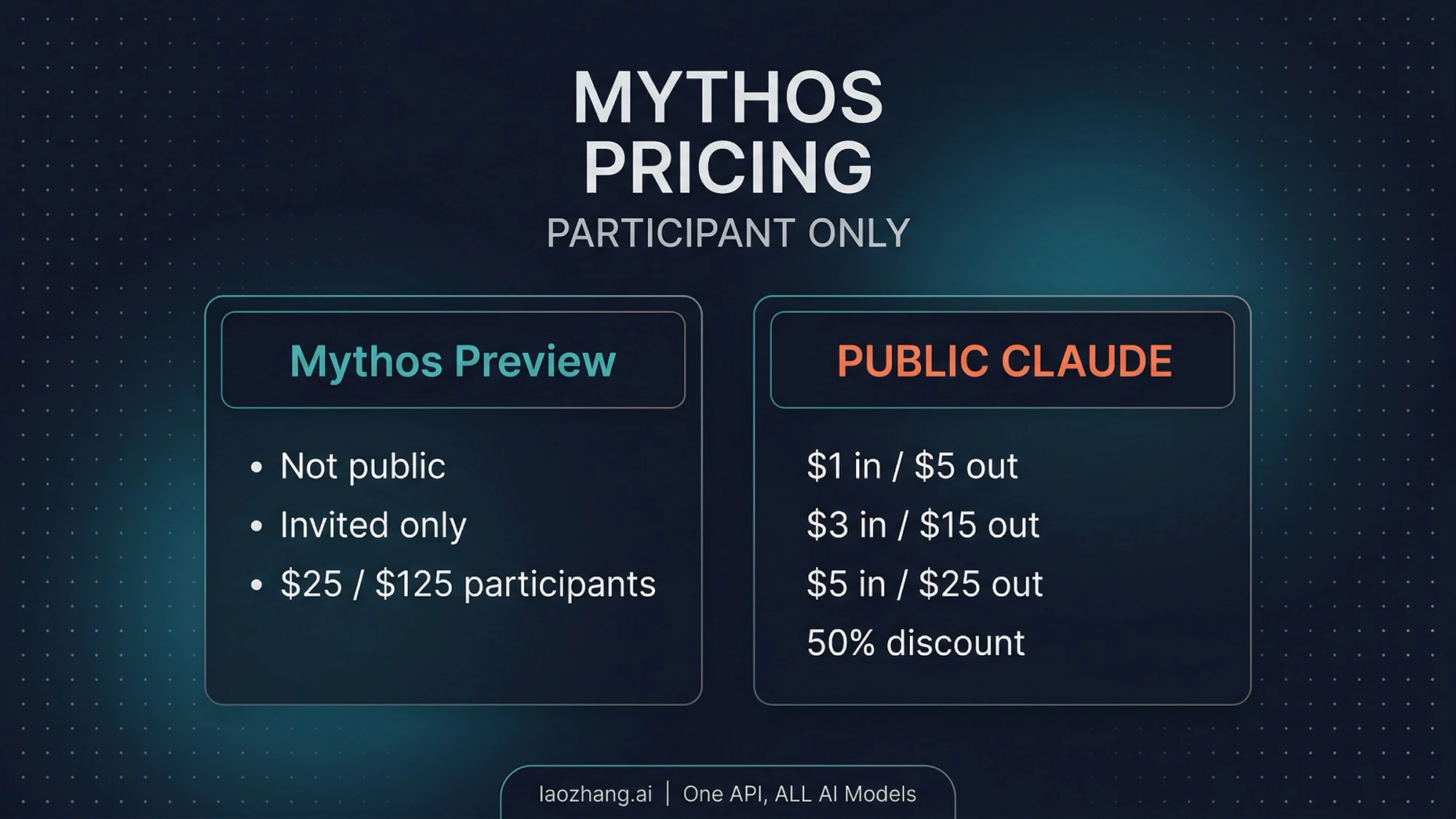
When a calculator or proposal says only “Mythos,” ask for the exact model ID and price schedule. Even 5 and 5.1, which have identical base input and output rates, produce different bills on cache-heavy workloads. An article's recent update date is less useful than a rate tied to the version your requests actually use.
The cache rates that change the bill
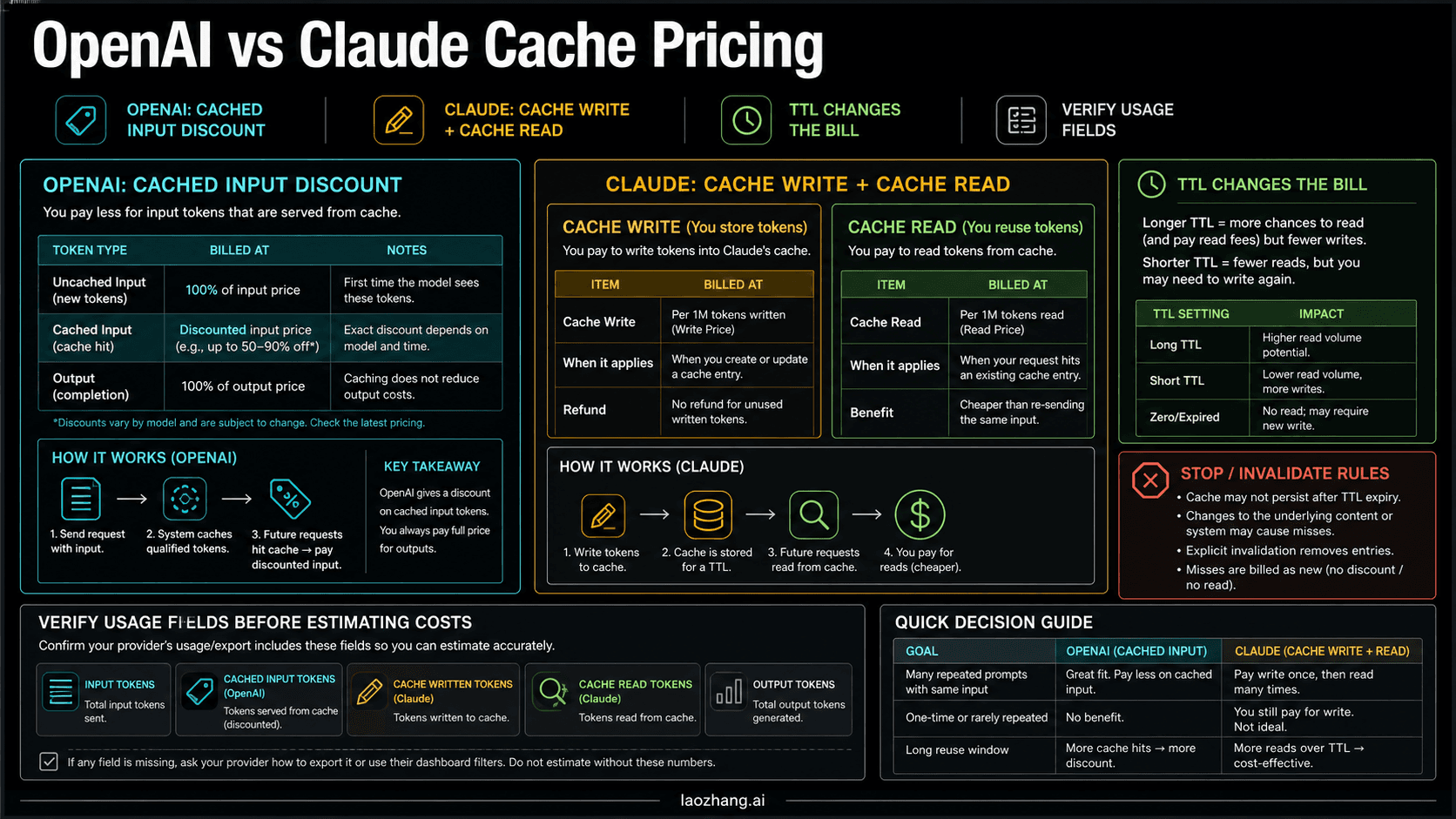
Anthropic's API pricing table separates ordinary input, cache creation, cache reads, and output. Each token category has its own rate; cached tokens should not also be charged as ordinary input.
| Billing category | Mythos 5.1, USD per million tokens | Mythos 5, USD per million tokens |
|---|---|---|
| Ordinary input | $10 | $10 |
| Five-minute cache write | $12.50 | $12.50 |
| One-hour cache write | $20 | $20 |
| Cache read | $0.25 | $1 |
| Output | $50 | $50 |
Writing a cache costs more than processing ordinary input once. The saving arrives when later requests reuse that input. A request can also contain both a cached prefix and fresh input: price the cached part at the read rate and the new part at the ordinary input rate.
For standard Mythos 5.1 usage, this calculation covers those categories:
Cost in USD = (
    ordinary_input_tokens × 10
  + five_minute_cache_write_tokens × 12.50
  + one_hour_cache_write_tokens × 20
  + cache_read_tokens × 0.25
  + output_tokens × 50
) / 1,000,000
Use the token counts reported for each billing category. Do not insert the total prompt length into ordinary_input_tokens and then add the cached portion again. For Mythos 5, replace the cache-read multiplier of 0.25 with 1; the other rates in this calculation stay the same.
A ten-request example you can recalculate
Suppose an application makes ten requests against the same 100,000-token reference document. Each response generates 10,000 output tokens. The first request writes the document into a five-minute cache; the next nine record cache hits within the valid cache lifetime. Assume no additional ordinary input, no batch processing, and no tool charges, regional premiums, or taxes.
These are illustrative calculations from the published rates, not measurements from an API test or customer invoice.
| Scenario | Calculation | Cost |
|---|---|---|
| One request with ordinary input | 0.1 × $10 + 0.01 × $50 | $1.50 |
| First request, creating the five-minute cache | 0.1 × $12.50 + 0.01 × $50 | $1.75 |
| Each subsequent cache hit on Mythos 5.1 | 0.1 × $0.25 + 0.01 × $50 | $0.525 |
| Ten requests on Mythos 5.1, one write plus nine hits | $1.75 + 9 × $0.525 | $6.475 |
| Ten requests on Mythos 5, one write plus nine hits | $1.75 + 9 × $0.60 | $7.15 |
| Ten requests without caching | 10 × $1.50 | $15.00 |
The 5.1 cache-read rate is 75% lower than the 5 rate. The entire ten-request bill falls by about 9.44%, or $0.675, when moving from 5 to 5.1 in this example. Output alone costs $5 across the ten requests, and its unit price has not changed.
This distinction matters when budgeting a migration. A large percentage reduction in one billing category cannot be applied to the full bill. Estimate savings from the cached-input share of your own usage, then check whether response lengths or retries change after the switch.
Choose caching and batch processing around the workload
Cache material that subsequent requests will actually reuse. In the example, a single request costs more with a cache write than without one. If there is no second read, that higher write price buys no token saving.
The one-hour cache has a larger upfront cost than the five-minute cache. It may suit requests spaced farther apart, but the cheaper duration is useful only when later calls produce hits. Check reported cache usage before building a monthly forecast around an assumed hit rate.
For work that can run asynchronously, Mythos 5.1 also lists a 50% Batch API discount on input and output. That brings ordinary batch rates to $5 per million input tokens and $25 per million output tokens. Under the uncached single-request assumptions above, the calculated token cost becomes $0.75. Batch processing changes timing requirements; it does not grant Mythos access. See the model's batch pricing before choosing it for a job.
Can you actually purchase Mythos API usage?
Mythos 5.1 remains a restricted offering. Anthropic's September launch announcement describes access for a set of US organizations, with international expansion planned. An application or a future expansion announcement is not approval for your organization. For current access discussions, Anthropic directs buyers to their Anthropic, AWS, or Google Cloud account team.
If you already have approval, confirm the model version enabled for your account and the billing terms of the platform you will use. If you do not, check the current Mythos 5.1 access requirements with your account team. Buying ordinary Claude API credits does not itself establish Mythos eligibility.
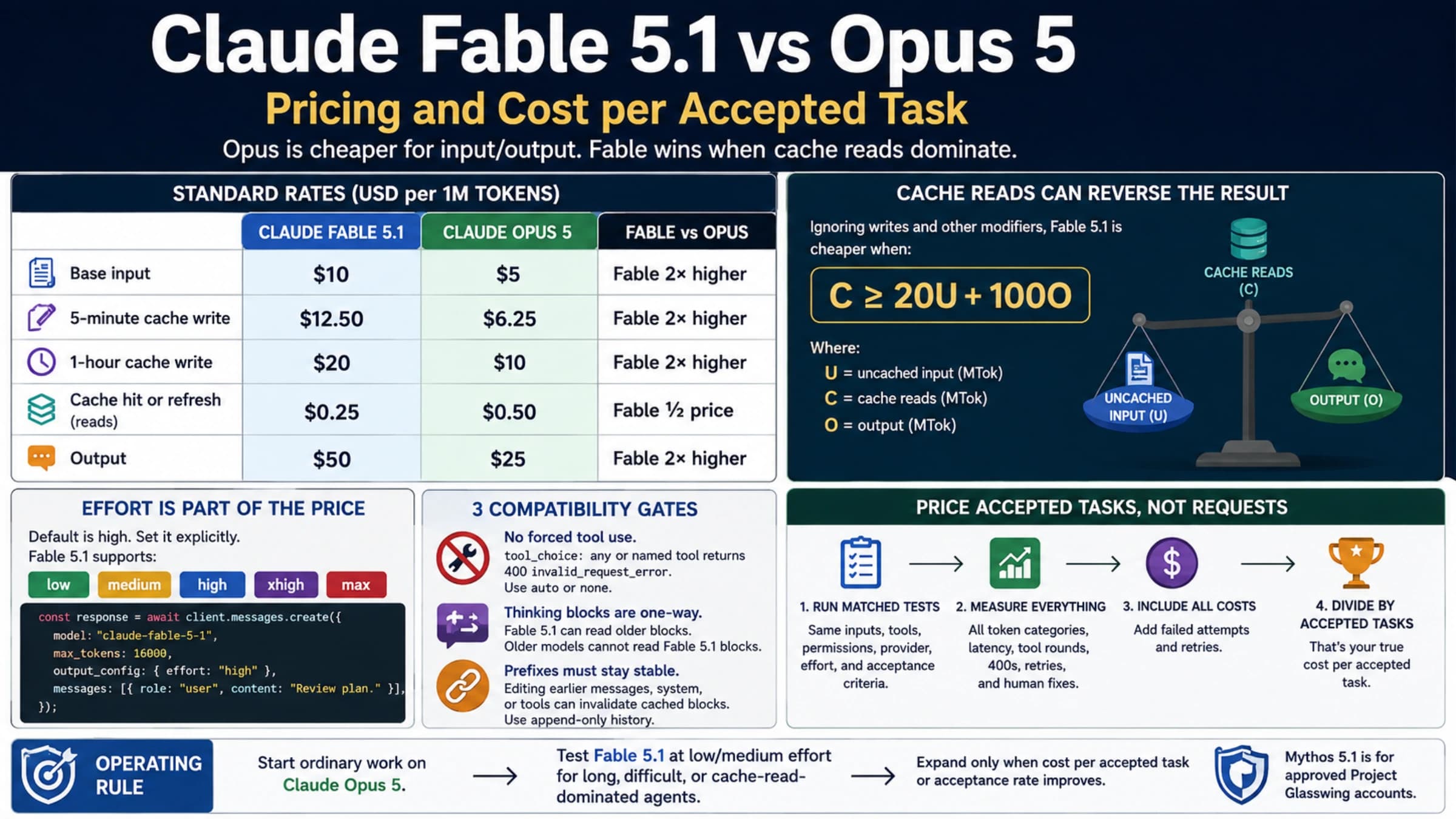
Fable 5.1 is a relevant option for teams that need a generally available model: Anthropic says Fable 5.1 and Mythos 5.1 share the underlying model, with different safeguards. The public model ID is claude-fable-5-1. Availability of Fable does not grant access to Mythos, and an offer for Fable should be labeled as Fable. Whether it fits your application depends on the behavior your task needs, not just the shared base model.
How to judge a cheaper Mythos offer
There is no verified universal cheapest Mythos provider in this comparison. The official prices above are a baseline for evaluating a proposal, not a ranking of resellers.
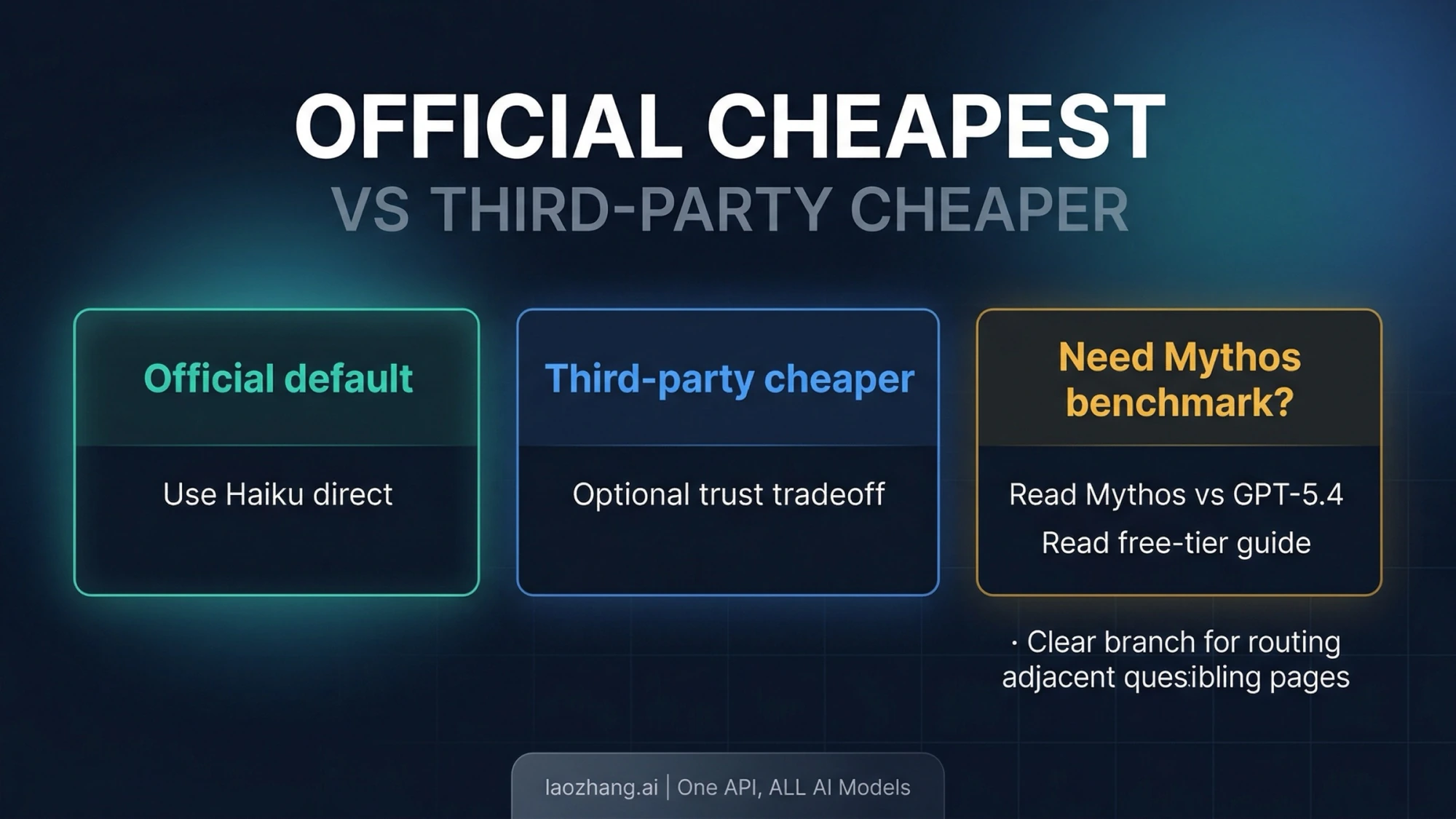
Before comparing headline discounts, get answers to four concrete questions:
- Which model does the offer deliver? Obtain the exact version and identify whether any fallback model can be used. A generic Claude label is insufficient for a Mythos-specific purchase.
- What access is covered? Confirm that the offered service is available for your organization and intended use. A provider's model catalog alone does not answer that question.
- How are tokens billed? Request rates for ordinary input, both cache durations, cache reads, and output. Check whether advertised savings depend on temporary credits or a minimum commitment.
- What is included in the payable amount? Check platform charges, regional requirements, payment fees, and taxes where applicable. Review the provider's own data-handling and support terms rather than assuming they match another service.
Then run the same expected token mix through each quote. A lower input rate can be outweighed by expensive output, missing cache discounts, or more paid retries. Compare cost per successfully completed job once you have enough representative usage to support that comparison.
If the requirement is simply a lower-cost Claude model, Anthropic also lists Opus 5 at $5/$25, Sonnet 5 at $2/$10, and Haiku 4.5 at $1/$5 per million input/output tokens in its current price table. Those are separate capability choices. Evaluate them against your task rather than treating their lower prices as discounted Mythos access.
Common pricing questions
Does a regular Claude API key unlock Mythos 5.1?
No. Mythos access requires approval. The existence of a documented API and price does not make the model available to every account.
Why do some pages still quote $25 input and $125 output?
Those figures come from the original Mythos Preview participant pricing. Mythos 5 and 5.1 have their own $10/$50 base rates. Check the version before using an older quote in a budget.
Does the 75% cache discount mean my Mythos bill drops 75%?
No. It describes the cache-read unit price change from $1 to $0.25 per million tokens. Ordinary input, cache writes, and output have unchanged rates between 5 and 5.1. The ten-request example above shows why the overall saving can be much smaller.
Is there a free Mythos API tier?
The original Glasswing announcement included usage credits for participants. That is not a general free tier that anyone can claim. Confirm any credit allocation with the account team; for the separate question of ordinary Claude starter credits, see Claude API free-tier options.
Sources5
External pages this guide links to, in the order they appear. Last updated Sep 8, 2026.
Sources5
External pages this guide links to, in the order they appear. Last updated Sep 8, 2026.
- 1.Mythos 5.1 documentationplatform.claude.com/docs/en/models/mythos-5-1/overview
- 2.Mythos 5 documentationplatform.claude.com/docs/en/models/mythos-5/overview
- 3.original Glasswing announcementanthropic.com/glasswing
- 4.API pricing tableplatform.claude.com/docs/en/about-claude/pricing
- 5.September launch announcementanthropic.com/claude-fable-and-mythos-5-1