If you live in a country where OpenAI does not support direct payment -- such as China, Iran, or certain other restricted regions -- subscribing to ChatGPT Plus means tackling one core challenge: payment. As of February 2026, the most reliable method is Apple Gift Cards (roughly $26/month including Apple's 30% commission), while the most hassle-free option is a third-party reseller service (around $20.50/month). Meanwhile, OpenAI's newer ChatGPT Go plan ($8/month) may be all many users actually need, making the $20 Plus subscription unnecessary. This guide compares 6 viable payment methods in detail, breaking down the true cost, step-by-step instructions, and safety risks of each approach to help you find the best fit.
TL;DR
Need to make a quick decision? Here is the core comparison of all 6 methods (based on real-world testing in February 2026, prices include fees and exchange rate fluctuations):
| Method | Monthly Cost | Difficulty | Safety | Rating |
|---|---|---|---|---|
| Apple Gift Card | ~$26 | Medium | Very High | 5/5 |
| Virtual Credit Card | ~$21.50 | Higher | High | 4/5 |
| Third-Party Reseller | ~$20.50 | Very Low | Medium | 3/5 |
| Account Sharing | ~$7 | Low | Lower | 2/5 |
| Google Play | ~$20 | Medium | High | 3.5/5 |
| Stripe Link + Dual-Currency Card | ~$20 | High | Medium-High | 3/5 |
If you are in a hurry: choose Apple Gift Cards for maximum reliability, use a reseller for maximum convenience, or consider ChatGPT Go ($8/month) if budget is a priority. The rest of this article provides detailed walkthroughs, hidden costs, and lessons learned for each method.
ChatGPT Plus 2026 Pricing and What Has Changed

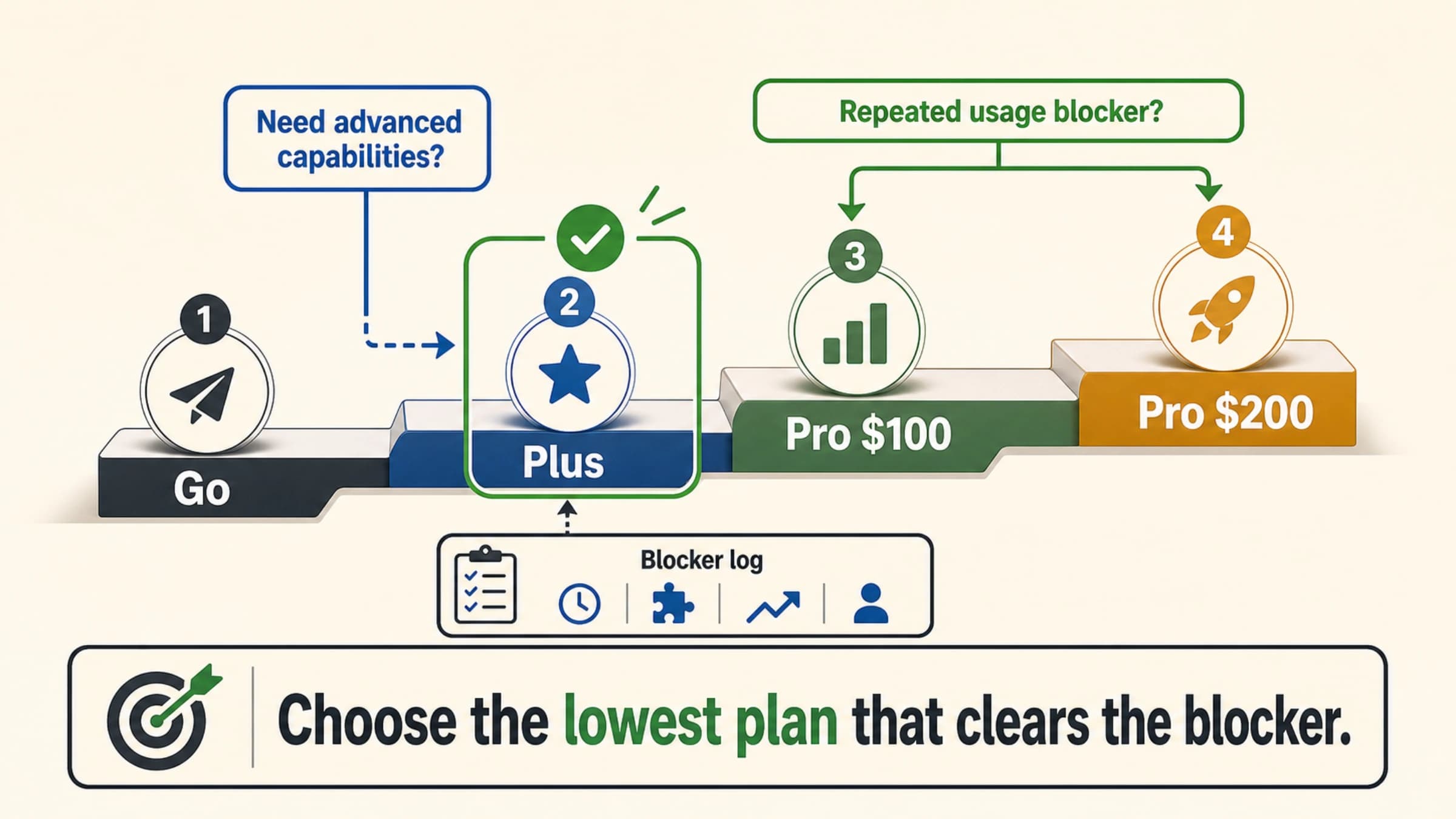
OpenAI's product lineup has changed significantly in 2026. Unlike 2024, when only Free and Plus tiers existed, ChatGPT now offers a complete four-tier matrix: Free, Go, Plus, and Pro (verified on OpenAI's official website, February 22, 2026). This shift directly affects your subscription decision, because you may discover that you do not actually need to spend $20/month on Plus.
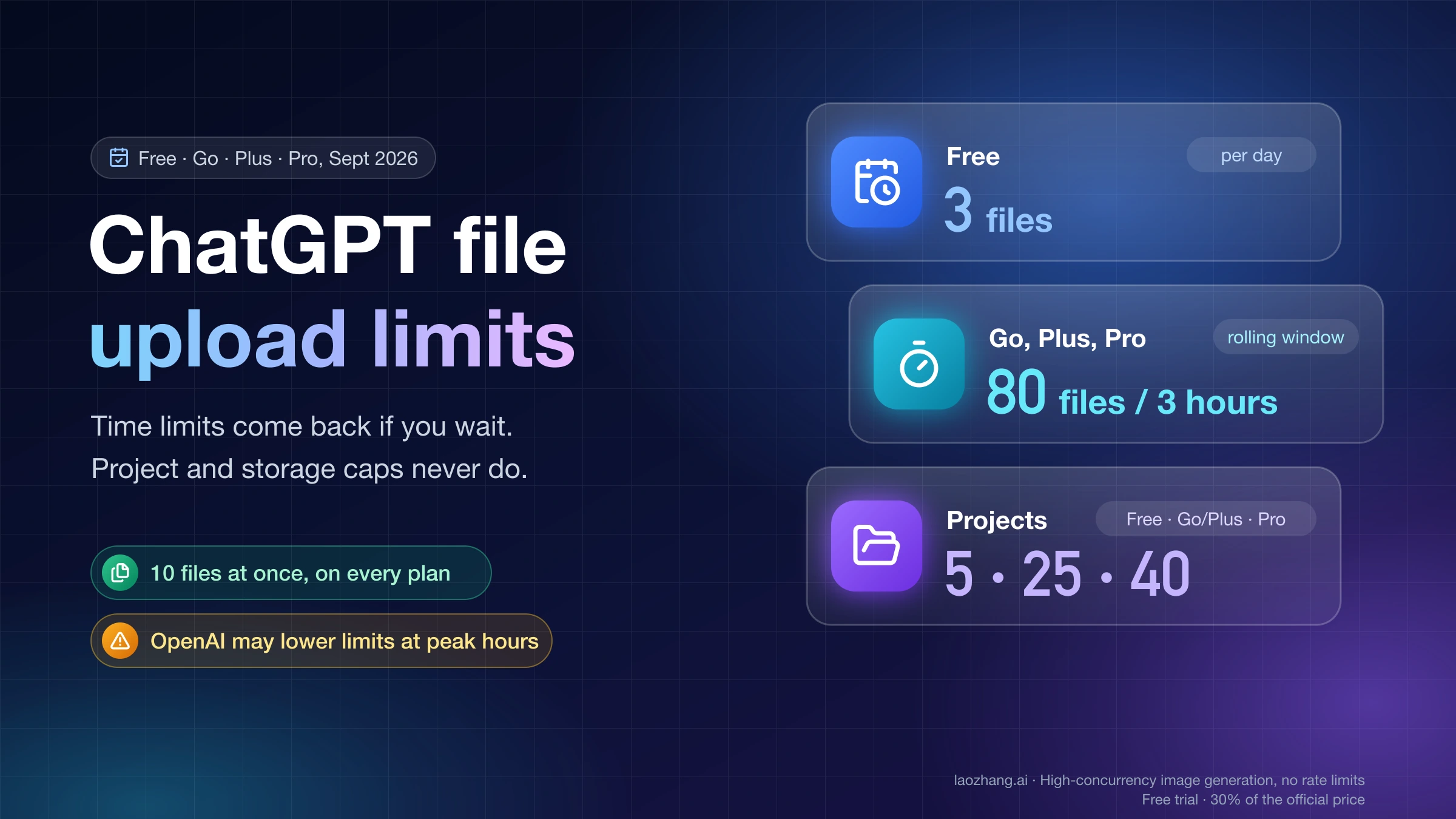
ChatGPT Go was first launched in August 2025 in the Indian market, then expanded globally to over 170 countries by late 2025. Priced at $8/month, it provides access to an extended version of GPT-5.2 Instant, 10x the message allowance of the Free tier, and supports file uploads and image generation. However, Go does not include GPT-5.2 Thinking (the deep reasoning model), which means users who need complex logical reasoning, code debugging, or academic analysis still require Plus or Pro. If you are unclear about the actual usage limits of ChatGPT Plus, it is worth reviewing the specific quotas for each tier first.
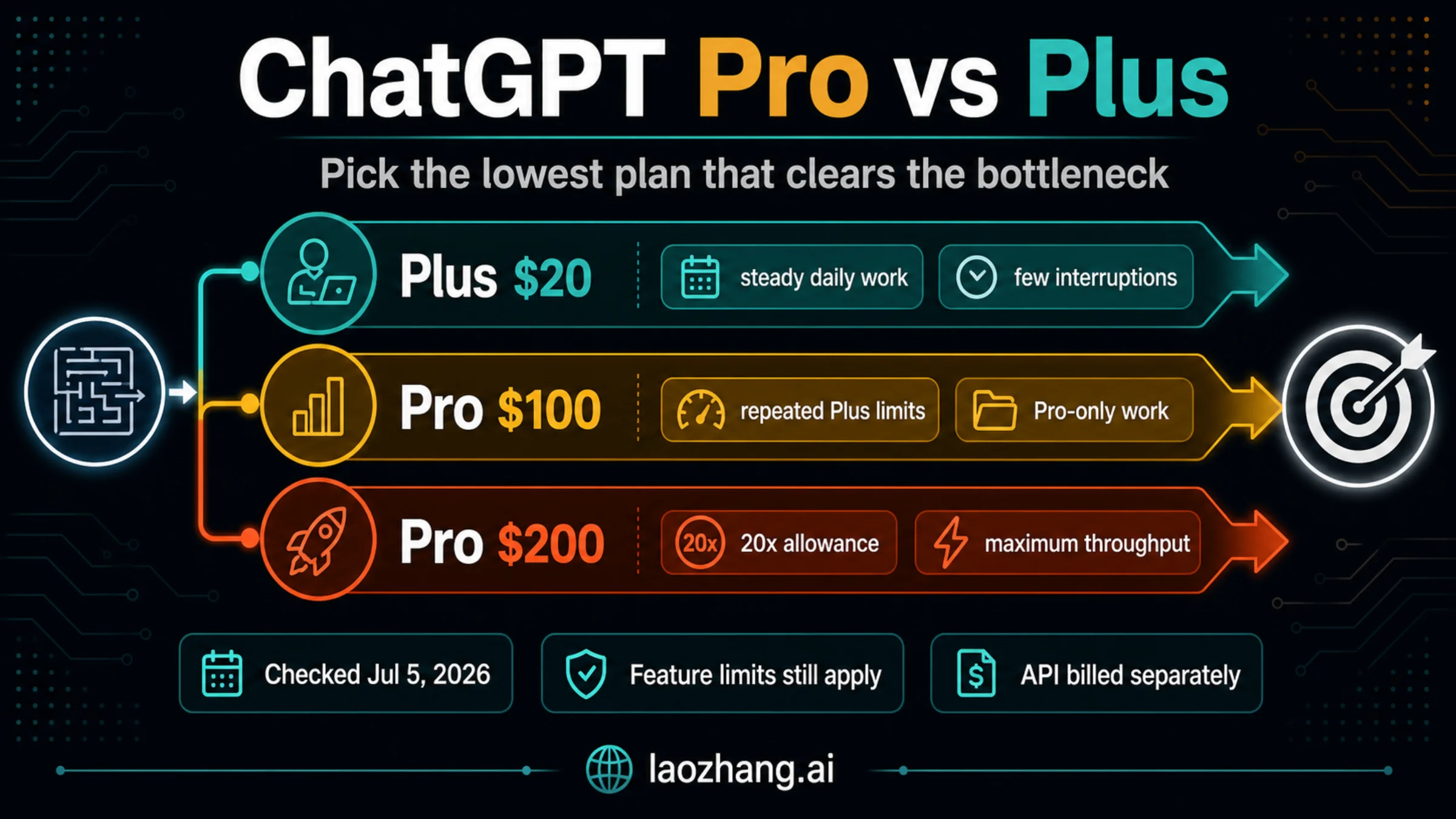
The Plus plan remains at $20/month, but its features have been substantially upgraded. Plus subscribers now get access to GPT-5.2 Thinking Extended (deep reasoning capabilities), advanced data analysis, image creation and Sora video generation, enhanced memory features, and priority access during peak hours. For users who need AI to assist with work and study, Plus remains the best value option. The Pro plan is designed for researchers and professional developers -- at $200/month, it provides GPT-5.2 Pro professional reasoning and unlimited GPT-5.2 access, which most regular users simply do not need.
It is worth noting that OpenAI discontinued regional discount pricing in 2025. Previously, many users enjoyed cheaper subscriptions by registering accounts in Turkey, Argentina, and similar low-cost regions (where Plus could cost as little as ~$10/month). This workaround was shut down across the board in mid-2025, with all regions now standardized at $20/month. This change means there is no longer a shortcut through "registering in a cheaper region," making your choice of payment channel all the more important.
Looking at the bigger picture, OpenAI is using product tiering (Go/Plus/Pro) to serve users at different price points. For most users in restricted payment regions, the key decision boils down to this: do you need GPT-5.2 Thinking's deep reasoning (requires Plus), or is GPT-5.2 Instant's everyday conversational ability (Go is enough) all you need? The detailed breakdown of 6 payment methods below will help you find the most cost-effective payment path once you have determined your needs.
Method 1: Apple Gift Card (Rating: 5/5)
Apple Gift Card top-up is currently the most reliable and safest way to subscribe to ChatGPT Plus from restricted regions, particularly suited for iPhone or iPad users. This method works by adding balance to a US Apple ID, then completing the subscription through the iOS ChatGPT app's in-app purchase -- the entire process goes through Apple's official payment channel, carrying zero risk of account bans.
The core process involves three steps. First, set up a US Apple ID -- if you do not have one already, you can register directly on Apple's website (appleid.apple.com), choosing a sales-tax-free US state (such as Oregon, Montana, or Delaware) to avoid extra state sales tax. Second, purchase a US Apple Gift Card -- the recommended options are buying directly from Apple's website (the gift cards page) or purchasing physical cards or redemption codes from trusted retailers. Third, log in with your US Apple ID on your iPhone or iPad, open the ChatGPT app, navigate to the subscription page in settings, and select the Plus plan to complete your subscription.
Regarding costs, Apple's 30% platform commission deserves special attention. When subscribing to ChatGPT Plus through the App Store, Apple takes a 30% cut, meaning you actually pay $26 instead of $20. Add in the exchange rate premium when purchasing gift cards (typically 3-8% above market rate), and the total cost comes to approximately $24-26/month. While this makes it the most expensive of the 6 methods, its advantages are clear: absolute security (official Apple channel with zero risk of stolen cards), simplicity (set up once and auto-renew), and buyer protection (issues can be resolved through Apple's refund system).
There are a few pitfalls to avoid: do not buy suspiciously cheap gift cards from unofficial sources -- these may have been purchased with stolen credit cards, and Apple could claw back the balance after redemption, leaving your account in debt. It is best to buy cards in $25 or $50 denominations to maintain a buffer against exchange rate fluctuations that could cause renewal failures due to insufficient balance. If you encounter a "purchase cannot be completed" error, check that your Apple ID payment information is complete -- sometimes you need to add a US address to your account before subscriptions will go through.
Method 2: Virtual Credit Card (Rating: 4/5)
Virtual credit cards are the mainstream way for users in restricted regions to subscribe to ChatGPT Plus directly through OpenAI's website. After WildCard announced the shutdown of its service in July 2025 (it later relaunched under the 9191.ai brand but discontinued virtual card number services), users needed to turn to alternative virtual credit card platforms. As of February 2026, actively operating platforms include BinPay, PokePay, and DogPay.
These virtual credit card platforms all work on the same principle: you top up your account with local currency or USDT, the platform generates a US-based virtual Visa or Mastercard number, and you use that card number to complete your subscription on OpenAI's website. The critical factor in this process is Stripe's payment verification -- OpenAI uses Stripe as its payment processor, and Stripe strictly checks that the IP address matches the credit card's billing address. Therefore, you must use a US IP address (a US West Coast node is recommended) and enter a US billing address that matches your virtual card when subscribing.
Here is a fee comparison of three major platforms: BinPay charges a one-time card issuance fee of 50 USDT, a top-up fee of 0.7%, no monthly fee, and cards are valid for two years. PokePay charges $5 for card issuance, a top-up fee of roughly 1% plus $1 per transaction, also with no monthly fee. DogPay charges 5 USDT for card issuance, a top-up fee of about 1% plus $0.3 per transaction. Overall, subscribing to ChatGPT Plus via virtual credit card costs approximately $20-23/month ($20 subscription + top-up fees + exchange rate spread), with the one-time card issuance fee added in the first month.
For a step-by-step walkthrough using BinPay as an example: register an account and complete KYC verification (typically requiring an ID document and facial recognition), top up at least 30 USDT, apply for a Visa virtual card, retrieve the full card number, expiration date, and CVV from the card details page, then go to chat.openai.com, log in, select the Plus plan under Settings > Subscription, and enter your virtual card information to complete payment. If your payment is declined, you can refer to the complete guide to resolving ChatGPT payment failures to troubleshoot the specific cause -- it is usually an IP address or billing address mismatch.
The main advantage of the virtual credit card approach is that you subscribe directly on OpenAI's website, maintaining full control of your account. You can cancel auto-renewal at any time, and there is no risk from third-party access to your account. The downside is the higher technical barrier -- you need to handle a VPN connection, USDT top-ups, and KYC verification, which may not be ideal for less technical users.
Method 3: Third-Party Reseller Platforms (Rating: 3/5)
Third-party resellers are currently the most hassle-free way to subscribe to ChatGPT Plus from restricted regions. The entire process typically requires only your ChatGPT account email, a payment via local payment methods, and a 10-30 minute wait for the subscription to be activated. Pricing is also competitive -- mainstream reseller platforms charge between $19-24/month for a dedicated Plus account, which is $2-6 cheaper than the Apple Gift Card route.
The way reseller platforms work is straightforward: the platform operator maintains overseas payment channels (bulk virtual credit cards, corporate accounts, or US bank accounts) and uses economies of scale to reduce the per-subscription cost. Some platforms also offer "pre-made accounts" -- selling ChatGPT accounts that already have Plus activated, priced at roughly $20-21/month. However, it is important to understand that the reseller market is unregulated, and choosing poorly can expose you to the risk of stolen card payments. A "stolen card" scenario means the platform used a fraudulently obtained credit card to complete your subscription. Everything appears normal in the short term, but when the original cardholder disputes the charge with their bank, OpenAI receives a chargeback and may freeze your account.
How do you identify a trustworthy reseller? Consider these criteria: first, check how long the platform has been operating -- those with at least six months of history tend to be more reliable. Second, confirm whether the platform offers post-sale guarantees, such as "full refund if top-up fails" and "compensation if your account is banned due to platform error." Third, look at the payment methods -- platforms that support official escrow through mainstream payment processors are safer than those accepting only cryptocurrency transfers. Fourth, search for the platform name along with terms like "scam" or "shutdown" to check for negative feedback.
The core risk of the reseller approach is that you need to provide your ChatGPT account login credentials (at minimum, your email) to the platform. While legitimate platforms claim they do not retain your account information, this trust is based on commercial reputation rather than any technical guarantee. If your ChatGPT account contains sensitive conversations or files, you should think carefully before proceeding. For users who do not mind the privacy trade-off and simply want the fastest path to Plus features, reseller services are genuinely the most efficient option.
Method 4: Account Sharing (Rating: 2/5)
Account sharing is the cheapest option among all payment methods, with monthly costs typically ranging from $3.50-10.50 -- just one-quarter to one-third the price of a dedicated Plus subscription. The concept is simple: multiple users share a single ChatGPT Plus or Team account and split the subscription fee. Shared arrangements in the market come in two main forms: purchasing a "shared seat" through dedicated sharing platforms, or organizing a group buy through social media communities.
The limitations of account sharing are significant and should be fully understood before committing. First, there is the concurrent usage problem: a ChatGPT Plus account only allows one device to be logged in at a time, meaning you may be kicked offline by another user during peak hours, resulting in a poor experience. Second, quota sharing is a concern: Plus message quotas are allocated per account, not per user, so five people sharing one account means each person only gets one-fifth of the quota. Third, there are serious privacy implications: sharing means your conversation history is visible to the account administrator (and potentially other shared users), making it unsuitable for any conversations containing personal or commercially sensitive information.
From a financial perspective, account sharing looks like a bargain on the surface, but when you factor in the usage restrictions and calculate the "cost per hour of actual usable time," the value proposition weakens considerably. Taking a $7/month shared price and 20% actual availability as an example, the effective cost for dedicated access works out to $35/month -- far more than the $20-23 cost of subscribing to Plus directly. Account sharing is truly suitable for one scenario: you occasionally need Plus features (perhaps two or three times a week), the Free tier is sufficient for your daily needs, and you only require GPT-5.2 Thinking's deep reasoning capabilities in specific situations.
If you do decide on account sharing, prioritize ChatGPT Team plan shares ($25/user/month), because the Team plan natively supports multiple simultaneous users -- eliminating the "kicked offline" problem -- and the enterprise tier does not use user data for model training by default, providing better privacy protection. However, Team plan shares are priced higher accordingly, typically at $8.50-10.50/month.
Method 5: Google Play In-App Purchase (Newer Method)
Google Play in-app purchase is a payment method that emerged in 2026, suited for Android users. Similar to the Apple Gift Card approach, this method completes the ChatGPT Plus subscription through the Google Play Store's in-app purchase system. Unlike iOS, however, Google Play reduced its commission rate from 30% to 15% for subscription apps in late 2025, making the Google Play route approximately 10-15% cheaper than the Apple channel.
The key to this process is having a US Google account with a Google Play payment method configured. The specific steps include: switching to the US Google Play Store on your Android device (requires a US IP and a US Google account), adding a payment method (Google Play gift cards or a virtual credit card), downloading or updating the ChatGPT app, and completing the Plus subscription within the app. Google Play gift cards can be purchased on Amazon.com or through Google's official channels.
On the cost side, since Google Play charges only 15% commission on subscription apps, the actual payment through this channel comes to about $23, and with gift card premiums factored in, the total cost is approximately $20-22/month -- roughly $4-6 cheaper than the Apple route. However, note that many Android devices sold outside the US may not come with Google services pre-installed. You may need to manually install Google Play Services and the Google Play Store first, which can be complicated on certain device brands that do not officially support Google Mobile Services. Additionally, Google Play's regional restrictions are stricter than the App Store's -- switching regions may affect updates for already-installed apps.
Overall, Google Play in-app purchase is a moderately priced, relatively safe option, particularly well-suited for Android users who already use Google services. If your phone supports Google services and you have a US Google account, this method is worth prioritizing.
Method 6: Stripe Link + Dual-Currency Card (Advanced Method)
Stripe Link with a dual-currency card is an advanced method for paying directly through OpenAI's website -- it does not require purchasing virtual credit cards or gift cards, but the success rate is inconsistent. The approach leverages OpenAI's Stripe payment page to complete payment using a Visa or Mastercard dual-currency credit card issued by your local bank.
Based on real-world testing, certain banks' cards tend to have higher success rates -- the key factors are whether the card supports international online transactions and whether the issuing bank's fraud detection system flags the charge. During the process, several critical points must be observed: you must use a US IP address (Stripe checks IP geolocation); the billing address must be a US address (ideally matching the state of your IP); and Stripe will perform a small verification charge on first binding (typically $1-2, which is automatically refunded). Some users have reported declining success rates with direct card payments since the second half of 2025, suggesting that Stripe has been tightening its fraud controls for non-US-issued cards.
If your card is declined for direct payment, try using the Stripe Link feature: first register an account at Stripe Link (link.co) and bind your dual-currency credit card, then select "Link" as the payment method on OpenAI's payment page. This approach adds an extra layer through Stripe's account system as a buffer, which in some cases can bypass the fraud controls triggered by direct card payments. That said, the success rate varies from person to person and depends on your issuing bank, card type, credit limit, and even how long you have had the card.
Cost-wise, Stripe Link with a dual-currency card is the closest to the official price: the $20 subscription fee plus the bank's currency conversion fee (typically 1-1.5%) brings the total to approximately $20.30-20.50/month. There are no additional platform fees, commissions, or intermediary markups. However, given the unpredictable success rate, this method works best as an "exploratory option" -- if your card happens to pass Stripe's fraud checks, congratulations, you have found the cheapest subscription channel. If it does not work, do not stress -- simply switch to the Apple Gift Card or virtual credit card method.
Side-by-Side Comparison and Scenario-Based Recommendations

Now that we have covered all 6 methods in detail, this comprehensive comparison table can help you make a quick decision. Each method is scored based on real-world testing and community feedback, with a maximum of 5 points:
| Dimension | Apple Gift Card | Virtual Credit Card | Third-Party Reseller | Account Sharing | Google Play | Stripe Dual-Currency Card |
|---|---|---|---|---|---|---|
| Monthly Cost | ~$26 | ~$21.50 | ~$20.50 | ~$7 | ~$20 | ~$20 |
| Difficulty | Medium | Higher | Very Low | Low | Medium | High |
| Safety | Very High | High | Medium | Lower | High | Medium-High |
| Reliability | Very High | High | Medium | Low | High | Unstable |
| Privacy | Excellent | Good | Fair | Poor | Good | Good |
| Ban Risk | None | Very Low | Exists | Exists | None | Very Low |
| Device Support | iOS | All Platforms | All Platforms | All Platforms | Android | All Platforms |

Recommended approaches vary by user profile. For students, budget is usually the top priority. If you only occasionally need Plus features for academic work, ChatGPT Go ($8/month) may already cover your everyday conversation and document processing needs. If you genuinely require GPT-5.2 Thinking's deep reasoning for academic tasks, the Apple Gift Card method is recommended -- while it has the highest monthly cost, its zero-risk nature makes it ideal for students who lack the financial independence to handle payment disputes on their own.
For working professionals who use ChatGPT in their daily workflow, virtual credit cards or Google Play in-app purchases are recommended. Both methods keep you in full control of your account at a monthly cost of $20-22, with strong privacy protection and no third-party access to your work conversations. If you frequently use ChatGPT to discuss product strategies, analyze business data, or handle client information, account security and data privacy should be your top priorities -- in which case Apple Gift Cards and virtual credit cards are the best choices, and the reseller approach should be treated with caution.
For developers, beyond a Plus subscription, API pay-as-you-go pricing is also worth considering. If your primary need is leveraging AI capabilities in code development, data processing, or automated workflows, the API offers far better value than Plus's web interface. Plus excels at conversational interaction and its web-based tools (data analysis, image generation, file processing, etc.), while the API's strengths lie in programmability and flexible per-usage billing. The two are not mutually exclusive -- many developers opt for a Plus + API combination, using Plus for daily interaction and the API for batch tasks.
For enterprise and team users, ChatGPT Team ($25/user/month, billed annually) is the more appropriate choice. The Team plan adds an admin console, shared team workspaces, and most critically, enterprise-grade data protection (user data is not used for model training by default). If your team has 3 or more people who need ChatGPT, the per-person cost of the Team plan actually comes out lower than individual Plus subscriptions, while providing better security guarantees.
Money-Saving Alternatives: Maybe You Don't Need Plus
Before spending money on a ChatGPT Plus subscription, it is worth asking yourself: do I really need Plus? With the expansion of OpenAI's product lineup in 2026 and the maturation of third-party AI tools, many use cases can be covered at a lower cost with comparable or even better results.
ChatGPT Go ($8/month) is the most straightforward money-saving alternative. It provides extended access to GPT-5.2 Instant, 10x the message allowance of the Free tier, and supports file uploads and image creation. For users who primarily use ChatGPT for everyday conversation, copywriting, translation, and simple Q&A, Go's capabilities are more than sufficient. The key features Go lacks are GPT-5.2 Thinking (deep reasoning model) and Sora video generation -- if your use case does not involve complex reasoning, academic analysis, or video creation, the $8/month Go plan saves you $12 every month compared to Plus.
API pay-as-you-go pricing is another option worth considering, especially for developers and technical users. OpenAI's API uses a per-token billing model -- you pay for exactly what you use with no fixed monthly fee. Taking GPT-5.2 Instant as an example, API call costs are significantly lower than Plus's fixed monthly fee, particularly for moderate usage levels. An average user with 20-30 conversations per day would see API costs of roughly $4-7/month -- less than half the Plus subscription price.
For developers and teams that need to call AI capabilities at scale, API relay services offer an even more economical choice. Platforms like laozhang.ai aggregate API interfaces from multiple AI models (including GPT-5.2, Claude, Gemini, and others), providing the same interface format as the official APIs while offering more competitive pricing. For developers who need to integrate AI capabilities into their applications or use multiple models simultaneously, API relay services provide both flexibility and cost advantages over a fixed Plus subscription. Interested developers can check the laozhang.ai documentation for specific integration methods and pricing details.
Beyond the options above, there is one easily overlooked money-saving tip: use a smart switching strategy with ChatGPT Free. While the Free tier has limited message quotas and throttled speeds during peak hours, it still provides basic GPT-5.2 access. A practical approach is to use the Free tier for simple everyday queries and switch to Go or Plus only when you need deep reasoning. You can upgrade or downgrade your subscription plan on the same OpenAI account at any time, and you can even pause your Plus subscription during months of lower usage, then reactivate it when needed. OpenAI does not penalize your account in any way for frequently switching plans.
To summarize the money-saving strategy: casual users should choose ChatGPT Go ($8/month), developers should use API pay-as-you-go, only heavy reasoning users truly need Plus ($20/month), and research-level needs justify Pro ($200/month). Assess your actual use case and usage frequency before deciding how much to spend -- many users discover after subscribing to Plus that 80% of their conversations could have been handled by Go, and the extra $12/month did not deliver proportional value. The smartest approach is to try the Free or Go tier for a while first, confirm that you genuinely need the Thinking model's deep reasoning capabilities, and then upgrade to Plus. There is no rush.