Seedance 2.0 APIプロバイダー比較:Kie・OpenRouter・第三者APIの選び方
最安の表示価格だけでは本番経路を決められません。現行のAPI契約と同一PoCを使い、Seedance 2.0の経路を選ぶための比較です。
目次
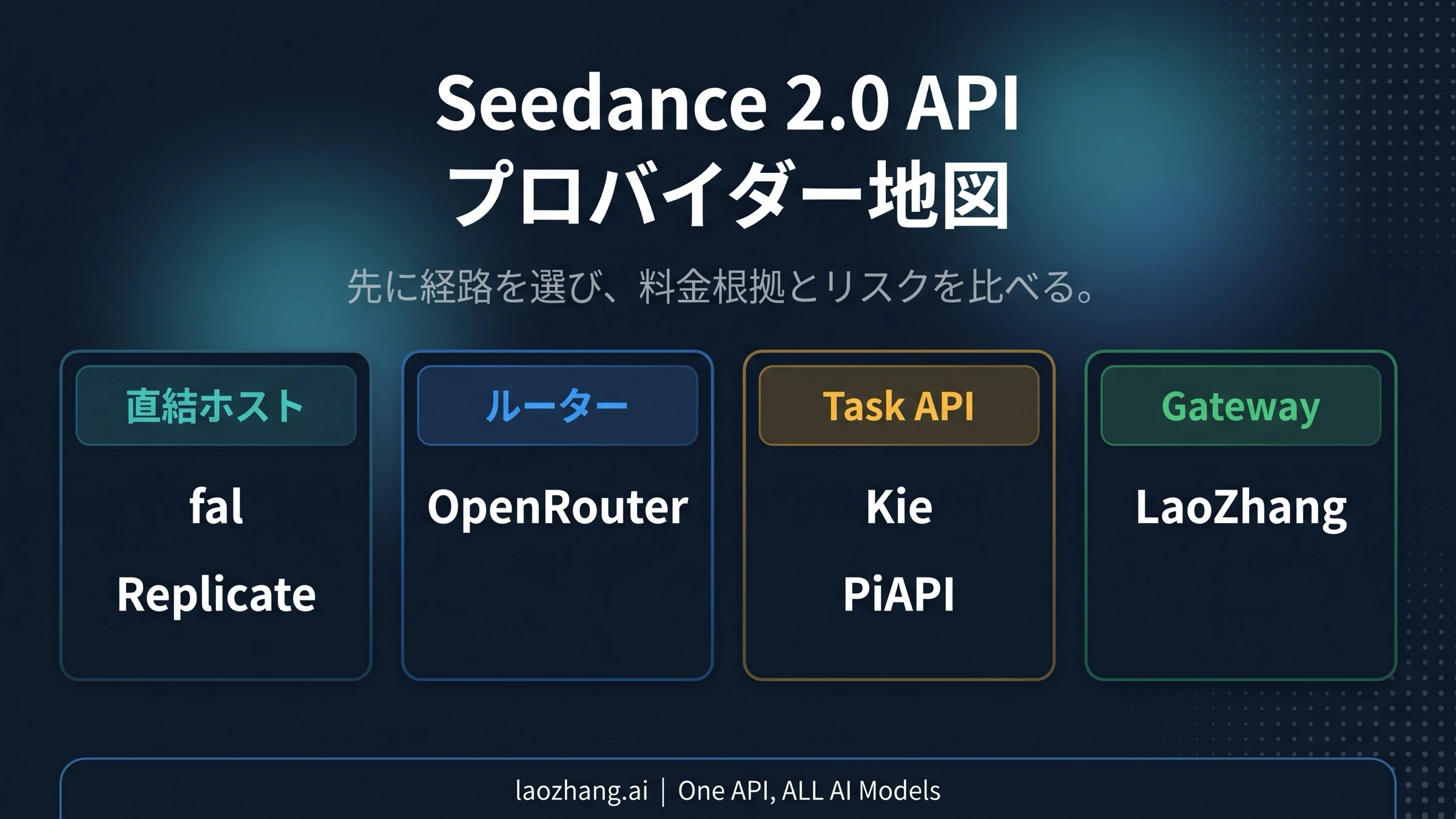
Seedance 2.0 APIに、すべての企業に共通する「最良のプロバイダー」はありません。既存の開発基盤、必要な入力素材、データ取り扱い、請求とサポート、そして失敗した動画を含む実コストで答えが変わるからです。
最初に比較すべきなのはトップページの最安単価ではなく、同じ仕様のジョブを完了し、社内の採用基準を通過した動画1本のコストです。本稿は2026年7月18日に各社の一次情報を再確認した結果に基づきます。価格、モデルID、利用可能地域、審査方針は変動するため、発注日には再確認してください。
結論:最初の検証先を条件で分ける
| 優先する条件 | 最初に検証する候補 | 現在の契約上の特徴 | 見送る条件 |
|---|---|---|---|
| SKUごとの公開料金とtask API | Kie | /api/v1/jobs/createTask。mini、fast、standard、解像度、動画入力の有無で料金行が分かれる | headlineだけで予算を作る、または入力動画の秒数を計算できない |
| 既存のOpenRouterキーと観測基盤 | OpenRouter | 作成は /api/v1/videos。202 Accepted、polling URL、usage/costを取得できる | Seedanceで複数providerの自動fallbackが必須。現時点の配信先は1社のみ |
| SDKとplaygroundで短期間にPoC | fal | text-to-video、image-to-video、reference、fastが個別endpoint | 公開秒単価の最小化が最優先 |
| predictionとwebhookを既に運用 | Replicate | bytedance/seedance-2.0 のhosted predictionを利用 | Replicate用の運用資産がなく、移行摩擦を相殺できない |
| variant別の明確なtask料金 | PiAPI | /api/v1/task。standard、fast、miniと審査モードを明示 | peak queue、再試行・返金条件、動画入力の加算方式が要件外 |
| モデル提供元に近い国際契約 | BytePlus ModelArk | 現行AP Southeast公開例は /api/v3/contents/generations/tasks、token課金、3種類のmodel ID | 日本アカウントの実際のhostname、ID、資格、地域、調達条件をconsoleで確認できない |
| 統一請求、支払い・サポート窓口や中継 | LaoZhang | 専用 /seedance/api/v3 経路、SeeDance2 グループ、事前控除後に精算 | 実在人物の顔、固定の公開秒単価、特定言語対応、法人請求書やSLAが必須なのに現行窓口で確認できない |
ここでいう「候補」は推薦順位ではありません。各ルートの契約が自社の必須条件を満たすかを確認するための出発点です。
10秒・720pのmatched canaryを固定する
価格表を開く前に、PoCの入力を固定します。本稿の比較カードは 10秒、720p、16:9、text-to-video、入力動画なし、音声あり(料金に含まれる場合)、variantを明示 とします。480pのheadline、動画入力ありの割引行、fastとstandardを混ぜると比較になりません。
この条件で公開料金から計算した見積もりは次の通りです。
| ルート | 10秒の公開見積もり | 根拠と境界 |
|---|---|---|
| Kie mini / fast / standard | $1.025 / $1.65 / $2.05 | 720p、動画入力なしの各行。$0.057/秒 headlineはこの条件ではない |
| OpenRouter standard | $1.512 | 720pは $0.1512/秒。$0.06726/秒 は480p standardの表示価格 |
| PiAPI mini / fast / standard | $1.40 / $1.60 / $2.00 | 720p strict variant。審査モードと入力条件を固定する |
| Replicate 720p | $1.80 | 動画入力なしの行。動画参照を加えると料金が変わる |
| fal fast / standard | $2.419 / $3.034 | 720p text-to-videoの公開行。音声込み |
| BytePlus ModelArk | 発注時にtoken式で再計算 | 公式の5秒・720p例はmini約$0.38、fast約$0.60、standard約$0.76。丸め値を10秒へ単純転用しない |
| LaoZhang | 固定額を記載しない | 事前控除と最終token精算の合計を実ログで確認する |
これは公開料金からの見積もりであり、本稿で有料生成を実行した結果ではありません。速度、画質、成功率、最終請求額の順位も意味しません。PoCでは次の式を使います。
採用可能な動画1本のコスト = canaryの総支出 ÷ 内容・仕様・技術要件をすべて通過した本数
安いルートで3回再生成し、高いルートで1回合格するなら、本番コストの順序は公開単価と逆転します。moderation rejectionやtimeoutが返金対象か、社内再レビューの工数がいくらかも同じ台帳に入れます。
現行のAPI契約を混同しない
OpenRouterはchat completionsではなくvideo API
OpenRouterの現行video generation文書では、GET /api/v1/videos/models で能力を確認し、POST /api/v1/videos へ投入します。応答はHTTP 202で、id、polling_url、statusを受け取り、完了後にunsigned_urlsとusage/costを確認します。
古い /chat/completions のサンプルへ動画payloadを送る実装は、現行契約に合わせて更新が必要です。Seedance 2.0のモデルページではstandardの480pが $0.06726/秒、720pが $0.1512/秒。現時点でSeedanceの配信providerは1社なので、統一APIと観測性には価値があっても、Seedance内部の複数社fallbackとは呼べません。
Kieの $0.057/秒 は720p共通価格ではない
KieのStandard、Fast、Mini文書は POST https://api.kie.ai/api/v1/jobs/createTask を使い、callbackまたはtask照会で結果を取得します。出力時間は4〜15秒で、standard、fast、miniと入力モードを分けて扱います。
Kie pricingと製品ページでは、$0.057/秒 はStandard 480p・動画入力ありの正確な行 $0.0575/秒 を丸めたheadlineです。720p・動画入力なしはmini $0.1025/秒、fast $0.165/秒、standard $0.205/秒。さらに動画入力ありの料金は「単価 ×(入力動画の長さ + 出力の長さ)」で、出力10秒だけを掛けてはいけません。first frame、first/last frame、multimodal referenceのどれを使うかまで一致させて見積もります。
専用ホストは運用資産との相性で選ぶ
falのSeedance 2.0 APIは用途別endpoint、SDK、playgroundが明確です。720p text-to-videoはfast $0.2419/秒、standard $0.3034/秒。実装の立ち上げ時間を短縮できるなら、単価差以上の価値があります。4Kの記述にはページ間の差があるため、必要なら契約前に実endpointで確認します。
Replicateのhosted modelは POST /v1/models/bytedance/seedance-2.0/predictions を使い、既存のprediction、webhook、保存処理を流用できます。動画入力なしでは480p $0.08/秒、720p $0.18/秒、1080p $0.45/秒、4K $1.00/秒で、動画入力ありは別料金です。
PiAPIの現行文書は /api/v1/task とvariant別料金を公開しています。720p strictはmini $0.14/秒、fast $0.16/秒、standard $0.20/秒。動画入力では出力料金に加え、入力秒数を単価の半額で加算します。moderation failureの返金、strictとless-restrictionの再試行差、09:00〜15:00 GMTのpeak queueも採否カードに含めます。
公式に近い経路とgatewayは別の課題を解く
ByteDanceのSeedance 2.0モデルページは能力の基準です。テキスト、画像、動画、音声を統合して扱い、公開上限は画像9枚、動画3本、音声3本、出力最長15秒です。ただし、この能力から第三者wrapperの入力項目を推測してはいけません。
国際契約ではBytePlus ModelArkの非同期task APIの現行AP Southeast公開例が POST https://ark.ap-southeast.bytepluses.com/api/v3/contents/generations/tasks を示します。同じ公開referenceの現行IDはstandard dreamina-seedance-2-0-260128、fast dreamina-seedance-2-0-fast-260128、mini dreamina-seedance-2-0-mini-260615。成功した生成だけが課金対象で、moderation failureは課金されず、task IDは7日間保持されます。ただし、日本アカウントで使うhostname、endpoint ID、model ID、資格、請求条件は現在のModelArk console/referenceからコピーし、AP Southeast例を全地域共通の契約として扱いません。
LaoZhangの現行Seedance文書ではbaseが https://api.laozhang.ai/seedance/api/v3、作成・照会は /contents/generations/tasks、互換ダウンロードは /v1/videos/{id}/content です。SeeDance2 グループの権限が必要で、実在人物の顔を含む入力・生成には対応しません。
請求は事前控除後、最終token使用量により追加控除または返金されるため、1ジョブに対応する2本の消費ログを合算します。0.18x は人民元基準を米ドル残高へ換算する係数で、追加割引ではありません。統一請求、支払い、ローカルサポートの価値で選ぶ経路であり、公開秒単価の最安候補として扱うべきではありません。
法人PoCで残す採否カード
| 項目 | 必ず記録する値 | 不合格時の判断 |
|---|---|---|
| API契約 | model ID、submit endpoint、status/callback、結果field | schemaを推測せず、そのrouteを停止 |
| 見積もりと請求 | submit前見積もり、事前控除、最終請求、返金 | 差額を説明できるまで増枠しない |
| 成果物 | 秒数、解像度、aspect ratio、音声、codec、file size | 要求との差を失敗として数える |
| 内容品質 | prompt遵守、人物・商品一貫性、審査、担当者の採否 | providerごとに合格基準を変えない |
| 運用 | queue、生成時間、timeout、cancel、retry | 製品SLOを超えればfallbackまたは切替 |
| ガバナンス | データ保持、URL期限、保存先、監査log、請求書、SLA | 調達・セキュリティ条件を満たさなければ不採用 |
本稿は有料canaryを実行していないため、実測レイテンシ、成功率、画質のランキングは提示しません。自社の同一canaryを少数実行し、quoteとactualを分けて保存してから本番routeを決めてください。
切り替えを決める停止条件
- Kie:実際のvariant、解像度、入力条件に一致する料金行を特定できなければ、headlineを予算に使わない。
- OpenRouter:Seedanceで複数providerの自動切替が必須なら、現在の1-provider構成を採用しない。
- fal / Replicate:SDKや既存prediction基盤による時間短縮が料金差を相殺しなくなれば、移行コストを再計算する。
- PiAPI:審査モード、peak queue、返金・再試行、動画入力加算が業務要件と合わなければ別routeを試す。
- LaoZhang:
SeeDance2権限、人物制限、token精算、保持期間が要件外なら公式または別providerへ移す。 - BytePlus直結:データ、SLA、契約主体を優先するなら第三者より先に評価し、資格・地域・調達コストが過大ならwrapperへ戻す。
実装ではprompt、参照素材、秒数、比率、音声、予算、採否状態をアプリ共通にし、endpoint、model ID、payload、callback、料金式、結果fieldだけをprovider adapterへ閉じ込めます。価格や可用性が変わったときに交換するのはrouteであり、製品全体ではありません。
submit、polling、downloadの基本実装はSeedance 2.0 APIガイドへ、人物素材を含む場合は実在人物の顔と安全なワークフローへ分けて確認してください。通常のPoCが通っても、人像入力の契約や審査まで通るとは限りません。